Key facts: Connecticut
Local risks
What drives damage in Connecticut
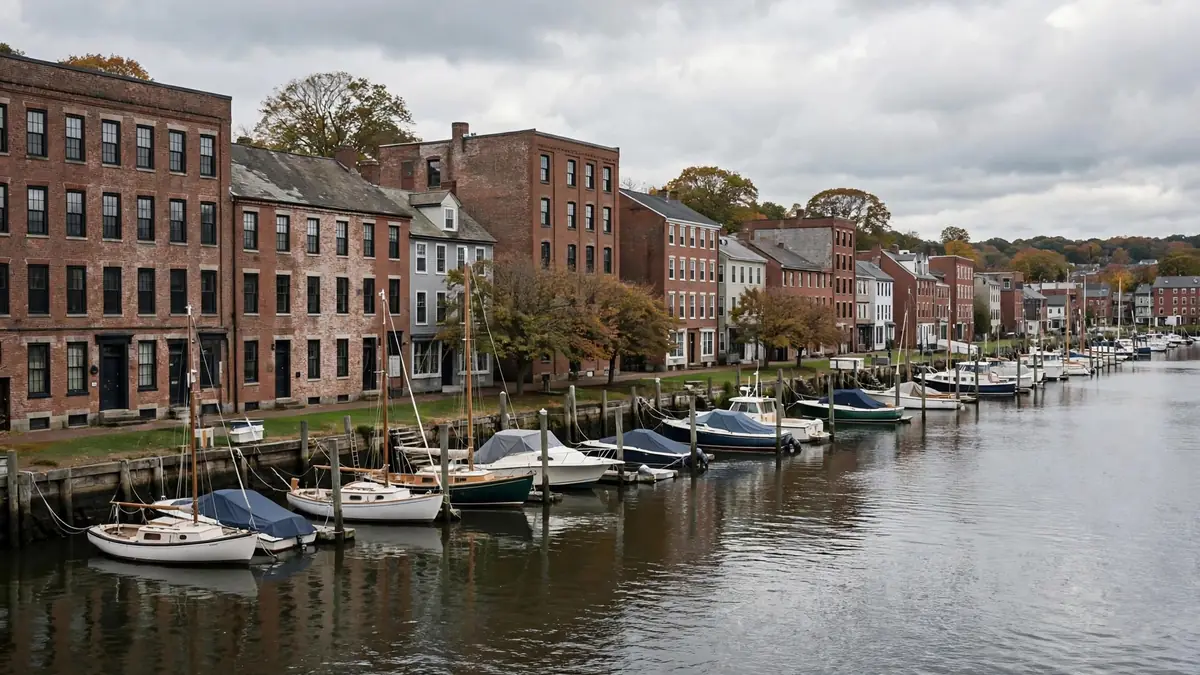
Along Long Island Sound, Stamford and New Haven have long storm histories. Norwalk's 1955 floods remain the most damaging in its history, and Bridgeport's Pequonnock River has its own flood record.
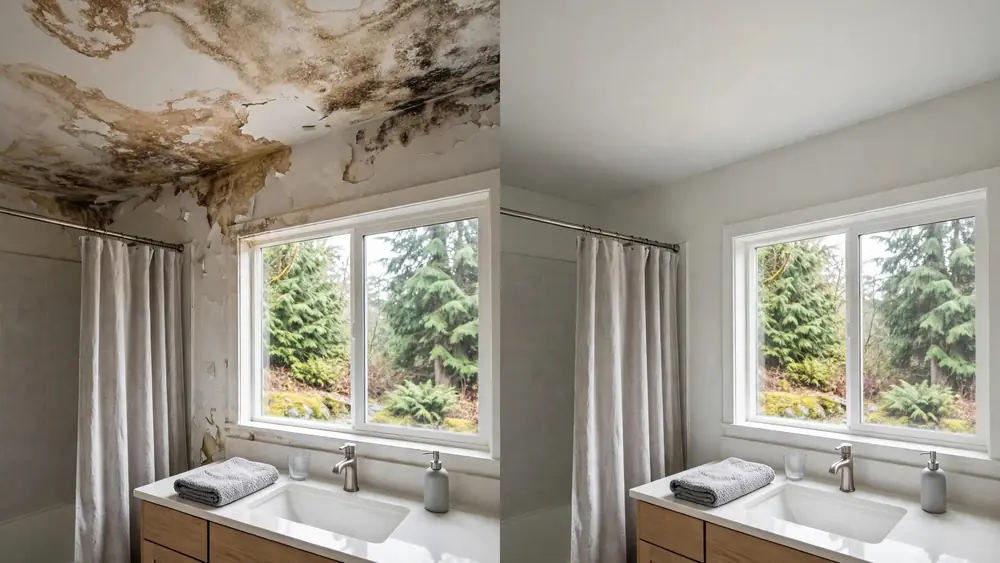
Inland, winter freezes bring burst pipes more often than rising water.
Housing
Homes and buildings here
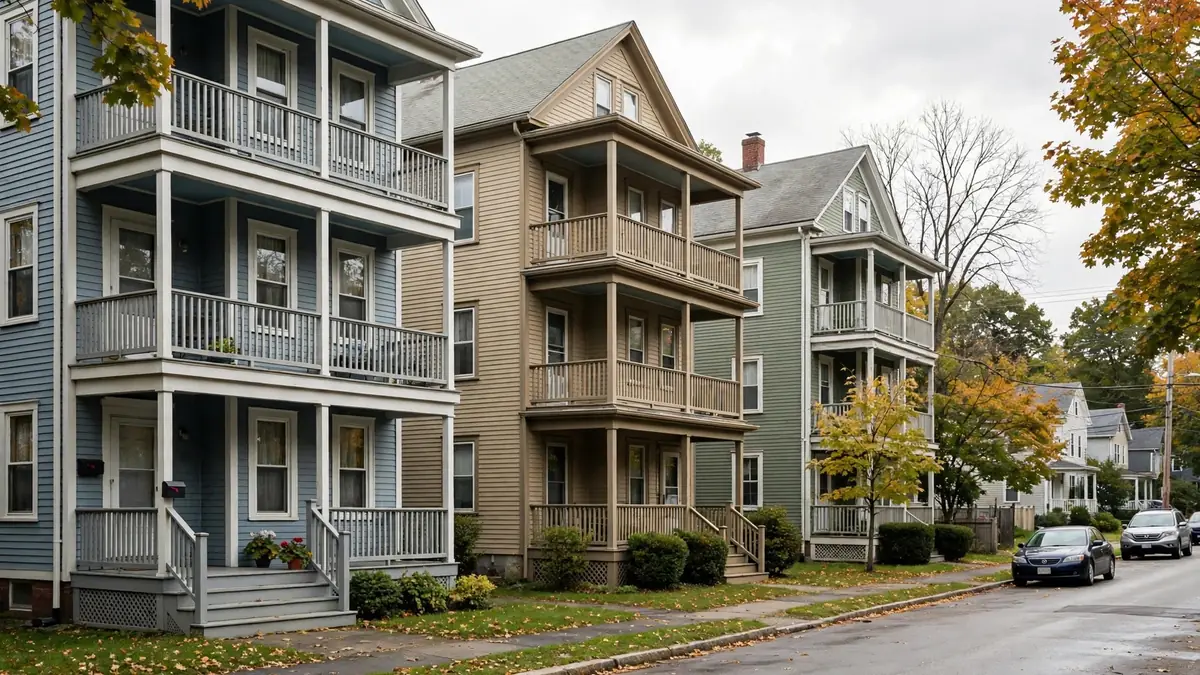
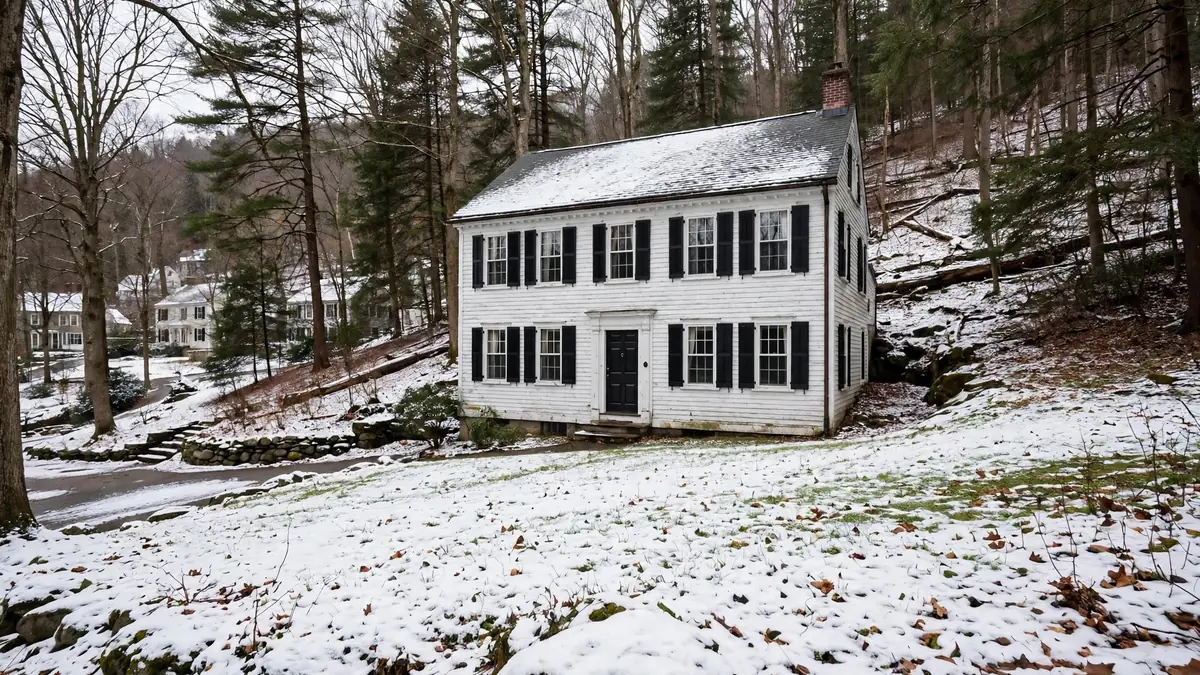
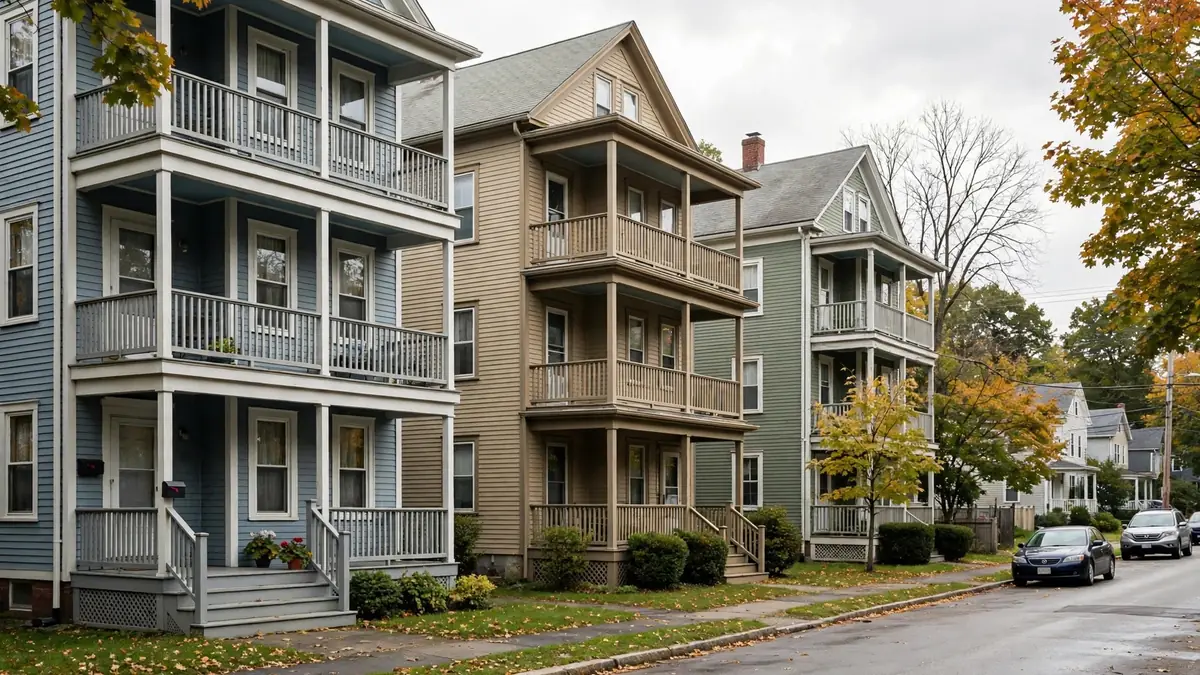
Bridgeport has many three-deckers and brick tenements, and New Haven has older multi-family homes. Stamford mixes high-rises with older single-family houses.
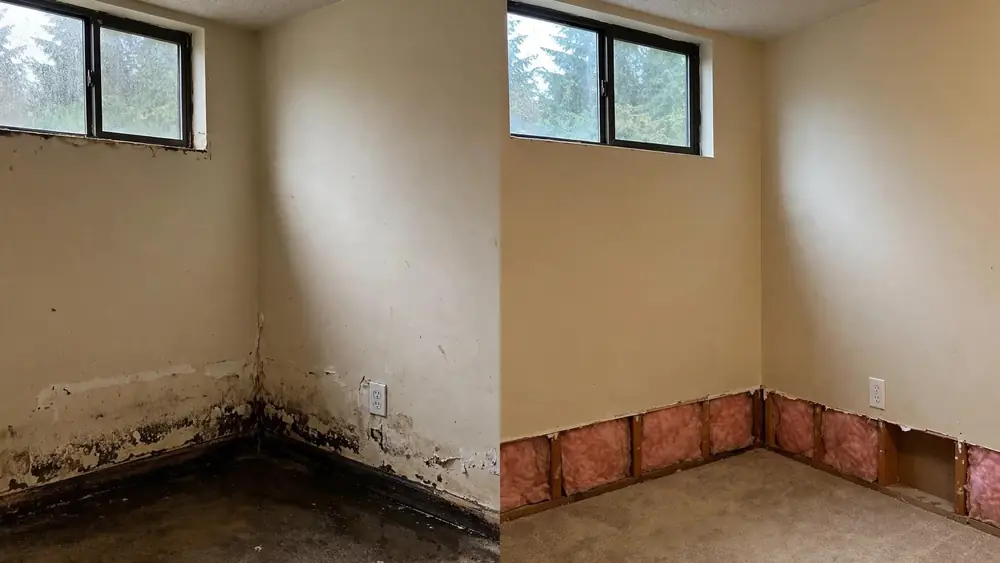
Common damage
Where to go next
Services people ask about
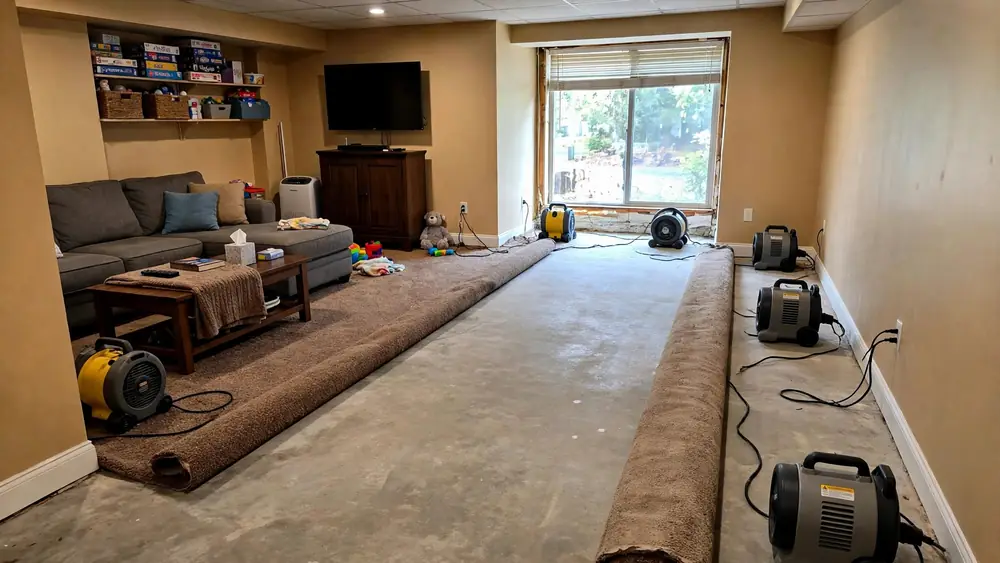
Start with water damage restoration, flooded basement cleanup or burst pipe water damage. Tenants should notify the landlord right away and photograph belongings.
Service areas
Restoration service areas in Connecticut
Cities and neighborhoods: Bridgeport, Danbury, New Haven, New London and Groton, Norwalk, Stamford, Waterbury.
Start here
Coast or river valley: the first question for a Connecticut address
If you live near the Sound, ask what the tide is doing. If you live in the Naugatuck watershed, ask what the rain upstream is doing. Inland, in January, ask whether the pipe in that outside wall has heat. Those three situations cover much of what goes wrong in Connecticut, and they call for different urgency and different paperwork.
Saltwater in a Stamford or Norwalk basement is a contaminated-water job, not a clean-water one, and a burst supply line in a Waterbury three-decker is a problem with several households attached.
State flood record
Storms that shaped Connecticut’s flood planning
These events explain why people here still talk about 1955.
- January 31, 1869The Kohanza Reservoir dam failed above Danbury. Eleven people died within thirty minutes as icy water tore through.
- September 1938The New England hurricane hit Long Island at Category 3 strength on its way north, and remains among its most destructive.
- August 1955Hurricane Connie left the ground soaked, then Diane brought more rain five days later. River valleys across the state flooded, and Norwalk still counts it as the worst in its history.
- 2011 and 2012Tropical Storm Irene caused widespread damage and outages, then Sandy brought evacuations to towns across the state.
Where you are
Connecticut risks city by city
Use the links for more detail on each place.
| City | River or shore | Worth knowing |
|---|---|---|
| [Stamford](/areas/connecticut/stamford/) | Long Island Sound, Mianus River nearby | High-rises beside older single-family houses |
| [Norwalk](/areas/connecticut/norwalk/) | Norwalk River, the Sound | About six inches of Diane rain fell on top of about nine from Connie in 1955 |
| [Bridgeport](/areas/connecticut/bridgeport/) | Pequonnock River, harbor | Record of spring flooding, including a deadly 1905 flood; many three-deckers and brick tenements |
| [New Haven](/areas/connecticut/new-haven/) | Quinnipiac River, harbor | Compact city of about 17 square miles, older multi-family homes |
| [Waterbury](/areas/connecticut/waterbury/) | Naugatuck River | Flood-control dams followed 1955, including one at Thomaston finished in 1960 |
| [Danbury](/areas/connecticut/danbury/) | Inland, near Candlewood Lake | Freezes and basements are likelier concerns than surge |
| [New London and Groton](/areas/connecticut/new-london-and-groton/) | Thames River, eastern Sound | Hurricane landfalls in 1938, 1954, 1960 and 1985 |
Winter
Ice dams and frozen lines inland
Ice dams form when a warm attic melts rooftop snow, and the melt refreezes at the cold eaves. That water backs up under shingles and can appear as a stain well away from the gutter. Treat the stain as a roof-and-attic issue, and do not climb an icy roof. Insulation in that attic may be wet even if the ceiling looks fine.
For frozen pipes, shut the main once you suspect a split, and thaw gently. Do not use an open flame. Burst pipe water damage explains what happens next, and wet drywall: save or replace helps when you are looking at the ceiling afterward.
Priorities
What a Connecticut homeowner should do first
If water is still rising, the only first step is leaving; Ready.gov says a mere six inches of fast water can take your feet out.
- 1
Check for surge or sewage
Assume coastal or river water is contaminated. Keep children out, and read sewage backup cleanup if drains are the source.
- 2
Shut off what you safely can
Close the main for plumbing failures. Leave the panel alone if you would have to stand in water to reach it.
- 3
If you rely on septic, ask about it
Much of Litchfield County and rural parts of Fairfield, New Haven and New London counties use private systems. Do not use a flooded one until it has been checked.
- 4
Tell the insurer and record the damage
Photograph first, then remove only what is needed to stop further harm. Keep damaged items for the adjuster.
- 5
Call (833) 610-0241
Water Damage First connects you to an independent contractor. Ask them about registration, insurance and when they can come.
Regulators
Connecticut agencies a homeowner may actually use
Home improvement contractors register with the Department of Consumer Protection, so you can check a registration number there before you sign. The Connecticut Insurance Department handles consumer questions when a claim gets confusing. Building permits come from each municipality's building official, so a Danbury job and a Groton job go through different offices.
Near the shore, ask your town about flood-zone rules before planning a substantial repair, because floodplain management can affect what gets rebuilt and how.
Coverage
Flood, backup and seepage in Connecticut policies
Standard homeowners coverage generally excludes flood, whether from the Sound or a river, and that coverage is typically bought on its own, through the federal program or a private insurer. A backup from a combined sewer in an older city may only be covered with an endorsement. Long-term seepage is often treated differently from a sudden leak.
None of that replaces your policy wording, so read the declarations page or ask your agent. Keep notes of each conversation, and see the adjuster guide if you are new to this.
Connecticut questions
Common Connecticut questions after a flood or freeze
Can I pump out my basement right away?
If the ground around the house is saturated with floodwater, rapid pumping can stress foundation walls. Ask the contractor how they want to proceed; for a burst pipe, this is less of a concern.
Does Long Island Sound water need special handling?
Yes. Treat it as contaminated, and rinse and dry materials under the contractor’s direction. Salt can also leave deposits on masonry.
Who pays when my upstairs neighbor’s pipe leaks?
It depends on the policies and the cause. Report it to your own insurer and the building owner, then let them sort it out. Keep drying moving in the meantime.
Sources and citations
- [1]U.S. EPA: A brief guide to mold, moisture and your home
- [2]Wikipedia: Stamford, Connecticut
- [3]Wikipedia: Norwalk, Connecticut
- [4]Wikipedia: Flood of 1955 (Connecticut)
- [5]Wikipedia: Hurricane Diane
- [6]Wikipedia: 1938 New England hurricane
- [7]Wikipedia: Hurricane Sandy
- [8]Wikipedia: Hurricane Irene
- [9]Wikipedia: Naugatuck River
- [10]Wikipedia: Pequonnock River
- [11]Wikipedia: Triple-decker
- [12]Wikipedia: Danbury, Connecticut
- [13]Wikipedia: Combined sewer
- [14]Connecticut Insurance Department
- [15]Connecticut Department of Consumer Protection
- [16]U.S. EPA: Flooded homes, cleanup and safety