Key facts: Louisiana
Local risks
What drives damage in Louisiana
Katrina's levee failures flooded about 80 percent of New Orleans in 2005. In 2016, rain floods hit the Baton Rouge area without any hurricane at all.
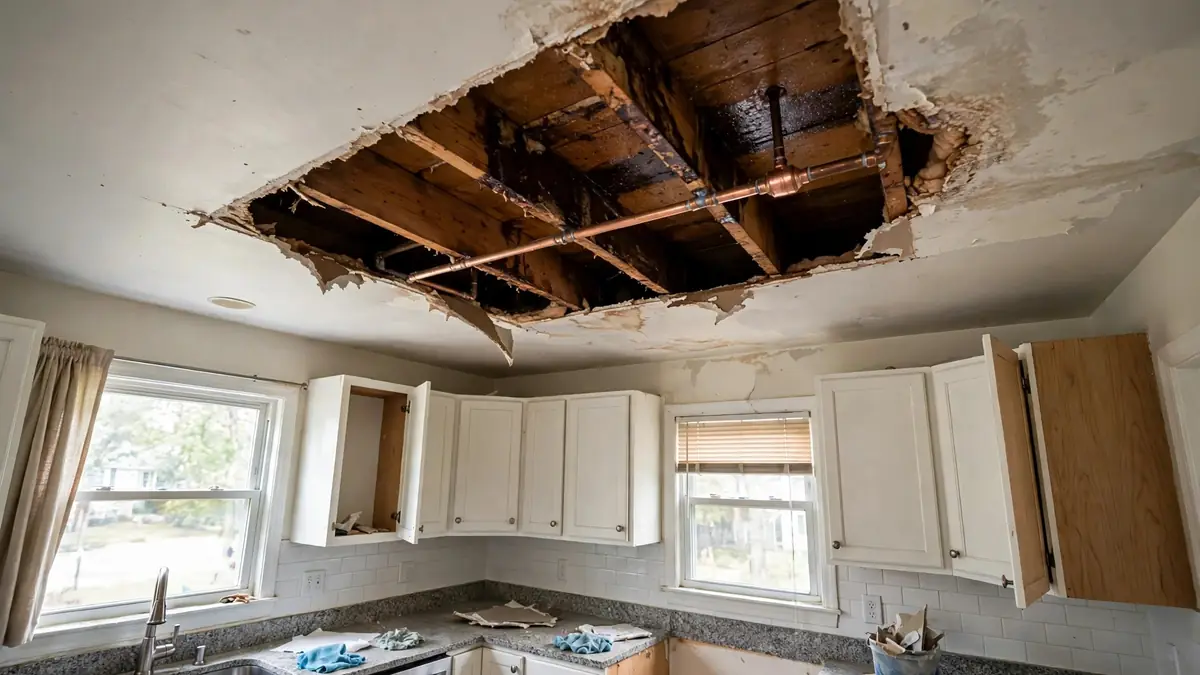
Ida brought roof and wind-driven rain damage to East Jefferson Parish suburbs.
Housing
Homes and buildings here
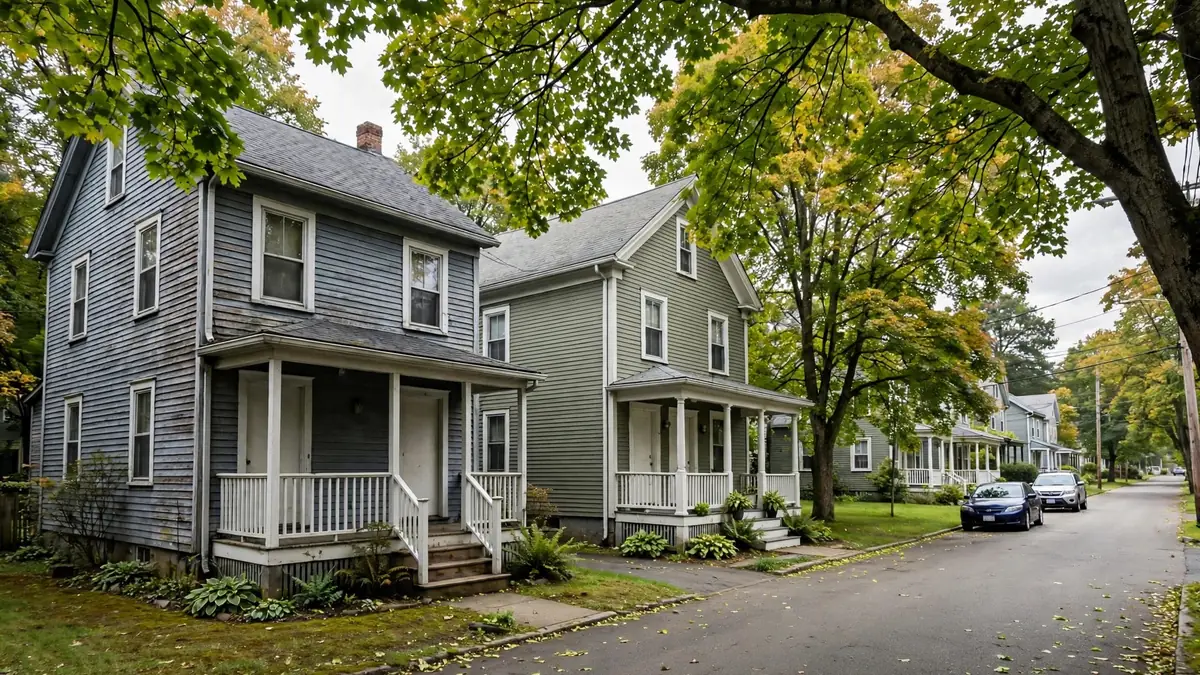
New Orleans mixes raised shotgun houses and Creole cottages on piers with postwar slab homes. Metairie and Kenner have many 1950s to 1970s slab ranches, and Slidell has raised rebuilds beside older slab homes.
Common damage
Where to go next
Services people ask about
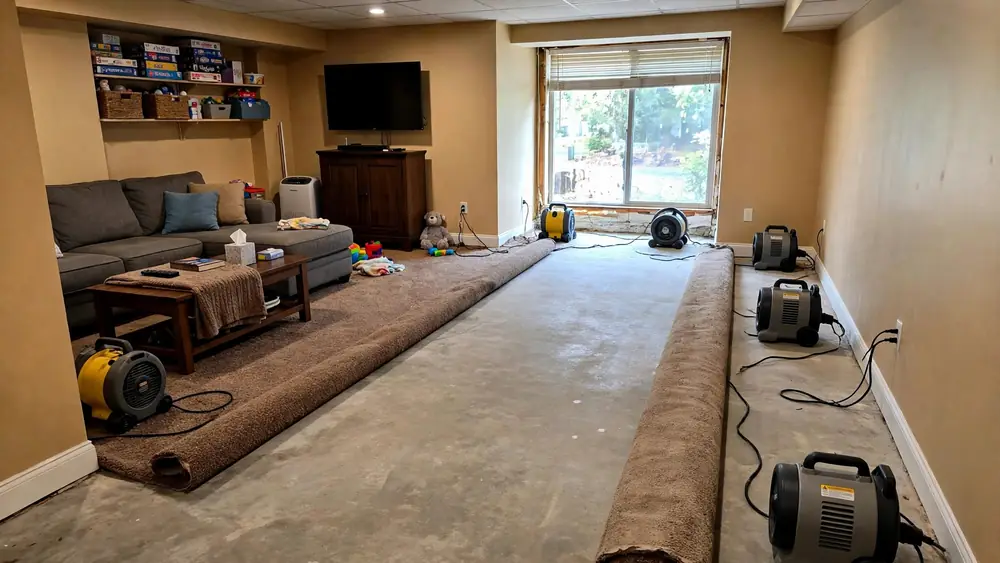
Start with water damage restoration, flooded basement cleanup or burst pipe water damage. Keep flood and wind claims separate, since they often go to different insurers.
Service areas
Restoration service areas in Louisiana
Cities and neighborhoods: Baton Rouge, Covington and Mandeville, Denham Springs and Walker, Metairie and Kenner, New Orleans, Shreveport and Bossier City, Slidell.
Answer first
Louisiana losses split into rain, surge, wind and old damage
Before you call anyone, work out which of four things happened. Rain flooding comes up from streets and bayous, surge pushes in from the Gulf and the lakes, wind opens the roof, and old damage is a musty wall left over from a past storm. They involve different coverage, and they often overlap in one event.
Baton Rouge averages about 62 inches of precipitation a year and Metairie about 62.5, so a house rarely gets a long dry spell to recover. Humidity is half the problem. Drying goes better with the house closed and conditioned, not with the windows open.
Disasters
Louisiana events that explain today’s building and insurance
You don't need a hurricane to flood here, as this list shows.
- May 8, 1995Metairie took upwards of 20 inches in roughly half a day.
- August 2005Katrina’s levee failures left about 80 percent of New Orleans under water.
- September 2008Gustav hit Baton Rouge on September 1 with winds over 100 mph.
- August 2016Hourly rates hit 2 to 3 inches in the worst spots, with 31.39 inches recorded at Watson. At least 30,000 people were rescued. The Amite and Comite hit record levels, and almost a third of Ascension Parish homes flooded after a levee was overtopped.
- August 2021Ida struck southeast Louisiana, with roof and wind-driven rain damage across East Jefferson suburbs.
Parish by parish
Louisiana covered areas, side by side
Each link has more about local housing and history.
| Area | Main concern | Building note |
|---|---|---|
| [New Orleans](/areas/louisiana/new-orleans/) | Rain pumping limits, surge, wind | Raised shotguns and Creole cottages on piers beside postwar slab homes |
| [Metairie and Kenner](/areas/louisiana/metairie-and-kenner/) | Heavy rain, wind | Many 1950s to 1970s slab ranches |
| [Baton Rouge](/areas/louisiana/baton-rouge/) | Backwater up tributaries, Gustav-type wind | Consolidated city-parish government |
| [Denham Springs and Walker](/areas/louisiana/denham-springs-and-walker/) | Amite and Comite flooding | Many homes repaired or raised after 2016 |
| [Slidell](/areas/louisiana/slidell/) | Surge, wind | Raised rebuilds next to older slab homes |
| [Covington and Mandeville](/areas/louisiana/covington-and-mandeville/) | Lake and river drainage | Historic cores from 1813 and 1834 amid new subdivisions |
| [Shreveport and Bossier City](/areas/louisiana/shreveport-and-bossier-city/) | Inland storms, freezes, Red River | Far from the Gulf, with different risks from the south of the state |
Raised or slab
Why the floor system matters more than the address
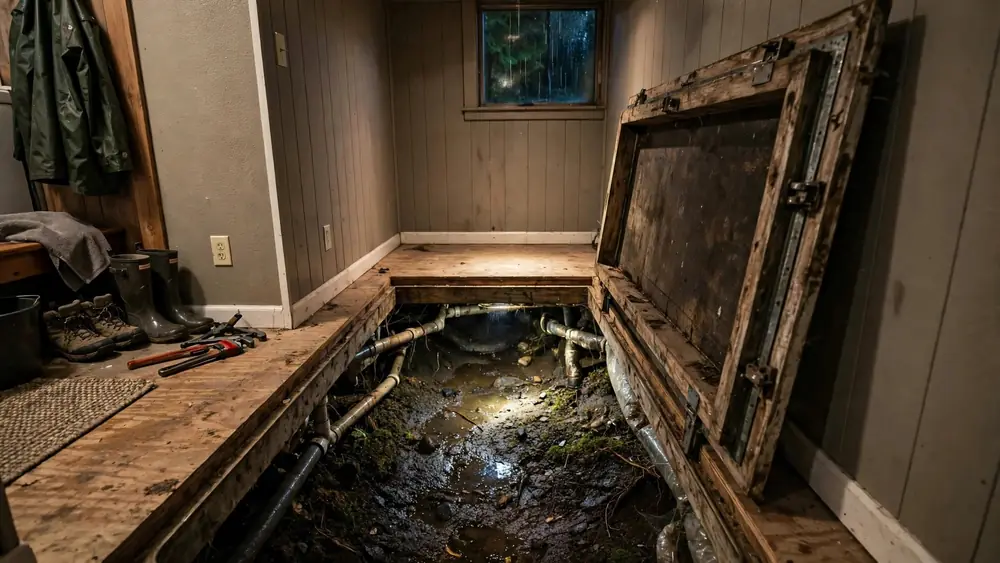
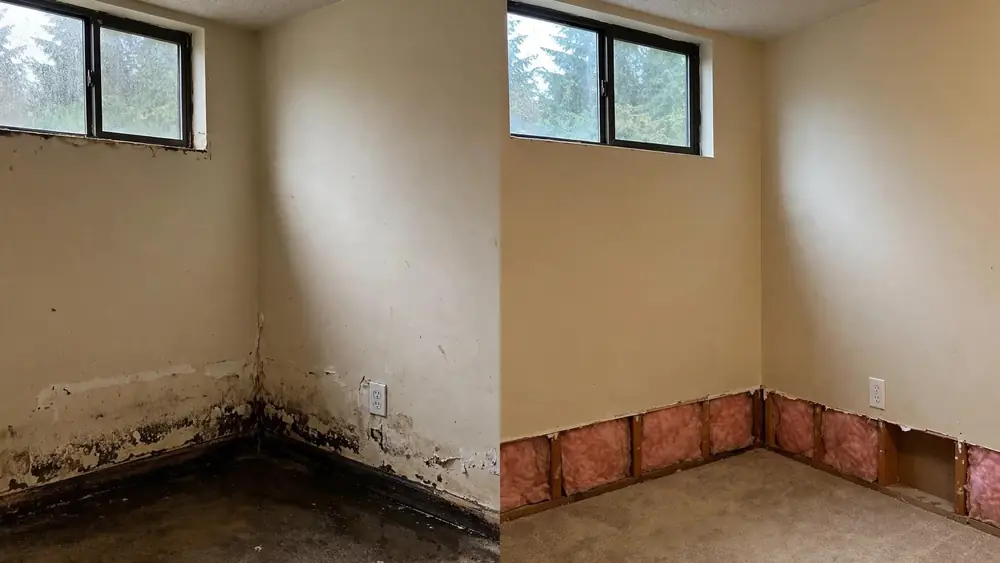
A raised house lets water run beneath it, and it can also hide wet insulation and damp subfloor where nobody looks. Ask the contractor to go under the house before they sign off. A slab ranch has nowhere to hide water except in the walls and flooring, so the bottom of the drywall and baseboards usually gets attention first.
Old wood and plaster deserve patience. Historic framing often dries well if given time and airflow, and tearing it out may be unnecessary. Paint before 1978 may have lead in it, which is one more reason not to start sanding.
Second-look homes
Checking a house repaired after 2016 or Ida
Some Livingston and East Baton Rouge homes were put back together fast because thousands of people needed them. Some framing may have been sealed damp, or soaked insulation left behind. A musty smell does not automatically mean the old work failed, but it is a good reason for a moisture check.
If you bought after a flood, ask the seller for records, and compare your floor height to how high water came on your street. Do not treat 2016 as the upper limit. In Denham Springs that year the crest came in nearly five feet above the previous record, which is the clearest argument against planning around history alone.
Immediately after
After a Louisiana storm: what to do first
Return only once officials allow it, and then use this list.
- 1
Check for gas, power lines and structure
Stay out if you smell gas or see sagging ceilings. Downed lines are always live until proven otherwise.
- 2
Cover openings
A tarp on a wind-damaged roof stops the next rain. See board-up and tarping.
- 3
Photograph, including the waterline
Mark the height on a wall and take a picture before anything is thrown out. Separate wind damage photos from flood photos.
- 4
Notify each insurer
Wind, flood and sometimes contents can sit with different companies, so call all of them.
- 5
Start removing water soon
The EPA2019s 24-to-48-hour drying target is tough in Gulf humidity. Water extraction and structural drying are the usual first jobs.
Contractor checks
Avoiding trouble with post-storm contractors
Storm chasers follow every big Louisiana event. Before signing, look the company up with the State Licensing Board for Contractors, ask for proof of insurance and read the agreement closely. Be careful with anything that hands your claim rights to someone else. Water Damage First makes the connection only, so the contractor you hire is independent and accountable for their own work.
Permits come from the parish or city, and Louisiana has many jurisdictions. Port Allen, Plaquemine and Gonzales each sit in different parishes from Baton Rouge, for instance. In a flood zone, also ask about elevation requirements before planning major repairs.
Policy reality
Flood and wind coverage across Louisiana
Homeowners policies generally leave out flood, and when the 2016 water came just about 21 percent of structures statewide had federal flood coverage. Many of those homes had never flooded before. Hurricane or wind deductibles often work differently from your regular deductible, too, so read that part of the declarations page.
The Louisiana Department of Insurance takes consumer questions, and its site is the first place to look if a claim stalls or you want to check who you are dealing with.
Louisiana questions
Louisiana flood and storm questions
Does this cover Shreveport as well as south Louisiana?
Yes, Shreveport and Bossier City are on the list. Ask on the call whether a contractor serves your exact address.
Does drywall left uncut in 2016 have to come out now?
Not automatically. Have it metered and inspected. If it took floodwater and stayed in place, a contractor may recommend opening a section to see what is behind it.
Is a dehumidifier enough in summer?
For a small clean-water leak, it might help. After real flooding, you need materials removed and professional drying, since the outdoor air is working against you.
Sources and citations
- [1]U.S. EPA: A brief guide to mold, moisture and your home
- [2]Louisiana Department of Insurance
- [3]Wikipedia: 2016 Louisiana floods
- [4]Wikipedia: Hurricane Katrina
- [5]Wikipedia: Hurricane Ida
- [6]Wikipedia: Hurricane Gustav
- [7]Wikipedia: Metairie, Louisiana
- [8]Wikipedia: Covington, Louisiana
- [9]Wikipedia: Mandeville, Louisiana
- [10]Wikipedia: Baton Rouge, Louisiana
- [11]Wikipedia: National Flood Insurance Program
- [12]Louisiana State Licensing Board for Contractors