
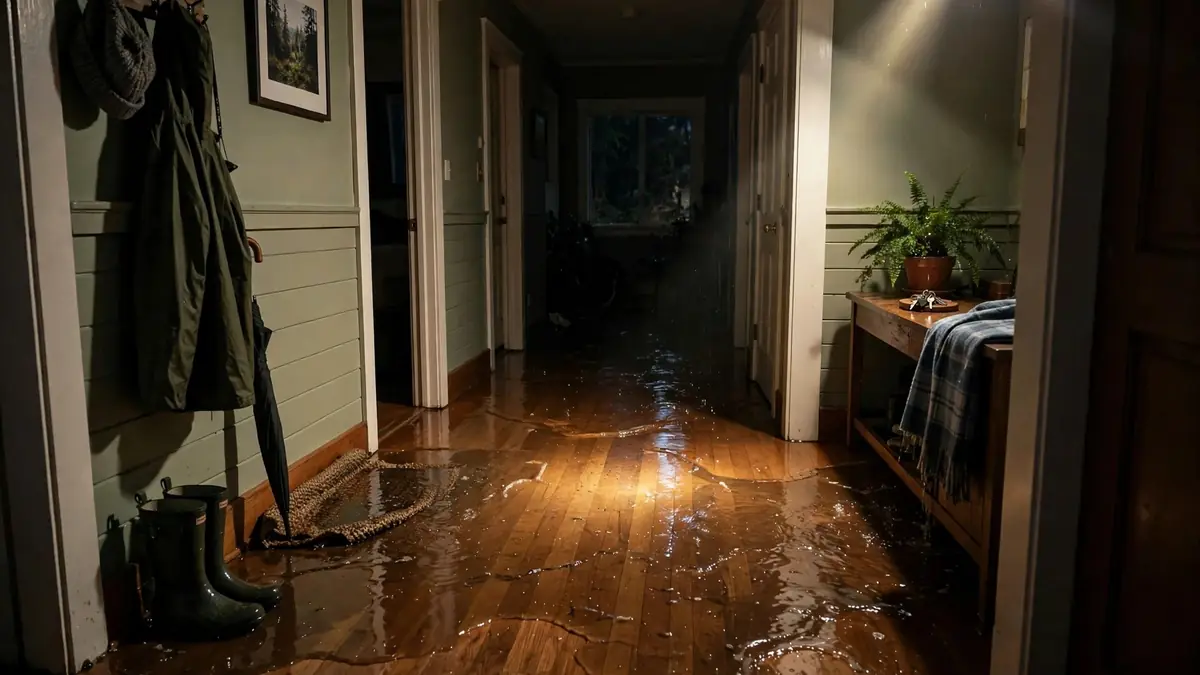
Key facts: What to Do After Water Damage
Checklist
Six moves in the first hours
- 1
Stay safe
Keep out of water near outlets or panels, and leave if a ceiling sags.
- 2
Stop the source
Shut the main valve if plumbing is the cause. See burst pipe water damage.
- 3
Photograph
Record rooms and items before moving them.
- 4
Protect belongings
Lift furniture off wet floors, and put foil under legs to prevent stains.
- 5
Call your insurer
Report the loss and ask what they need.
- 6
Start drying
Open interior doors and run a dehumidifier if safe. Call for help if water reached walls.
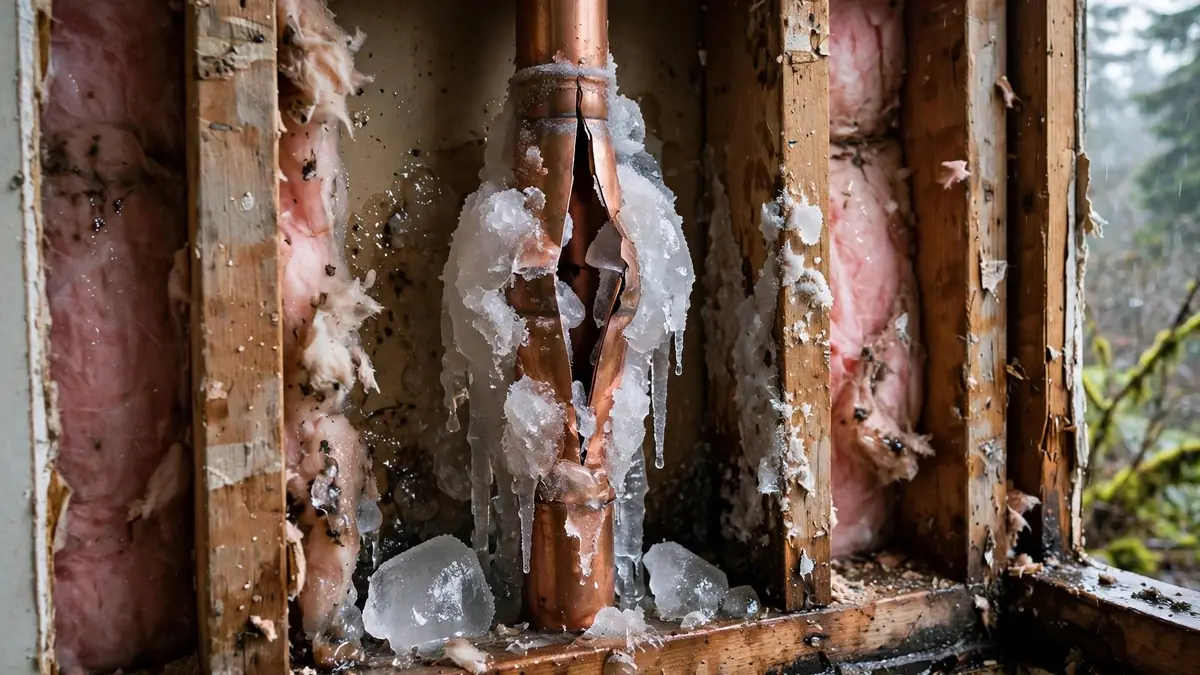
A failure you may not see until it thaws
What to avoid
First-day habits that backfire
Do not use a household vacuum on water, walk through sewage, or run ceiling fans under a wet ceiling. Do not throw away damaged items before they have been recorded. Then read how long drying takes.
Answer first
The first thing to do
Make sure everyone is safe, then stop the water if you can do so without risk. After that, photograph everything, tell your insurer, and start removing water and drying. The order matters, because a few minutes spent on safety and the valve can spare you far more trouble later, and because photos are easiest to take before things are moved.
You do not need to work out the whole job today. You need to answer four questions: Is it safe to be here? Is water still coming in? What did it touch, and what kind of water is it? Who has to know? The sections below deal with each of these, along with some specific situations that change the order.
Safety check
Is it safe to be in the house?
Leave right away and call for help from outside if any of these apply. Water damage can be replaced, and you can't.
- Water around electrical equipmentStay away from damp electrical equipment, and never stand in water to reach it. Ready.gov says to cut power only when that can be done safely. If reaching the panel means walking through water, leave it and call the utility or an electrician.
- Sagging ceilings or bulging wallsWet ceilings can fall. Keep everyone out of the room, and do not try to poke or drain one yourself unless someone qualified has told you it's safe.
- Gas smellLeave the house without using switches, and call the gas utility or 911 from outside.
- Sewage or floodwaterIt may carry contaminants and sharp debris. Keep everyone out, especially children.
- Structural damage or a flood warningFollow the instructions from local authorities. Only go back when they say it is safe.
- Generators and fuel-burning heatersRun generators outdoors, far from windows. EPA warns against heating a home with gas stoves, ovens, grills or dryers because of carbon monoxide.
Stopping it
Shutting off different kinds of leaks
Know these before you need them. Show everyone in the home where the main valve is, and label it.
| Source | Try first | If that fails |
|---|---|---|
| Toilet | The small valve behind the toilet | Main water valve |
| Sink or faucet | Stop valves under the sink | Main water valve |
| Washing machine | The two supply valves behind the machine | Main water valve |
| Dishwasher or ice maker | Valve under the sink or behind the fridge | Main water valve |
| Water heater | Cold-water inlet valve on top; turn off gas or power as the manufacturer directs | Main water valve; call a plumber |
| Burst or hidden pipe | Main water valve, then run a low tap until the lines empty | Water utility's shutoff at the street, if authorized |
| Roof or window leak | Catch water in buckets and move items; do not go on a wet roof | Call a roofer or tarping contractor |
| Sewer backup | Stop running water and flushing | Call a plumber or sewer contractor; do not enter contaminated water |
Water type
Finding out what kind of water you have
How you respond should depend on whether the water is clean. A broken supply line or a sink overflow is often clean at first. A washing machine overflow carries soil and detergent. Sewage, river water and floodwater are contaminated, so stay out, keep fans off and leave the cleanup to people with protective equipment.
If you aren't sure, assume the worse possibility. EPA's clean-water steps stop applying once sewage or other pollutants could be involved, and it warns against using fans until the water is known to be clean. Also, clean water does not always stay clean, and the categories guide explains how that works.
If your water supply may be affected, as can happen in a flood, ask the water utility or health officials if it is drinkable. EPA says to bring water to a rolling boil for one full minute to disinfect it (three minutes above 5,280 feet) if you are under a boil advisory, and warns not to use a flooded well until it has been tested and is safe.
Record it
Taking photos that are actually useful
NAIC advises documenting losses before removing debris or belongings. A few minutes now gives you a record you can't recreate later.
- 1
Start wide
Stand in each doorway and take a wide shot of the room, then move to the next corner.
- 2
Then go close
Photograph the source, water lines on walls, damaged flooring, ceilings and each affected item.
- 3
Show scale and depth
Include a tape measure or a familiar object in photos of water depth.
- 4
Record serial numbers
Take a close shot of appliance and electronics labels.
- 5
Narrate a short video
Walk through and say what happened, when you noticed it, and what you did.
- 6
Do not put yourself at risk
Take photos from a safe spot. Skip anything near electricity or contaminated water.
- 7
Back them up
Keep copies off your phone, in case of loss or damage.
Calls
The first calls, and what to say
Your exact order may differ, depending on whether water is still coming in.
- Plumber or rooferIf the failure still needs repair, describe where it is and whether the water is off. The plumber or restoration guide explains who to call first.
- Restoration contractorSay where the water came from, roughly when, which rooms and floors it reached, and whether it's clean. Water damage restoration explains the stages of the work.
- Insurance agent or companyReport the loss and ask what they need. Ask for a claim number and the adjuster's contact details.
- Landlord or building managerIf you rent or live in a condo, tell them right away. Water often affects neighbors and shared systems.
- Neighbors belowIn an apartment or attached home, check whether the water reached them too.
- UtilityIf you need a street-level shutoff, or for gas odors and sparking.
Contents
Protecting belongings without making things worse
Once it is safe, take the things most likely to be harmed out of the way. Lift furniture off wet carpet, or slide foil, plastic or blocks under the legs. Take rugs off wet floors, as dye can bleed. Pick up curtains and fabric that touch the floor. Remove books, photos and papers from damp shelves. Store them in a dry room and keep them separate from one another if they are wet.
EPA has a useful note for paper: valuable books and documents can be frozen to buy time, either in a frost-free freezer or at a storage locker, until someone can treat them. Photograph or copy anything important. EPA also says to consider a restoration specialist for items that are valuable or irreplaceable, or that have sentimental value.
Do not plug in or turn on wet electronics or appliances. Take them to a dry place only if you can do so safely, and leave them unplugged until someone has checked them. Keep damaged items for the insurer. Texas and Oregon regulators both say to hold on to them until your insurer has seen them or says otherwise. Spoiled food or sewage-soaked items should be photographed and then handled safely.
Drying
Starting to dry while you wait
These steps help with a clean-water leak. Do not run fans on contaminated water or use equipment in standing water.
- 1
Remove standing water
A mop, towels or a wet vacuum can take out water from small clean spills. Don't use a household vacuum.
- 2
Move air
If it is safe, open interior doors and cabinets. Set fans across damp areas, not on ceilings that could be wet.
- 3
Lower the humidity
A dehumidifier helps. EPA's target range is 30 to 50 percent, and under 60 at most.
- 4
Use your HVAC with care
It may help with a clean-water leak, but ask first if water got in the ducts or air handler. Don't run it if contamination is possible.
- 5
Pull out wet items
Soaked rugs and padding and wet cushions make the air wetter. Move them out if you can.
- 6
Know when to stop
If water reached walls, ceilings or another floor, then call for help. Read how long drying takes to find out what to expect.
Do it yourself?
What you can handle and what you should not
Use your own judgment and your physical limits as well. If in doubt, ask.
| Situation | Usually OK to handle yourself | Better to call for help |
|---|---|---|
| Small clean spill on hard floors | Yes, wipe and dry | If water runs under the flooring |
| Clean water on carpet in a small area | Maybe, with wet vacuum and airflow | If the pad is soaked or the area is large |
| Stain on a wall or ceiling | Note it, and find the source | If the wall is soft or the ceiling sags |
| A small patch of mold, under 10 square feet | EPA says you can usually do this yourself | If it's larger, or you have health concerns |
| Sewage or floodwater | No | Always, because of contamination |
| Water near electrical equipment | No | Always; call an electrician or the utility |
| Hidden moisture you can smell but not find | Basic checks only | If you suspect it's in walls; see the hidden moisture guide |
Special cases
If you are renting, away or in a condo
A few situations change who does what.
- RentersTell your landlord immediately, and in writing as well if you can. The building is generally the owner's responsibility, while your belongings depend on a renters policy, if you have one. Take your own photos.
- Condo ownersResponsibility may be shared between you and your association, based on the building's documents and insurance. Tell the manager, and ask how they want the matter handled.
- Coming home to a leakTurn off the water first. Since you may not know how long it ran, treat the water with more caution and look closely for mold. Note when you left, and when you returned.
- LandlordsRespond quickly, keep tenants informed, and document conditions. Local rules may set out specific duties.
- Vacation or second homesAsk your insurer whether the home's vacancy or unoccupied status changes anything, and have someone you trust check the property.
Watch for
Your health over the following days
CDC says mold exposure may produce no symptoms, or may cause a stuffy nose, sore throat, cough, wheezing, itchy eyes or a rash.
- Asthma and mold allergies can make reactions stronger. Ready.gov tells anyone with lung disease or low immunity to keep away from moldy or leaking buildings.
- Keep children out of cleanup work.
- Wear heavy gloves, protective clothing and boots during any cleanup, and a mask for mold or debris.
- Wash up with soap after contact, especially before eating or drinking.
- Clean and cover any cuts, and tell a doctor about wounds or illness after contact with floodwater.
- CDC warns that bleach combined with ammonia creates poisonous gas, so use one product at a time.
What is next
The next 48 hours in brief
Once the emergency has passed, your focus moves to tracking progress.
- Check that the leak is really fixed by looking at the repair and watching for any new drips or stains.
- Ask the contractor for moisture readings, and for a plan you can follow.
- Keep your insurer informed about what's been done, and don't make permanent repairs before inspection unless they've agreed. See the adjuster guide.
- Start an inventory of damaged items, room by room.
- Keep receipts for emergency repairs and any hotel stays.
- Watch for musty smells, bubbling paint or swollen baseboards as signs of trapped water.
- Think about what caused the problem, and whether you need a water alarm, a new hose or some other fix.
Questions
Questions from the first day
Should I shut off the power?
Only if you can reach the panel without standing in water or touching anything wet. If you can't, leave and call your utility or an electrician.
Should I wait for the insurance adjuster before cleaning up?
Do what's needed to stop more damage, like extracting water and drying, but take photos first and keep receipts. Avoid permanent repairs until you've spoken with your insurer.
Can I stay in my home?
It depends. If the water is clean and the power is safe, you may be able to. Sewage, mold, major damage, or anyone with a health condition may mean staying elsewhere for a while.
What if the leak stopped by itself?
It may start again. The pressure could have dropped or the part could have shifted. Have the cause checked, and don't assume the problem has gone.
What if I don't have insurance?
The steps are largely the same: safety, stopping the water, photos and drying. Ask local relief groups or government agencies about help after a declared disaster, and ask any contractor for a clear written scope before work starts.
By cause
Common causes and their first move
The first move changes with the cause. Find yours, then return to the steps on this page.
| Cause | First move | Also read |
|---|---|---|
| Burst or frozen pipe | Close the main, then open a low faucet carefully | Burst pipe water damage |
| Sewage backup | Stop using all water and keep out | Sewage backup cleanup |
| Flooded basement | Stay out until electrical risk is cleared, and find the cause | Flooded basement cleanup |
| Failed sump pump | Check power from a dry spot | Why sump pumps fail |
| Roof leak in a storm | Catch water and move items; tarp when safe | Board-up and tarping |
| Water from firefighting | Wait for clearance and get a moisture check | Fire damage restoration |
| Appliance overflow | Turn off the machine and its supply valve | Water extraction |
Early look
Ceilings, floors and walls: what to look at first
Look up first. A ceiling that has water above it can come down, so a bulge or sag means the room is off limits. A small hole to relieve pressure is something trained people may do, but it can bring the whole ceiling down on you. Move what you can from outside the danger zone, and keep people out of the room.
Next, check the floors. Hardwood can cup or swell quickly, and laminate can trap water beneath a surface that looks almost fine. Carpet often soaks farther than it seems; press a paper towel on it to find the edge. The wet carpet guide goes into that decision, and the wet drywall guide covers walls.
Then look at the walls. Baseboards are the early warning system. If they are swollen, soft or pulling away, water has probably reached behind them. Mark any wet line in pencil with the date, so you can see whether it's growing.
Be ready
A short kit worth having ready
You will not be able to buy these during an emergency. Keep them where you can reach them without going through a flooded room.
- A printed note showing the location of the main water valve, the electrical panel and the gas shutoff.
- A flashlight, plus spare batteries.
- Rubber boots and heavy gloves.
- Contact details for your insurer, a plumber and an electrician, kept somewhere other than your phone.
- Photos of your rooms and valuables, saved to the cloud, for comparison with what you see after damage.
- A wet vacuum and a few tarps or plastic sheets, if you have space.
- Water alarms for the areas most likely to leak, such as under sinks, around the laundry hookups, and beside the tank.
Prevention
Stopping it from happening again
Once the emergency has passed, a few steps can make a repeat much less likely.
- 1
Find out the root cause
Ask the plumber or roofer what failed, and whether similar parts in your home are at risk.
- 2
Replace worn parts
Old rubber supply hoses, aging water heaters and tired wax rings often give a warning before failing.
- 3
Protect against freezing
Before cold weather, insulate exposed pipes and disconnect outside hoses.
- 4
Manage outside water
Keep gutters clean and direct downspouts and ground slope away from the house.
- 5
Test your backups
Sump pumps and battery backups need regular testing to be any use.
- 6
Close the main when you're away
If you're leaving for a while and it won't interfere with heating or other systems, consider shutting the water off.
Service areas
What to Do After Water Damage service areas
Your region shapes which water problems are most likely and how drying goes. See Oregon, Connecticut, Delaware, Kansas, Louisiana, New Hampshire, Chicago, Dallas, Colorado Springs, Cedar Hill, Lake Stevens, Norcross, Port Charlotte, Prosper, Atlanta, Indianapolis.
Sources and citations
- [1]U.S. EPA: A brief guide to mold, moisture and your home
- [2]Ready.gov: Floods
- [3]NAIC: Navigating the claims process, recover and rebuild
- [4]U.S. EPA: Mold remediation guide, Chapter 4, Table 1
- [5]U.S. EPA: Flooding
- [6]U.S. EPA: Mold cleanup in your home
- [7]CDC: About mold and health
- [8]Texas Department of Insurance: Help after a storm
- [9]Oregon Division of Financial Regulation: Wildfires and storm damage