Key facts: Smoke Damage Cleanup
The short answer
Identify the residue, then choose the method
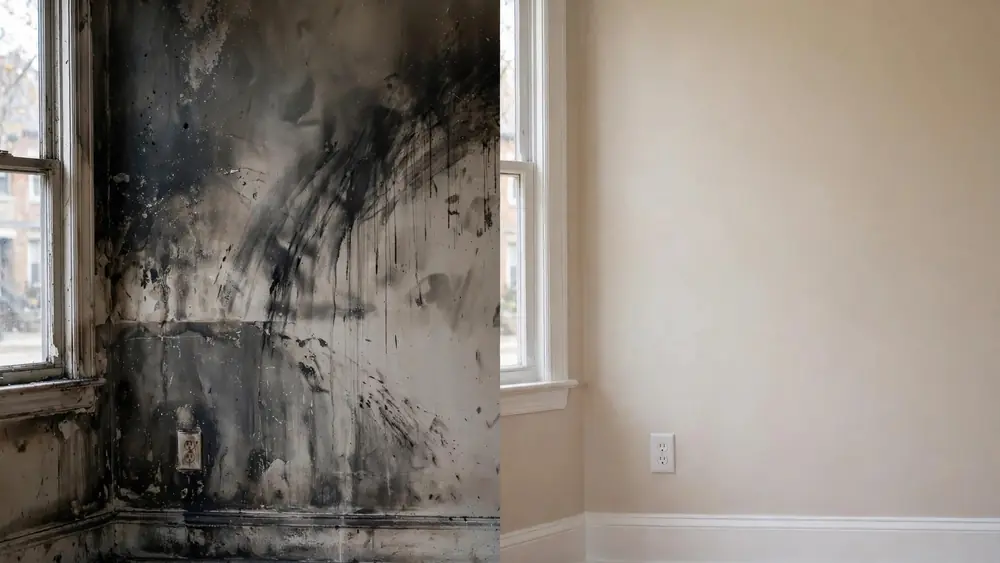
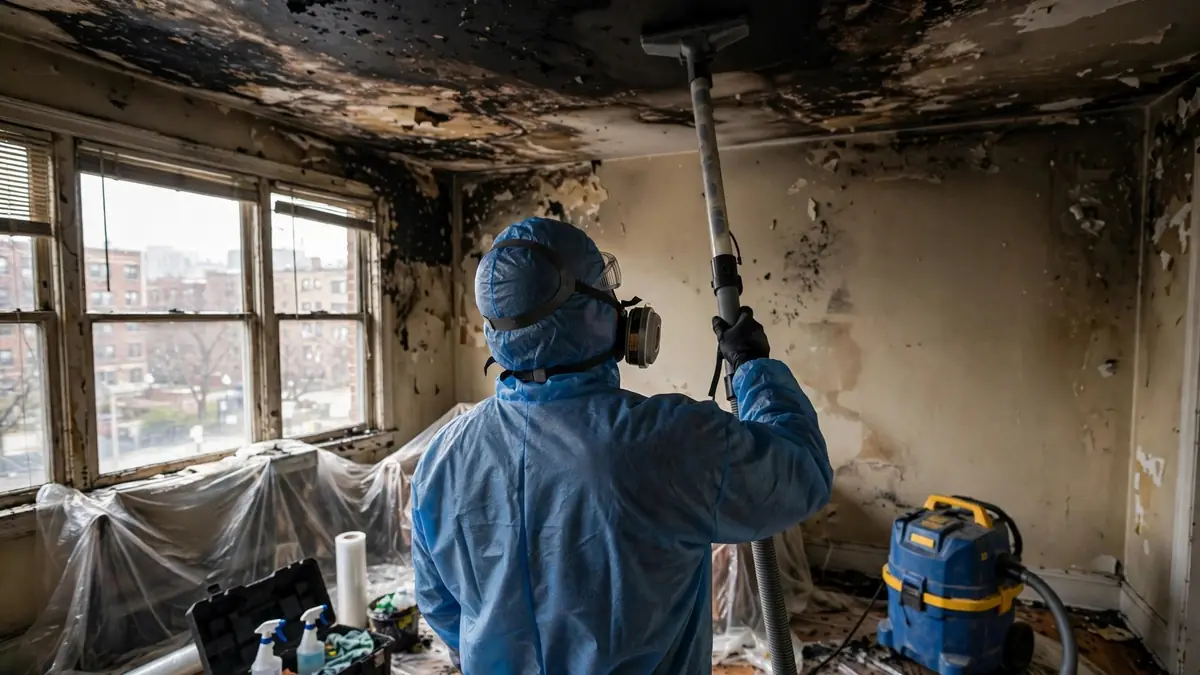
Dry soot is usually lifted first with HEPA vacuums and dry chemical sponges, because water can drive it into paint. Sticky residue from plastics generally needs a solvent or detergent. Kitchen film may need degreasing even where walls look clean.
A test patch tells the contractor more than a visual check. Cleaning that works in one room can fail in the next, since rooms near the fire and rooms far from it collect different residue.
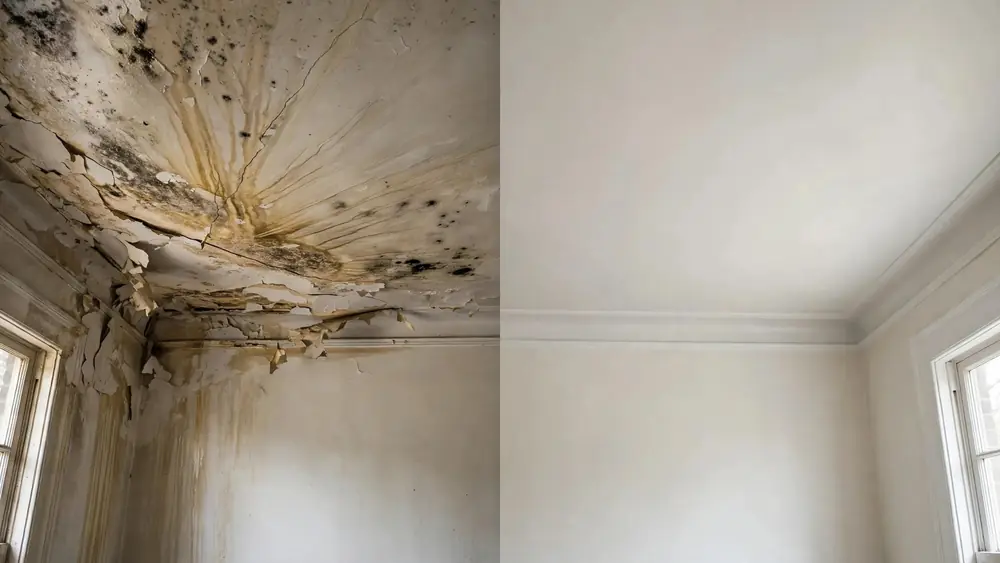
Residue on a ceiling
Odor
Why the smell outlasts the cleaning
Smell lingers in insulation, ductwork, unfinished framing and soft goods. Sealing or fogging over residue only hides it for a while, so removal comes first. Ask any contractor how they plan to treat odor, and be cautious about ozone: EPA has warned about its health effects, so nobody should be in the house during such a treatment.
If water was used on the fire, structural drying needs to finish before final cleaning. The wider job is covered under fire damage restoration.
Where it hides
Places smoke reaches that people forget
Check inside closets and cabinets, on top of door trim, behind switch plates, in attic insulation and in return air ducts. Pale outlines around pictures or on walls show how airflow carried residue. Cool exterior walls tend to collect more of it, sometimes in patterns that follow the studs.
Rooms that look fine can still smell, because very fine particles are hard to see on light paint.
Checklist
Until the cleaning is done
- Limit time in the house, and wear a well-fitted respirator if you must go in.
- Keep the HVAC system off unless a professional says otherwise.
- Avoid dragging furniture or brushing against stained walls.
- Do not repaint, since paint over residue can trap the smell.
- Bag clothes only after asking how they will be cleaned, as sealed bags can intensify odor.
After cleaning
How to tell whether it worked
Surfaces should look even, without smears or ghost marks when wiped with a clean white cloth. Odor should stay gone after the house has been closed up for a day with normal temperature, since warmth can bring it back. Ask what happens if it returns. If a wall still smells after cleaning, sealing may be appropriate, though only after the source has been dealt with.
Wildfire smoke
When the fire was not in your house
Nearby fires can push ash and smoke through vents and window gaps. Gritty sills and a persistent smell are common signs. Our Colorado Springs page covers this in more detail. Check with your insurer, since smoke damage from a nearby fire can still lead to a claim.
Is this what you need?
Signs you need smoke damage cleanup
You may need cleanup if you see a gray film on walls, dark webbing in corners, or stains around vents, or if a smell returns when the heat comes on. Furnace puffbacks, candle soot and nearby wildfires can all cause these signs without a house fire.
Ask for residue to be identified before any cleaning starts. The right method for dry paper soot can ruin a surface coated in sticky plastic residue.
Compare
Common residue types
| Residue | Usual source | Cleaning note |
|---|---|---|
| Dry soot | Fast fires, paper and wood | Vacuum and dry sponge first |
| Sticky film | Burned plastics and synthetics | Often needs a degreasing cleaner |
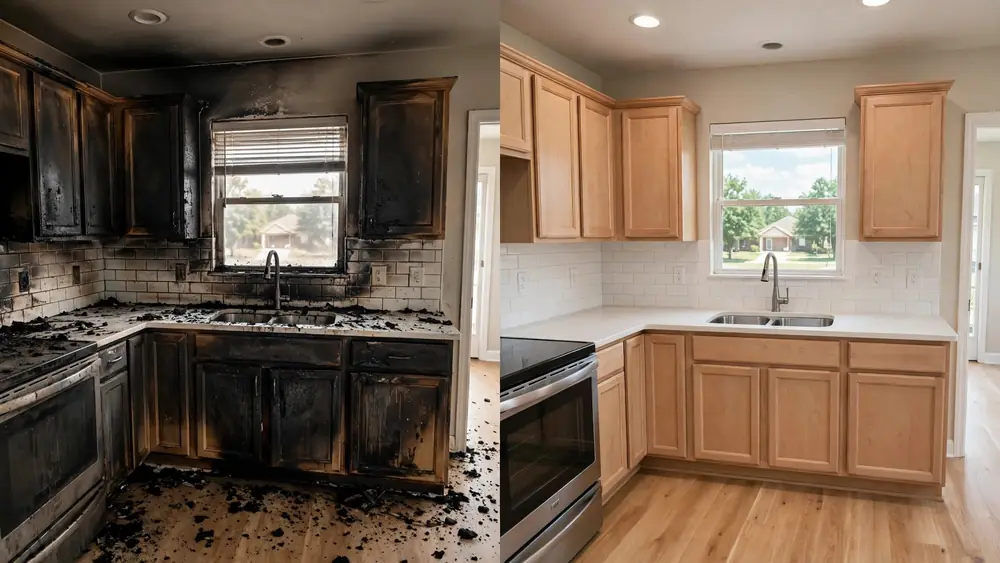
| Protein film | Kitchen fires | Nearly invisible, but smells strongly |
| Ash | Nearby wildfire | Gritty, so avoid dry wiping |
Questions
More questions about smoke damage
Can I just repaint over smoke stains?
No. Stains and odor bleed through paint unless the residue is removed and the surface is properly sealed.
Are soot and smoke harmful?
They contain fine particles that can irritate lungs, so limit exposure and wear a respirator if you must be inside.
Do ducts always need cleaning?
Not always. Ask for photos of soot inside the ducts before agreeing to it.
Guides
Guides for this job
Source of the smoke
Smoke events that are not house fires
Plenty of smoke damage comes from something much smaller than a house fire, and the cleanup differs for each.
Furnace puffback
A burner that misfires can blow oily soot through ducts and registers. Fine black streaks appear near vents and along ceilings. The heating technician should fix the burner before cleaning starts.
Fireplace or woodstove backdraft
A blocked flue or a closed damper sends smoke into the room. Soot tends to be heaviest around the hearth and the ceiling above.
Candle soot
Repeated candle use leaves dark lines at carpet edges and above doors. The residue is real, but it is usually light and calls for surface cleaning.
Cooking smoke
A burned pot leaves a film that clings to cabinets and fabrics. It is often oily even when it looks clean.
Electrical smoke
A failed appliance or a small wiring fault gives off a sharp plastic smell. An electrician should find out what happened before the room goes back to normal use.
Neighbor's fire
Smoke can pass through a shared attic or wall in an attached home, leaving residue in rooms with no other damage.
Order of cleaning
How a contractor works through a smoke-damaged room
Sequence matters. Working in the wrong order drives residue in or sends it back onto a clean surface.
- 1
Protect
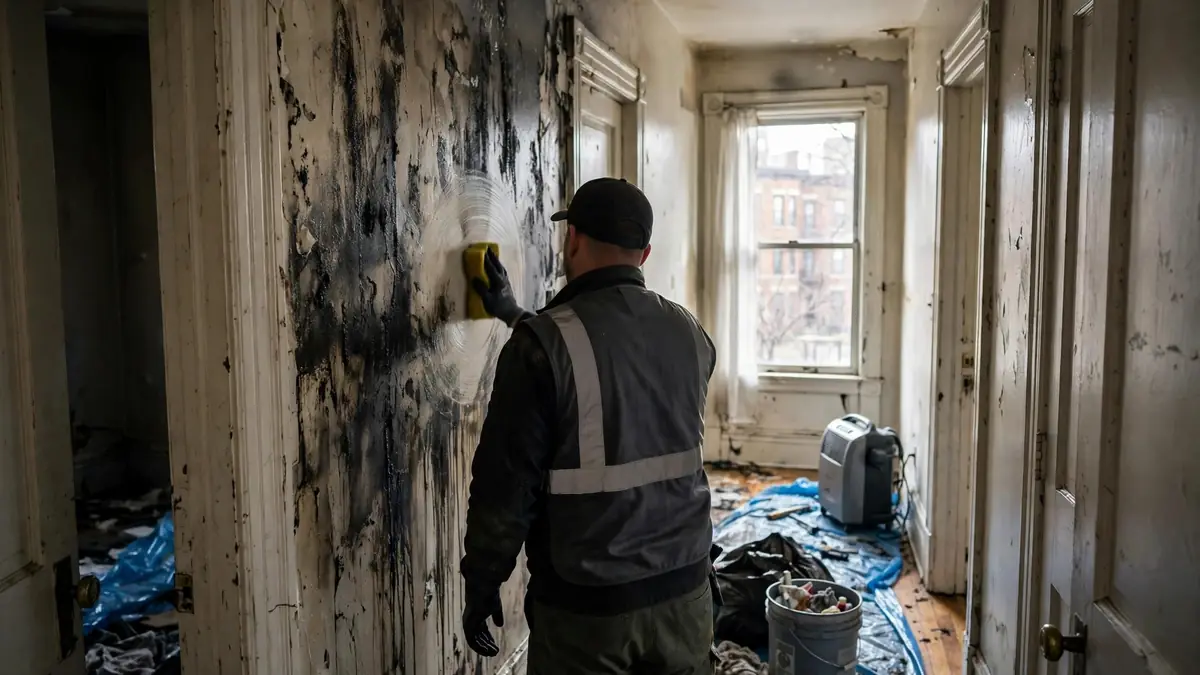
Floors and furniture get covered, and air scrubbers may run to capture particles stirred up during the work.
- 2
Start high
Ceilings and upper walls come first, so that falling soot lands on surfaces not yet cleaned.
- 3
Dry remove
Loose soot is taken off with HEPA vacuums and dry sponges, with strokes that lift residue and do not grind it in.
- 4
Test wet cleaning
A small patch shows how the paint responds and what product works, before an entire wall is committed.
- 5
Wash
Detergents or degreasers are matched to the residue, then rinsed so that nothing is left to attract more dirt.
- 6
Deal with odor
Only after cleaning is done are air treatments or sealers considered, with the sources already removed.
- 7
Check again
A second look in daylight, along with a sniff test in a closed room, tells the crew whether anything was missed.
Surface by surface
How different finishes respond to smoke
Finishes vary a good deal, and old damage responds differently from fresh damage. Ask for a test area on anything you value.
| Surface | Common concern | Usual approach |
|---|---|---|
| Flat latex paint | Porous, marks easily | Dry sponge first, gentle washing, repaint if needed |
| Semi-gloss paint | Handles washing better | Detergent wash after dry removal |
| Wallpaper | Stains and lifts with water | Dry cleaning, and often replacement |
| Unfinished wood | Absorbs odor and residue | Cleaning, light sanding or sealing |
| Natural stone | Porous and sensitive to chemicals | Stone-safe cleaners, tested first |
| Brick fireplace face | Rough, traps soot | Vacuuming, then appropriate masonry cleaning |
| Metal and chrome | Soot can pit it when left alone | Prompt cleaning and drying |
Why speed matters here
What residue does if it is left alone
Soot is not inert. Over days and weeks, acidic residue can discolor plastics, tarnish metal, etch glass and set into grout and paint. Wiping chrome and appliance surfaces is sometimes among the first jobs on site for that reason. Heat and humidity tend to speed these changes along, so running the air conditioning in a smoky house without checking it first is not a good shortcut, since an unclean system can spread residue.
Do what you can without touching walls. Keep windows closed if there is outdoor ash. Do not vacuum soot with a household vacuum, as its filter will blow fine particles right back into the room. Ask the contractor which items can be moved out while you wait.
Fabrics and soft goods
Treating clothes, curtains and upholstery
Soft goods respond well or badly depending on how they are handled.
- ClothingShake nothing indoors. Many items can be saved with specialist laundering, though repeated home washes can set odor and stains.
- Curtains and blindsCurtains collect heavy residue because air passes through them, and they should be taken down carefully. Blinds can often be cleaned off site.
- Upholstered furnitureFabric absorbs odors deep in the foam. A cleaner can often tell you whether the cushion or the whole piece is worth treating.
- Mattresses and pillowsThese can be very difficult to deodorize. Ask your insurer for guidance, and photograph them before making a decision.
- RugsDo not walk on or roll a sooty rug before it has been looked at. Natural fibers may need a specialist.
- Leather and suedeThese need a cleaner who works with them, since water and solvents can mark them permanently.
Electronics and appliances
Soot on computers, televisions and kitchen equipment
Do not turn on a device covered in soot until someone has checked it. Fans can pull residue across the circuit boards, and acidic deposits can cause corrosion that only shows months later. Make a list of serial numbers, unplug at the wall where it is safe and leave them where they are. Back up data as soon as you can, but only from a device a technician has cleared.
Refrigerators, ovens and microwaves collect residue on and around vents. Food stored in a kitchen exposed to smoke should be treated with suspicion, even in the refrigerator, since seals do not always keep odor out. Throw out what smells or looks affected, and take a record of it first.
Sealers
When a sealer belongs in the plan, and when it does not
A sealing primer has a real role, but it comes after cleaning. It can lock in faint odors in framing that has been cleaned and cannot be replaced, and it helps stop stains from bleeding through new paint. A contractor who proposes to seal first, however, may be hiding the job and not doing it.
Ducts have their own rule. EPA accepts sealants in ducts hit by fire once they have been properly cleaned, and never on wet liners or on debris. It also rules out steam and other wet cleaning inside ducts of any kind. Those are simple standards to check a proposal against. Ask to see how much residue is actually inside before duct work is agreed to.
Odor treatments
Comparing the odor options a contractor may offer
No treatment replaces source removal. These are the common tools, with their limits.
- HEPA air scrubbersThese capture fine particles during and after cleaning. They help with air quality, but do not remove what has already settled on surfaces.
- Thermal foggingA fine deodorizing mist reaches cracks and cavities. Occupants have to leave, and the home needs airing out afterward. It can leave a scent behind if overused.
- Hydroxyl unitsThese treat air and surfaces slowly, and are sometimes offered as an option that lets work continue around them. Ask for the manufacturer's safety sheet.
- OzoneIt is strong and carries health risks. EPA warns about ozone generators, and nobody, including pets and houseplants, should be present during treatment.
- ReplacementRemoving and replacing insulation, carpet pad and damaged trim is sometimes the only lasting fix, particularly in attics and wall cavities.
Air inside
Breathing inside a smoky building
Very fine particles are the main concern, and they are not visible on most surfaces. People with asthma, heart disease or other lung conditions, as well as children and older adults, are generally more sensitive to smoke and should stay out until the home has been cleaned. If you need to go in, a well-fitted N95 respirator is much better than a cloth mask. Keep visits short.
Some people choose a portable air cleaner with a HEPA filter for the rooms they are using. It reduces airborne particles but it does not clean walls or fabrics. Avoid any air cleaner that deliberately produces ozone. If you have ongoing symptoms such as coughing, chest tightness or headaches, speak with a doctor and mention the smoke exposure.
Wildfire ash
Cleaning fine ash that came in from outside
Wildfire ash is different from indoor soot. It is gritty, so dry wiping can scratch glass and polished finishes, and leaf blowers or dry sweeping send it back into the air. Wet methods with care, or a HEPA vacuum, generally work better, and wearing a respirator is sensible. Check attic vents, fireplace dampers and the air filter on your furnace, because those are the main ways in.
Change the air filter often during and after an event, and then check the coil and the blower compartment if the smell keeps returning. A pool, a garden bed or a child's play area may have ash too, so ask your local health department about outdoor cleanup. Ash from burned structures can contain more hazardous materials than ash from vegetation.
Owner's checks
What you can do yourself, and what to leave alone
Not all of this needs a contractor. It helps to know where the line sits.
- Fine to do: open cabinet doors so air and light reach them, once the contractor agrees.
- Fine to do: list and photograph belongings room by room.
- Fine to do: change your furnace filter once a technician has said the system can run.
- Leave alone: wiping walls with a damp rag, which can set the residue.
- Leave alone: running a fan on a soot-covered surface, which only moves it elsewhere.
- Leave alone: using scented sprays or candles to cover the smell, since these add new residue and hide what needs checking.
- Leave alone: washing large amounts of smoky clothing at home before you get advice.
Smoke cleanup specifics
Further questions on smoke residue
How can I tell soot from dust?
Soot is finer and oilier, and it smears when rubbed. A dry chemical sponge drawn gently across the surface leaves a dark mark where it has lifted the residue.
Can smoke damage be hidden in a house I am buying?
Yes. New paint can cover smoke stains, but smells may come back in warm weather. Ask for fire records, and have the attic and ducts inspected.
Why do my windows look hazy?
Residue clings to cool glass. Acidic soot left too long can etch it, so have it cleaned sooner rather than later.
Does a house fire smell ever fully go?
It usually can when residue and contaminated materials are removed, though closed cavities that were skipped are a common reason it returns.
Are candles and air fresheners helpful?
No. They add fragrance and, in the case of candles, more soot. Wait until cleaning is complete, then let the house air out normally.
Who can look at a smell that will not go away?
The referral line, (833) 610-0241, can put you in touch with someone who checks attics, ducts and closed spaces for residue.
Attics and insulation
Why attics are often the last smell to go
Hot smoke rises, so attics can collect a heavy load even after a fire on the ground floor. Blown or batt insulation traps particles throughout its depth, and it cannot really be wiped clean. If the smell returns on hot days, look there first. Removal and replacement is the usual answer for insulation that holds odor, followed by cleaning of the rafters and the deck.
Crawlspaces and wall cavities behave in the same way on a smaller scale. Openings around plumbing and wiring let smoke into closed spaces, which then release smell slowly over time. Contractors can treat these spaces, but sometimes need to open small sections to reach them.
Timeline of a typical cleanup
What happens in which order after smoke exposure
Length varies by job, so this table shows sequence only and does not promise a schedule.
| Stage | Main goal | Your role |
|---|---|---|
| Assessment | Identify the residue and how far it reached | Share what burned, and how long it smoked |
| Contents | Protect or remove belongings | Choose priorities, and keep an inventory |
| Structure cleaning | Remove residue from walls and ceilings | Keep out of work areas |
| Systems | Check and clean ducts and air handlers if residue is found | Ask to see inside the ducts |
| Odor treatment | Deal with what remains after cleaning | Leave when the contractor says to |
| Sealing and paint | Finish the surfaces that need it | Check with a closed-house smell test |
Insurance detail
Showing smoke damage to an adjuster
Smoke can be harder to document than fire because it does not always show up clearly in photographs. Include close-ups next to a cleaned spot or a white cloth to show contrast. Note odor by room, in your own words, and mention any symptoms that came on after going back in. Ready.gov also says to hold on to receipts for fire-related spending, since an insurer may ask for them.
Ask the contractor to record test results for each room. Notes about what cleaned up and what did not are useful evidence when an adjuster wonders why a room with light staining needs repainting.
Questions for the crew
What to ask before smoke cleaning starts
These four questions tell you most of what you need to know about how a contractor approaches a smoke job.
- What did you find when you tested the residue in each room?
- Which rooms need cleaning only, and which need sealing or replacement?
- Will you open any cavities or attic spaces, and how will you show me what you found?
- How do you confirm that the odor is gone, and what happens if it comes back?
Service areas
Smoke Damage Cleanup service areas
Where you live changes smoke damage cleanup. See Oregon, Connecticut, Delaware, Kansas, Louisiana, New Hampshire, Chicago, Dallas, Colorado Springs, Cedar Hill, Lake Stevens, Norcross, Port Charlotte, Prosper, Atlanta, Indianapolis.
Urgent?
If this is happening right now
Go straight to the first steps: emergency smoke damage services, emergency soot removal, emergency smoke odor removal.