
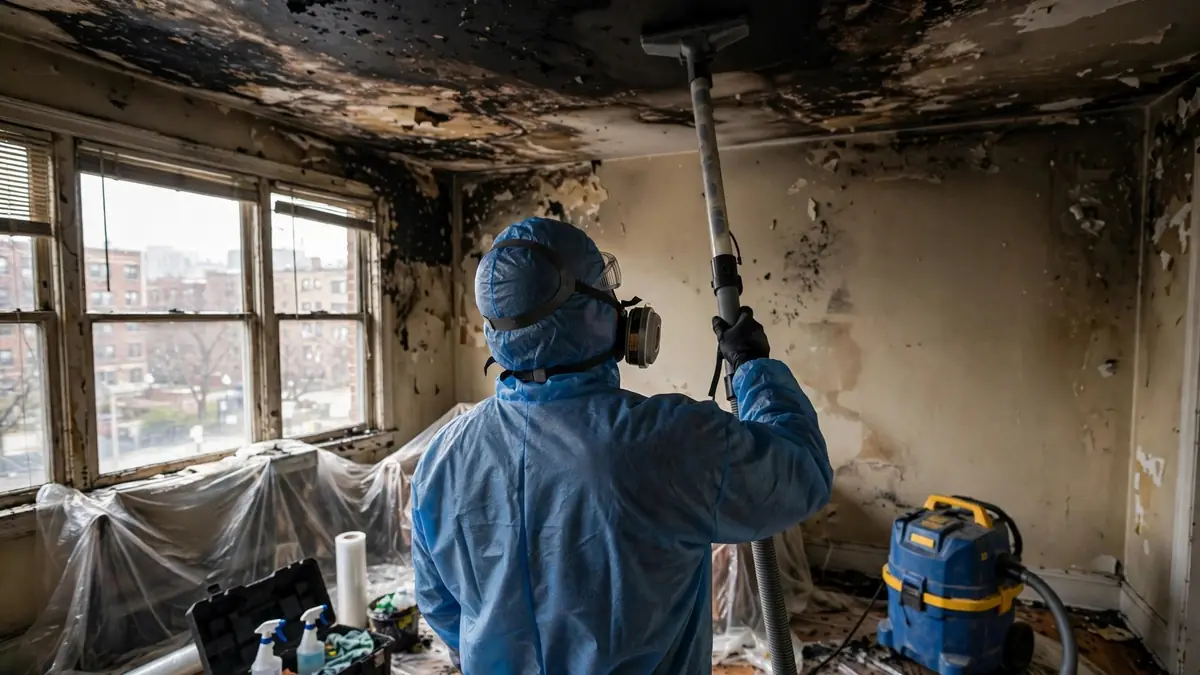
Key facts: Emergency Soot Removal
- Do not wipe: Damp cloths can push soot into paint.
- Do not use a regular vacuum: It blows fine particles back into the room.
- Soot cleanup calls are referred to independent contractors, with service depending on location.
Right now
First steps for soot removal
- 1
Do not wipe
Damp cloths can push soot into paint.
- 2
Do not use a regular vacuum
It blows fine particles back into the room.
- 3
Close doors
This limits spread to clean rooms.
- 4
Change into clean clothes
Soot travels on shoes and fabric.
One dry pass at a time
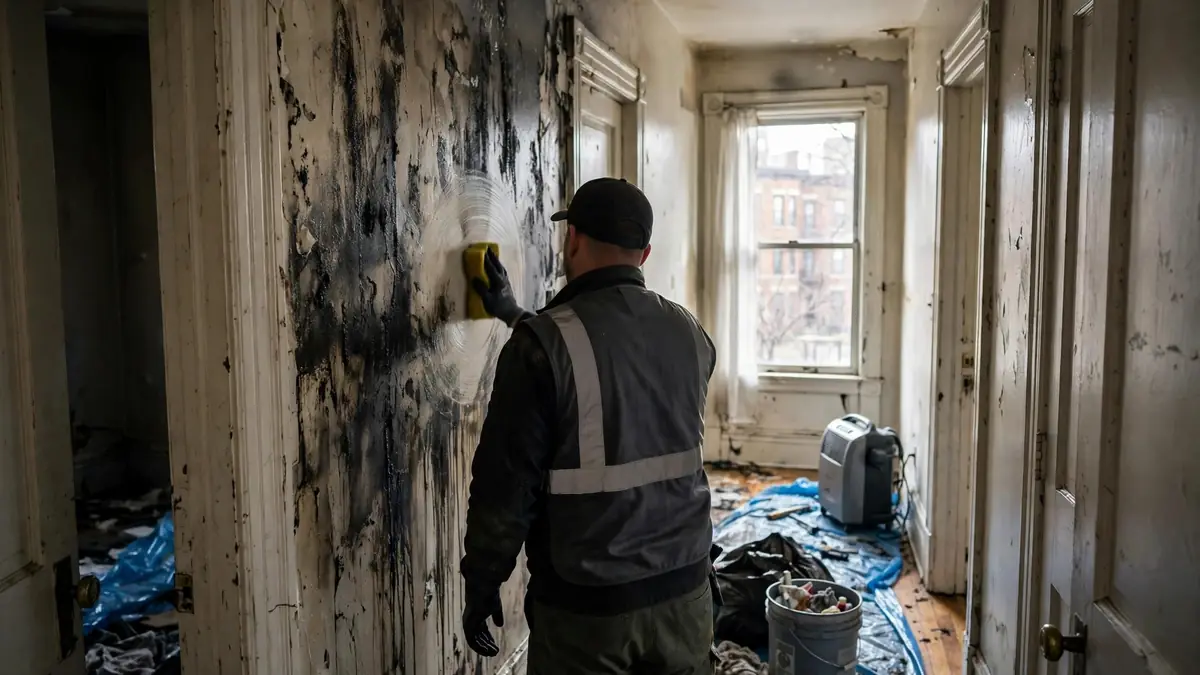
Where from?
Finding the source before cleaning any soot
Cleaning before you have stopped the source just means doing the same job twice.
- Furnace or boiler puffbackA sudden coat of soot on walls, sometimes in a pattern around vents, usually points to the heating system. Turn the unit off and have a technician check it before restarting. Keep CO alarms working.
- FireIf there was a fire, follow the fire department's clearance first, and do not assume a small fire is safe. The steps on the fire damage emergency page come first.
- Fireplace or wood stoveBlowback can mean a blocked or poorly drafting chimney. Stop using it until it has been inspected.
- Candles or oil lampsThese usually leave light marks on walls and above the flame. Not an emergency, but worth stopping before cleaning.
- Wildfire ashFollow local instructions on returning and on air quality. Ash can be different from indoor soot, so ask before you start cleaning.
- UnknownDark lines along walls and ceilings with no obvious cause call for an HVAC and CO check. Treat unexplained soot as a warning.
Order of work
What to do between finding soot and cleaning it
This is the sequence for keeping soot in one place until it can be removed. Availability of help varies.
- 1
At once
Turn off the source if it is a furnace or stove, using the normal switch if it is safe to reach. If you smell gas, leave and call emergency authorities from outside.
- 2
Next few minutes
Shut the HVAC off at the thermostat, so that soot is not pushed around. Close doors to clean rooms. Open windows only where the outside air is clean.
- 3
First hour
Take photos before anyone touches anything, including close-ups of the walls, vents and ceilings. Move children, pets and people with lung issues away.
- 4
Same day
Keep foot traffic to a route. Take shoes off at the edge of the sooty area. Change clothes before going into clean rooms, and bag worn clothes for washing separately.
- 5
Next day
Book a technician to deal with the cause and a contractor to deal with the residue. Ask how the contractor will test the type of residue and what method they suggest, including HEPA vacuuming and dry sponges where they fit.
- 6
Before cleaning
Ask how the contractor will protect floors and belongings, and how they will contain the mess. Remove exposed food from the home, as FoodSafety.gov advises.
Soot types
How to describe what you are seeing
Different residues clean differently, and the wrong first move can set a stain. Use these as talking points with a contractor, not as a diagnosis.
| What you see | Possible source | Why it matters |
|---|---|---|
| Dry, powdery gray or black | Faster, hotter fire | Often easier to lift dry |
| Sticky, smeary, strong smell | Smoldering, low heat, plastics | Smears easily; needs a different method |
| Oily film near a furnace | Puffback from oil burner | Spreads with a touch; check the heating system |
| Greasy yellow-brown film | Kitchen fire | May need degreasing methods |
| Fine dust with gritty ash | Wildfire or fireplace | Avoid stirring it up |
Hands off soot
What makes the stain worse
- Wiping with a wet clothDamp cloths can push soot into paint and leave streaks.
- Vacuuming with a standard vacuumHousehold machines can blow fine particles back out. Ask for a HEPA vacuum.
- Touching walls and trimSkin oils leave dark prints in soot, so keep hands clear, especially kids' hands.
- Using all-purpose spraysChemicals may react with residue, or drive it into paint. Test only on the contractor's advice.
- Sitting on soot-covered furniturePressure pushes it into the fabric. Cover or move it if you can do so without spreading anything.
- Running the fans or HVACAir movement carries soot to clean rooms and into ducts.
- Painting over itIt may show through, and the smell will not go away. Removal comes first.
Safety gear
Choosing protection for soot work
Fine particles are the main concern. Follow CDC guidance on damaged buildings, and leave larger jobs to someone equipped for them.
| Item | Why | Note |
|---|---|---|
| N95 or better respirator | Filters fine particles | A paper dust mask is not enough; fit matters |
| Goggles | Keeps particles out of your eyes | Choose a sealed type where possible |
| Gloves | Keeps skin clean and stops prints | Change often to avoid spreading residue |
| Disposable coveralls or old clothes | Prevents spread to clean rooms | Remove them at the edge of the area |
| Shoe covers or dedicated shoes | Stops tracking | Leave them at the boundary |
Anyone with a lung or heart condition should talk to a doctor before wearing a respirator or doing any of this work, and should stay out of the area.
Records
What to log after a soot event
- Source reportAsk the technician to note what went wrong and when. A puffback may be a separate issue for your insurer.
- Photo seriesEach wall, ceiling, vent and soft item, before any cleaning. Include a shot of the filter.
- Service historyPast furnace or chimney service records, which your insurer may ask about.
- Damaged belongings listInclude things in closets and drawers. Soot reaches further than you expect.
- Test patchesAsk the contractor to mark and photograph any test spots, and note which methods they used.
- HVAC cleaning recordsIf ducts are cleaned, keep the before-and-after notes.
Puffbacks
Why a furnace misfire deserves real attention
A puffback is a small explosion inside an oil-fired burner or combustion chamber, and it can send soot through ducts or the flue into the home. People sometimes find it hours later as dark streaks around vents. The soot may look like the main problem, but it is a sign the heating system has failed in some way. Do not restart the unit until someone qualified has inspected it, and make sure that a carbon monoxide alarm is working on each floor.
Tell your insurer promptly and ask how they want it handled, since coverage can depend on the cause. Keep the technician's report. If the soot spread via the ducts, ask the contractor how they will clean the system and protect the rooms while they work.
Questions
Soot Removal: quick answers
What is a furnace puffback?
A misfire that can blow soot through ducts into several rooms.
Can soot be painted over?
No, it needs to be removed first, or stains and odor will return.
Can I clean a small patch of soot myself?
A candle mark on a washable wall is one thing. Soot from a furnace or fire, or a large area, is a job for someone with the right tools and protection.
How do I keep soot from spreading while I wait?
Close doors, leave the HVAC off, keep foot traffic down and take off shoes at the boundary.
Does soot damage things if left alone?
It can stain and hold odor, and acidic residue can harm some finishes over time. That is why you should ask for cleaning advice soon after the event.
Are my clothes ruined?
Often not. Do not wash them with other laundry until you have asked for advice, since soot can transfer and set.
Next
When the soot has been lifted
The smoke damage cleanup page describes residue removal across a whole home. The fire damage restoration page is the place to go if the soot came from a house fire, and why smoke smell lingers explains what can stay behind after surfaces look clean.