Key facts: Structural Drying
The short answer
How drying actually works
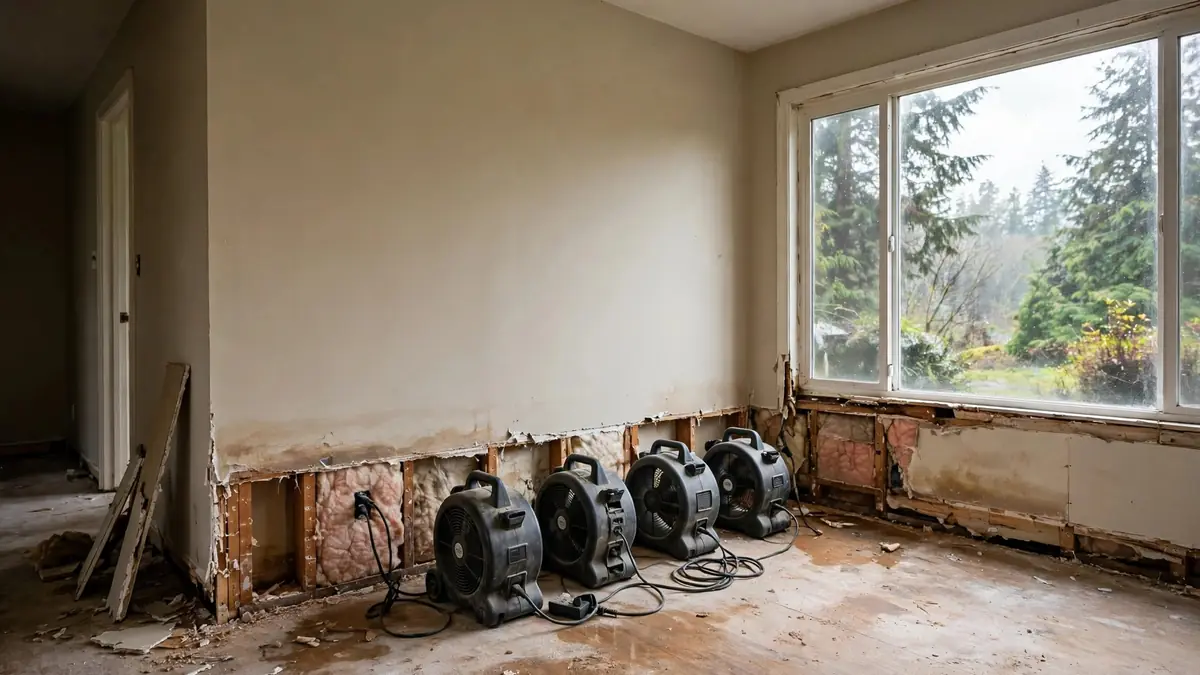
Evaporation needs moving air, dry air and some warmth. Air movers break the damp layer on a surface, dehumidifiers remove what evaporated, and the building gradually gives up its moisture. Too few dehumidifiers simply move damp air around the house.
Dense materials dry slowly. Hardwood, plaster and concrete can take much longer than drywall, and cold or humid conditions slow things further. For realistic expectations, read how long drying takes.
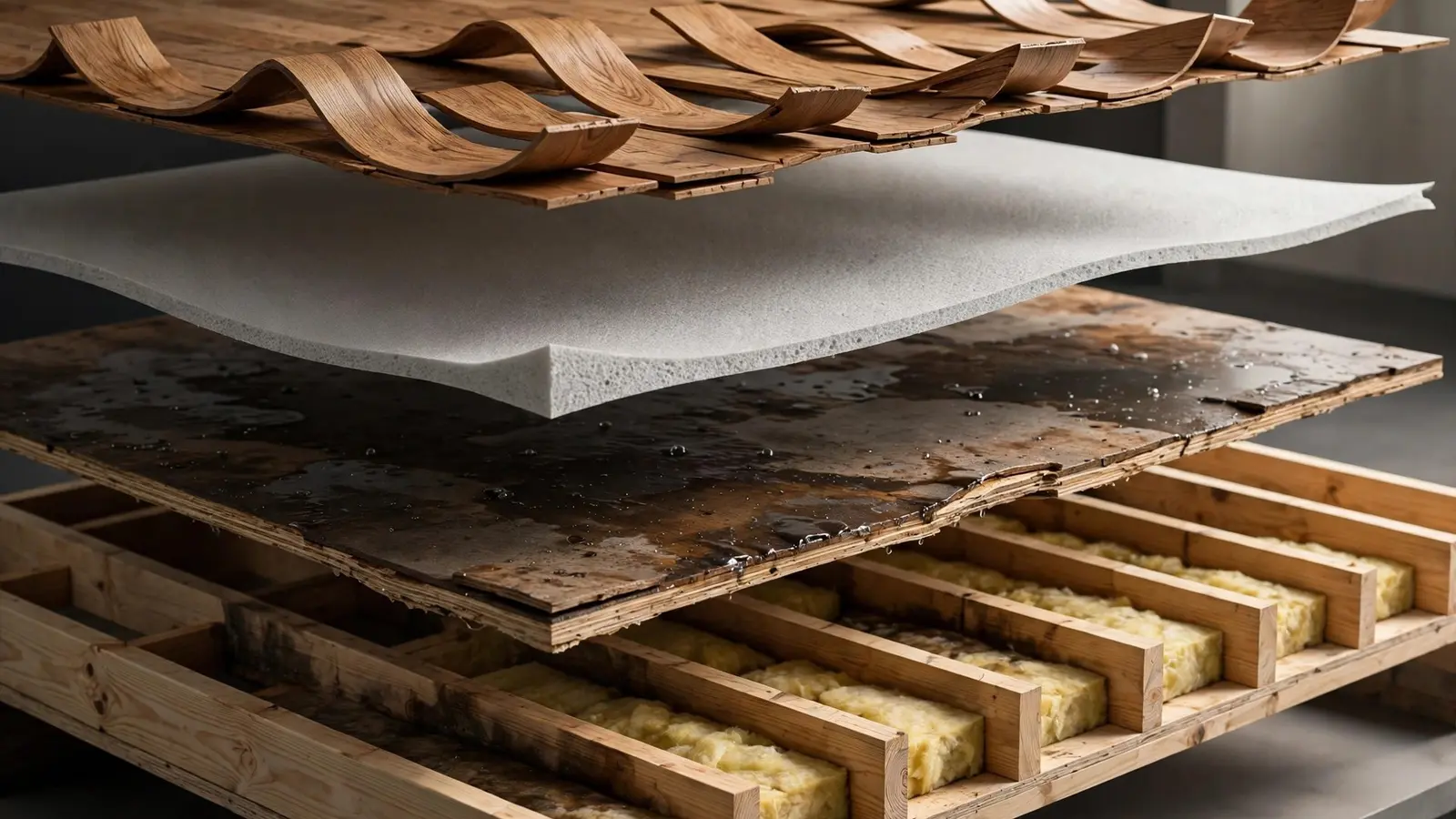
The floor layers that hold moisture
The process
What to expect during drying
- 1
Set a target
Readings from an unaffected area show what dry means in that house.
- 2
Open what must open
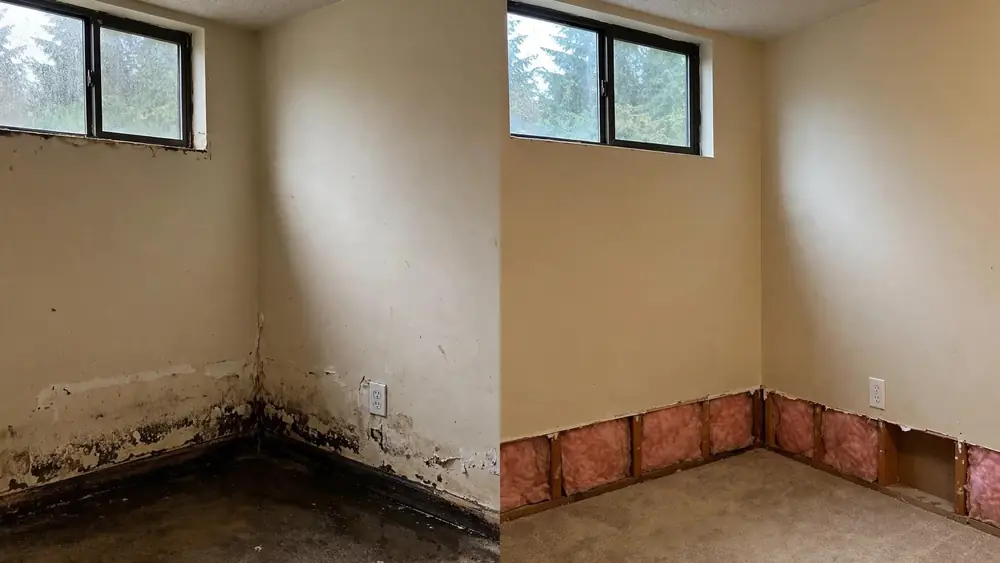
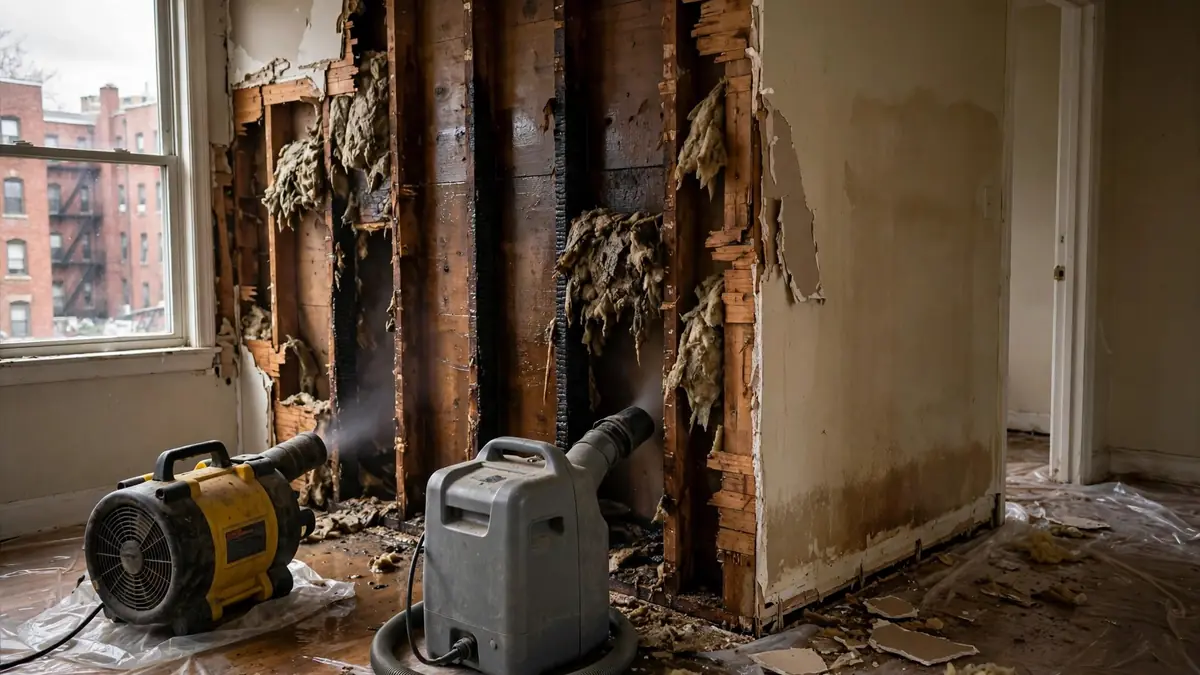
Baseboards or small wall sections may come off so air reaches wet cavities. See wet drywall: save or replace.
- 3
Monitor
Readings are retaken and equipment moved as areas dry.
- 4
Confirm
Equipment leaves only after materials reach the target. Repairs follow.
Reaching a wet wall cavity
Types of drying
Dehumidifier types and when they are used
Refrigerant dehumidifiers work well in warm, humid rooms, the conditions of most summer losses. Desiccant units are often chosen for cold spaces or dense materials, since they can reach very low humidity. Heat can speed things up in some jobs, but it must be used with care around older finishes.
In crawlspaces and wall cavities, air may need to be directed with ducting or injection systems instead of relying on room air.
Checklist
Living with drying equipment
- Expect noise and warm air, usually around the clock.
- Leave equipment running, and call before moving or unplugging it.
- Keep windows closed unless the contractor says otherwise.
- Ask about circuits, because several machines can trip a breaker.
- Check that wet areas are not being sealed behind furniture.
Older homes
Plaster, stone and old timber
Lath and plaster hold moisture and can lose their bond if dried too aggressively. Stone cellars keep absorbing moisture from the ground, so their readings may never match a modern wall. A good contractor sets a realistic target for materials like these. If your house was built before 1978, ask how they will handle lead paint when opening walls.
Finishing
What the final record should show
A complete drying log lists the date, location, material, reading and equipment used. Keep it with your claim file, as it may matter if a problem appears later or when you sell. For related decisions, read wet drywall: save or replace.
Is this what you need?
How to tell whether a building still needs drying
If the floor looks dry but a room smells damp, feels clammy or has swollen baseboards, drying may not be finished. Fans alone are the usual culprit. They dry surfaces while moisture remains in framing, subfloor and insulation.
A professional uses a dry part of the house as the reference, then measures wet materials until they match. That is the honest finish line, and you should see it in writing.
Compare
Common materials and how they behave
| Material | Behavior | What often happens |
|---|---|---|
| Drywall | Absorbs quickly, dries fairly quickly | Dried in place if clean and firm |
| Insulation | Holds water | Usually removed if soaked |
| Hardwood | Absorbs and releases slowly | May cup, then needs time |
| Concrete and stone | Releases slowly | Longer drying, realistic targets |
Questions
More questions about structural drying
Why are holes being cut in my wall?
Small openings let air reach closed cavities, which can avoid removing a full wall.
Can I turn the equipment off at night?
It is best not to, as stopping slows the process. Ask first if noise or power is a problem.
Why does the room feel so warm?
Dehumidifiers and air movers release heat, and warm air helps evaporation.
Guides
Guides for this job
The physics, briefly
Three conditions that decide how fast a building dries
Drying is a contest between the water in a material and the air around it. Moisture leaves a surface when the air next to it holds less water than the surface does. So a good setup changes three things: it replaces the thin layer of damp air against the material, it keeps the room's air dry, and it keeps the material reasonably warm.
Take any one of these away and the job stalls. Air movers without dehumidifiers raise the humidity in a closed room until evaporation slows. A dehumidifier without airflow dries the middle of the room while the wall stays wet. A cold basement or a house in winter can stretch out a job until the temperature is managed.
Those conditions can be measured. Temperature and relative humidity combine into a figure often called grains per pound, or specific humidity, and comparing that figure in the wet room, in the unaffected part of the house and outside tells a technician whether the dehumidifiers are keeping up.
Meters and tools
What each measuring tool tells you
Each tool answers a different question, and none is enough alone.
Pin moisture meter
Two pins go into the material and measure resistance. It gives a precise reading at that depth, but leaves small holes and works differently across materials.
Pinless meter
A pad scans under the surface with no holes. It is good for mapping large areas, and metal behind the surface can throw it off.
Thermal camera
It shows temperature differences, not moisture. A cool patch may be wet or may just be a drafty spot, so a meter must confirm it.
Thermo-hygrometer
This reads air temperature and humidity at set points, so the crew can tell if the setup is working.
Hole-and-probe tests
Concrete may call for readings inside the slab or special test methods, especially before flooring goes down.
Drying a wall
How an interior wall usually gets dried in place
Where drywall is clean and firm, this approach may let it stay.
- 1
Remove the baseboard
It comes off carefully, gets numbered and is set aside so that it can go back in the same place.
- 2
Open a low gap
Small holes or a narrow strip behind the baseboard line let air into the cavity, and the trim will later cover them.
- 3
Check for insulation
Exterior walls usually have it, and wet insulation often has to come out, which means removing more of the wall.
- 4
Direct the air
Injection tools or angled air movers push air into the cavity, while dehumidifiers deal with what comes out.
- 5
Remove vapor barriers
Vinyl wallpaper and some paints trap moisture, so they may need to be perforated or stripped.
- 6
Read both faces
Readings are taken from both rooms and at several heights until the wall reaches the target.
Tough assemblies
Assemblies that resist normal drying
Some parts of a building hold water well beyond the rest. Bring these up with the contractor.
- Double subfloorsLayers of plywood trap water between them, so a top reading may look better than the truth. Mats or panels may help.
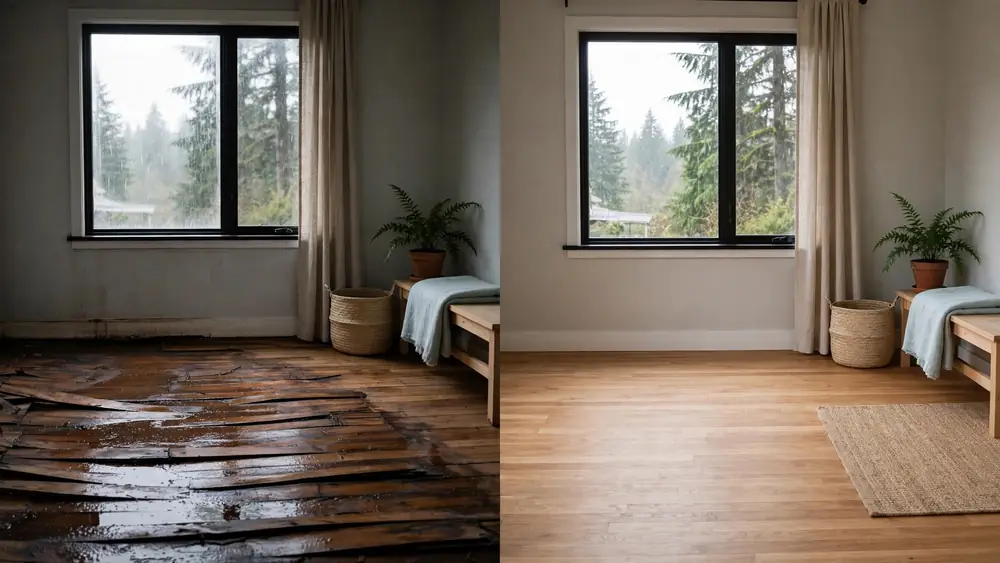
- Hardwood over plywoodFloor drying mats pull air through the seams and require patience. Flooring that has cupped may flatten over time, but it may not.
- Tile over cement boardWater that gets underneath has very little way out. In some cases, removal is the only reliable way to dry it.
- Stacked plates and rim joistsThese thick wood members soak up water at the base of walls and take longer to dry than the studs around them.
- CabinetsToe kicks can be removed to reach the space beneath. Particleboard boxes may swell and fail regardless.
- Shower pans and tub surroundsWater can stay trapped in framing behind these fixtures, where it is rarely dried without access.
Which setup fits
Choosing a drying setup by room and season
Equipment is chosen by conditions as well as by the size of the job. Here are some general patterns.
| Situation | Often used | Reason |
|---|---|---|
| Warm, humid summer room | Refrigerant dehumidifier and air movers | Works well when the air is warm and damp |
| Cold garage or unheated house | Desiccant unit, added heat | Refrigerant units lose capacity in the cold |
| Closed wall cavities | Injection or ducted air | Room air does not reach the framing |
| Hardwood floors | Floor mats with a suction system | Pulls moisture out through the seams |
| Crawlspace | Ducted air, ground cover and a dehumidifier | Ground moisture must be controlled first |
| Dry winter climate | Heated indoors, with outdoor air considered | Very dry outside air can help in some cases |
Open or closed
Why a contractor may seal the room or use outside air
Most drying jobs keep windows and doors closed so dehumidifiers can do their work. Open windows in muggy weather simply feed the machines more moisture. The exception comes when outside air is truly drier than the air inside, which can happen on a dry winter day. Then a technician may vent the room for a while, on the basis of readings rather than guesswork.
Containment is a related choice. Plastic sheeting around the wet area can focus equipment on a smaller volume of air, which can be more efficient. It also helps protect the rest of the house when the water has been contaminated. Tell the crew if containment blocks a route you need, such as a stairway or a bedroom door, and they can plan around it.
Getting power
Electrical loads, breakers and generators
Drying machines draw substantial current, and house circuits are not sized with them in mind. Expect the crew to distribute equipment over several circuits. If a breaker keeps tripping, do not reset it repeatedly, and tell the contractor. In a home that has had water around wiring, an electrician may need to clear circuits before they can be used at all.
Generators may be used if the power is off. CDC says never to run gasoline, propane, natural gas or charcoal devices inside a home, basement, garage or camper, or close to an open window, door or vent, because carbon monoxide is odorless and can kill suddenly. CDC also warns against connecting a generator to home circuits without an approved automatic-interrupt device.
What can slow things down
Reasons a job takes longer than expected
Delays usually have a reason you can ask about. Hidden wet material found midway through is the most common one. Water that keeps arriving, from a slow leak or wet ground, can make readings level off. Humidity in the house may also stay too high if there are too few machines, or if machines keep getting moved or switched off. The EPA points out that materials wet for more than two days tend to grow mold, which can change the plan.
Look at the log for a trend. Readings should fall from one visit to the next, then flatten as they near the target. Flat readings early on, in an area that is still wet, suggest a problem to be solved rather than more waiting. Ask what the contractor plans to change. See how to find hidden moisture for where else water can be sitting.
Reading the log
What to look for on a drying record
A drying log looks technical, but you can read most of it. Here is what each part should tell you.
- Dry standardA reading from each material in an unaffected area. This is the target the wet material is being compared against.
- Daily readingsReadings from the same spots on each visit, so the numbers can be compared fairly.
- Atmospheric readingsTemperature and humidity in the wet room, in the unaffected part of the house and outside.
- Equipment listWhich machines were in which rooms, with the dates they went in and came out.
- A floor sketchA simple plan showing where readings were taken, which helps anyone reviewing the job later on.
- Notes on changesWhy something was removed, or why the plan changed along the way.
Too fast, too hot
How aggressive drying can do harm
Faster is not always better. Wood dried too rapidly can check, crack or twist. Plaster can lose its bond with the lath, and fine finishes on furniture and floors can craze. Musical instruments, antiques and art kept in the room may react badly to rapid changes in humidity, so move them out or ask how they will be protected.
Dry air can also pull moisture from materials that were never wet, leaving hairline cracks in paint or gaps in floors. A good contractor watches the unaffected areas as well as the wet ones, and adjusts settings as the job nears its finish. Tell them about anything fragile at the start.
Before the walls close
The handoff from drying to repairs
Once readings hit the target, get the final numbers in writing before the repair crew starts. Let the repair contractor see them too, particularly where wood flooring is going in, since installers usually have their own requirements. Moisture in concrete deserves special attention before any glued-down floor is laid, as trapped moisture is a well-known cause of floor failure.
Keep an eye on the area for a few weeks after the repair. A change in smell, new staining or paint that bubbles may mean that something was missed. Keep the hygrometer running, with EPA's suggestion of below 60 percent humidity, and ideally between 30 and 50 percent, as your benchmark. For related advice, see mold prevention after water damage.
Being a good host
Small things that help the equipment work
Most of this is common sense, but each one has a real effect on the result.
- Keep pets away from cords and fan intakes, and give them a quiet room.
- Leave closet and cabinet doors open in affected rooms so air gets inside.
- Move stored items a little away from wet walls, if you can do it safely.
- Do not stack anything on top of machines, or block their intakes and hoses.
- Let the crew know of any planned trips, so someone can get in for readings.
- Tell the contractor if a machine stops, makes a new noise or starts leaking water.
- Use ear protection or white noise at night if the sound is hard to sleep with.
Drying specifics
Further questions on structural drying
Can a wall be dried without being opened?
Sometimes, when it has no insulation or vapor barrier and it got wet only briefly. Readings on both sides will show if it is working.
Why are readings different between pin and pinless meters?
They measure in different ways and at different depths. Readings are compared on the same meter at the same spot, not across meters.
Should a home stay heated during drying?
Usually it should be kept at a comfortable temperature, but the contractor may adjust the thermostat. Ask before changing it.
Can I use my own dehumidifier?
It helps with minor dampness or with keeping levels down afterward. A household unit will rarely keep up with a soaked room.
Do dry readings mean mold cannot grow?
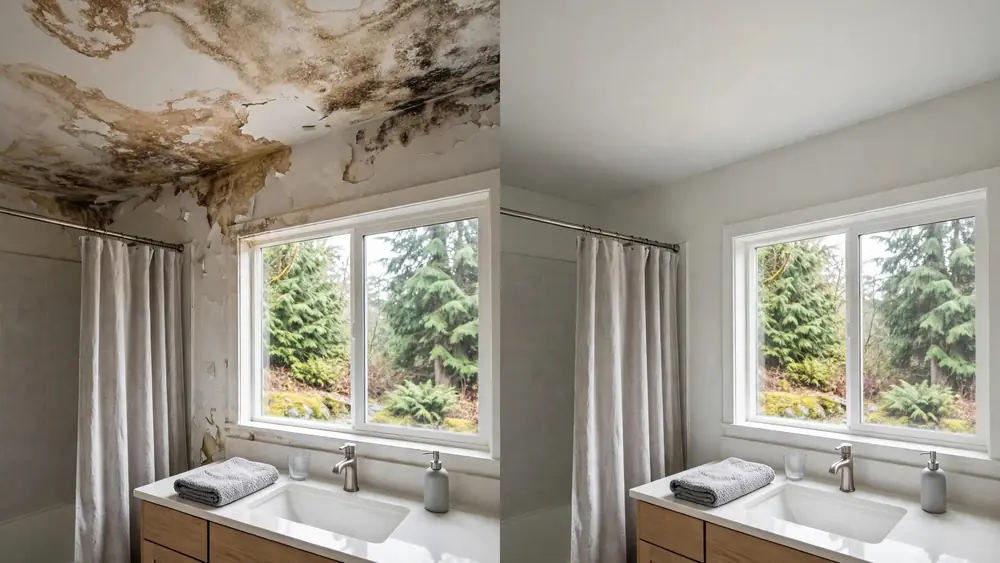
They mean moisture is no longer feeding it. Existing growth still has to be cleaned, and new leaks can start the problem again.
Who should I call for readings on a job already finished?
The line at (833) 610-0241 can link you to a different contractor for a second set of readings.
Commercial and multi-unit
Drying in apartment blocks and larger buildings
Bigger buildings raise issues that a house does not. Water may pass through several units, so each needs its own readings and access arrangements. Fire-rated walls and ceilings may have rules about how they are opened and how they are closed up, and building management should be told before anyone cuts into them. Shared mechanical systems can move moist air between floors, so ask whether a system should stay running.
Timing also has to work around residents and tenants. Noise and locked doors can slow things down, and a machine in a corridor may need clearance from the fire marshal. An agreed access schedule is usually the most useful thing a manager can provide.
Seasonal effects
How the seasons change a drying job
The same wall behaves differently at different times of the year.
Humid summer
Air holds a lot of moisture, so windows stay shut and dehumidifiers work hard. Sealing the room helps them keep up.
Cold winter
Cold materials give up moisture slowly, and pipes in open cavities may be at risk. The house usually needs to be heated while it dries.
Dry climates
Outdoor air may help, and overdrying wood is more of a concern. Fine finishes need watching.
Rainy stretches
Wet ground slows basement and crawlspace work, because the source of moisture keeps coming back.
Crawlspaces
Getting a crawlspace dry under a house
A crawlspace dries badly because air barely moves and the ground beneath it can be damp. Standing water comes out first, then any wet insulation under the floor is usually removed. Next comes a ground cover, along with ducted air and a dehumidifier sized to the space. Fix the drainage if water came from outside, or the crawlspace will get wet again.
This is tight, dirty work, so leave it to people with the right protection. Look for damp joists and subfloor from below during the process. Since there may be pests, old insulation or exposed wiring in there, ask for photographs showing what was done. The emergency crawlspace page has immediate steps.
Choosing who dries
Questions that reveal how a drying contractor works
Ask these before work starts, and the answers will show how the job is likely to be run.
- Where will the dry standard come from, and can I see the reading?
- How often will someone come back to take readings?
- How do you decide on the number of machines for each room?
- What will you open, and how will it be repaired?
- Who should I call if a machine stops at night?
Service areas
Structural Drying service areas
Where you live changes structural drying. See Oregon, Connecticut, Delaware, Kansas, Louisiana, New Hampshire, Chicago, Dallas, Colorado Springs, Cedar Hill, Lake Stevens, Norcross, Port Charlotte, Prosper, Atlanta, Indianapolis.
Urgent?
If this is happening right now
Go straight to the first steps: emergency structural drying.