Key facts: Flooded Basement Cleanup
The short answer
Find the cause before pumping
If the soil outside is still saturated, pumping a basement dry too quickly can leave pressure against the walls. With a large flood, ask the contractor or local officials before removing it all at once. Smaller water from a pipe or an appliance is more straightforward.
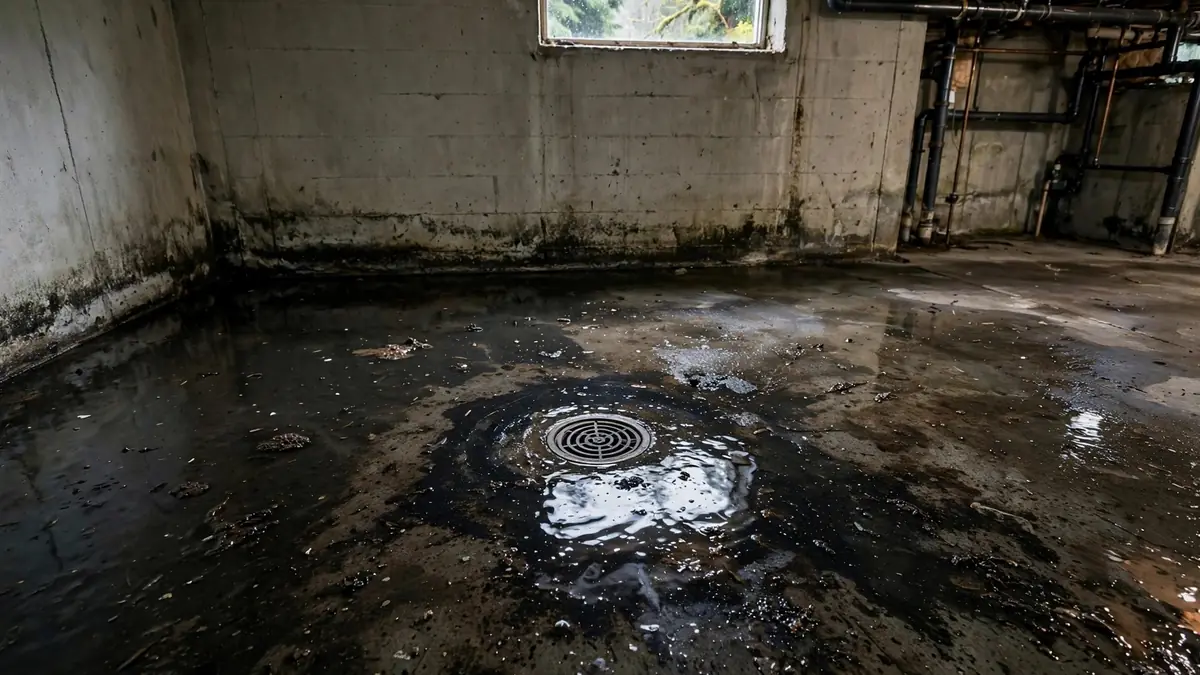
Dark or foul water suggests a sewer problem, which is a different job. See sewage backup cleanup. Clean water can go straight to water extraction.
What sits behind a basement wall

Finished spaces
What usually stays and what goes
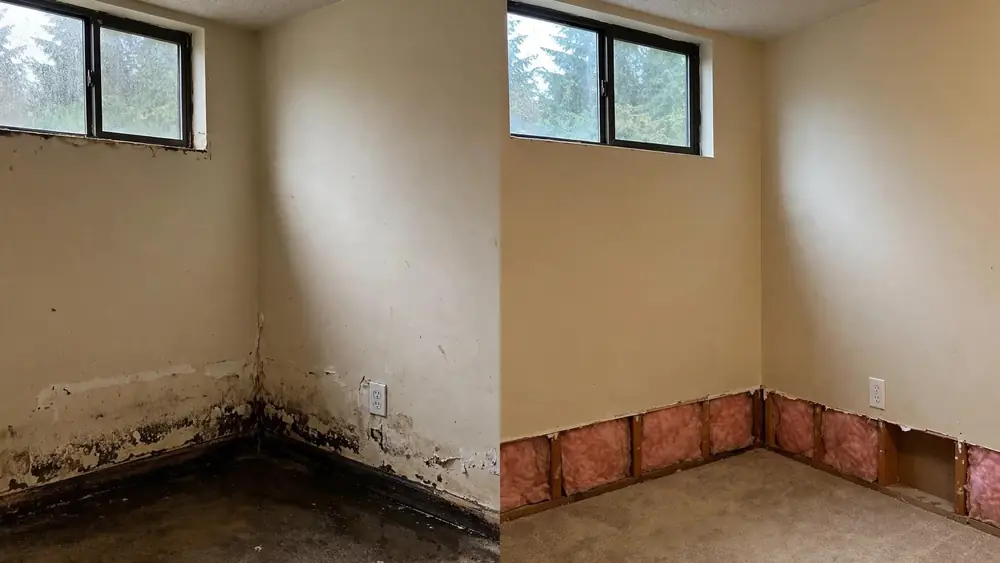
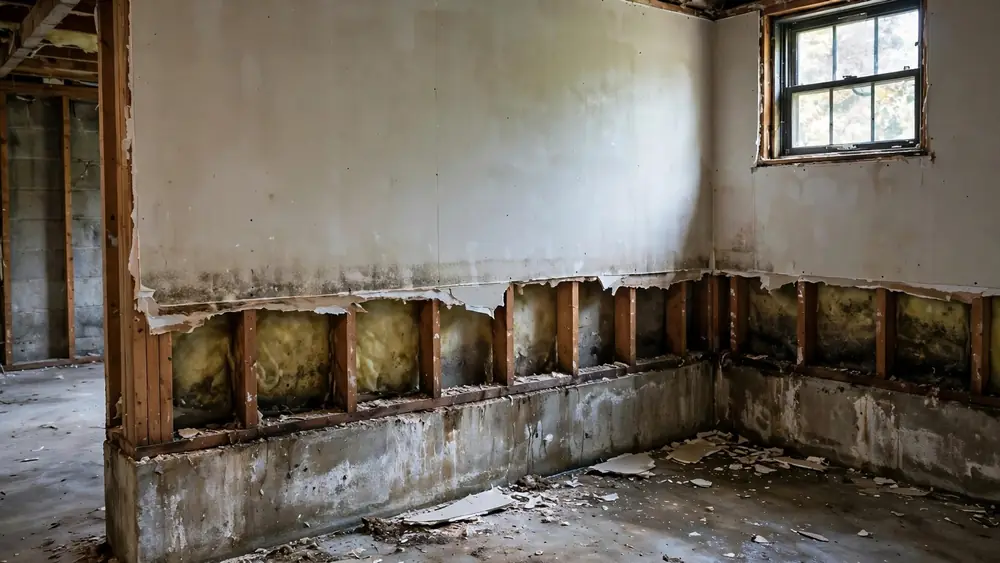
Concrete and block can usually be cleaned and dried. Carpet, pad, soaked insulation and drywall often come out, especially after floodwater. Furnaces, water heaters and panels that got wet should be checked by a qualified technician before use.
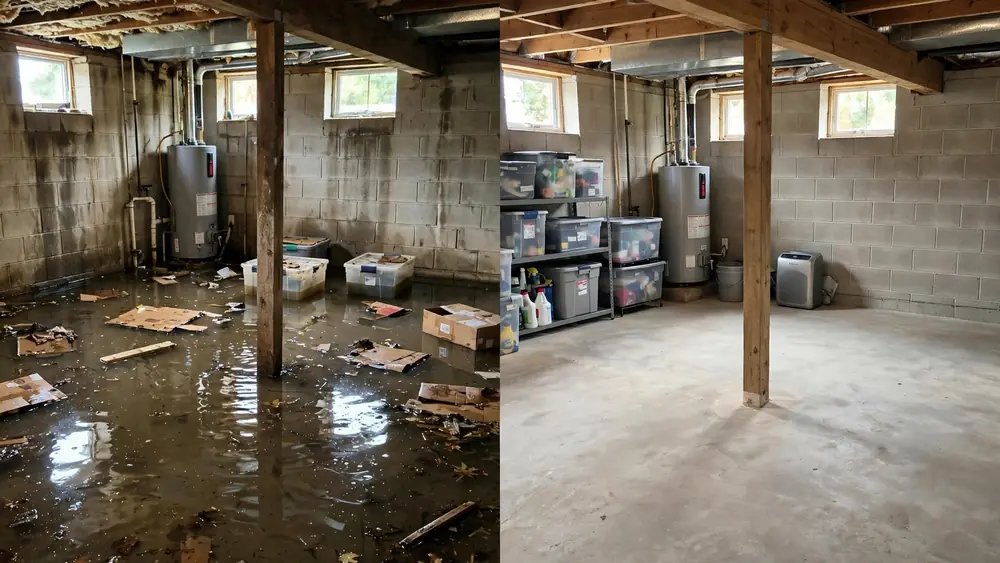
Stored items are a separate decision. Photograph them before discarding anything, since those photos support an insurance claim.
Questions
Questions about wet basements
Why does it keep happening?
Common reasons include poor grading, a failed sump, clogged gutters and a high water table. A restoration contractor handles the damage, while a waterproofing or plumbing contractor may be needed for the cause.
Is my homeowners policy enough?
Often not for outside water. Check the policy, and ask about a sump or sewer backup endorsement.
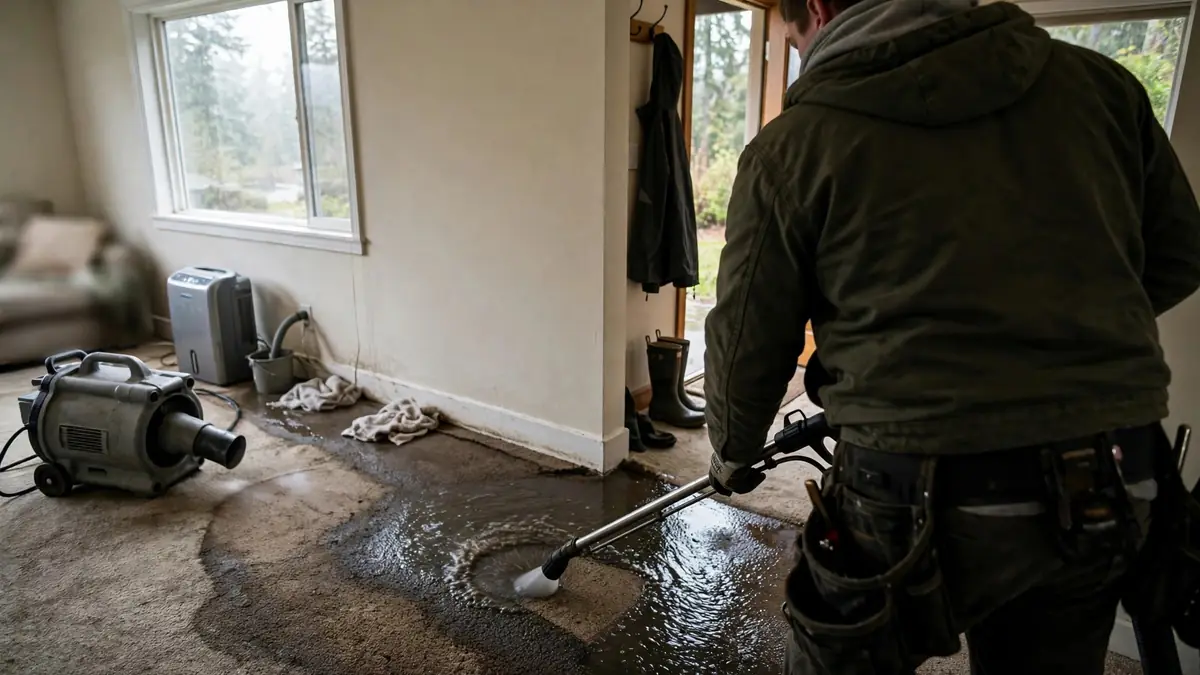
Pumping out the water
Common causes
Sorting out why the basement flooded
A failed sump pump usually means water near the pit and along the floor edge. Seepage shows up at the joint between wall and floor or through cracks. A clean, fast flood often points to a supply line or water heater. Dark water coming from a floor drain suggests a sewer backup, especially during heavy rain.
Knowing the cause also decides who pays, since insurers treat these events differently. Note what you saw first, and take a photo if you can do so safely.
Checklist
Keeping the next one smaller
- Test the sump pump each season by adding water to the pit.
- Consider a battery backup in case power fails during storms.
- Store valuables on shelves or in plastic tubs, not on the floor.
- Extend downspouts away from the foundation.
- Ask a plumber whether a backwater valve fits your sewer line.
Air and health
After the water is out
Damp basements can send humid air upstairs. Keep a dehumidifier running until readings return to normal, and clean surfaces that floodwater touched. If there are fuel tanks or chemicals in the basement, be alert to spills and odors, and call the fire department if you smell fuel or gas. Mold guidance is on our prevention page.
Is this what you need?
What people usually want to know about a flooded basement
Most people want to know three things: is it safe to go down, where did the water come from, and what can be saved? Safety depends on the power and fuel systems. Source shows in the pattern: pit overflow suggests the sump, wet wall joints suggest seepage, and a dirty floor drain suggests the sewer.
Finished basements call for more tear-out than unfinished ones, because carpet, paneling and drywall trap water against concrete.
Compare
Reading the source
| What you see | Likely source | Who may be needed |
|---|---|---|
| Water around the sump | Pump failure | Plumber, restorer |
| Line along wall and floor | Seepage | Waterproofing contractor, restorer |
| Dark water at floor drain | Sewer backup | Sewer contractor, restorer |
| Clean water near heater | Tank or supply line | Plumber, restorer |
Questions
More questions about basement flooding
Can I use the furnace after a flood?
Not until a qualified technician has checked it, since water can damage controls and burners.
Will a dehumidifier be enough?
For dampness, perhaps. For standing water or wet walls, you will need extraction and more drying capacity.
Should I pump it all out now?
With a large flood from outside, ask first. Removing water too quickly while soil is saturated can stress basement walls.
Guides
Guides for this job
Before the first step down
Deciding whether the stairs are safe to use
Most basement injuries in a flood come from going down too soon. Run through these checks from the top of the stairs.
- 1
Look at the water level
If water reaches outlets, the panel, a furnace or any appliance, treat the whole room as a possible shock hazard. Ready.gov's rule is hands off wet electrical gear, and no contact at all while standing in water.
- 2
Find the panel
If the panel is upstairs or outdoors and the floor is dry, switch off the main. If reaching it means wading, CDC's answer is an electrician rather than you, so stay on the stairs.
- 3
Smell the air
Gas or fuel odor means leave the house and call the utility or the fire department from outside.
- 4
Check the stairs themselves
Wooden treads and stringers may be soft or floating, and the bottom steps can be slick with silt.
- 5
Think about what is floating
Shelving, paint cans and storage tubs drift and tip over. A floating freezer or fuel container can block your way out.
- 6
Decide, then stay out
If any answer worries you, wait for the contractor, an electrician or the utility.
Pumping rate
Why large floods are drained in stages
During a regional flood, the soil around the house may hold as much water as the basement does. That water pushes on the walls from outside, while the water inside pushes back. Draining the room quickly takes away that balance, and block or poured walls can crack, bow or even collapse.
A common rule of thumb is to wait until water outside has gone down, then lower the level inside gradually, in steps, watching for water to rise again overnight. If the level comes back up after pumping, the ground is still saturated and the pump is losing the race. The contractor can judge timing based on what they see, and local officials may have advice during a wide flood.
This caution matters most with deep water from outside. A failed water heater or a broken supply line leaves no such pressure in the soil, so that water can normally be removed right away.
Basement types
How the construction of the basement changes cleanup
Basements are built in several ways, and each one responds to water differently.
Poured concrete
Dense and durable, with most water entering at cracks, tie holes or the joint at the floor. It cleans well but takes time to dry through.
Concrete block
Hollow cores can fill with water and release it slowly, sometimes for a long while after the room seems dry. Small weep holes are sometimes drilled to drain them, though that is a decision for a specialist.
Stone or brick
Common in older homes. The mortar can be soft, and the walls were never meant to be completely dry, so targets need to be realistic and aggressive pressure washing should be avoided.
Walkout
A door or window at grade gives an easy path for pumping and for moving out debris, but also a low entry point for surface water.
Finished with a wood-framed wall
Studs, drywall and insulation hide water against the concrete. Lower wall sections often come out so the cavity can be cleaned and dried.
Equipment down there
What to do about basement mechanical systems
Do not restart anything that got wet until a technician has seen it. This table shows who to call and why it matters.
| System | Concern | Who checks it |
|---|---|---|
| Furnace or boiler | Burners, controls and blower motors can be ruined by water | HVAC technician |
| Water heater | Gas valves and burners can fail unsafely after being submerged | Plumber or gas technician |
| Electrical panel | Corrosion can be hidden behind the cover | Licensed electrician |
| Washer and dryer | Motors, wiring and gas connections | Appliance technician |
| Sump pump | May have burned out from running nonstop | Plumber |
| Fuel oil tank | Can shift or float, and lines can break | Fuel supplier and fire department if leaking |
Contents
Handling what was stored on the basement floor
Storage is often the first thing people want to deal with. Sort it in the order below, once the space is safe.
- Photograph firstTake wide shots of the room, then close-ups of anything with value. Keep model numbers where you can see them.
- Pull cardboard and paper earlyWet boxes collapse and spread water and mold quickly, so transfer contents to open tubs or dry tables.
- Save photos and papers separatelyKeep them cool, and interleave with clean paper if you can. Do not try to peel apart stuck pages yet.
- Treat floodwater contact seriouslyCDC advises discarding items that cannot be cleaned and dried quickly. Stuffed toys are a clear example.
- Wipe and dry hard itemsMetal shelving, plastic tubs and tools can often be washed with hot water and detergent, then dried.
- Rinse tools right awaySilt and water rust steel quickly, so a good cleaning today can keep a tool from being lost.
Silt and sludge
Cleaning up after muddy water
River and storm water leave a layer of mud that can look harmless once dry. CDC warns that floodwater can carry bacteria from sewage and agricultural or industrial waste, so wear rubber boots, gloves and goggles while dealing with it. Shovel out the mud while it is still wet, since dry silt becomes dust and is harder to shift. Then clean walls and floors with hot water and detergent.
Do not wash mud down a floor drain in bulk, because it can settle and plug the line. Avoid the temptation to run a gas-powered pressure washer indoors. CDC says never to run such equipment inside a home, basement or garage because of carbon monoxide, and that includes keeping it away from open windows or vents. Generators belong outdoors as well, at least 20 feet from any openings.
Floor drains and pits
Why water may return after cleanup
After pumping, take a look at the floor drain, the sump pit and any cleanout. A drain that gurgles or a pit that refills quickly tells you the source has not gone away. Tell the contractor about any rise in level, and mark the waterline with tape so you can compare it over a few hours.
Check outside too. Gutters that dump at the foundation, a window well full of leaves and ground that slopes back toward the house all feed water into the same spots. On many houses, the simplest fix is also among the most useful: moving water away from the foundation at the surface.
Repeat flooding
Telling a one-time event from a recurring problem
A contractor can dry a basement, but the longer-term answer may lie with someone else. Clues like these suggest a recurring cause.
- White, chalky deposits on concrete or block, known as efflorescence, which indicates that water has been moving through the wall.
- Old staining at the same height on walls or stored items.
- Rusted bottoms on metal shelf legs, or a line of rot along bottom plates.
- A sump pump that cycles even in dry weather, which can point to a high water table or a plumbing leak.
- A musty smell that returns each spring or after each heavy rain.
- Neighbors with similar trouble, which may point to area drainage or a shared sewer issue.
Rebuilding down there
Finishing a basement so the next wet event does less harm
If walls and floors were lost, consider using materials that tolerate water. Tile and sealed concrete recover far better than carpet. Cement board and other moisture-resistant panels hold up better low on a wall than ordinary paper-faced drywall, and leaving a small gap at the floor can help keep wall material out of a shallow puddle. Raised storage and shelving keep belongings clear of the floor.
Do not close anything up until the concrete and framing have reached their target readings. Moisture stays in masonry for a long time, and a new wall built too soon can start growing mold from behind. Mechanical equipment can sometimes be raised onto a platform, or moved higher in the house, but that is a discussion for your HVAC contractor and local code officials. Basements used for sleeping also have egress requirements, so ask about them before rebuilding a bedroom.
Flood or backup
How the cause shapes an insurance conversation
Standard homeowners policies commonly exclude surface flooding, and a separate flood policy may be limited in what it pays for below grade, so read the basement section with care. Sewer and sump overflow is usually covered, if at all, by an add-on. A broken pipe inside the house is often handled in another way entirely. This is why the insurer will ask where the water came from, and why you want to note it before the evidence is cleaned up.
Describe what you saw in plain terms and leave the labeling to the adjuster. Photos of the sump, the drain and the outside ground are useful here, and a plumber's note on the cause carries weight. Working with your adjuster has more detail on preparing for the visit.
For the call
What the contractor will ask about your basement
You can give better information on the phone at (833) 610-0241 if you can answer these, even roughly.
- How deep is the water, in rough terms such as ankle or knee height?
- Where did it appear first, and is it still rising?
- Is the power to the basement off, and who turned it off?
- Is the basement finished, partly finished or bare concrete?
- What color is the water, and does it smell?
- Is there a way to get a pump hose out, such as a window or a door?
- Are there fuel tanks, chemicals or anything else hazardous down there?
Who stays out
Keeping vulnerable people clear of a wet basement
Ready.gov's flood page tells anyone with a lung condition or a compromised immune system to avoid a leaking or visibly moldy building, and it keeps children out of cleanup work too. Pets belong elsewhere too, since paws carry contaminated silt upstairs.
Close the basement door when you can, and consider laying down a boot-off zone at the top of the steps so that dirty water does not get tracked through the house. Wash with soap and water after any contact. CDC says to wash open cuts or sores that are exposed to floodwater and to get medical attention right away if you are hurt or become sick.
Basement details
Follow-up questions about a wet basement
Is an inch of water still a problem?
Yes. Even shallow water wets bottom plates, wicks up drywall and soaks whatever is stored on the floor.
Can I use a shop vacuum?
For a small, clean spill with the power safely handled, yes. It will not keep up with several inches of water, and it should not be used on sewage.
Should I open the basement windows?
In dry weather it can help, but in humid weather it can bring in more moisture. Ask the contractor once dehumidifiers are running, since they work best in a closed space.
Why does my basement smell even after it dried?
Odor usually points to wet materials left behind, such as carpet pad or the bottom of a wall. A reading in those spots will often find it.
Will the concrete floor be damaged?
Concrete generally handles water well, but finishes on it may not. Paint and adhesive can let go, and tile may loosen, so check the surface after it dries.
Should the sump pump be replaced after a flood?
Have it tested. A pump that ran for a long time or sat under silt may no longer be reliable, and why sump pumps fail explains what to look for.
Odor and air upstairs
Keeping basement air from reaching the rest of the house
Basement air tends to rise into the house, carrying damp and smell. Keep the door shut when the crew allows it, and check whether the furnace return draws air from the basement. If it does, ask the technician before you run the system. A closed-off basement with a dehumidifier usually protects upstairs rooms better than fans blowing air around the house.
Close off floor vents leading to wet areas if the contractor agrees. Once the floor and walls test dry, normal airflow can resume, and any lingering smell is a useful signal to investigate further.
Sump and drain checks
Checks to make before you call it finished
A basement is not done when the floor is dry. Before you put anything back, make sure of these points.
- The sump pump starts on its own when water is poured in, and stops afterward.
- The discharge line outdoors is clear and carries water well away from the house.
- The check valve holds and does not let water flow back into the pit.
- Floor drains take water freely, and their covers are back on.
- Stored items go back on shelves, raised off the concrete.
- A water alarm sits on the floor near the lowest point of the room.
- Window wells are free of leaves and soil, with any covers back in place, and the ground beside them slopes away from the wall.
Service areas
Flooded Basement Cleanup service areas
Where you live changes flooded basement cleanup. See Oregon, Connecticut, Delaware, Kansas, Louisiana, New Hampshire, Chicago, Dallas, Colorado Springs, Cedar Hill, Lake Stevens, Norcross, Port Charlotte, Prosper, Atlanta, Indianapolis.
Urgent?
If this is happening right now
Go straight to the first steps: emergency flooded basement services.