
Key facts: The First 24 Hours After a House Fire
Checklist
Your first-day order of priorities
- Confirm everyone is safe, and get medical care if needed
- Get clearance before re-entering
- Call your insurer and ask about temporary housing
- Ask the fire department how to get the report
- Arrange board-up and tarping
- Photograph damage without moving things
- Collect medications, IDs and documents if allowed
- Keep every receipt
Closing up the openings firefighters leave
Avoid
Day-one mistakes after a fire
Do not turn on utilities or appliances until they have been checked. Do not wipe walls, wash clothes in the house or use the HVAC. Be cautious with anyone who knocks offering to manage your claim, and read before you sign. See fire damage restoration and board-up services.
Answer first
What matters most in the first day
Day one after a house fire comes down to three jobs: keep people safe, get everyone a place to sleep, and start a paper trail. Repairs, cleaning and big decisions can wait. Almost nothing you do on day one needs to be permanent, and very little of it should be.
Ready.gov's guidance is plain on the main points. Get the fire department's word that the building is safe before re-entering. Do not reconnect utilities yourself. Inventory damaged property, do not throw damaged goods away until that inventory is complete, and save receipts for funds spent because of the fire. Notify your mortgage company too.
The U.S. Fire Administration publishes a free guide, After the Fire: Returning to Normal, that covers the first day, insurance, valuing property, replacing documents and salvage. It is worth reading when you have a quiet hour, and you can ask the fire department or local relief groups if you need help finding it.
Timeline
Hour by hour after the trucks leave
Your own day will not be this tidy. Use this as a loose order and skip whatever does not apply.
- 1
Before the fire department leaves
Ask whether the building is safe to enter, which utilities were shut off, and how to get a copy of the report. Write down the incident or report number and the name of the officer in charge.
- 2
The first hour
Account for every person and pet. Get medical care for anyone who breathed smoke or has burns, even if they feel fine. Call a family member or friend so someone outside the situation is helping you keep track of things.
- 3
The next few hours
Call your insurer or agent to report the fire. Ask about help with temporary housing and what they want done to protect the property. If you rent, call your landlord and your renters insurer.
- 4
By evening
Settle where everyone is sleeping. Contact a local disaster relief service such as the Red Cross if you need shelter, food or medicine. Replace urgent prescriptions through your pharmacy.
- 5
Before you sleep
Make sure the property is secured or that a board-up is arranged. Tell a neighbor you trust that the house is empty and whom to call if they see anyone there.
- 6
The next morning
Start your written log and photo set, if you are allowed in. Return the insurer's call. Begin the list of what you need to replace first.
At the scene
Questions to ask the fire officer before they go
Firefighters may still be at the property when you arrive. These questions are short and the answers are hard to get later.
- May I go inside, and are any areas off limits?
- Which utilities did you shut off, and which ones are still live?
- Who has to approve turning gas or power back on?
- Is there a chance of the fire rekindling, and what should I watch for?
- How and when do I get the fire report or incident number?
- Has an investigation been opened, and may I remove anything yet?
- Is there a local program or victim support contact you can give me?
Re-entry
Going back in, if you are cleared
Permission to enter is not the same as a safe building. Fire weakens stairs, floors and ceilings in ways you cannot see from below, and water from the hoses makes everything heavier. Wet insulation and plaster can come down well after the flames are gone, so look up before you step into a room, and leave at once if you see sagging, hear creaking, or smell gas.
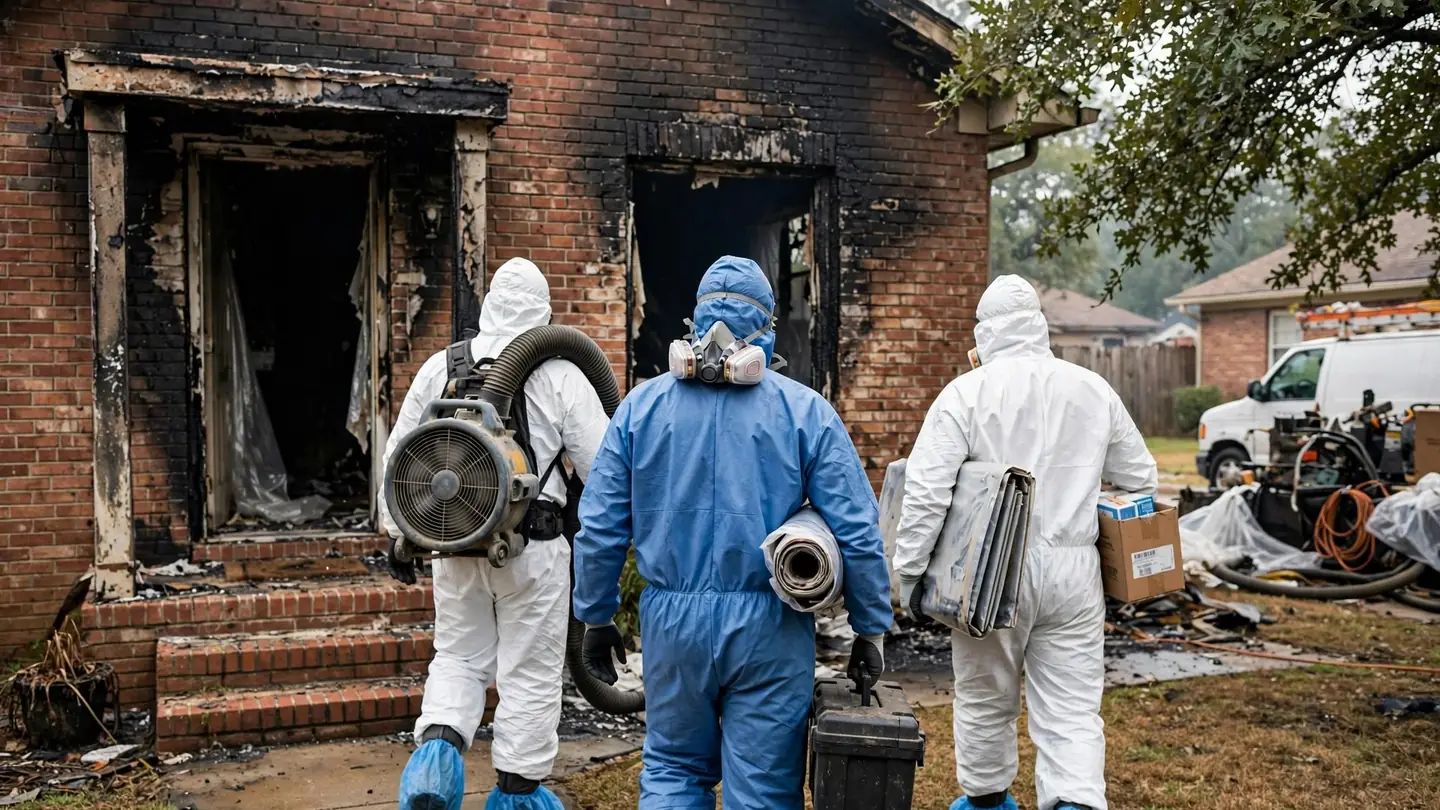
If you are permitted inside, keep the visit short. Wear long sleeves, sturdy closed shoes and gloves, and ask the fire department what breathing protection is sensible. Soot and ash are not ordinary dust, since burned plastics, wiring and furnishings all leave residue. Keep children and anyone with asthma, heart problems or lung disease out altogether.
Go in for a purpose: identification, medication, glasses, phones and chargers, keys, wallets, pet supplies, and important papers. If the fire is under investigation, ask first, because removing items could cause problems for you or the investigators.
Contacts
Who to call on the first day
Keep one list in one place. Note the date, time and name for every call so you do not have to repeat yourself.
| Call | Why | Have ready |
|---|---|---|
| Insurance agent or company | Report the loss and ask about temporary housing | Policy number if you have it, address, fire date |
| Landlord (if renting) | The building owner handles the structure and its insurer | Your lease, plus your renters policy if you have one |
| Local relief service, such as the Red Cross | Shelter, food and medicine needs | Number of people and pets, any medical needs |
| Mortgage company | Ready.gov advises notifying them; lenders may be named on payments | Loan number |
| Utilities | Confirm what has been shut off and how service is restored | Account numbers |
| Employer or school | Time off, schedule changes, replacement supplies | Contact person |
| Board-up contractor | Close openings and protect the property | What was cut open, and any instructions from the insurer |
Securing the building
Why the house gets cut open, and why it must be closed
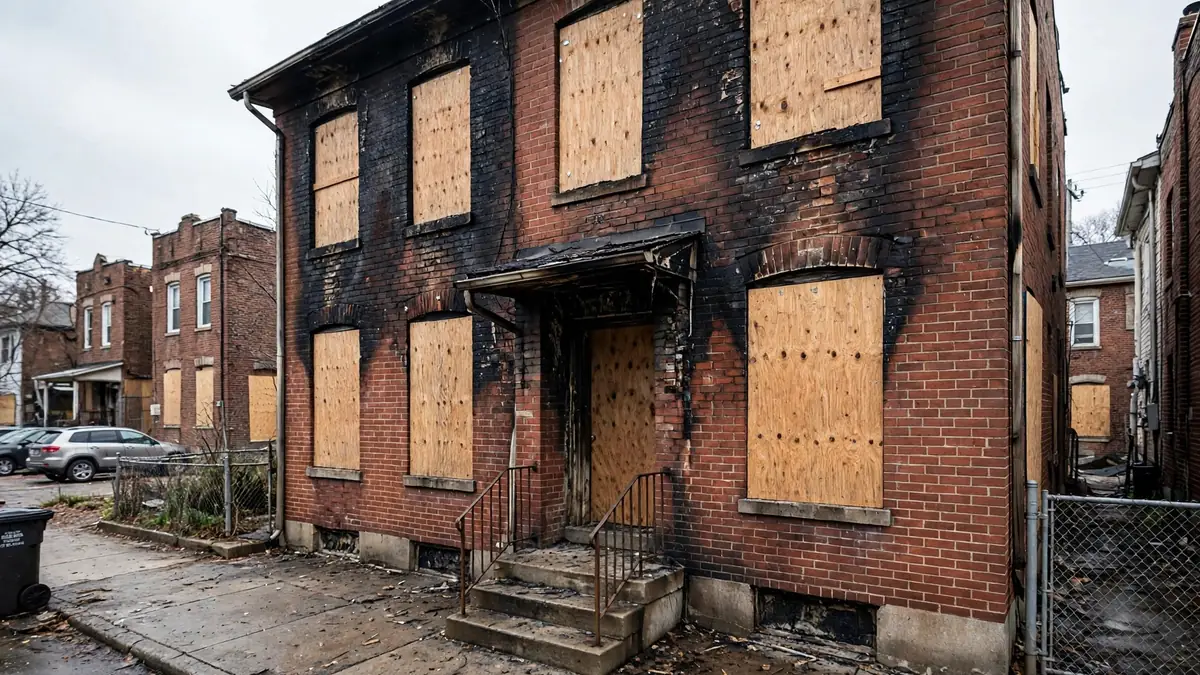
Firefighters often break windows and cut holes in roofs and walls. This lets heat and smoke escape and helps them reach hidden fire. It can look like needless extra damage, but it is a normal part of putting a fire out. It also means your house is now open to weather, animals and theft.
New York's regulator names covering broken windows among the necessary repairs that protect health or safety, and Florida's guidance describes temporary repairs as a policy requirement. Ask your insurer about any process it wants followed, and keep a record of what was done and why. Do not wait days for a reply if rain is forecast or the door will not lock.
The board-up and tarping page explains what the work involves. Take photos of the openings before they are covered, because plywood will hide them once it goes up. Then remove anything visible and valuable if you are permitted to, or ask whether it can be moved to a safer room.
Paper trail
Starting your record on day one
You do not need a perfect record on the first day. You need a start that you can keep adding to.
- 1
Start one notebook or phone note
Record every call with date, time, name and what was said. Louisiana's insurance regulator recommends keeping this kind of call log during a claim.
- 2
Photograph before anything moves
Shoot each room from the corners and doorways, then close up. Video with narration works as well.
- 3
Begin the inventory from memory
Go room by room while details are fresh. Include drawers and closets. Old photos and shopping accounts can help you remember items later.
- 4
Keep every receipt
Hotels, meals, clothes, toiletries, pet boarding, travel and storage. Ready.gov notes they may matter to your insurer and at tax time.
- 5
Save damaged items for now
Do not throw things away until the inventory is finished and your insurer has said what it needs to see.
- 6
Get written copies
Ask for anything you sign, and do not hand over an original document if a copy will do.
Essentials
Things to find or replace quickly
Most of these can wait a day, but a few are urgent. Start with what affects your health and your ability to prove who you are.
- Medications and medical devicesYour pharmacy can usually look up prescriptions. Tell your doctor about any exposure to smoke, and ask whether any medicine exposed to heat or soot should be replaced.
- Glasses, hearing aids, mobility aidsThese are easy to overlook until the first night away from home.
- Driver's license or IDYour state motor vehicle agency handles replacements. Other documents are easier to replace once you have this one.
- Bank and credit cardsCall the issuers if cards or checkbooks are missing or damaged.
- Birth certificates, passports, insurance papersThese usually go through the issuing agency. USFA's guide covers replacing documents in more detail.
- Phone and computer accessRecover logins from the cloud where possible, because records and policy files may be stored there.
- Children's and pets' comfort itemsA familiar blanket or toy, if safely cleanable, can make the first night far easier.
Handling contents
Food, clothes and belongings in smoke
Do not sort everything on the first day. Your job is to keep things from getting worse. Generally, throw out food that was exposed to heat, smoke or soot, but photograph or list it first. Sealed jars and cans can look fine and still have been damaged by heat, so err on the side of discarding.
Do not wash clothes in the house, since the machines may not be safe to run, and soot can transfer to other items. Keep cleanable items bagged and labeled by room. Keep valuables, paper, photos and electronics out of damp rooms. Electronics exposed to soot or water should stay unplugged until someone has checked them, because residue can be corrosive.
Furniture and fabrics often respond better to specialist cleaning than to home attempts, and rubbing soot with a wet cloth can drive stains in. If you want to know what lingers after the flames, read why smoke smell lingers.
The second problem
Water left behind by the hoses
A fire house is usually a wet house. Water sits in walls, under floors and in the rooms below where the fire burned, and it can start causing its own damage while everyone's attention is on the burned rooms. EPA's guidance on drying within 24 to 48 hours applies here just as it does to a leak, though safety clearance comes first.
Do not start pumping or running electrical equipment on your own. Power may be off for a good reason, and the wiring may have been damaged. Ask the contractor who inspects the home to include moisture in the assessment. Keep in mind that firefighting water may carry soot and debris, which makes it unlike a clean leak. See structural drying for how that part of a job usually works.
Caution
Spotting a bad offer at the curb
People may appear at the scene within hours. Some are helpful, and some are not. Slow down whenever you hear any of these.
- Someone urges you to sign today, before you have spoken with your insurer.
- A person says they work with your insurance company but cannot show how.
- You are asked to sign over claim payments or give someone authority over your claim.
- A contractor wants a large payment up front or only accepts cash.
- The paperwork is blank, vague, or does not name a company, address and scope.
- Someone offering to handle your claim cannot show a license. NAIC says your state insurance department can answer questions about public adjusters.
Recovery
Looking after people, not just the house
A fire is frightening even when everyone is unhurt. Trouble sleeping, irritability, jumpiness and forgetfulness in the days after are common, and children may cling or go quiet. USFA's page points people to the American Psychological Association for information on emotional recovery after a home fire, and your doctor or local crisis services can help if it does not ease.
Breathing problems deserve attention as well. Smoke can affect people after they have left the building,. Call a doctor about symptoms, and call 911 for trouble breathing, chest pain or confusion.
Give yourself permission to do less. Ask one calm friend to keep the phone list, and let them take messages. The rest of the claim and the fire damage restoration work will take much longer than a day, and the first day does not have to solve any of it.
Later
What can wait until day two
It is fine to leave these for later. Rushing them often causes trouble.
- Choosing a repair contractor or signing a rebuild contract.
- Deciding which belongings are unsalvageable, beyond spoiled food.
- Agreeing to a final claim amount or a full list of damaged property.
- Cleaning walls, ceilings or soot-covered furniture yourself.
- Testing whether appliances still work.
- Telling everyone the details. A single shared message to family can spare you repeated calls.
Overnight
A go-bag list for your first stay away
Most people leave with very little. Ask friends or family to bring what you could not, and buy only what you need tonight, keeping receipts.
- HealthPrescriptions, inhalers, glasses or contact lenses, and a list of doctors.
- Identity and fundsID, a bank card, your insurance details, and a little cash if you can get it.
- CommunicationPhone, charger, and a written list of key numbers in case the phone fails.
- ChildrenSchool contacts, any comfort item, a change of clothes and diapers or formula if needed.
- PetsFood, leash or carrier, medication and vet records. Ask relief groups about shelter options that accept animals.
- Work and schoolA short note to your employer and school explaining the situation, and asking what they need from you this week.
Practical matters
Pets, neighbors and a house that sits empty
Frightened pets hide, and they may not come out while strangers are in the house. Tell firefighters right away if an animal is missing, and do not go in to search for one. Once the area is calm, check with neighbors and your local animal shelter. Have a vet look at any animal that was in the smoke, since small lungs are easily harmed.
An empty, fire-damaged house attracts attention. Ask a neighbor to watch for strangers, and ask local police whether they can add the address to their patrols. Have your mail held or redirected through the post office so that nothing with your name on it piles up. If you have vehicles at the home, check for soot and heat damage, and report any damage to your auto insurer, since a car is often insured separately from the house.
If you rent out or share the building, tell the other occupants what you know. Attached homes and apartments may have smoke or water beyond a party wall, even where nothing looks wrong. They should get their own clearance before returning.
Family
Telling children what happened
Children often take their cues from the adults around them. A few simple moves can help during the first day.
- 1
Tell the truth, simply
Say what happened, that everyone is safe, and where you will sleep tonight. Short answers are fine.
- 2
Keep a routine where possible
Meals, bedtime and school can steady a child even in a strange place.
- 3
Keep them away from the site for now
Seeing a burned bedroom can be upsetting, and the air and debris can be harmful.
- 4
Let them help
Writing down a list of favorite things, or choosing a meal, gives them a small amount of control.
- 5
Watch for changes
Ask a doctor or school counselor for help if sleep, appetite or behavior problems last.
Insurer call
Questions for your insurer on that first call
You do not need answers to all of these today, but asking them early prevents surprises.
- Does my policy help with somewhere to stay, and what records do you need for it?
- Can you advance any funds for immediate needs? New York's regulator says many insurers will, though it notes they are not required to.
- Who will inspect the home, and how soon can I expect to hear from them?
- What temporary protection do you want done now, and what should wait?
- What should I do with damaged items in the meantime?
Questions
First-day fire questions
Where do I stay?
Check your policy for additional living expenses. Local relief groups such as the Red Cross may also help.
Should I tell my mortgage lender?
Often yes, as lenders may be named on claim payments.
Can I go back to get my things?
Only after you are cleared by the fire department, and ask whether anything is off limits. A short supervised visit is a common way to get medication and documents.
How do I get a fire report?
Ask the responding department how it handles report requests, since each one has its own process. Note the incident number so the request is easy to make.
What if I rent?
The landlord and their insurer generally deal with the building. Your belongings and your housing needs depend on your own renters policy, if you have one, and your lease. Tell your landlord right away.
Can I sleep at home if only one room burned?
Do not assume so. Smoke travels well beyond the burned room and utilities may be off. Wait for the fire department's word and ask your insurer or a professional about air quality and safety.
Will my smoke alarm and carbon monoxide alarm still work?
Do not rely on alarms exposed to fire or heavy smoke. Replace them as part of repairs before anyone sleeps in the home again.
Sources and citations
- [1]Ready.gov: Home fires
- [2]IICRC: ANSI/IICRC S700 fire and smoke standard
- [3]U.S. Fire Administration: After a fire
- [4]Louisiana Department of Insurance: Post-disaster insurance guide
- [5]U.S. EPA: A brief guide to mold, moisture and your home
- [6]NAIC: Navigating the claims process, recover and rebuild
- [7]New York DFS: Managing and mitigating losses
- [8]Florida CFO: General disaster insurance FAQs