Key facts: Water Extraction
The short answer
What extraction does, and what it leaves behind
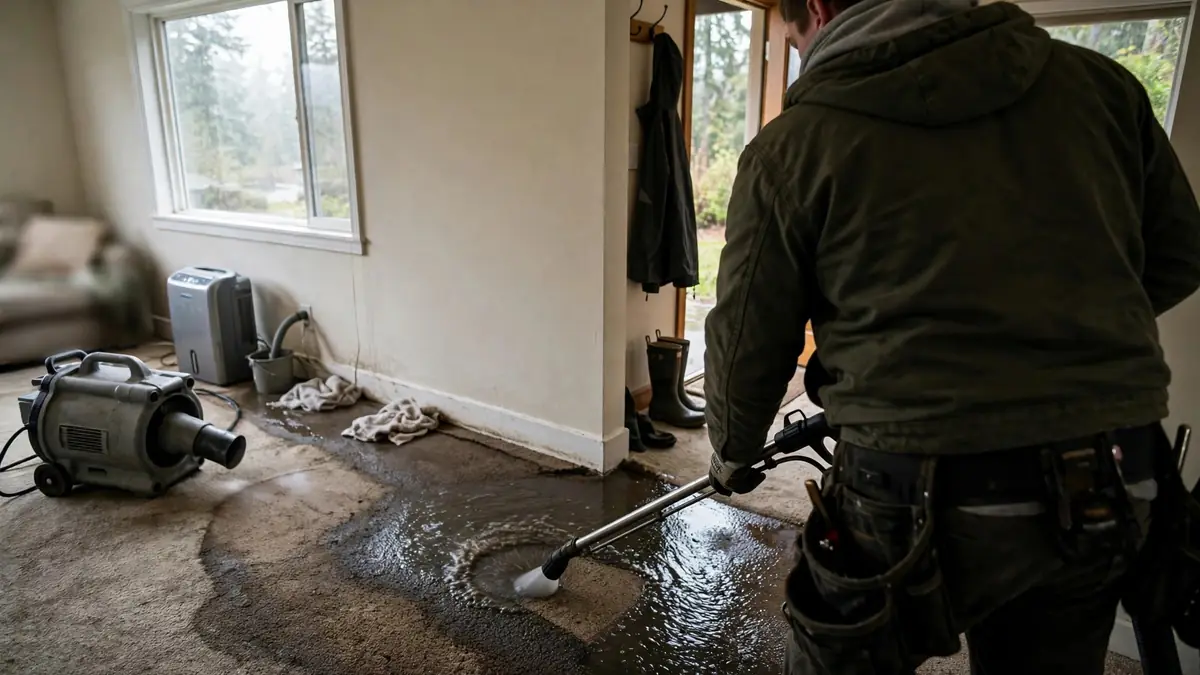
Deep water goes out by submersible pump. Extraction wands and weighted tools then pull what carpet and pad hold. Hard floors are squeegeed toward the extractor, and water is checked for at the edges, where it runs under baseboards.
Extraction does not dry anything completely. Wall cavities and subfloors stay wet, which is why structural drying follows.
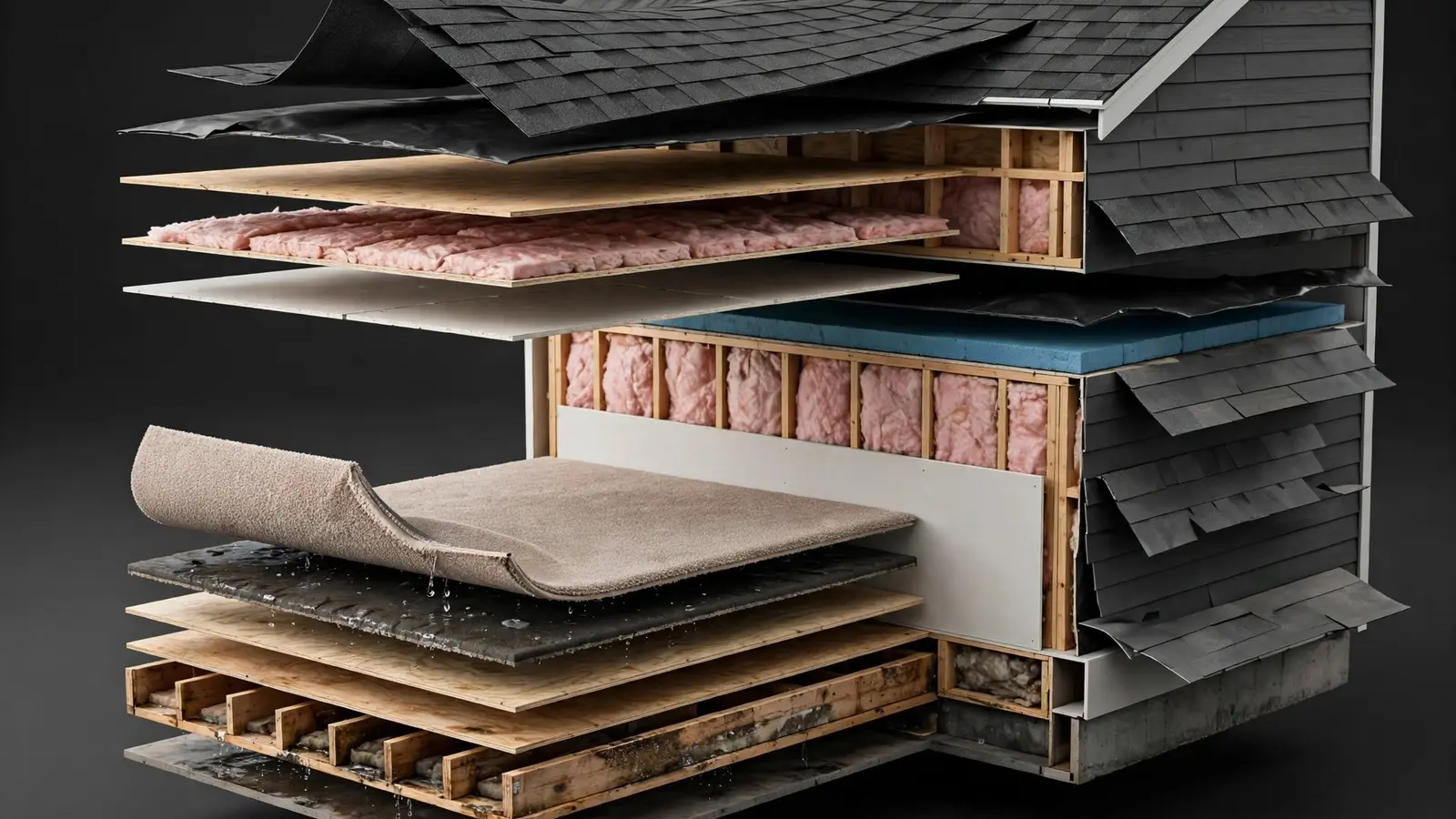
Where water sits under carpet
Decisions
Carpet and pad: keep or remove?
Pad soaks up water like a sponge and is often removed even when the carpet is saved. Where the water is sewage or floodwater, both are usually discarded, because porous materials cannot reliably be made sanitary. See sewage backup cleanup.
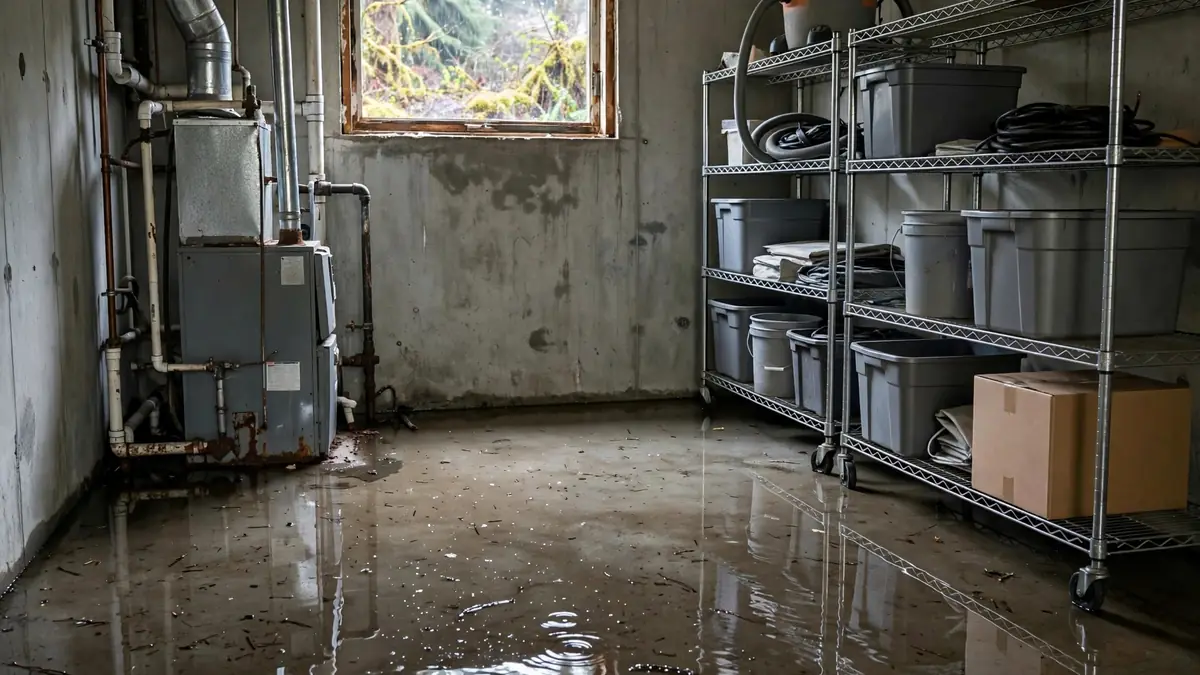
In a basement, the plan also depends on the cause. If a pump failed or the ground is still saturated, water may come back after it is removed. Flooded basement cleanup covers that case.
Extraction equipment in use
Equipment
What the tools do
A submersible pump handles deep water, and it can run until only a thin layer remains. Portable and truck-mounted extractors use strong suction for what is left. On carpet, weighted extraction tools press water out of the pad, which removes far more than a wand alone.
Shop vacuums are useful for small, clean spills, but they fill quickly and have far less suction. Household vacuums should never be used on water.
Checklist
Before the crew gets there
- Turn off power to wet rooms if the panel is dry and safe to reach.
- Move small items and rugs off the floor, photographing them first.
- Pin up curtains and lift upholstered furniture onto blocks.
- Keep children and pets away from the area.
- Note where water first appeared, since this helps tracing.
Hard floors
Hardwood, tile and laminate
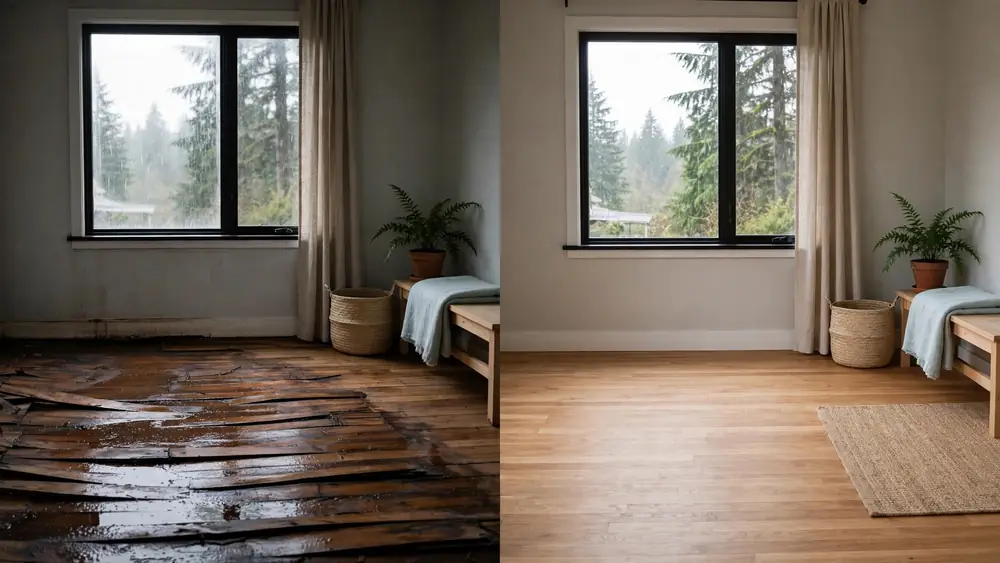
Water runs under tile and into grout lines, and it soaks the edges of laminate, which usually swells and rarely recovers. Hardwood may cup as it absorbs water, and specialized drying mats sometimes help if treatment starts early. Do not sand or refinish cupped boards until they have fully dried, since some flatten on their own.
Time
Why speed matters here
The longer water sits, the further it wicks up walls and the more likely it is to degrade. Removing it early shortens every later step, and this is the one stage where a few hours can make an obvious difference. It also helps you meet the EPA's drying target discussed in mold prevention after water damage.
Is this what you need?
When water extraction is the right first call
Extraction is what you need when liquid water is still on the floor, in carpet or in a basement. If the surface is only damp, you can usually move straight to drying. If carpet squelches underfoot, or water seeps from under the baseboards, liquid water remains.
Tell the contractor the depth, the source and whether power is off. Those details decide what equipment comes and how safely work can begin.
Compare
Which tool fits the situation
| Situation | Common tool | Why |
|---|---|---|
| Several inches in a basement | Submersible pump | Moves large volumes quickly |
| Soaked carpet and pad | Weighted extractor | Presses water from the pad |
| Tile or concrete | Squeegee and wand | Clears thin layers |
| Small, clean spill | Wet vacuum | Enough for limited water |
Questions
More questions about water extraction
Does extraction dry the house?
No. It removes liquid water. Walls and subfloors still need dehumidifiers and air movers.
Should I lift the carpet myself?
Wait if you can, as wet carpet is heavy and tack strips are sharp. Your insurer may also want to see it first.
Can extraction save my carpet?
Sometimes, with clean water caught early. The pad usually goes, and sewage-affected carpet is generally discarded.
Guides
Guides for this job
Next, read how long drying takes and can carpet be saved after a flood?.
On site
How an extraction visit usually goes
The order is fairly consistent, even though equipment varies with the job.
- 1
Safety walk
The technician checks for power in wet rooms, trip hazards and any contamination, and agrees where hoses will run.
- 2
Source check
Extraction waits if water is still coming in. The plumber or the owner needs to confirm the source has stopped.
- 3
Move and protect
Furniture is moved or raised on blocks, with plastic or foam under the legs to prevent staining.
- 4
Bulk removal
Pumps deal with anything deep. Discharge hoses go to a suitable drain or outdoor location, subject to any local rules.
- 5
Fine extraction
Wands and weighted tools make repeated, slow passes in overlapping lines until little more comes up.
- 6
Edges and low points
Corners, thresholds and closets get attention, since water tends to sit where a floor dips.
- 7
Drying setup
Readings are taken and equipment placed, or the job is handed to whoever is doing the structural drying.
Truck or portable
Truck-mounted and portable extractors compared
A truck-mounted unit sits outside and sends hoses into the home. It generally offers strong, sustained suction and takes dirty water away to a holding tank, which suits larger floors and long runs. Its limits are physical: the hose has to reach, so high-rise units, gated properties and long driveways can be a problem.
Portable extractors go right into the room. They suit apartments, upper floors and tight spaces, and many of them can deal with a wide range of jobs. Their tanks are smaller and need more emptying, or they pump out through a hose to a drain. Neither type is automatically better, and what matters is how the tool fits the building and how much water is present.
Where water hides
Places that keep water after a pass
A floor that looks finished can still be holding water in places the wand does not reach.
- Under carpet edgesTack strip creates a small trough along the wall, and water can sit behind it.
- Beneath floating floorsLaminate and vinyl plank sit on an underlay that can hold a thin sheet of water, which you may see squeezing out at seams when you step on them.
- Under cabinetsToe kicks hide a closed-off space that can stay full. Removing the kick shows what is there.
- Under vinyl sheet goodsWater that gets beneath sheet vinyl has no way to evaporate, and the adhesive may fail.
- Door thresholdsWater passes under thresholds into the next room, and those rooms are easily overlooked.
- Stair treadsWater runs down the stairs and collects at the back of each tread, and then in the wall below.
- HVAC floor registersFloor ducts can catch water and hold it out of sight. Lift the cover and look with a flashlight.
Water quality
How water type changes how it is removed
Clean water is one job, and contaminated water is another. Equipment and handling differ.
| Water | Handling | Where it goes |
|---|---|---|
| Clean supply line | Standard extraction, with quick drying | A suitable drain, generally |
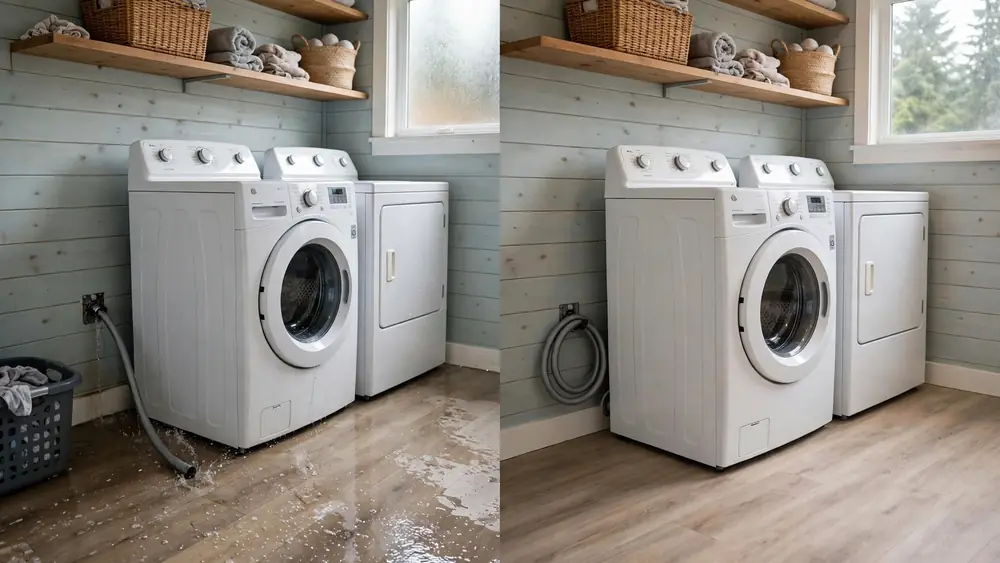
| Washer or dishwasher | More cleaning after extraction, and closer scrutiny of pad | A suitable drain, generally |
| Rain through a roof | Treated according to what it passed through, such as insulation | Depends on condition |
| Outside floodwater | Protective gear, removal of affected porous items, and cleaning | Local rules may apply, especially during an event |
| Sewage | Full protection and containment, with separate hoses or equipment | Sanitary drain or as directed by rules |
Floodwater
Staying out of water you have not identified
Ready.gov warns that floodwater can be contaminated, contain debris and even be charged by underground or downed power lines. Snakes and other animals can also come in with it. So the rule for a homeowner is simple: if you did not see it come out of a clean pipe, stay out of it until you know more.
CDC adds that wet circuits should be shut off at the main provided your feet stay dry, and that a panel you can reach only by wading is a job for an electrician. It also says that gas-powered pumps do not belong inside. Never run a generator, a pressure washer or any gasoline-powered device inside a home, basement or garage, or near an open window or door, because carbon monoxide can kill quickly and has no smell.
Do-it-yourself limits
What you can reasonably remove yourself
A small amount of clean water is a reasonable home job, as long as you stay inside these limits.
- Only use a wet vacuum rated for water, and plug it into a GFCI outlet in a dry area with the cord off the floor.
- Empty the tank often. A full one is much heavier than you might think, and it can hurt your back on the stairs.
- Use towels and a mop on hard floors, wringing them outside the wet area.
- Stop if you find water reaching outlets, or if the source is unclear.
- Do not use a wet vacuum on sewage or on floodwater that may be contaminated.
- Lift wet rugs with help, since a soaked rug can be very heavy and hard to handle.
- Call for help if water has been sitting for a day or has moved into another room.
Upstairs leaks
Extraction on upper floors and in high-rise buildings
Upper-floor jobs bring their own challenges. Weight is one, since water and soaked materials are heavy, and a saturated ceiling below is a safety matter. Access is another, as hoses may need to go through a stairwell or an elevator lobby, and a building may have rules on when and how equipment comes through.
Tell your building manager right away, and alert any neighbors below. Water may be going down through chases and light fixtures long before it shows on a ceiling. The contractor will probably need to check the floors below yours, and any repair work there will need that owner's or tenant's consent.
Pumps and discharge
Where the pumped water should go
Pumped water needs a suitable destination. Dumping it by the foundation just sends it back into the basement, so the hose should run well away and downhill. Clean water can often go to a yard or a storm drain, depending on your area, but contaminated water usually cannot. Rules vary, so the contractor should know what applies locally.
During a citywide flood, your storm drain may be full, and a sanitary sewer may be overloaded as well. Pumping into those can just cause trouble elsewhere. Ask the contractor or your local public works office about it. In a deep basement flood from outside, also read the pumping rate advice on the flooded basement cleanup page, which explains why that water should sometimes come out slowly.
After the pass
How you can tell extraction was thorough
You can check a good deal of this for yourself once the machines are off.
- Press a clean white towel onto the carpet with your weight on it. It should come up damp at most, and not wet.
- Walk the floor in socks, and pay attention to anywhere that feels cold or squishy.
- Look at baseboards for a dark line or for water beading at the joint with the floor.
- Ask the technician how many passes were made, and with what tool.
- Check under anything left in place, such as a sofa or bed.
- Ask for the reading taken after extraction, which is where the drying log should begin.
Belongings
Moving things out of the way of the hoses
What you do with furniture in the first hour matters, because stains and swelling start fast.
Wood furniture
Lift it off wet carpet onto foil, plastic or blocks, since finishes and stains can bleed into a carpet.
Metal legs and racks
Rust marks can appear overnight. Pads under legs help a lot.
Books and papers
Take them off the floor first. Stand books on end to dry, or freeze wet papers if they cannot be dealt with soon.
Fabric hanging low
Skirts on sofas and curtain hems wick water upward, and pinning them up stops this.
Items going to a claim
Do not throw out anything before you have photographed it. Your insurer may want to see it, too.
Before they leave
Questions to ask at the end of the extraction visit
Before the crew packs up, ask what remains wet and who is coming back to deal with it. Extraction is the first stage, and a job left at this point is not finished. Make sure that you know whether any carpet was left in place, and for how long it will be monitored. Ask what happens next if readings do not fall.
It is also worth asking whether the pad or any other material should be removed before drying starts, and how that decision was made. Get the answers in writing where you can. Your insurer will likely want that record, and it gives you something to refer back to if you need to speak with a second contractor. If you still need a contractor for extraction, the referral number is (833) 610-0241.
Extraction specifics
Further questions on removing water
How much water can a carpet hold?
More than most people expect, mainly in the pad. That is why weighted tools pull so much more than a wand pass over the top.
Can I run my HVAC while water is on the floor?
Check with the contractor first, particularly if there are floor registers or if the air handler got wet. Air movement can spread moisture and odor.
Why does the crew want to run hoses through my front door?
It is often the shortest clear path. Ask for floor protection along the route, and let them know if a pet or a child might get out while the door is propped open.
Is a little water left on the concrete okay?
Yes, for the moment. A thin film is left for the dehumidifiers to take up, since pumps and wands can only remove so much.
What if water keeps coming back?
Stop and find the reason. It may be an active leak, a rising water table or a failed sump. Extraction cannot get ahead of a source that has not been stopped.
Do I need extraction after a ceiling leak?
Sometimes. Water from above often lands on carpet, so the floor may need it, while the ceiling and attic need drying instead.
Depth and access
Telling the contractor how much water you have
Rough descriptions work better than guesses in gallons. Say whether the water is a film on the floor, over the sole of a shoe, at the ankle or at the knee, and say how many rooms it covers. Tell them about stairs, narrow halls and low doorways, since a pump and its hoses need a route. If the only way out for a hose runs through a clean room, the crew will want to protect that floor first.
Parking matters as well. Hoses from a truck-mounted unit have a working length, so a long driveway, a gated complex or a tenth-floor unit changes which machine makes sense. Mention any of these on the first call. It saves a second trip, and it shortens the time that water sits.
Rugs and pad details
Decisions the technician makes on carpet during extraction
Carpet decisions usually happen while the machine is running. These are the things being weighed.
- Water categoryClean water leaves more options, while contaminated water usually ends the discussion for both carpet and pad.
- Time wetBacking can start to separate from the face fibers, which is called delamination, and a carpet in that state rarely lies right again.
- Pad typeDense rebond pad holds a lot of water and is slow to give it up, so it is commonly pulled and replaced.
- Floor belowHardwood or a particleboard underlayment under the carpet may need more attention than the carpet itself.
- Area rugsWool and hand-knotted rugs are normally sent to a rug specialist, since dyes can run and backing can shrink.
Mess and access
What the home looks like during extraction
Expect hoses across thresholds, doors held open and a good deal of machine noise. Pets should be shut away, partly because of the noise and partly because an open door is an easy escape. Clear a path before the crew arrives if you can do it without wading, and let them know about fragile items along the way.
Water often drips from hoses and wands as they move, so a clean route is not guaranteed. Ask them to lay runners over floors you care about. When the crew finishes, walk the route with them and point out any scuffs or wet patches left behind while they are still there to deal with it.
Second visits
Why extraction may need to be repeated
One pass is not always the end. Carpet that was left in place may release more water as pad settles, and a basement may seep overnight. In that case, a return visit with the extractor is normal and is not a sign of a poor first attempt. Check the low spots in the morning, and let the contractor know what you find, ideally with a photo so they can judge what equipment to bring back.
Fresh water after a pass may mean something else, though. If new water appears in a spot that was dry, look for a source before anyone starts the machine again.
Service areas
Water Extraction service areas
Where you live changes water extraction. See Oregon, Connecticut, Delaware, Kansas, Louisiana, New Hampshire, Chicago, Dallas, Colorado Springs, Cedar Hill, Lake Stevens, Norcross, Port Charlotte, Prosper, Atlanta, Indianapolis.
Urgent?
If this is happening right now
Go straight to the first steps: emergency water extraction, emergency firefighting water removal.