
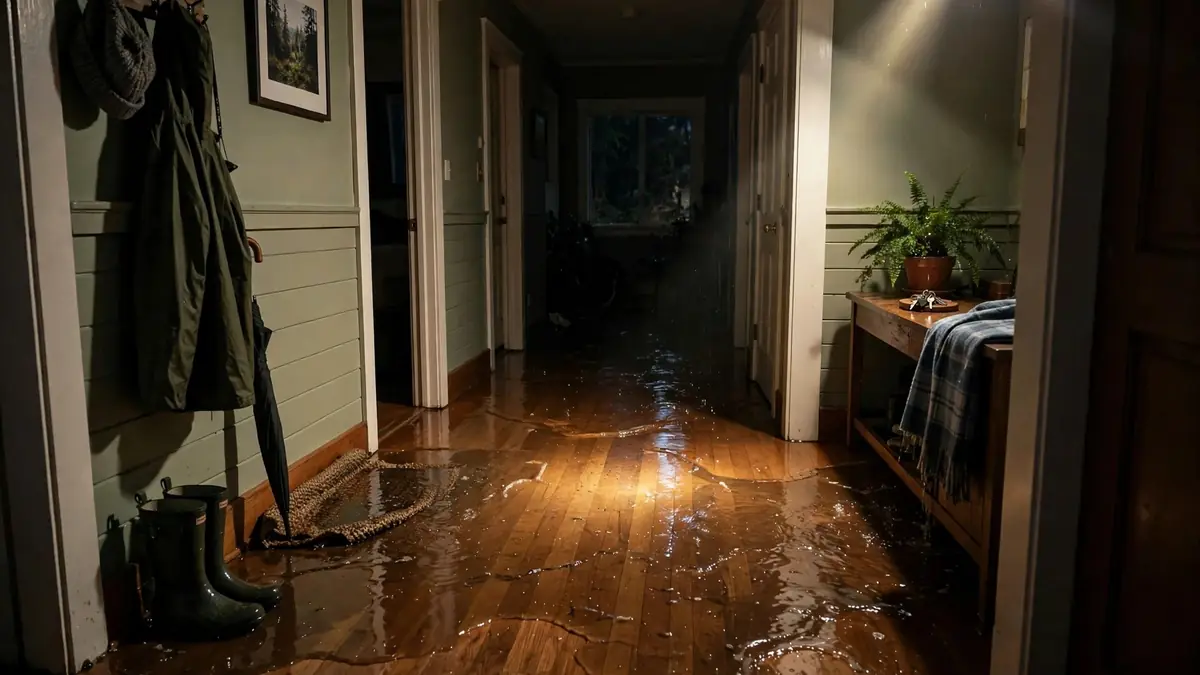
Key facts: Emergency Firefighting Water Removal
- Wait for clearance: Fire-weakened floors may not hold weight.
- Keep power off: Wet wiring needs checking first.
- Firefighting water jobs are referred to independent contractors, and availability differs by location.
Right now
First steps for firefighting water removal
- 1
Wait for clearance
Fire-weakened floors may not hold weight.
- 2
Keep power off
Wet wiring needs checking first.
- 3
Tell the contractor what burned
It helps to judge contamination.
- 4
Protect lower floors
Water often collects well below the fire.
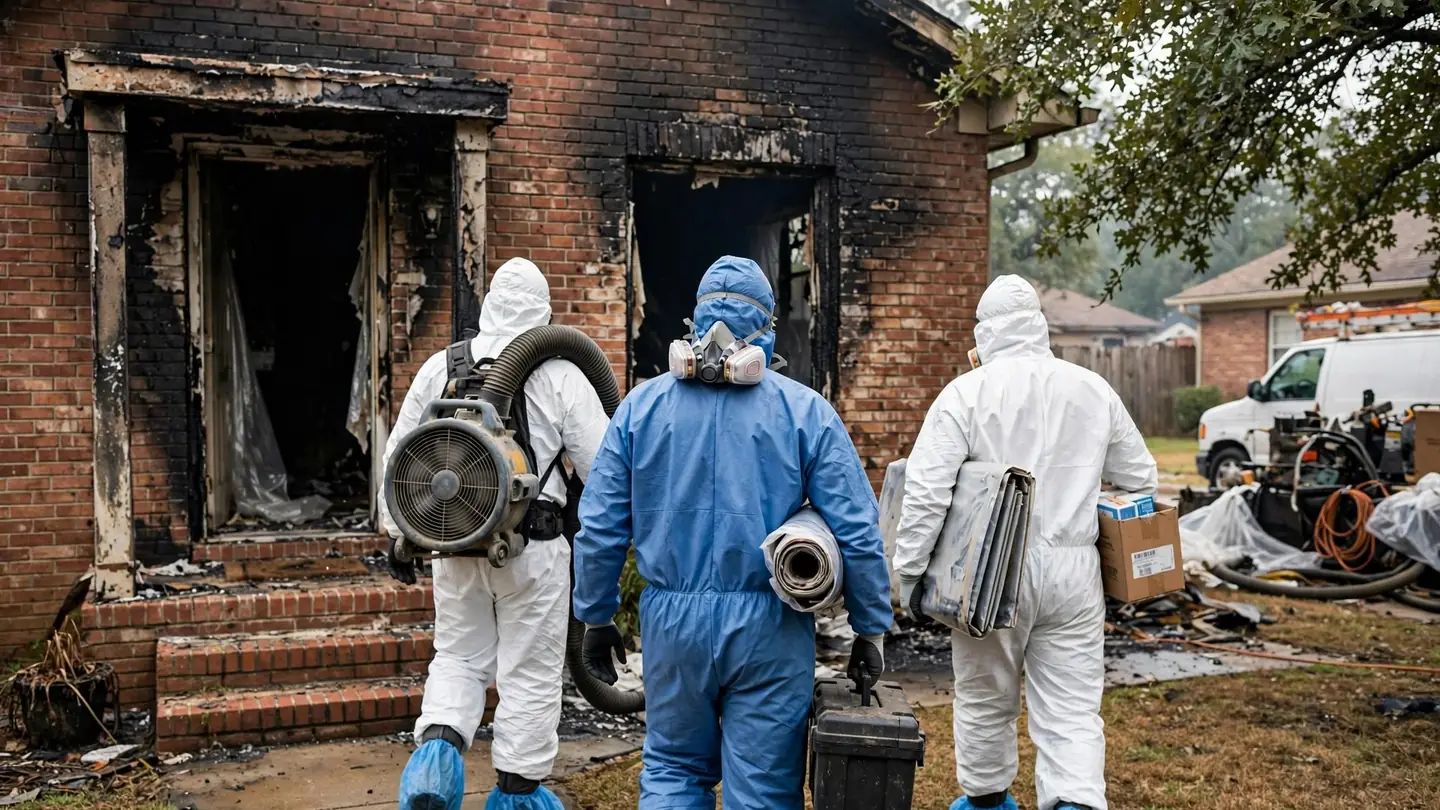
Going in to deal with hose water
Two losses
Why the water can matter as much as the fire
Firefighters use what it takes to save the building, and that water has to go somewhere. It moves down through floors, along framing and into lower levels. A fire in one upstairs room can leave the kitchen ceiling soaked, the basement flooded and wet insulation in rooms the flames never reached.
This water is also not clean. It has passed through burned materials and picked up residue. That makes it different from a burst pipe in nearly every way: who can handle it, what can be saved, and how it must be removed. Tell everyone involved that it came from a fire, and which materials burned.
Before anyone starts
What needs to be true before water removal
- The building has been clearedRe-entry follows a safety confirmation from the fire department, per Ready.gov. Burned floors holding extra water weight may be unsafe.
- Utilities have been dealt withDo not reconnect them yourself. Before crews leave, firefighters should tell you the status of each service, as Ready.gov explains.
- A plan exists for electric powerCrews need power for equipment, but building circuits may not be safe to use. Ask how they will supply it. Any generator stays outside and 20 feet clear of openings, per Ready.gov.
- Your insurer knowsAsk what they need to document, and whether they want to see the wet areas first. Water removal should generally not wait long, so be clear about timing.
- Someone has looked up and downCheck ceilings that may hold water, and floors that have been weakened. Keep people out of any space below a heavy, wet ceiling.
Hours and days
The usual order after the engines leave
A fire scene is unpredictable, and contractor availability varies. Use this as a checklist instead of a timetable.
- 1
At the scene
Ask the officer in charge how much water was used and where it was concentrated. Ask whether power and gas were shut off.
- 2
First few hours
Do not go in without clearance. From outside, note water running from doors, or pooling at the foundation. Take photos and start your insurer call.
- 3
First day
Have the building secured if it stands open. Tell the contractor what burned, the rooms affected and the floors below. Ask for a walk-through with you when allowed.
- 4
First day, once cleared
Water removal can start where it is safe. Lower levels and rooms below the fire often need attention first, because that is where the water ends up.
- 5
Days 1 to 3
Removal of soaked insulation and ceilings may be needed for safety and for drying. Drying and residue cleaning need to be planned together, so ask how the contractor will sequence them.
- 6
Following days
Ask for moisture readings and the plan for rooms that got water but no fire. Keep checking for musty smells or new stains, since a house without power may have little airflow.
Room by room
Where hose water tends to end up
Water takes the easy route down. Check the areas below and beside the fire, not just the burned room.
| Location | What may happen | What to ask |
|---|---|---|
| Room of origin | Soaked debris mixed with residue | How will debris be documented and removed? |
| Ceilings below | Water held above drywall or plaster | Is it safe to enter, and can it be relieved? |
| Wall cavities | Wet insulation, residue carried down | Which walls need to be opened? |
| Stairwells | Water running down steps, slippery surfaces | Is the stair sound? |
| Basement | Standing water, wet panel or equipment | Is the power cut, and how will water come out? |
| Crawlspace | Standing water out of sight | Has anyone checked? |
| Neighboring unit | Water through shared walls or floors | Has the neighbor or manager been told? |
Do not
Wet-house mistakes after a fire
- Using household fans on house powerWiring near a fire or in water may not be safe. Wait until an electrician or the utility has confirmed it.
- Walking on sagging floorsFire weakens floors, and water adds weight. Stay out until the structure has been checked.
- Mopping or wiping without adviceWater mixed with residue can spread stains and smell. Ask what the plan is before you start.
- Putting wet items in sealed bagsSealed wet goods can start to smell and grow mold quickly. Photograph them and ask for advice.
- Assuming the rooms below are cleanWater carries soot down with it. Treat lower-level rooms that got wet as part of the fire loss.
- Keeping children or pets in the wet buildingCDC advises keeping them away from affected areas until cleanup ends.
- Forgetting freezing weatherIn an unheated house, standing water can freeze and make floors and stairs treacherous. It may also damage plumbing. Ask for advice about protecting the house.
Salvage
Items that got wet but did not burn
Move quickly, but only once you are cleared. Water-damaged goods often have a better outlook than burned ones, though residue can complicate them.
| Item | Usual first step | Caution |
|---|---|---|
| Clothing and fabric | Ask about specialist cleaning | Wet fabric can sour and mildew quickly |
| Wood furniture | Move out, blot, dry slowly | Do not put it in direct sun |
| Upholstery and mattresses | Photograph and ask | Often unsalvageable if soaked in dirty water |
| Paper and books | Ask about freezing or drying options | Do not force apart wet pages |
| Photographs | Keep from sticking; ask for advice | Do not rub |
| Electronics | Keep unplugged | Do not power up without a professional check |
| Food and medicines | Discard if exposed | No exceptions for items with doubt |
Protect yourself
If you must be in the wet building
Fire scenes should mostly be left to professionals. If you are allowed in briefly, take these precautions.
- Wear real protectionCDC lists a hard hat, goggles, an N95 mask or higher-level respirator, heavy gloves and waterproof boots with steel toes and insoles for work in damaged buildings.
- Go in daylight and with someoneCDC recommends daytime return, especially if power is out. Do not go in alone.
- ListenLeave at once if you hear shifting or strange noises.
- Wash up afterwardUse soap and water. Wash clothes in hot water with detergent, separately from other laundry.
- Treat cuts promptlyClean any cut that has been exposed, and get medical attention if needed.
- Keep it shortTake the essentials, photograph, and leave.
Log
What to note about firefighting water
- Fire reportThis connects the water to the fire. Keep the incident number with each record.
- Photos of water pathsCeilings, stairs, basement and neighboring rooms, plus the outside of the building.
- Materials that burnedTell the contractor and keep notes. It affects how the water and residue are viewed.
- Water removal detailsWhere the crew removed water, what equipment they used, and how they handled disposal.
- Wet rooms that did not burnPhotograph them separately, so that the insurer can see the full damage.
- Neighbor notificationsNote who you told, when, and what they reported in their own space.
Questions
Firefighting Water Removal: quick answers
Is this covered with the fire claim?
Commonly it is part of the same loss, but check with your insurer.
Can wet walls be cleaned first?
Drying and residue removal are planned together, so ask about the order.
Do I need separate contractors for the water and the fire?
Not always. Many jobs combine them, but make sure someone is clearly responsible for each stage. Ask which contractor handles what.
Can the water just dry on its own?
Not safely. In a closed-up building with wet materials and residue, it invites mold and more staining. Drying should begin promptly once it is safe to work.
Why did they cut holes in my roof and walls?
Firefighters may vent a building or open walls to find hidden fire. Include these openings in your photos and tell your insurer. Ask about securing them.
The fire department flooded my basement. Should I pump it right away?
Wait for clearance and a check on power. Tell the contractor about any ground conditions, since outside flooding can make fast pumping risky.
Next
When the hose water is out
The water extraction page explains the removal process. The fire damage restoration page sets that in the context of the full recovery, and structural drying picks up where water removal leaves off.