
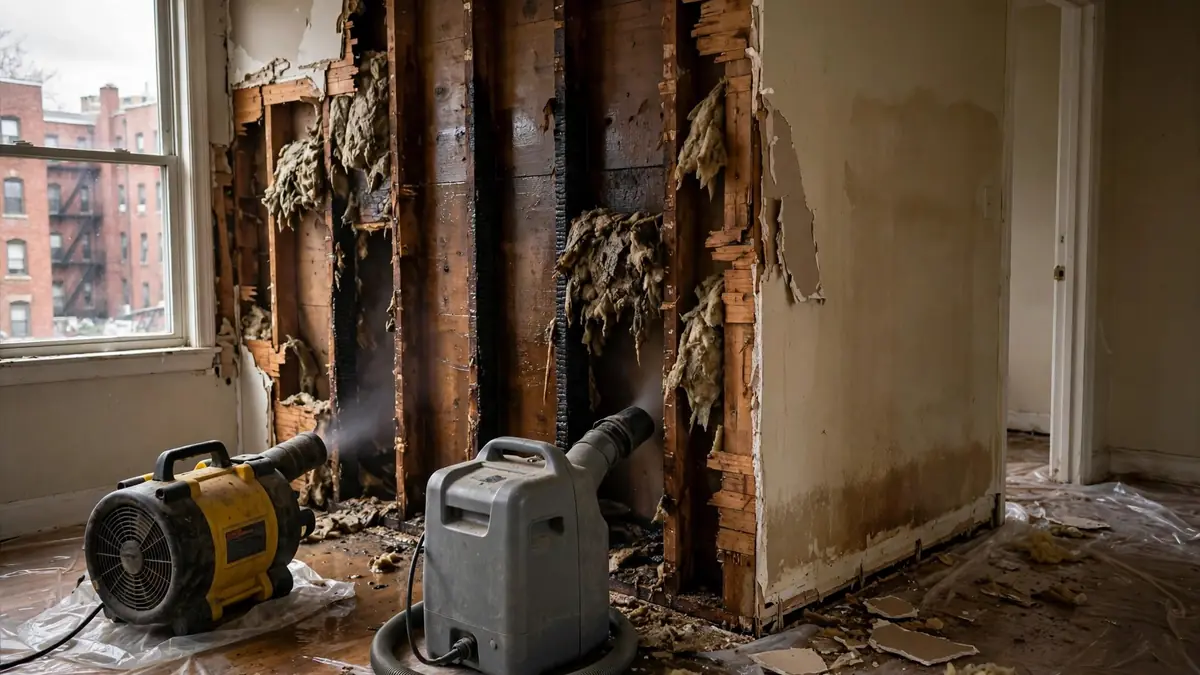
Key facts: How to Find Hidden Moisture
- EPA's drying window of 24 to 48 hours is meant to limit mold [1].
- Pin and pinless meters measure moisture differently, so professionals often use both.
- Thermal cameras show temperature differences, which suggest moisture but need a meter to confirm it.
Signs
Clues your walls give away
Walk the room with the lights off and a flashlight held flat against the wall. Waves or shadows show swelling. Press baseboards, and look for lifting paint, dark corners and rust on fasteners. Then check the room below and the room behind, since water moves sideways along framing and down through floors.
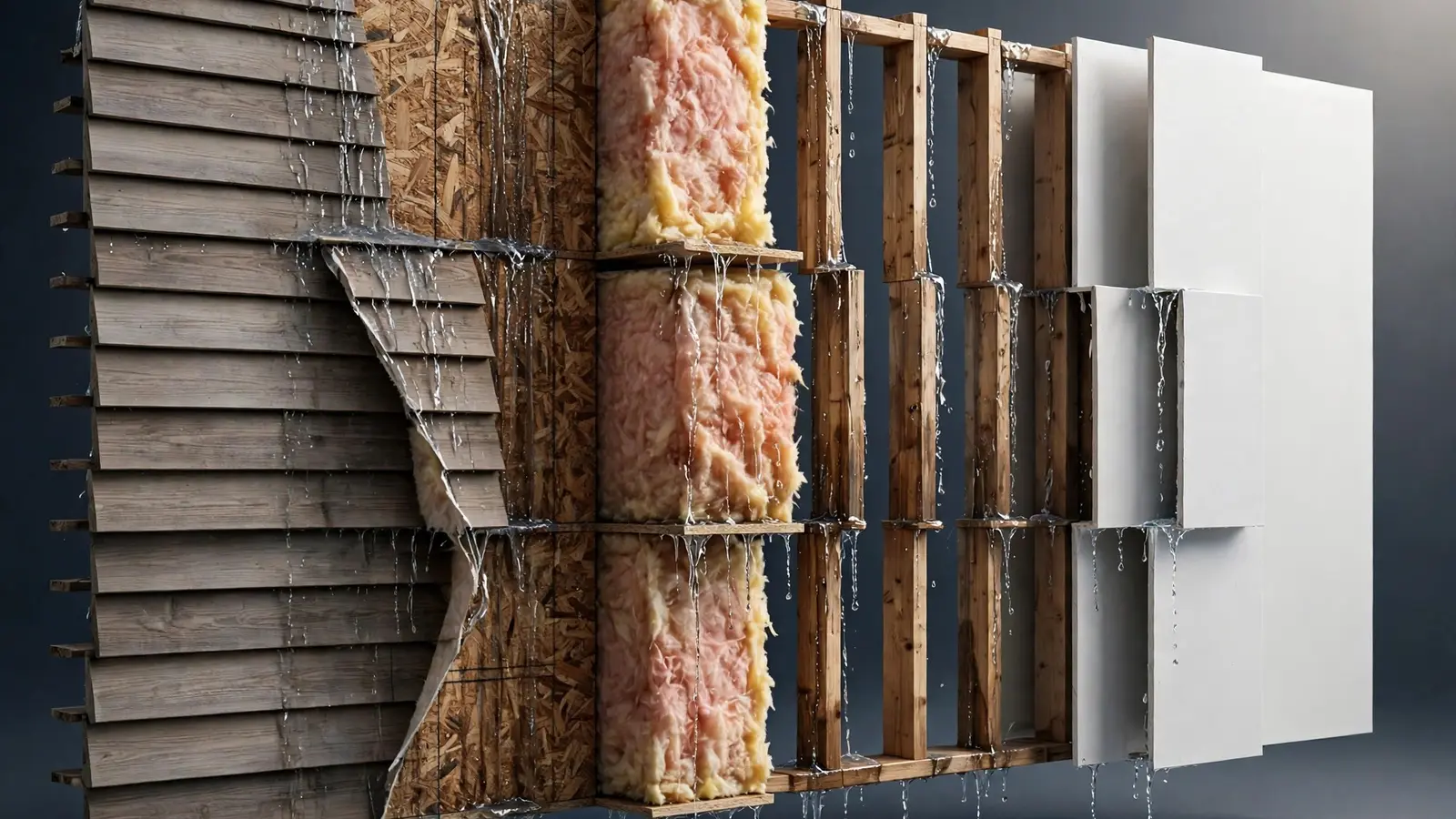
Layers where moisture hides
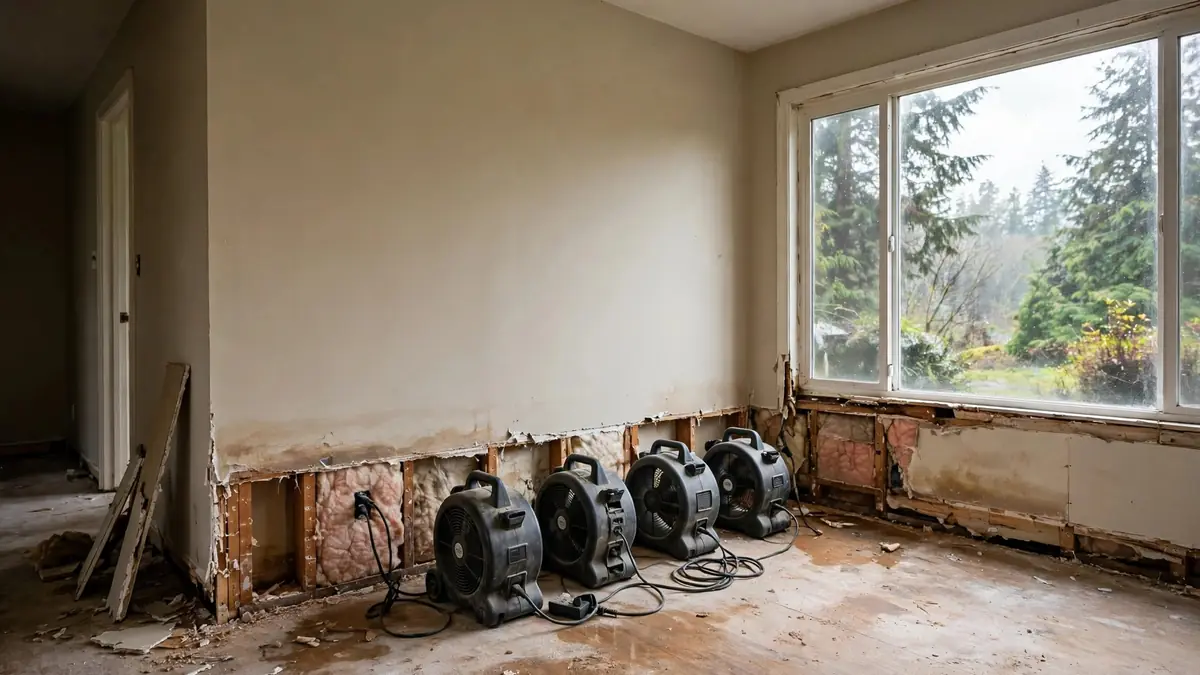
Baseboards off, cavity exposed
Compare
Meters, cameras and hygrometers side by side
| Tool | Good for | Limit |
|---|---|---|
| Pin meter | Exact spots in wood and drywall | Leaves small holes |
| Pinless meter | Quick scans | Depth is limited |
| Thermal camera | Finding patterns | Must be confirmed with a meter |
| Hygrometer | Room humidity | Says nothing about materials |
Where to look
A room-by-room checklist
Use this list after a known leak, or when you smell something and cannot find it. Take a flashlight and a notepad.
- KitchenToe kick under the cabinets, the back of the sink base, behind the refrigerator line and dishwasher, and the floor edges next to appliances.
- BathroomAround the toilet base, behind the vanity, the ceiling of the room below the tub, and any access panel for the shower valve.
- LaundryBehind the washer, at the supply boxes and drain standpipe, and the floor near any floor drain.
- AtticUnderside of the roof deck, around chimneys and vents, wet or matted insulation, and condensation on ducts.
- BasementBase of walls, seams where wall meets floor, behind stored boxes and paneling, near the sump, and under the stairs.
- CrawlspacePuddles, damp soil, sagging insulation, and the undersides of joists beneath bathrooms and kitchens.
- Exterior wallsBelow windows, around door frames, and any spot where gutters overflow or the ground slopes toward the house.
- HVACAround the air handler, drain pan and condensate line, and the areas near supply registers if there is a musty smell when the system runs.
Do it in order
How to run your own moisture check
A systematic pass finds more than a hurried search. Stop right away if you see sagging ceilings, sewage or anything electrical in contact with water.
- 1
Start in a known-dry area
Take a reading on the same material in an unaffected room. This is your reference, and it is what later numbers mean most against.
- 2
Mark the source
Note where the leak began, and work out what is below it and on the other side of the wall.
- 3
Scan along the floor line
Go around the room at the bottom of each wall, near the baseboard. Mark anything above your reference on painter's tape, with the number and date.
- 4
Work upward until readings fall
Find the height where wet readings stop. That tells you how high water wicked in.
- 5
Go to the adjacent rooms
Check both sides of each wall, closets, and the room below.
- 6
Photograph and date your numbers
A photo of the meter next to the tape gives you a record that shows change over time.
- 7
Repeat in a day or two
One reading is a snapshot. A rising or stubborn number suggests an active source; a falling one suggests drying is happening.
Reading numbers
Understanding what a meter is telling you
Moisture meters give numbers that are easy to misread. Many report wood moisture content directly and other materials only on a relative scale, so a number on drywall does not mean the same thing as the same number on a stud. Read the manual, and always compare like with like. A reading only has meaning when you compare it with a known-dry piece of the same material.
Pin meters read between two points and are good for pinpointing, though they leave small holes. Pinless meters scan through a surface and are quick for mapping, but they respond to what is within their sensing depth and can be fooled. Metal such as foil-backed insulation, nail plates or a metal corner bead can produce a high reading on a dry wall, and so can some tile and dense materials.
False lows happen as well. A pinless meter on a thick floor may not sense a wet layer underneath. That is why contractors often use more than one tool and sometimes open a small inspection hole where the readings and the evidence disagree.
Infrared
What thermal cameras can and cannot show
A thermal camera shows surface temperature, not water. Evaporation cools a wet surface, so damp spots often show up as cooler patches, and that pattern can reveal the path water took. It is a useful way to see where to test next.
But cool spots have many other causes. Missing insulation, air leaks, a cold pipe, and a nearby vent can all look much like moisture. On the other hand, a wet area that has reached room temperature and stopped evaporating may hardly show at all. Cameras work best with a temperature difference between inside and outside, so results can vary with the weather.
Treat any thermal image as a question, not an answer. A contractor who shows you a colored image should also put a meter on that spot. If someone uses an image to recommend removal without taking a moisture reading, ask them to take one.
Sorting causes
Is it a leak, or something else?
Damp patches are not always plumbing. The pattern gives useful clues about the source before anyone opens a wall.
| What you notice | Possible source | A useful next step |
|---|---|---|
| Damp only during or after rain | Roof, flashing, gutters, window or grading | Check the outside above and around the spot |
| Damp all the time, getting worse | Pressurized supply line | Check the water meter with everything turned off |
| Damp after using a fixture | Drain line, shower pan or overflow | Run that fixture alone, then check below |
| Beads on cold surfaces in humid weather | Condensation | Check humidity; EPA says condensation can signal high humidity |
| Dark band along the base of a basement wall | Groundwater or a slab joint | Look at gutters, grading and sump function |
| Musty odor when the HVAC runs | Drain pan, ducts or air handler | Have the system checked and do not run it if mold is suspected |
Going further
When opening a wall or floor is justified
Sometimes a small hole answers a question no meter can. If readings are high at the base of a wall and there is insulation behind it, the only way to know how much is wet may be to look. A small inspection cut near the floor, hidden later by a baseboard, can be a fair first step. Pulling a baseboard first can give access with very little damage.
Do not start cutting in an older home without checking first. EPA notes that cutting into pre-1978 paint can put lead dust in the air, and asbestos can be present in older building materials. Turn off power to that wall, and find out where plumbing and wiring run. Disturbing hidden mold can also release spores, so have a plan before you open a suspect area; EPA's cleanup guide covers when professional help makes sense.
For flooring, an access point at the edge of a room or in a closet can show what is beneath. Lifting a corner of carpet is easy; lifting hardwood, tile or laminate may not be, so a pinless scan and readings from the room below may be the better early step.
Hard cases
Materials that hide water best
These are the materials and spots most likely to fool a quick inspection.
- Vinyl wallpaper and glossy paintThey slow evaporation and can make a wall read dry on the surface while the board behind it stays wet.
- Vinyl plank, tile and sheet flooringWater can travel beneath these with almost no visible sign. EPA says to confirm the underflooring is dry.
- Hollow-back cabinetsThe space behind a kick plate can hold water for a long time and is rarely opened during cleanup.
- Insulation in exterior wallsIt holds moisture against the sheathing and framing, away from any airflow.
- Plaster and old masonryThick materials can read differently across a wall and release moisture slowly.
- Ceilings under upstairs bathroomsWater can spread across the top of the ceiling and show up well away from its source.
Limits
When to bring in a contractor
A basic meter is useful, but some situations call for help.
- You smell mold but cannot find any source; EPA suggests considering an experienced professional in that situation.
- The water came from sewage or floodwater, since testing should not expose you to it.
- Readings are high in more than one room, on more than one level, or do not fall.
- You are planning to close up walls or install flooring and want proof that everything is dry.
- Someone in the home has a chronic lung problem, asthma or reduced immunity.
- An insurer has asked for documentation. A contractor's moisture log can help, though your insurer decides what it will accept.
Testing
Should you test for mold rather than moisture?
Usually, finding the moisture matters more. CDC does not recommend routine mold testing, because health effects vary from person to person and there are no set standards for acceptable mold levels. CDC's advice is to remove what you can see or smell and to fix the moisture problem behind it.
EPA similarly notes that sampling is not always necessary, although professional testing is an option if you are in doubt. If you do pay for testing, ask what question it will answer and how the results would change the plan. A positive or negative result rarely tells you where the water is coming from. See mold prevention after water damage for more on the moisture side.
Follow-up
Keeping an eye on it afterward
After repairs, a few simple checks will tell you whether the problem has returned.
- Keep a small hygrometer in the affected room. EPA's advice is below 60 percent humidity, ideally 30 to 50.
- Recheck the same spots with a meter after a heavy rain or a change of season.
- Look for new staining, rust on fasteners, or soft spots in baseboards.
- Note any change in odor when returning from a day away, when your nose has reset.
- Keep your original readings as a baseline, so you can see any change.
Tracing the path
How water travels once it gets out
Knowing how water moves makes the search much shorter. It falls until something stops it, then spreads sideways along that surface until it finds an opening. A ceiling board, a subfloor, or the top of a foundation can act like a shelf, carrying water well away from the leak. Pipes and wires passing through framing give it a route from one floor to another.
Porous materials also pull water upward by wicking. Drywall, plaster and masonry can draw moisture above the visible water line, and that is why a stain on a wall may sit higher than the flood itself ever reached. Slopes matter too: most floors are not perfectly level, so water may pool on the far side of a room from where it began.
That's why a good search goes beyond the wet spot. Sketch the room, mark the source and draw arrows showing where water could go. Check the lowest points, then work back. In a multi-story home, go to the room directly below, and then to the rooms alongside it.
Roof and exterior
Clues from outside and overhead
Water that comes in from outside often leaves its first signs away from the room where you notice the damage.
- Gutters and downspoutsOverflow marks, loose joints and downspouts dumping against the foundation can feed damp walls below.
- Roof penetrationsVents, chimneys and skylights are common trouble points. Look at the attic side after rain, using a flashlight, and stay off a wet roof.
- Window and door headsStains at top corners can point to a failed flashing or seal, with water running down inside the wall.
- GradingSoil that slopes toward the house sends water to the foundation. Look at the ground during a rain.
- Siding and exterior paintPeeling paint, or a swollen or stained area on the outside, can match a damp wall on the inside.
- Hose bibs and irrigationA leak where an outdoor faucet passes through the wall may only run when the hose is in use.
Visual clues
Reading the signs on each surface
What you see can hint at how long a problem has been around. These are hints, and they should be confirmed with readings.
| Sign | Can suggest | Check next |
|---|---|---|
| Fresh wet sheen or dripping | Active leak | Stop the water; find the source |
| Stain with several rings | Repeated wetting over time | Whether it is still active, with a meter |
| Bubbling or peeling paint | Water behind the paint film | Meter reading; the back of the board |
| Rusty nail heads or corner bead | Past or current dampness | The cavity behind the wall |
| Cupped wood flooring | Moisture coming from below | Subfloor, crawlspace or basement ceiling |
| White chalky powder on masonry | Water moving through the wall and leaving salts | Grading and drainage outside |
| Dark speckling in corners | Possible mold growth | The cause of the moisture; see EPA cleanup guidance |
| Loose tile or soft grout | Water behind or under tile | Backer board and the floor below |
Odor
Smells can be misleading
A musty smell usually means something is damp, though not necessarily where you notice it. Air moves through a house. It can carry an odor from a crawlspace up into a bedroom, or from a wall cavity into a closet. Odors may also become stronger when the HVAC runs, when doors are closed or when the weather turns warm and humid.
Sewer-like smells are a different problem. A dry floor drain trap, a failing wax ring or a broken vent can let sewer gas in without any flooding. Pouring water into an unused floor drain restores the trap, and that's an easy test. If the smell stays, call a plumber. Don't confuse this with hidden moisture just because the two can smell somewhat alike.
Try an odor walk. Leave for a few hours so your nose can reset, then return and move slowly from room to room. Open closets and cabinet doors, and sniff near the baseboards and vents. Note where the smell is strongest. This low-tech method can give a contractor a useful starting point.
Hiring help
What a professional moisture survey should include
If you pay for an inspection, the results should be something you can read and keep.
- 1
A conversation first
They should ask what happened, when, and what you have noticed.
- 2
Reference readings
They should measure dry materials of the same kinds, so wet readings mean something.
- 3
A map of the affected area
You should get a sketch or photos showing where the readings were taken and what they found.
- 4
More than one tool
Expect a meter along with thermal imaging or a hygrometer, as called for.
- 5
An explanation of the source
They should say what they think is causing the moisture, or say plainly that they don't yet know.
- 6
Clear next steps
Ask what should be done, who should do it, and how you'll know when it's dry.
Questions
Moisture-hunting questions
Can I rent or buy a meter?
Yes, and basic ones are useful for tracking change, but readings vary by material, so interpret them with care.
What if readings are normal but it still smells?
The source may be elsewhere, such as a drain, crawlspace or HVAC. See mold prevention.
Can water be trapped in a wall for weeks?
Yes. An enclosed wall cavity gets very little airflow, so moisture can remain long after the room seems fine. That is why readings matter more than appearance.
Can I use a meter on tile or concrete?
Basic meters are often unreliable on these. Readings can be affected by the material itself, so treat any result as a clue and compare with a dry spot nearby.
Does a dry-feeling wall mean there is no moisture?
No. The surface can dry first while the back of the board and the framing stay damp. Check with a meter before closing up or repainting.
Will a home inspector find it?
A general inspector may note visible signs, but a full moisture investigation is usually more detailed. Ask what tools and which areas are included before booking.