Key facts: Chicago
Local risks
What drives damage in Chicago
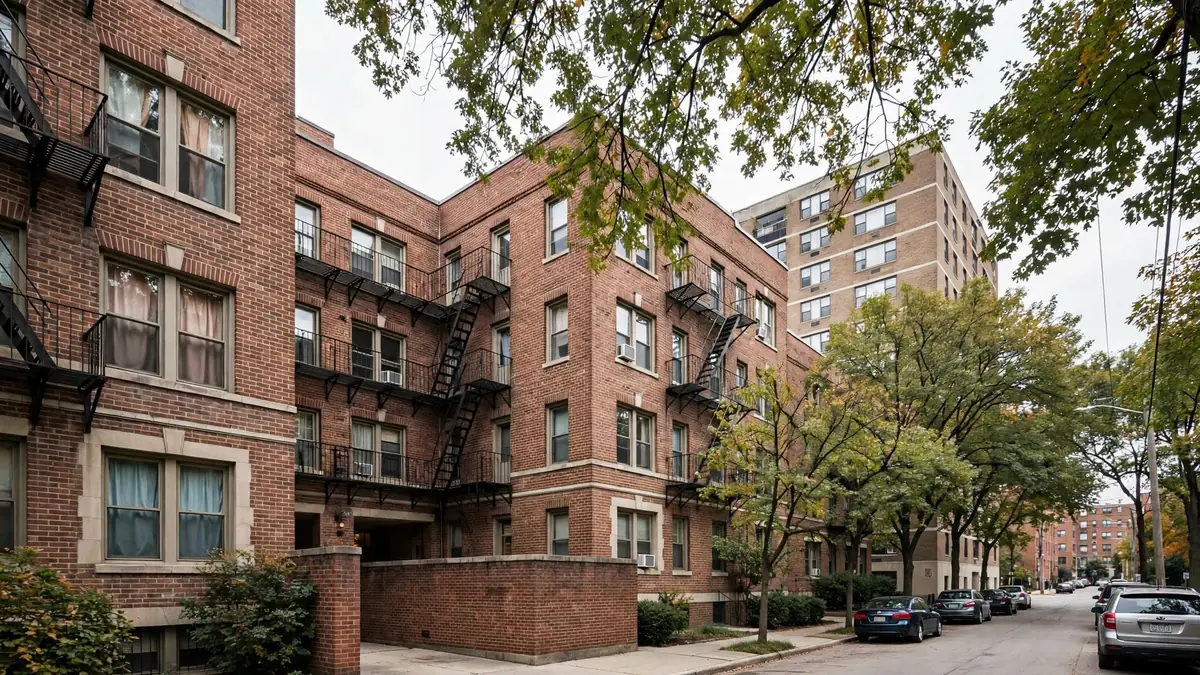
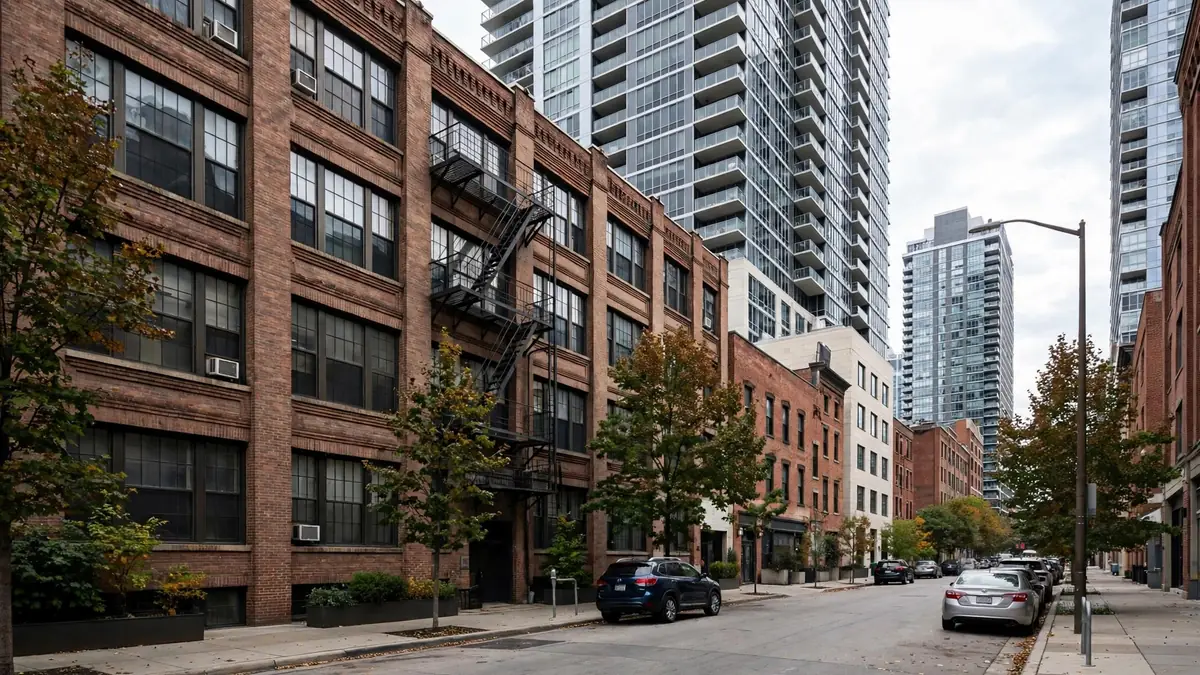
Hallways and shared stairwells can carry smoke to units that never saw flames. High-rise management also controls access and building systems after a fire.
Winter fires add another risk, since firefighting water can freeze in a building left without heat.
Housing
Homes and buildings here
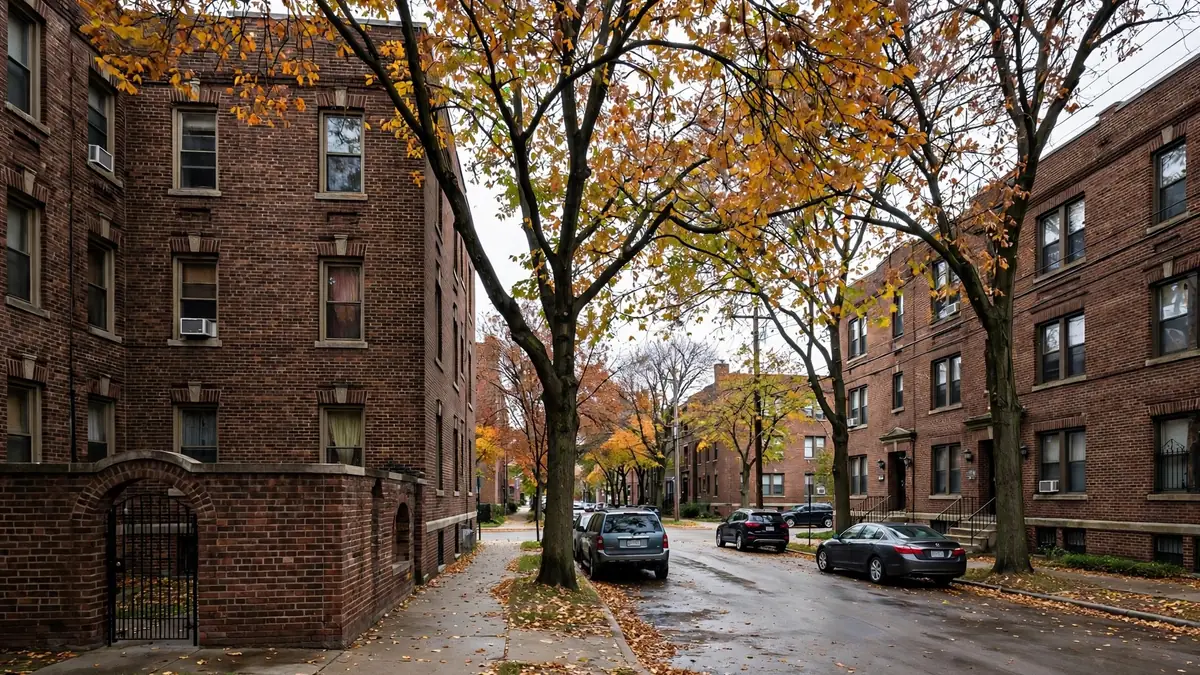
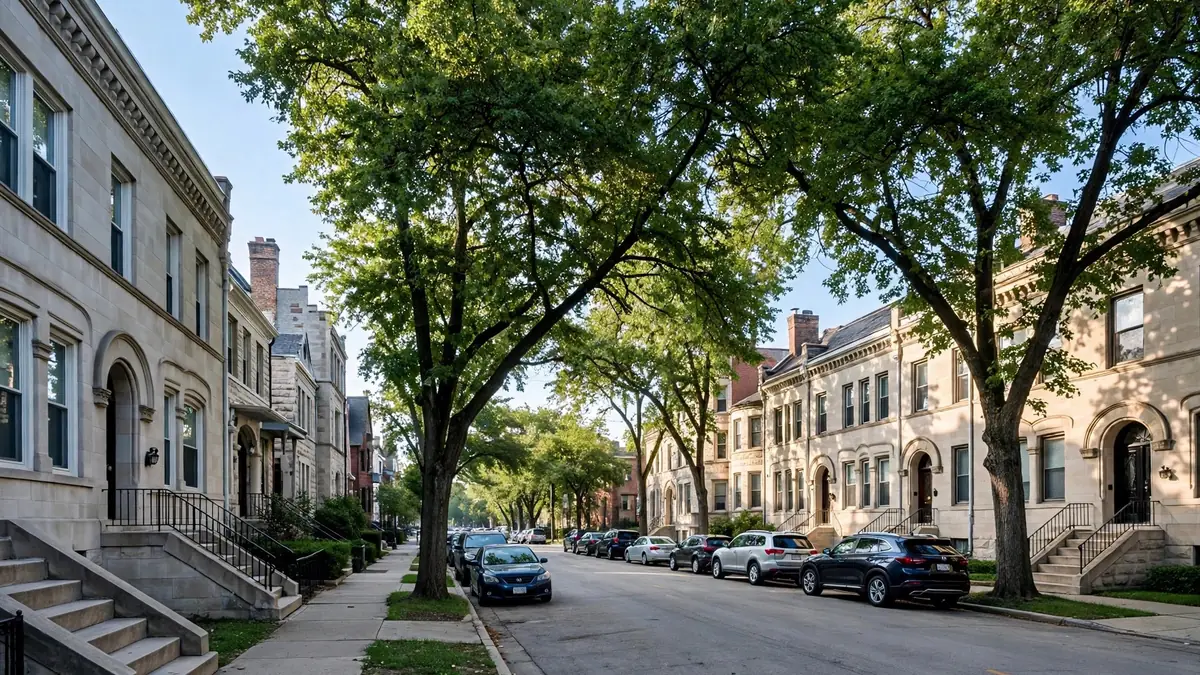
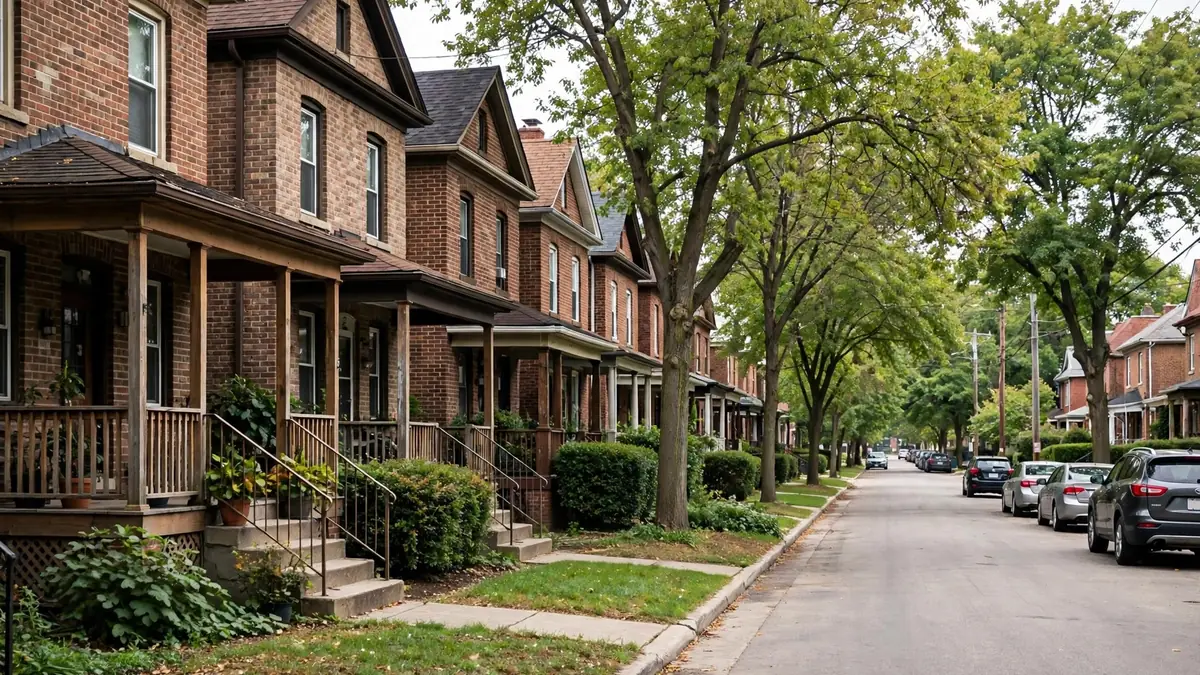
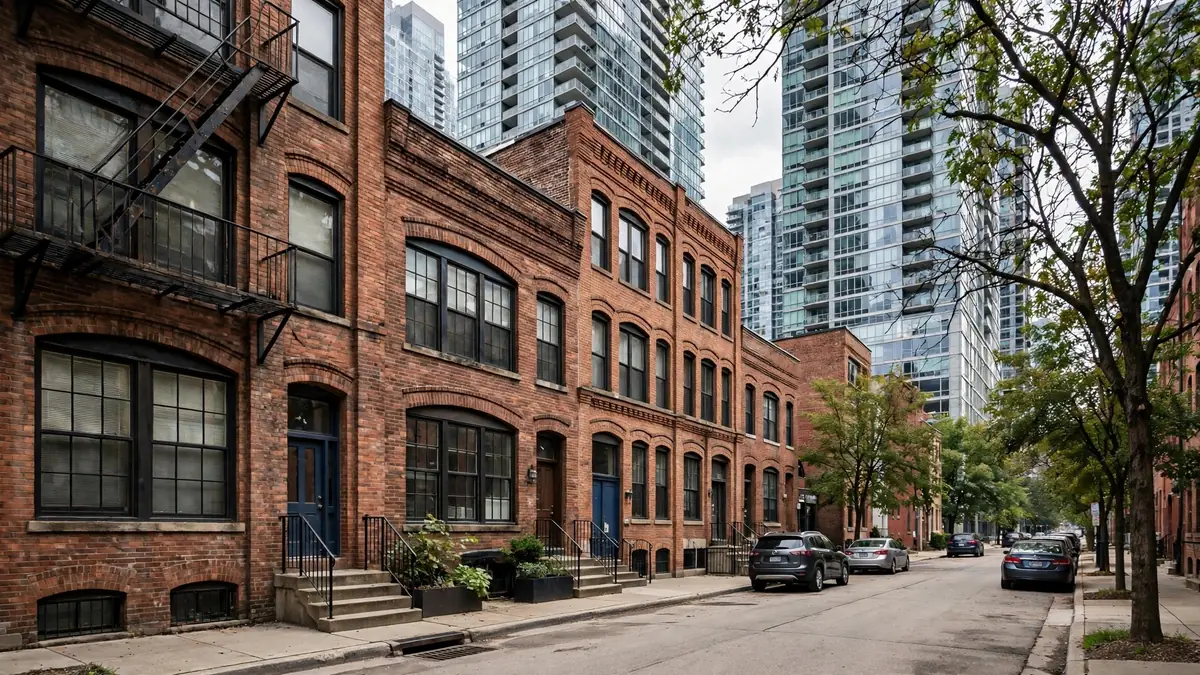
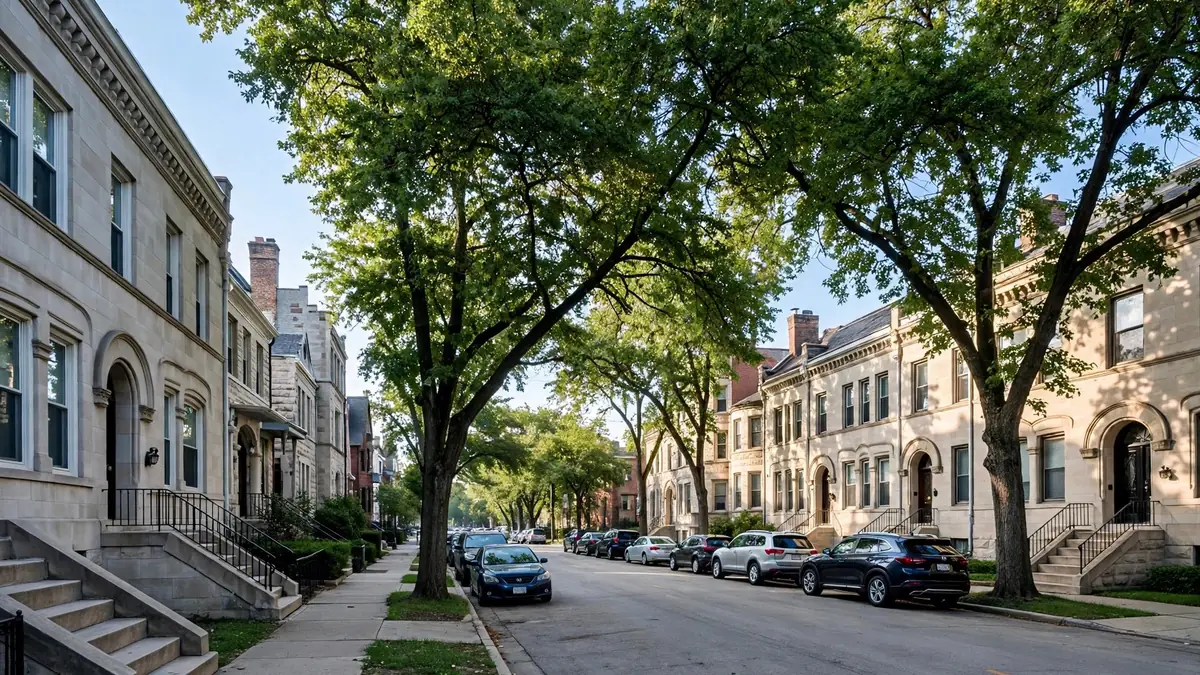
Logan Square has greystones and brick two-flats. Portage Park and Jefferson Park have 1910 to 1940 brick bungalows with full basements, while Lakeview and Uptown have many courtyard buildings and lakefront towers.
Common damage
Where to go next
Services people ask about
Start with fire damage restoration, smoke damage cleanup or board-up and tarping. Older homes may need lead-safe work.
Service areas
Restoration service areas in Chicago
Cities and neighborhoods: Lakeview, Logan Square, Loop and South Loop, Portage Park and Jefferson Park, River North and Streeterville, Uptown and Edgewater.
In brief
Your first Chicago question after a fire: who controls the building?
In a single-family bungalow, you do, once the Chicago Fire Department has released the property. In a two-flat you likely share the decision with another household. In a condo or a downtown tower, the association or management controls access, elevators and shared systems. Sort that out early, because it decides who can let the contractor in.
Do not go back in until firefighters release the building and utilities are confirmed safe. If you smell gas, leave and call Peoples Gas from outside.
A city built by fire
1871, and the buildings Chicago put up afterward
The Great Chicago Fire burned from October 8 to 10, 1871, destroying about 17,500 buildings over roughly 2,100 acres. About 300 people are believed to have died. Officials started rewriting fire standards almost immediately, driven in part by insurers and reformers, and a good deal of Chicago's masonry character traces back to that period.
Brick outside does not mean fireproof inside. Many older houses and flats have wood framing behind the masonry or siding, and balloon-framed walls can run uninterrupted from basement to attic. Smoke, and sometimes fire, can travel through those cavities. Ask the contractor to look above and below the room that burned.
Neighborhood guide
Chicago building types by neighborhood
See each neighborhood page for local detail.
| Neighborhood | Typical buildings | What to raise on the call |
|---|---|---|
| [Lakeview](/areas/chicago/lakeview/) | Courtyard buildings, greystones, lakefront condos | Shared stairs and halls; landmark districts |
| [Logan Square](/areas/chicago/logan-square/) | Limestone greystones, brick two-flats | Boulevard landmark district review of exterior work |
| [Loop and South Loop](/areas/chicago/loop-and-south-loop/) | High-rises, Printers Row lofts | Building approval for contractors; sprinkler water on lower floors |
| [Portage Park and Jefferson Park](/areas/chicago/portage-park-and-jefferson-park/) | 1910 to 1940 brick bungalows | Attic spaces, full basements, detached garages |
| [River North and Streeterville](/areas/chicago/river-north-and-streeterville/) | Towers and converted buildings | Elevators, management rules, smoke in shafts |
| [Uptown and Edgewater](/areas/chicago/uptown-and-edgewater/) | 1910s and 1920s courtyard buildings | Rear porches, tenant belongings, multiple owners |
Fire to water
The water half of a Chicago fire loss
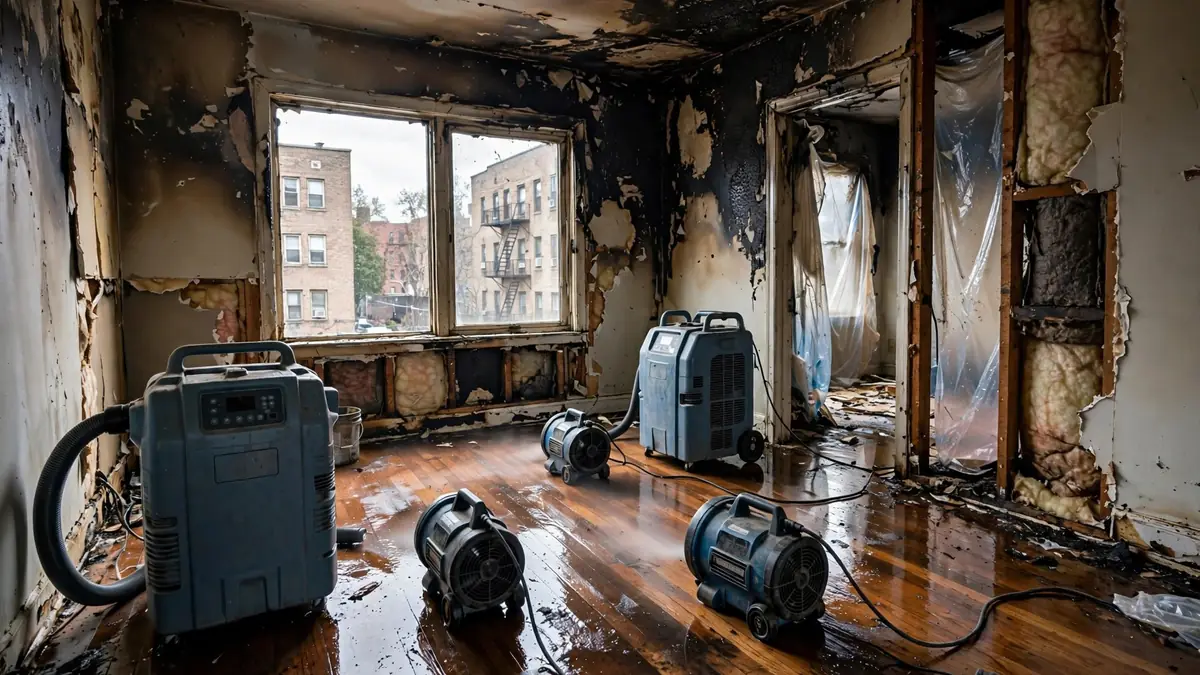
Most fires leave a wet building behind. These are the main problems.
- Hose and sprinkler waterWater travels down, so the units below the fire can have the worst flooding and no burn marks at all. Tell the contractor about floors below.
- Winter freezeIf heat is off, water left behind can freeze in pipes and on floors. Ask about keeping lines drained and getting temporary heat or drying going quickly.
- Basement mixingWater that reaches a basement may mix with drain or sewer water. Firefighting water removal covers what comes next.
- Ash in standing waterAsh and soot can make runoff corrosive and dirty, so keep kids and pets out.
Rain too
When the problem is a flooded basement, not a fire
Chicago's other big home emergency is basement flooding. From June 29 to July 2, 2023, a storm dropped an amount the National Weather Service put at 2 to 9 inches on the western part of the city and nearby suburbs. WBEZ counted more than 12,000 basement flooding reports to 311 from July 2 to July 18, and about four in ten of those came from Austin.
If this is your situation, stop using your drains, report it to 311 and go to flooded basement cleanup. The same bungalow basement can face both risks across a single year.
Timeline
The first day after a Chicago house or flat fire
Use this sequence after the fire department has finished.
- 1
Get the release and the report details
Ask who the incident commander was and how to get the fire report. Your insurer will want it.
- 2
Secure the opening
Broken windows and vent holes need closing up, and winter makes this urgent. See board-up and tarping.
- 3
Tell every party
Your insurer, landlord or association, and neighbors who share a wall or stair.
- 4
Keep damaged items
The Illinois Department of Insurance advises keeping everything until the adjuster has seen it.
- 5
Do not start cleaning soot yourself
Wiping can smear residue and set it. The smoke damage cleanup page explains why, and why smoke smell lingers goes further.
- 6
Reach a contractor
Call (833) 610-0241 and ask what they need from your building manager. The contractor is independent and agrees the work with you directly.
Permits and landmarks
Chicago Department of Buildings and landmark reviews
Repair work after a fire, such as electrical, plumbing, drywall or porches, may need a permit from the Department of Buildings. Rebuilding a rear porch or garage is permitted work, and a contractor should handle the application. For designated landmarks or properties in landmark districts, like the Logan Square Boulevards, the Commission on Chicago Landmarks generally reviews permitted exterior work as well.
Lead is routine here because so much of the housing predates 1978. Under EPA rules, paid work disturbing paint in those homes needs a certified firm using lead-safe methods. Have doubtful materials tested first.
Illinois insurance
Illinois claims for owners, condo units and renters
Additional living expense coverage, according to the state's Department of Insurance, pays for the rise in your spending above normal; relatives you stay with may need to show proof of what you paid them. Tenants need to know a landlord's policy does not cover their belongings. Condo owners should check how the association's master policy and their own unit coverage divide up the walls, floors and fixtures.
If a claim stalls, you can file a complaint with the department. Read working with your insurance adjuster and the house fire first-day guide for the practical side.
Chicago questions
Chicago fire restoration questions
A fire happened two floors up, but my unit only smells of smoke. Do I need anything done?
It is worth an inspection. Smoke can move through halls, stairs and shafts, and your own insurance may respond. Report it in writing to management.
Can I use my rear porch after a fire next door?
Not until someone qualified has inspected it. Chicago porches are structural and heat or water can weaken them.
Is duct cleaning always needed?
Not always. If the system ran during the fire or smoke reached the returns, ask the contractor to inspect it before running it again.
Sources and citations
- [1]U.S. EPA: A brief guide to mold, moisture and your home
- [2]IICRC: ANSI/IICRC S700 fire and smoke standard
- [3]Wikipedia: Chicago bungalow
- [4]Wikipedia: Great Chicago Fire
- [5]Wikipedia: Balloon framing
- [6]Wikipedia: Greystone (architecture)
- [7]Wikipedia: Lake View, Chicago
- [8]WBEZ: Chicago’s record rainfall leads to record flooding
- [9]National Weather Service Chicago: July 2, 2023 flooding
- [10]City of Chicago: Department of Buildings permits
- [11]City of Chicago: Commission on Chicago Landmarks
- [12]Illinois Department of Insurance: File a complaint
- [13]U.S. EPA: Lead Renovation, Repair and Painting Program
- [14]Peoples Gas: Natural gas safety
- [15]U.S. Fire Administration: After a fire