Key facts: Mold Prevention After Water Damage
The short answer
Moisture is the only thing you can control
Mold spores are already in ordinary indoor air, so nobody can remove them all. What decides whether they grow is moisture. That makes fast water extraction and thorough structural drying the real prevention work.
After drying, a simple hygrometer tells you whether the room is staying within EPA's suggested range. Run bath and kitchen fans, and use a dehumidifier in damp basements.
Where mold grows out of sight
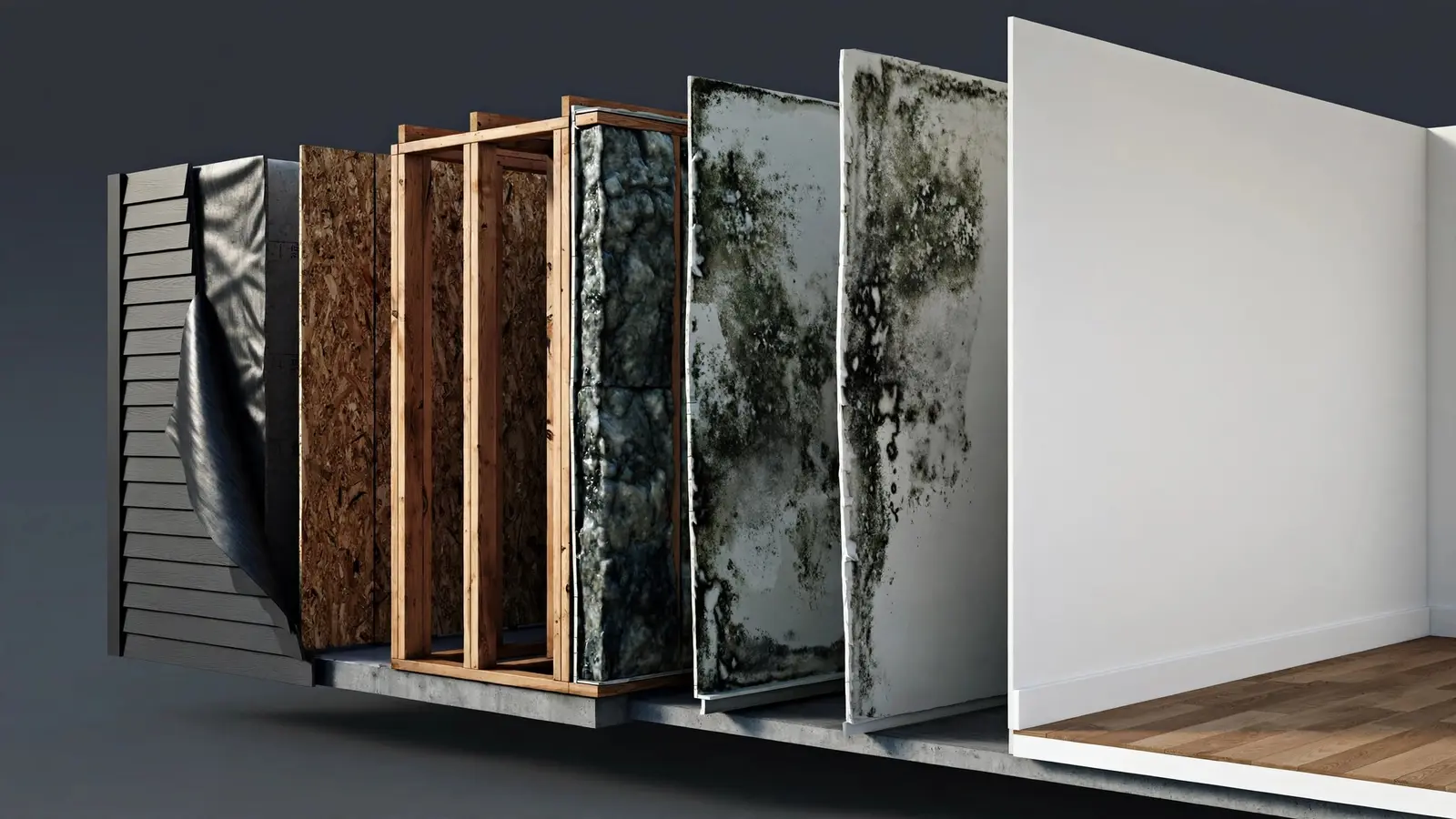
If you already see it
When mold has already started
EPA suggests small areas can often be handled by a homeowner with hard-surface cleaning and protection, while bigger or hidden growth deserves a professional. Porous materials such as ceiling tile and carpet may need to go. Rules for mold work differ by state, so ask about licensing where you live.
Musty smell with no visible growth may point to a wet cavity. Moisture readings can help locate it. See wet drywall: save or replace.
Questions
Questions about mold after a leak
Should I use bleach?
EPA does not recommend disinfectants as a routine step for mold, and killing it does not remove it. Dead spores can still cause reactions, so cleaning and drying matter more.
Do I need a mold test?
EPA generally says that if you can see or smell mold, you usually do not need sampling to know to deal with it. Testing can make sense for hidden problems or health concerns.
Dried framing helps prevent growth
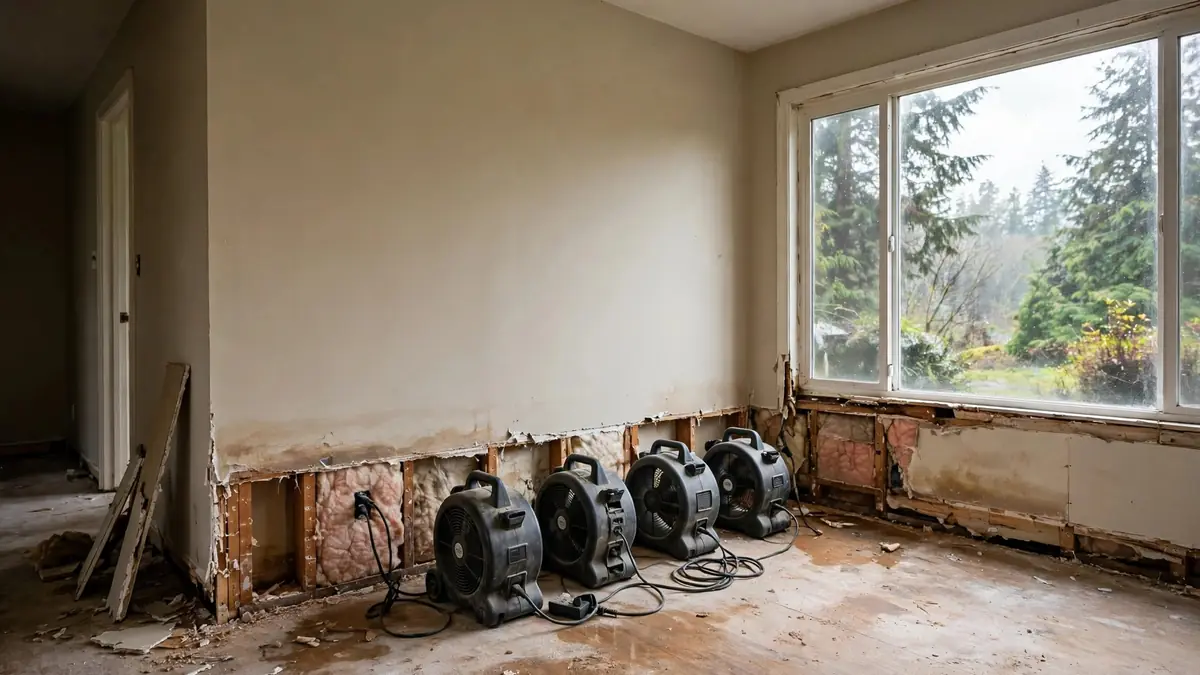
Where to look
Spots that stay damp the longest
Check behind baseboards, under vinyl flooring, inside cabinet bases, around window frames and on the back of drywall. Carpet pad and insulation hold water for a long time. Closets on outside walls stay cool, so condensation can build up there even after a room seems dry.
Attics and crawlspaces deserve a look after any roof leak or plumbing failure, since nobody spends time there.
Checklist
Practical steps in the first two days
- Remove standing water and wet rugs right away.
- Run a dehumidifier, emptying it or draining it to a sump.
- Move furniture away from wet walls so air can circulate.
- Pull up wet carpet pad if it is safe and allowed by your insurer.
- Check readings or call for help if walls stay damp.
Health
Who should be more cautious
People with asthma, allergies or weakened immune systems can react more strongly to mold, and they should stay away from cleanup work. If anyone has symptoms that worry you, talk to a doctor. Wear gloves, eye protection and an N95 respirator for small cleanup jobs, as EPA recommends for this sort of work.
Is this what you need?
Prevention or remediation: which do you need?
Prevention fits when materials are wet but no growth has started, and the work is mainly drying and humidity control. Remediation applies when growth is established, especially over a large area or in an air system. Many states have their own rules for mold work, so ask what applies where you live.
A musty smell with nothing visible often means a hidden wet spot. Find that before anything else.
Compare
Where to focus
| Area | Why it matters | What helps |
|---|---|---|
| Wall cavities | Hidden and slow to dry | Meter checks, airflow, opening if needed |
| Carpet pad | Holds water | Remove if soaked |
| Closets | Low airflow | Open doors, move items |
| Crawlspaces | Ground moisture | Drainage, vapor barrier |
Questions
More questions about mold
How quickly can mold appear?
EPA advises drying within 24 to 48 hours to help prevent growth, so treat that as your working window.
Does an air purifier solve it?
It can reduce airborne particles but will not fix a moisture source or remove growth.
Should I test for mold?
EPA generally says visible growth does not need sampling to act. Testing is more useful for hidden problems.
Guides
Guides for this job
Hour by hour
A two-day plan after a leak or spill
EPA and CDC both point to the same window: a day or two, 48 hours at most, to get wet materials dry. This is one workable order for using that time.
- 1
First hour: stop and make safe
Close the water source, deal with power in wet rooms, and photograph what you see.
- 2
Next few hours: get liquid out
Remove standing water, and take wet rugs and cushions out of the room.
- 3
Same day: find the edges
Check how far the water went, including under floors, in closets and in the room below.
- 4
Same day: start the air working
Run a dehumidifier with doors and windows closed, and aim fans across wet surfaces if the water was clean.
- 5
Second day: decide on materials
Anything that is still soaked needs a decision, since drywall, pad and insulation may need to be opened or removed.
- 6
After 48 hours: verify
Take readings, or have them taken. A surface that feels dry may still be holding water underneath.
Humidity numbers
What the humidity readings mean
A basic gauge can still be useful. These bands come from EPA and CDC guidance.
| Reading | What it suggests | What to do |
|---|---|---|
| 30 to 50 percent | EPA's ideal range | Keep doing what you are doing |
| At or below 50 percent | CDC's all-day target | Use air conditioning or a dehumidifier to hold it there |
| 50 to 60 percent | Below EPA's upper limit, but drifting higher | Check for a damp source, and use exhaust fans |
| Above 60 percent | Over EPA's suggested limit | Find the cause and run a dehumidifier |
Materials
How long different materials hold their risk
Different materials give you different amounts of room for error once wet.
Paper-faced drywall
The paper and its starch backing feed mold readily, so the back face is often where growth begins, out of sight.
Carpet and pad
EPA notes carpet may have to go if moldy, and CDC wants soaked carpet out when quick drying is not possible. Pad is the slower of the two to dry.
Wood framing and subfloor
Solid wood can usually be dried and kept, though dark staining calls for a closer look. Engineered panels may swell along the edges.
Fiberglass insulation
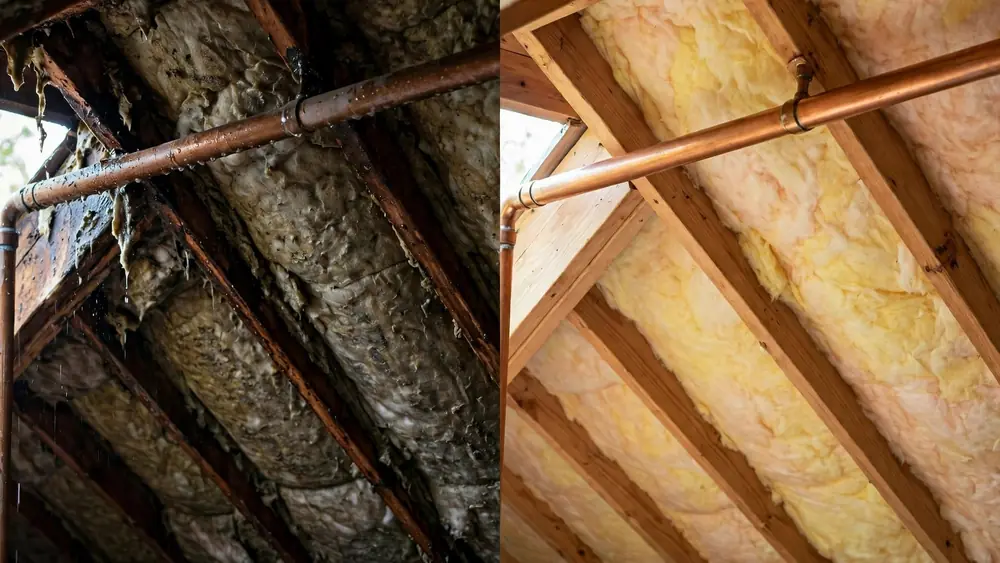
It holds water against framing and loses its loft, and EPA says wet or moldy duct insulation should be replaced.
Ceiling tile
Tile is highly absorbent, and EPA names it among the porous materials that may need to be thrown away if moldy.
Tile, glass and metal
Nonporous surfaces can be cleaned, but what matters more is the backing behind them.
Sizing it up
The 10 square foot line, and what it really means
EPA treats about 10 square feet, a patch a little over three feet on each side, as a rough dividing line. Below it, a homeowner can generally handle cleanup with EPA's guidance. Above it, the agency points people toward more extensive remediation guidance and, often, experienced help.
Size is not the only factor, though. Bring in help no matter how small the patch looks if the moisture came from sewage or other contaminated water, if the growth may be in your heating and cooling system, or if someone in the home has a health concern. Growth you can see may also be only the visible edge of a larger problem inside a wall.
Cleaning properly
What a safe small cleanup looks like
CDC says hard surfaces can be cleaned with soap and water or household cleaners. If you do use bleach, CDC's limit is no more than 1 cup of laundry bleach per gallon of water, with windows open and with rubber boots, gloves and goggles on. Never mix bleach with ammonia or other cleaners, since dangerous fumes can result. EPA, for its part, does not recommend biocides such as bleach as a routine practice in mold cleanup.
Do not paint or caulk over a moldy surface, as EPA warns. The coating is likely to peel, and it leaves the source behind. Dry the area completely once it has been cleaned. And the most important step is the one people skip: fix the moisture source, or the growth will return.
Hidden growth
Clues that mold may be growing out of sight
A closed wall can be growing mold while the room looks fine. These signs are worth following up.
- A smell that gets stronger when you open a cabinet or a closet.
- Paint that bubbles or wallpaper that lifts on a wall with plumbing behind it.
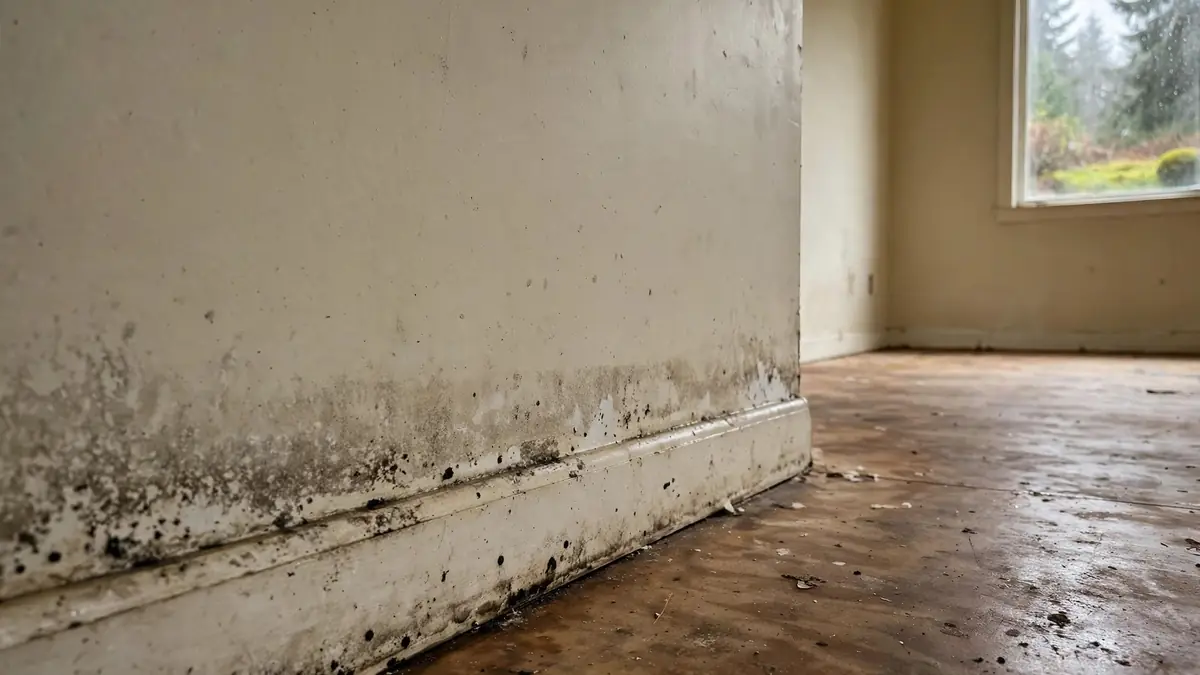
- Baseboards with dark edges, or trim that has started to feel soft.
- Allergy-like symptoms that ease up when you leave the house.
- A past leak that was dried with only fans, and closed up afterward.
- Dark staining on the underside of a roof deck or on floor joists above a crawlspace.
Opening walls
Why you should not tear into a suspect wall yourself
EPA cautions that disturbing a hidden colony can release large numbers of spores. If you suspect growth on the back of wallpaper, inside a wall or under a subfloor, slow down and think about containment before pulling anything off. An experienced contractor can isolate the work area with plastic sheeting and filter the air.
Also, take care if the home is older, since opening a wall can disturb lead paint or asbestos. Ask how those materials will be handled before work starts. Water and power lines also run in those cavities, so a saw or pry bar can make a bad day worse.
HVAC
Keeping heating and cooling from spreading the problem
Air systems matter here since they move air through every room in the house.
- Before running itIf water reached the air handler, the ducts or return grilles, have them checked first. Moving air through wet ducts can carry spores and odor around the home.
- What EPA looks forDuct cleaning is worth considering when there is substantial visible mold in hard-surface ducts or on other parts of the system. Only an expert can confirm whether a substance is mold.
- Lined ductsFiberglass duct board or lined duct material that is wet or moldy should be replaced, not cleaned.
- Moisture methodsSteam cleaning and other moisture-based methods should not be used on any ductwork, according to EPA.
- SanitizersEPA reports that no biocides are registered for use on fiberglass duct board or fiberglass-lined ducts, so be wary of a sales pitch to the contrary.
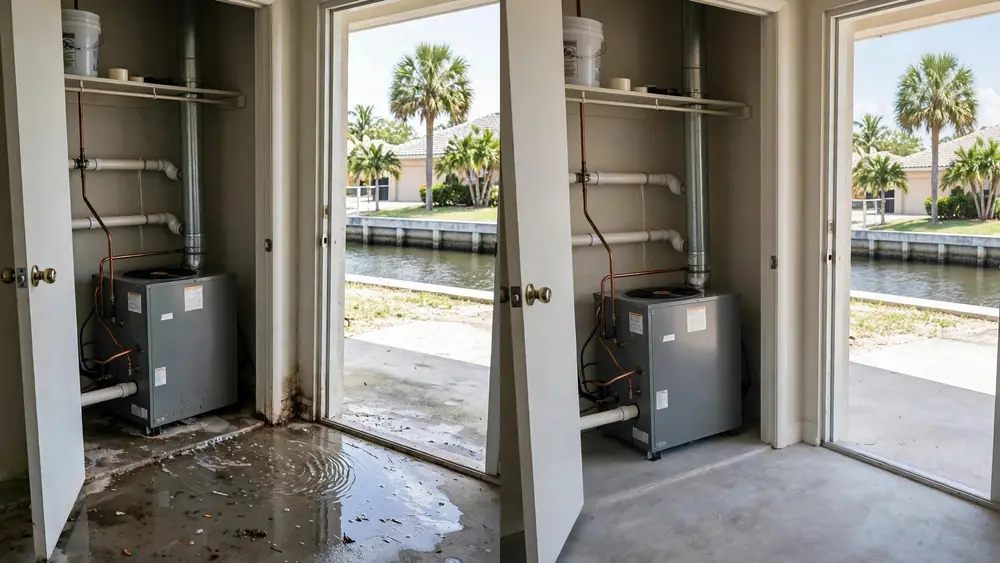
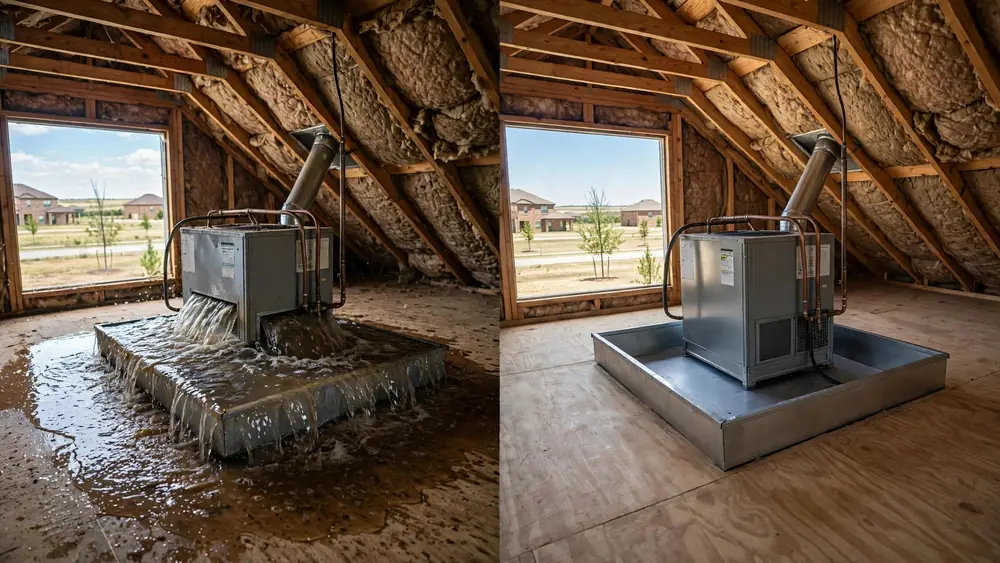
- Drain pansMake sure the pan slopes toward the drain, and check the insulation around the cooling coil for wet spots.
Testing
What mold testing can and cannot tell you
CDC does not recommend routine testing, because there are no established standards for what level of mold is acceptable. You do not need to know the species in order to deal with it, as CDC notes that any mold you see or smell should be removed, along with the source of the moisture.
Sampling can sometimes help in specific situations, such as when a doctor asks for it or when you need to locate a problem that nobody can find. If you do test, ask what question the result will answer before you pay for it. A single air sample with no comparison outdoors or in another room says little. Moisture readings are often the more useful step, since they point directly to what can be changed.
Staying well
Health questions during and after a wet event
CDC lists stuffy nose, wheezing and red or itchy eyes or skin among common reactions in sensitive people, while some people have no effects at all. Those with asthma or mold allergy can react more severely. Immune-compromised people and people with chronic lung disease may develop lung infections. Talk with a doctor about any symptoms that worry you, and mention the water event.
Ready.gov goes further for anyone with a breathing condition or low immunity, advising them to keep out of a building that has active leaks or mold they can see or smell. Temporary arrangements for them are a reasonable part of the plan, even if the rest of the household stays home.
After the job
Habits that keep a recovered home dry
Once drying is done, keeping moisture low takes only a little routine effort.
- Keep a small hygrometer in the room that was affected, and glance at it each week for a few months.
- Vent bathroom and kitchen fans outdoors, and make sure the clothes dryer is vented outside too, as CDC advises.
- Skip carpet in bathrooms and basements, which is another CDC point.
- Clean gutters, and check the slope of the ground beside your foundation.
- Leave a little space between stored items and outside walls so that air can move.
- Inspect sink cabinets and the water heater base regularly, since slow leaks are what often restart the problem.
- Fix drips and condensation on cold pipes with insulation.
Hiring
Choosing someone for mold work
EPA advises making sure a contractor has experience with mold cleanup and checking references. Ask whether they follow EPA's guide to remediation in schools and commercial buildings, or guidelines from ACGIH or IICRC. If they plan to spray something and leave, ask how the moisture source and the existing growth are going to be addressed.
It is also fair to ask who will decide when the job is done, and how. Some people prefer to have one firm assess and a different firm carry out the work, and certain states have requirements on this. Water Damage First is a referral service, so whoever you reach through (833) 610-0241 is independent, and these questions are ones you can put to them directly.
Second homes
Protecting homes that sit empty
A vacation home or a house waiting to be sold can quietly grow mold after a small leak, because no one is there to notice a smell or to run the air conditioning. Keep humidity in check with a dehumidifier set to drain on its own, or with air conditioning set to run periodically in humid climates. A connected humidity sensor lets you check the reading from afar. Shut off the water main when you leave, if the house has no fire sprinkler that depends on it, and ask someone to walk through after any storm.
Rental property calls for clear rules. Ask tenants to report leaks promptly, and respond quickly when they do. A small report dealt with early rarely turns into the kind of problem described on this page.
Everyday mold questions
Follow-up questions on mold and damp
Do fans alone prevent mold?
They help on clean water but do not remove moisture from the air. Without a dehumidifier or outside air that is drier, the room can stay humid.
Can I keep my carpet if it dries in time?
Possibly, when the water was clean and the drying was fast. Soaked pad often needs to go, and sewage-affected carpet should be discarded.
Will an ozone machine stop mold?
Do not rely on it. Moisture control and removal are what work, and ozone can harm health. Keep people out of any treated space.
Is black mold worse than other mold?
Color does not identify a species, and CDC says you do not need to know the type in order to act. Treat all of it the same way: remove it and fix the moisture.
How do I know if drying is finished?
Moisture readings should match those from an unaffected spot, and the structural drying log should show how readings changed over time.
Can mold grow in winter?
Yes. Cold exterior walls can collect condensation, and a tightly closed house can trap moisture in closets and corners.
Climates
How local climate changes prevention
In the humid South, outside air often carries more moisture than indoor air, so opening windows can make a wet room worse. Air conditioning and dehumidifiers do the heavy lifting there. In cold northern climates, the concern is condensation on cold surfaces, and warm moist air getting into attics or wall cavities. Dry mountain regions offer more help from the outside air, although basements can stay damp there too.
A hygrometer takes the guesswork out of it. Compare the number inside with what you get from outdoors, and only ventilate when the outside air is actually drier. No single rule fits every house, so go by the readings.
Mold-prone projects
Projects that invite mold after a leak
Some repair choices trap moisture. Check them before you close up a damp area.
| Choice | The risk | Better approach |
|---|---|---|
| New vinyl over a damp slab | Traps moisture under the floor | Test the slab first |
| Fresh paint on damp drywall | Peels, and hides a wet area | Dry completely first |
| Caulk over a stain | Hides growth | Clean and dry, then seal |
| Foam in a wet cavity | Holds moisture against framing | Dry and verify before filling |
| Carpet in a damp basement | Holds moisture and dust | Use hard flooring and rugs |
Renters
What renters can do about damp and mold
You do not own the walls, but you still have some control.
- Report leaks in writing, with photos and the date.
- Run exhaust fans, and crack a door after showers.
- Keep furniture a little way off cold outside walls.
- Ask your local health or housing department what rules apply if nothing gets fixed.
Service areas
Mold Prevention After Water Damage service areas
Where you live changes mold prevention after water damage. See Oregon, Connecticut, Delaware, Kansas, Louisiana, New Hampshire, Chicago, Dallas, Colorado Springs, Cedar Hill, Lake Stevens, Norcross, Port Charlotte, Prosper, Atlanta, Indianapolis.
Urgent?
If this is happening right now
Go straight to the first steps: emergency mold services.