
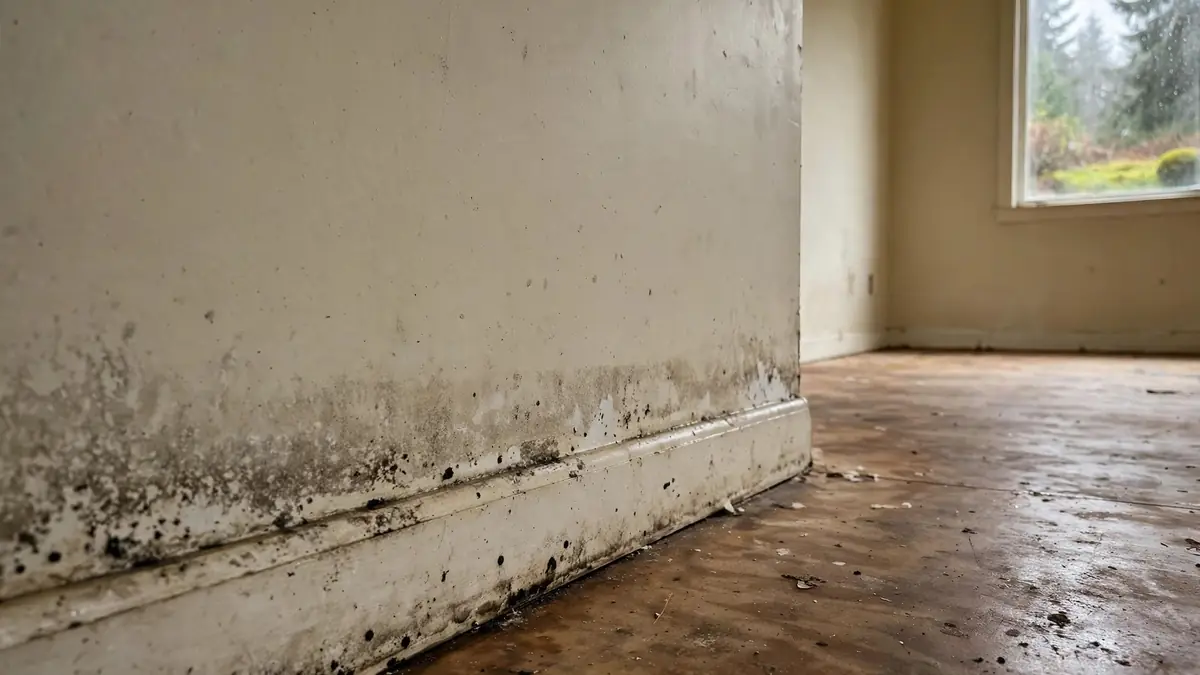
Key facts: Emergency Mold Services
- Stop the moisture: Fix or isolate the leak first, since cleaning cannot win against ongoing water.
- Do not disturb large patches: Scrubbing or dry brushing can spread spores.
- Mold enquiries go to independent contractors, and not every area has one to refer.
Right now
First steps for mold services
- 1
Stop the moisture
Fix or isolate the leak first, since cleaning cannot win against ongoing water.
- 2
Do not disturb large patches
Scrubbing or dry brushing can spread spores.
- 3
Shut off HVAC if it is affected
This limits movement through ducts.
- 4
Limit exposure
People with asthma or weak immune systems should stay away.
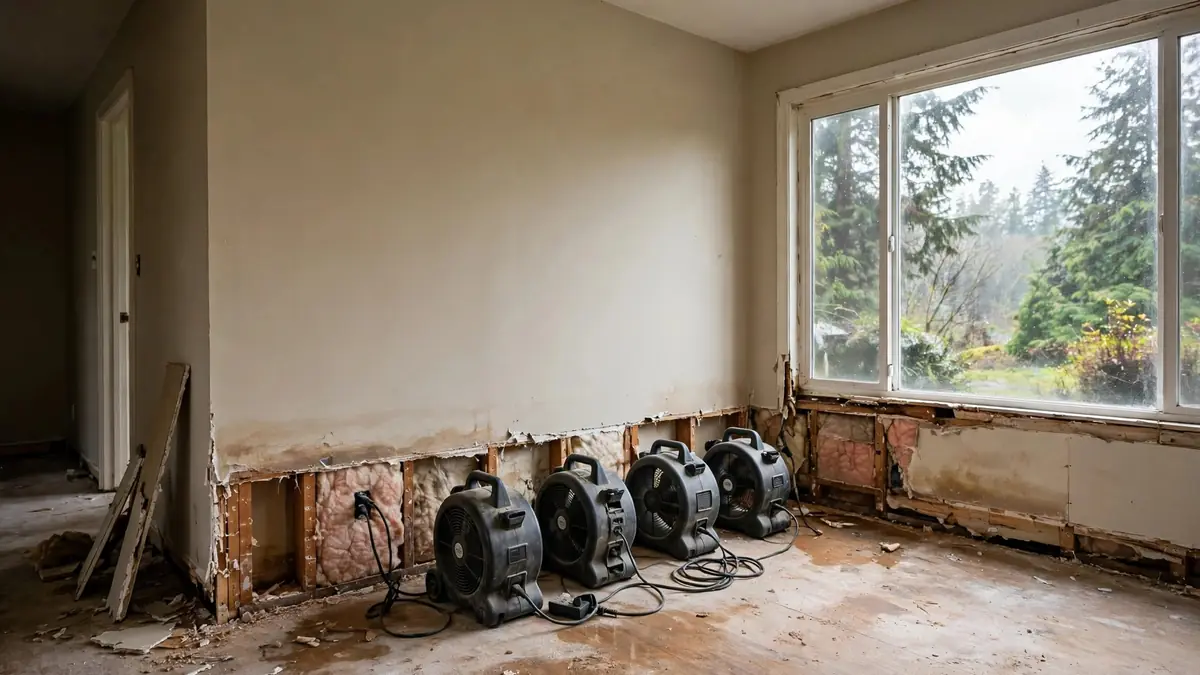
Drying is what starves mold
Is it urgent?
What makes mold pressing and what does not
Mold usually grows over days and weeks rather than minutes, so a patch found on a Sunday does not normally call for the same response as a burst pipe. Three things do raise the urgency: an active water source feeding it, a person in the home whose health is at risk, and a large or spreading area, especially one in contact with the air system. If none of those apply, you have time to think, photograph and call around. If one does, act today.
The EPA's guidance rests on a simple point: there is no practical way to remove every mold spore from an indoor space, so the way to control mold is to control moisture. Any plan which leaves the leak in place will fail, however thorough the cleaning.
Urgency
Sorting what you found
Use this to choose how fast to move. If someone is having trouble breathing, get medical care first and treat the mold second.
| What you found | How fast | First action |
|---|---|---|
| Growth with an active leak | Today | Stop the water, then photograph |
| Patch on a surface, no current leak, healthy occupants | This week | Find the old cause, follow EPA cleanup advice if under about 10 square feet |
| Large patch, or more than one room | Soon | Keep from disturbing it, contact an experienced contractor |
| Growth in ducts or on the air handler | Today for HVAC, soon for cleanup | Stop running the system |
| Growth after sewage or dirty water | Today | Use a professional experienced with this type of damage |
| Musty smell with no visible source | Soon | Look for hidden moisture, and limit time in the room |
| Vulnerable person with symptoms | Today | Talk to a health professional and move them elsewhere |
First 48 hours
What to do from finding it to having a plan
A mold discovery is rarely fixed in one visit. Availability of inspectors and contractors varies, so work through what you can control.
- 1
First hour
Stop any water you can find. Take wide and close photos before anything is touched. Do not scrub or scrape. Close the room's door if that does not block your route out.
- 2
Same day: people
Move anyone with asthma, lung disease or low immunity out of the area, in line with Ready.gov advice on mold and leaks. If you have health concerns, the EPA says to talk to a health professional before starting any cleanup.
- 3
Same day: air system
If you know or suspect the HVAC is contaminated, do not run it. The EPA warns that this could spread mold through the building. Tell the contractor and read its air duct guidance before anything else.
- 4
First evening
Look for the cause. Check above the patch, behind it and around plumbing, windows and exterior walls. Note any past leak, and write down what you remember about when it happened.
- 5
Day two
Measure the visible patch. A tape measure and a photo beat a guess. Under about 10 square feet, you can often do the job yourself, the EPA says. Larger areas or significant water damage need more, starting with its guidance for bigger jobs.
- 6
Day two, second half
Call for help if the job is beyond you. Ask contractors whether they follow EPA guidance or recognized standards from ACGIH or IICRC, as the EPA suggests. Ask for references and experience with mold specifically.
Leave alone
Five habits that can make mold worse
- Dry brushing or sandingScrubbing a dry patch can put spores and dust in the air. If you take on a small job, follow the EPA's instructions, which center on detergent and water on hard surfaces and proper protective gear.
- Spraying bleach as the first stepThe EPA does not recommend chlorine bleach as a routine method, though it says there can be special cases where professional judgment calls for it. If bleach is used, ventilate, and never mix it with ammonia. Dead mold must still be removed, because it can still cause reactions.
- Painting or caulking over itThe EPA is plain on this: clean and dry the surface first, since paint over mold is likely to peel.
- Running an ozone machineThe EPA says ozone at levels that meet public health standards is not effective against mold, and that even at far higher levels contaminants in porous materials may be unaffected. Ozone can also damage the lungs.
- Fans pointed at growthMoving air speeds up drying only when the growth is contained and the plan calls for it. A fan on a moldy surface can spread spores. Ask first.
Who does what
Different mold calls for different people
Mold can involve several specialists. Knowing which one you need keeps you from paying for the wrong visit, and from delays.
| Need | Who | Ask them |
|---|---|---|
| Stopping the water | Plumber or roofer | Where was the leak, and how did you confirm it is fixed? |
| Finding hidden moisture | Inspector or restoration contractor | What tools did you use, and which areas were checked? |
| Removal of a large area | Contractor experienced in mold cleanup | Which guidance do you follow, and how will you contain the work? |
| Air system concerns | HVAC professional | Is the system contaminated, and what does the EPA guidance on ducts suggest? |
| Health symptoms | Doctor or health professional | Should this person stay out of the home? |
| Rental home | Landlord and local housing authority | What are the duties under local rules? |
Testing
Why you may not need a mold test
A test seems like a good first step, but it often adds little. When mold is visible, the EPA says sampling is usually unnecessary, and there are no federal limits to compare any result against. Sampling should be done by experienced professionals, and if it is done it should have a clear purpose, such as checking whether cleanup was complete or looking for a hidden source. Ask what question a test would answer before you agree to one, and how the answer would change the work.
Color is not a reliable guide either. Whatever the shade, what counts is how much there is, where it is growing, and who is exposed. A contractor who uses alarming language about color before they have looked at the moisture is not giving you useful information.
Your small job
If the patch is small and you handle it
A patch smaller than 3 feet on each side, or near 10 square feet, is often manageable for a homeowner according to the EPA. If you have health concerns, ask a health professional first, and leave this to someone else if you are in a vulnerable group.
- Wear the right gearThe EPA lists an N-95 respirator, gloves (long ones are recommended), and goggles without ventilation holes.
- Use detergent and water on hard surfacesScrub with those, then dry the area completely. Hard surfaces are the realistic target for this kind of job.
- Replace what cannot be cleanedAbsorbent materials such as ceiling tiles and carpet may need to be thrown away, as mold can be impossible to remove from them fully.
- Protect others in the homeKeep children and pets away while you work. Ask for help before you move heavy items.
- Fix the moistureDo this before or with the cleaning, or it will come back. After any future leak, aim to dry things out inside the first two days.
- Stop if it is bigger than it lookedIf removing a baseboard reveals growth on the back or inside the wall, pause and reassess. The hidden area counts toward the size.
Evidence
What to record when you find mold
- The date and how you found itA smell, a stain or a contractor's comment. Note it, along with who told you.
- A photo with a tape measureTake it before any cleaning, so the size at discovery is on record.
- Moisture cause and repairKeep the plumber or roofer's invoice and description. It connects the growth with a particular event, or shows that you fixed it.
- Past leaksOld claims, repair records, and even dated phone photos can establish the timeline.
- Symptoms, if anyWho felt what, and when, and whether it eased when they left the home. Share this with their doctor.
- Notices to your landlord or associationSend them in writing, keep a copy, and note the replies.
- Scope and clearanceAny remediation plan, containment details and post-cleanup checks.
Insurance and rentals
Questions to ask before anyone opens a wall
Mold coverage can be limited or tied to a covered water event, and policies differ, so ask your insurer directly how it treats growth linked to the leak you have had. Report promptly and be ready to say when the water happened. Before an adjuster visits, leave the evidence in place unless there is a health reason not to.
Renters should report in writing and ask what the landlord plans to do and when. Rules on mold differ among states and cities. Local housing or health departments can tell you what applies. If someone in the home has health concerns, tell the landlord this too, and ask a doctor for advice on whether to stay.
Whoever pays, the sequence is the same. Fix the moisture, contain the work, remove what cannot be cleaned, clean what can be saved, dry everything, and then check that the area remains dry before finishing. Pay attention if a proposal skips the first step.
After a flood
When mold follows a recent water loss
If you have just had a leak or a flood, the clock is what matters, not the mold itself. The EPA gives you a day or two to get wet things dry before growth becomes a real concern. Once that window has passed, keep checking the wet zones: base of walls, under carpet, inside lower cabinets, and behind furniture against exterior walls. Mold can appear in hidden places first, and a musty smell is often the earliest clue you will get.
CDC adds practical protective steps for those working in damaged homes: an N95 mask or higher-level respirator, goggles, heavy work gloves and waterproof boots, plus a thorough wash with soap and water at the end of each session. Keep children and pets out until the job is finished.
Questions
Mold Services: quick answers
Is black mold always an emergency?
Color does not tell you the species or risk. What matters is size, location and who is exposed.
Should I spray bleach?
EPA does not recommend routine disinfectants, and removing the moisture matters more.
Should I leave my home because of mold?
Most people with a small patch do not need to. Anyone with serious symptoms or a weak immune system should talk with a health professional, who can advise on whether to stay away.
Is a musty smell enough to call someone?
Yes, if it persists. Smell often comes before visible growth and suggests moisture somewhere you cannot see.
Will an air purifier fix it?
It does not address moisture or growth. Treat it as a separate question from cleanup, and steer clear of devices that produce ozone.
How do I know the job is finished?
The moisture source is fixed, the materials are dry, visible growth is gone, and the musty smell has not returned. Ask the contractor to show you how they checked each of these.
Next
With the moisture under control
The mold prevention page deals with keeping growth from returning. The hidden moisture guide helps you find what feeds it, and drying timelines explains how long the wet material may take to recover.