Key facts: Port Charlotte
- For Port Charlotte homes, aim to finish drying inside the EPA's 24 to 48 hour window [1].
- Charley's eyewall struck Port Charlotte and Punta Gorda on August 13, 2004, and Ian's second landfall came near Punta Gorda in 2022 [2].
- Port Charlotte callers reach independent contractors; Water Damage First only makes the connection.
Local risks
What drives damage in Port Charlotte
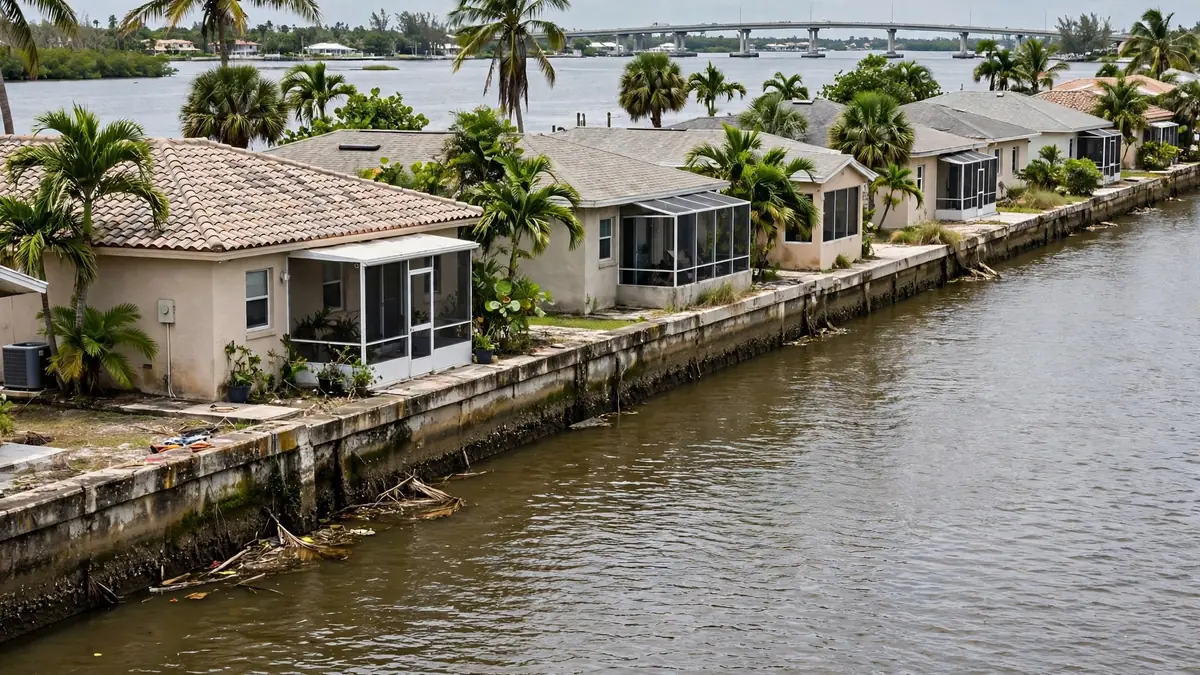
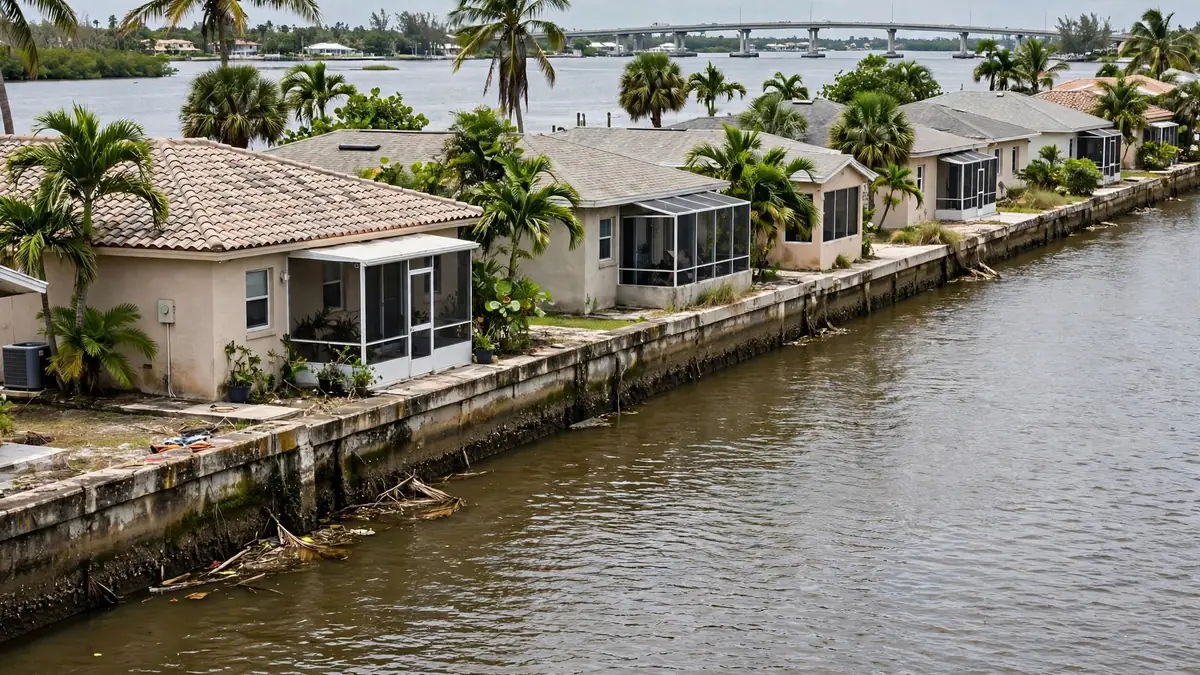
Peace River crests can follow upstream rain well after a storm has passed. Waterfront and canal properties have their own concerns about seawalls.
Housing
Homes and buildings here
Block homes are common here. Punta Gorda has its own building department and a canal network, while Deep Creek sits on somewhat higher ground.
Common damage
Where to go next
Services people ask about
Start with water damage restoration, flooded basement cleanup or burst pipe water damage. After a storm, photograph the roof from the ground rather than climbing it.
Service areas
Restoration service areas in Port Charlotte
Cities and neighborhoods: Charlotte Harbor, Deep Creek, Harbour Heights, Punta Gorda.
Answer first
In Charlotte County, wind, surge and a late river crest are three separate clocks
Wind damage shows up right away. Surge comes and goes with the storm. The Peace River can crest after the skies have cleared, because it drains a large basin to the north, and Harbour Heights eventually sees the runoff from Hardee, DeSoto and Polk. Do not assume a house is safe the morning after a storm just because the sun is out.
Annual rainfall near Port Charlotte runs about 49.6 inches, with heavy summer downpours, and a modelled figure suggests closer to 58. Everything dries slowly in that humidity. EPA guidance on keeping indoor humidity below 60 percent is hard to meet without working air conditioning or dehumidifiers.
Storm comparison
Charley, Ian, Helene and Milton in Charlotte County
These storms hit differently, and that matters for how you read your own house.
| Storm | Year | What stood out locally |
|---|---|---|
| Charley | 2004 | Reshaped housing; rebuilt streets now adjoin ones that only got repairs |
| Ian | 2022 | Center made a landfall near Punta Gorda; an automated station logged 117 knots, then went silent |
| Helene | 2024 | Coastal water 2 to 5 feet over mean higher high water; gusts of 60 to 70 mph; over 1,900 buildings listed with major damage |
| Milton | 2024 | Peak water of 4 to 8 feet; county gusts of 70 to 80 mph, and 3 to 6 inches of rain in most places |
Repeat damage
The 50 percent rule after back-to-back storms
Charlotte County's 50 percent rule can require code compliance, including elevation, when repairs in a flood zone exceed half of the building's value. Ask the county how it treats your home if it was damaged more than once, especially after Helene and Milton came so close together.
This is why good records matter from the start. Keep your invoices, photos and drying logs, and speak with Community Development before you commit to a big rebuild.
Local jurisdictions
Which office handles a Port Charlotte-area repair
Most of the area is unincorporated, which simplifies things.
- Unincorporated countyPort Charlotte, Charlotte Harbor, Deep Creek and Harbour Heights generally go to Charlotte County Community Development.
- City of Punta GordaPunta Gorda was incorporated in 1887, is the county seat, and has its own building department and canals.
- Evacuation zonesFive lettered zones are drawn from hurricane center data, land height and roads. They reflect surge only, so look yours up with the Know Your Zone tool.
- Contractor checksLook up a licence on the Florida DBPR portal before you agree to work.
Block homes and canals
Why a Florida block house still holds water
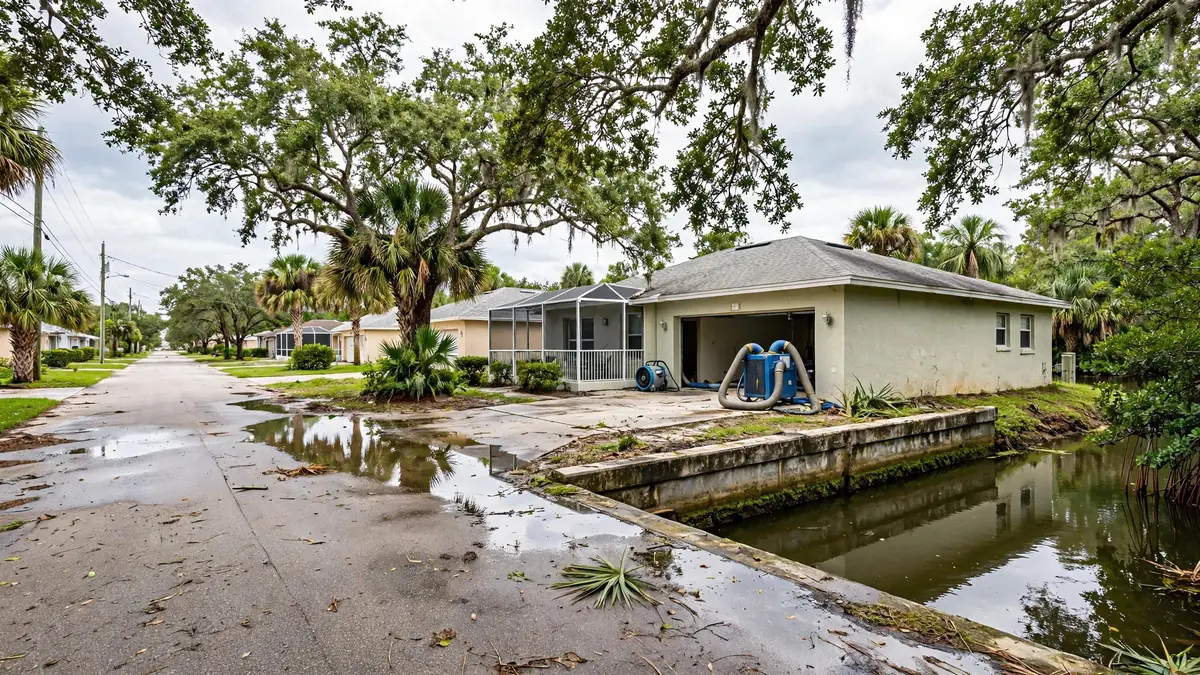
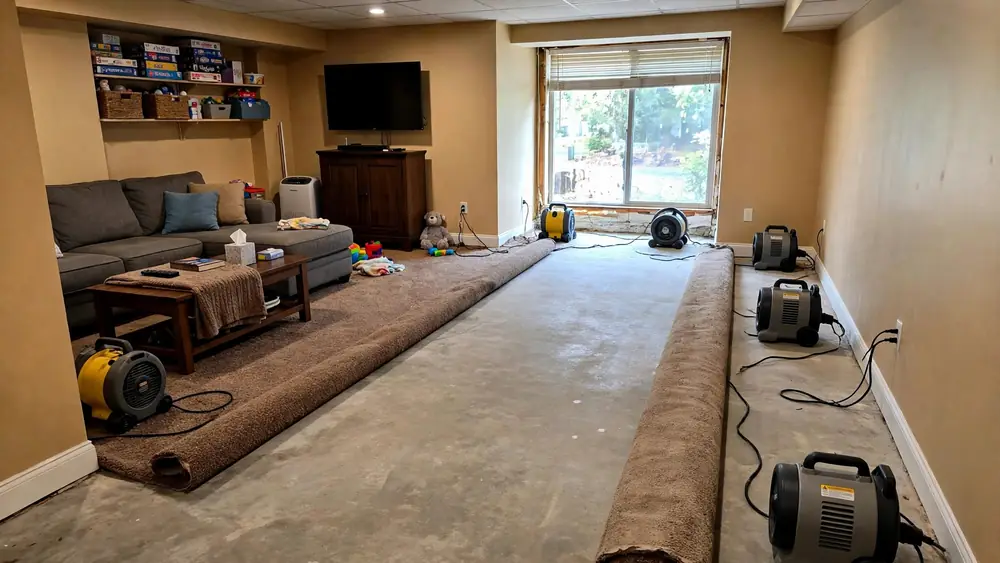
Concrete block looks tough, and the structure may be fine, but flooring, drywall, insulation and cabinets are not. Furred-out walls can trap moisture behind them, so ask the contractor to read those walls rather than judging from the surface. Slab-on-grade floors mean water spreads quickly under tile and laminate.
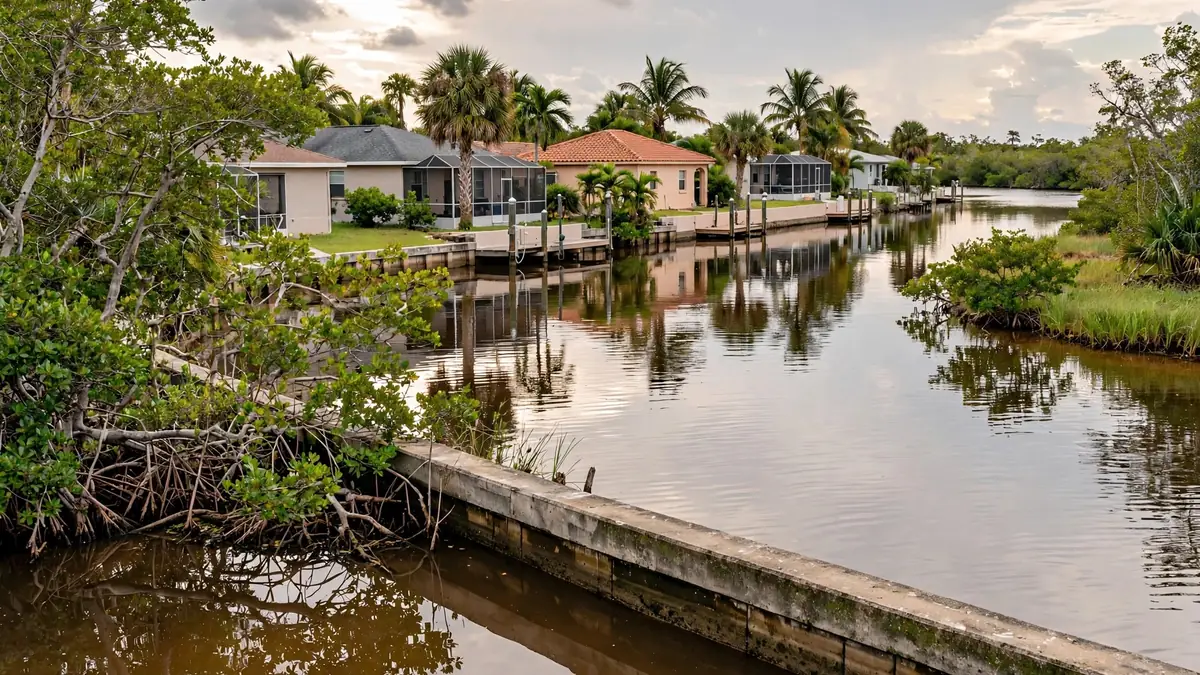
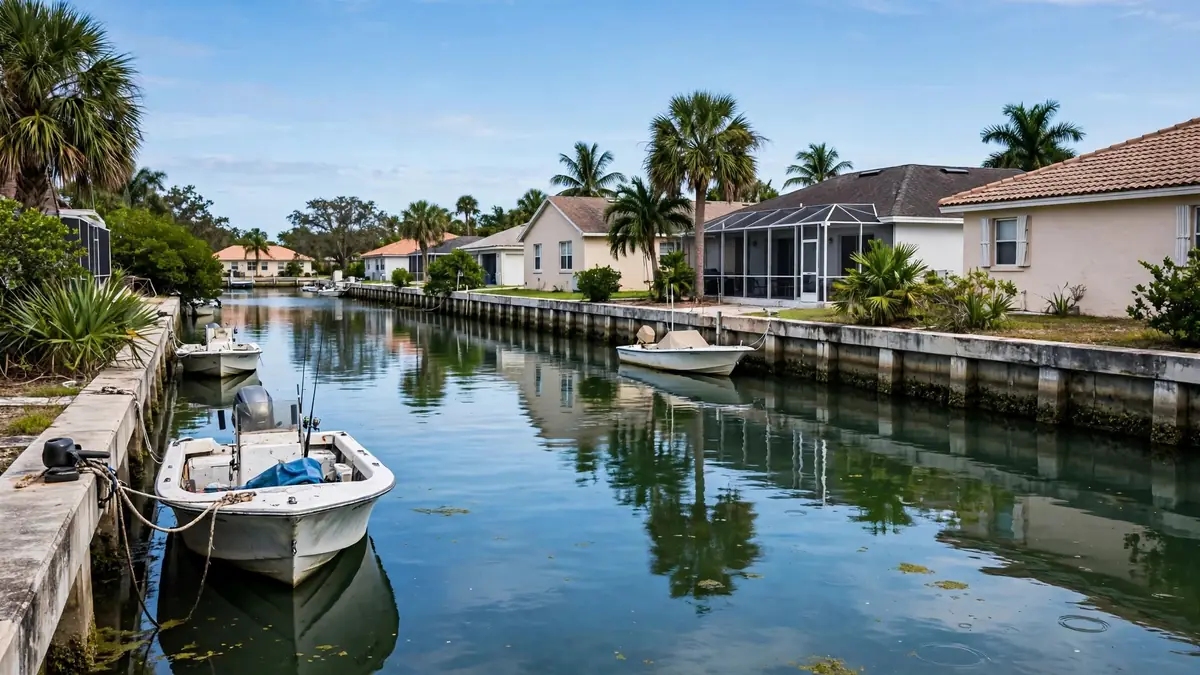
Waterfront and canal lots have extra questions about seawalls, which are beyond a restoration contractor's job. Deep Creek sits on somewhat higher ground, at a reported 23 feet, and is deed-restricted, so check rules about exterior work. Harbour Heights grew from 2,523 people in 1990 to 3,428 in 2020, so newer houses stand near older ones.
Back at the house
Returning to a Port Charlotte home after a hurricane
Only return when officials clear your zone.
- 1
Check the outside before you step in
Look for downed lines, pooled water and roof holes. Even shallow moving water is dangerous on foot.
- 2
Tarp the roof and cover openings
Board-up and tarping stops the next afternoon storm from adding to the damage.
- 3
Mark the water line
Photograph it, including close-ups, as surge, rain and wind can be treated differently.
- 4
Give notice to your insurer
Florida law sets deadlines for notice of property claims, so report promptly. Section 627.70132 of the statutes gives the details.
- 5
Remove wet materials quickly
After about two wet days, mold is likely on many items, according to EPA. Mold prevention explains what to do about it.
- 6
Call (833) 610-0241
You will reach an independent contractor, who handles scheduling with you.
Florida rules
Mold rules and insurance in Florida
Florida regulates mold assessors and remediators, and section 468.8419 of the statutes sets out prohibitions, including rules about one firm both assessing and remediating the same job. Ask about this if a company offers both. The state Office of Insurance Regulation oversees insurers.
Most homeowners policies exclude flood and treat wind separately with a hurricane deductible. Flood coverage is sold federally or by private companies. If your claim involves both wind and water, expect questions about what caused what, and keep photos of each.
Charlotte County questions
Port Charlotte water and storm questions
Does the county handle permits for Punta Gorda?
Generally no. The city has its own building department. Unincorporated areas use the county.
My house did not flood, but it smells musty after the storm. Why?
Roof leaks, wind-driven rain or lost air conditioning can raise moisture inside. Have someone check the attic, walls and insulation.
How do I find out if I am in a flood zone?
Use FEMA’s map service and the county’s flood information, and remember that evacuation zones are a different thing.
Sources and citations
- [1]U.S. EPA: A brief guide to mold, moisture and your home
- [2]Wikipedia: Hurricane Charley
- [3]Wikipedia: Hurricane Ian
- [4]National Hurricane Center: Tropical Cyclone Report, Hurricane Ian
- [5]National Hurricane Center: Tropical Cyclone Report, Hurricane Charley
- [6]Florida DBPR: Licensing portal
- [7]Florida Statutes 627.70132: Notice of property insurance claim
- [8]Florida Statutes 468.8419: Mold assessor and remediator prohibitions
- [9]Florida Office of Insurance Regulation
- [10]Wikipedia: Peace River (Florida)
- [11]Wikipedia: Punta Gorda, Florida