Key facts: Water Damage Restoration
- EPA guidance is to dry wet building materials and furnishings within 24 to 48 hours to help prevent mold [1].
- Professional water damage work in the U.S. is guided by the ANSI/IICRC S500 standard [2].
- S500 groups water into three categories by contamination, and the category shapes what can be saved [2].
The short answer
What a restoration job actually includes
Most jobs follow one order: make the house safe, stop the water, remove it, dry the structure, then rebuild. Skipping ahead causes most of the trouble. New drywall hung over damp studs traps moisture behind a clean surface, and the problem returns as odor or mold months later.
The first decision is what kind of water you have. A supply line is usually clean when it breaks. Dishwasher overflow carries more contamination, and sewage or river water is treated as grossly unsanitary. See water damage categories explained for how that changes the work.
How water moves through a wall
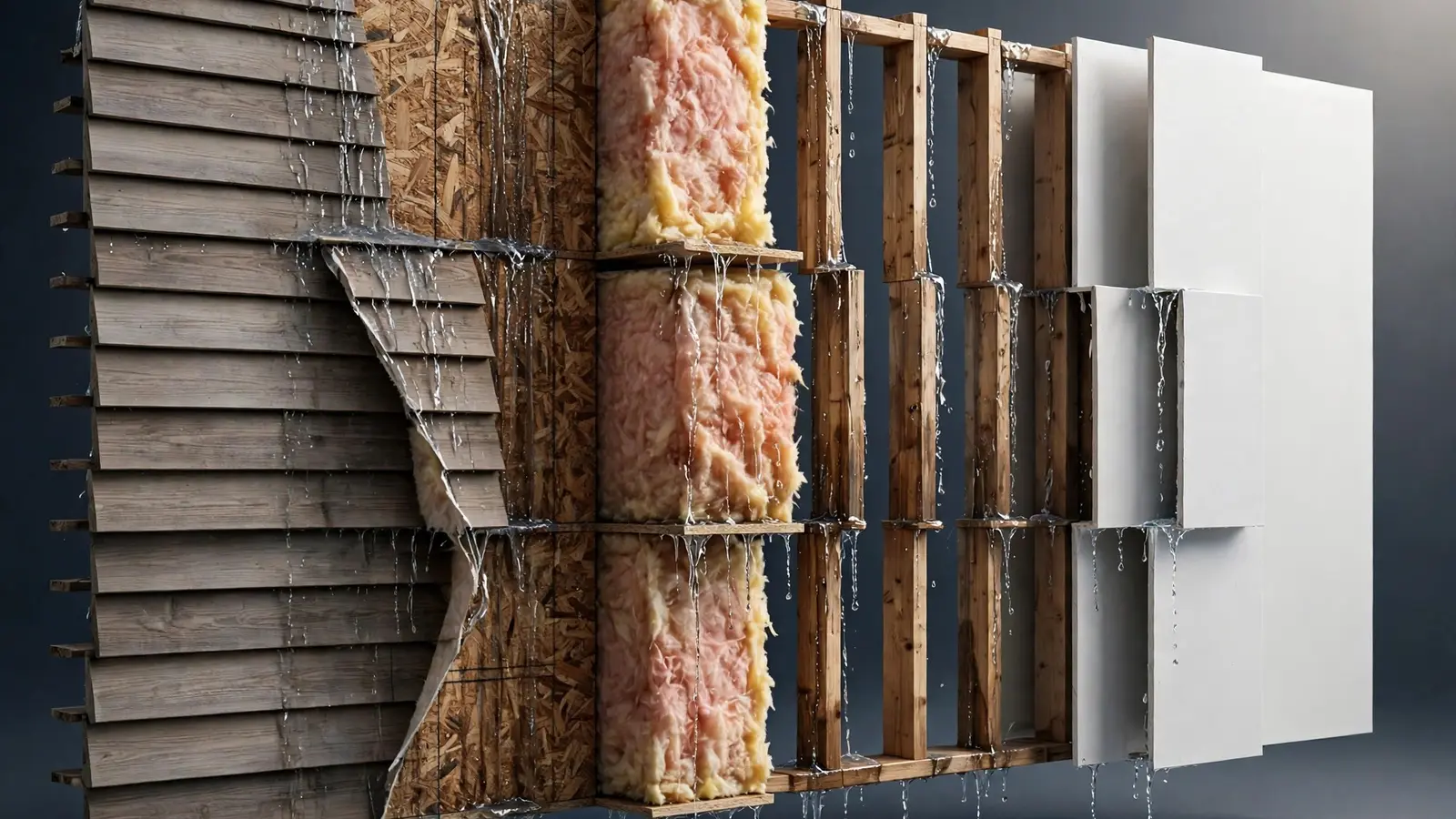
The process
The usual order of work
- 1
Inspection
The contractor traces the source and maps wet areas with moisture meters, since water travels well beyond the visible stain.
- 2
Water removal
Water extraction takes out standing water and what carpet and pad are holding.
- 3
Tear-out
Materials too contaminated or too soaked to recover are removed and recorded.
- 4
Drying
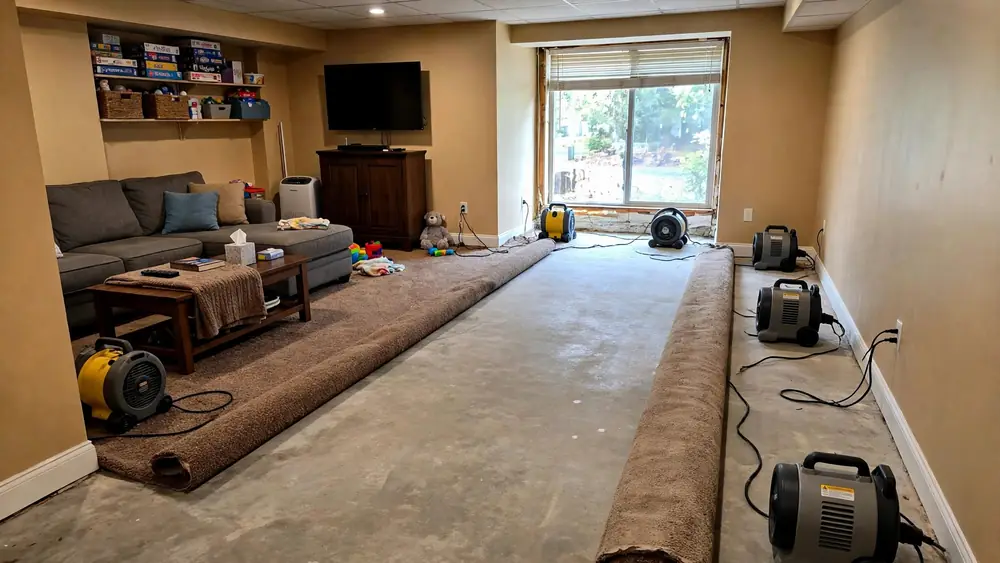
Structural drying uses air movers and dehumidifiers, with readings taken until materials reach a dry target.
- 5
Repair
Drywall, flooring and trim go back after the framing tests dry, sometimes by a separate repair contractor.
Questions
Common questions about water damage
Can I dry it myself with fans?
A small, clean spill caught early often can be. Fans alone rarely dry wall cavities, subfloors or insulation, so larger losses usually need meters and dehumidifiers. Start with what to do after water damage.
Does insurance pay for this?
That depends on your policy and the cause. Sudden pipe breaks are treated differently from flooding, which standard homeowners policies generally exclude. Ask your insurer, and read working with your adjuster.
Water that reached a lower level
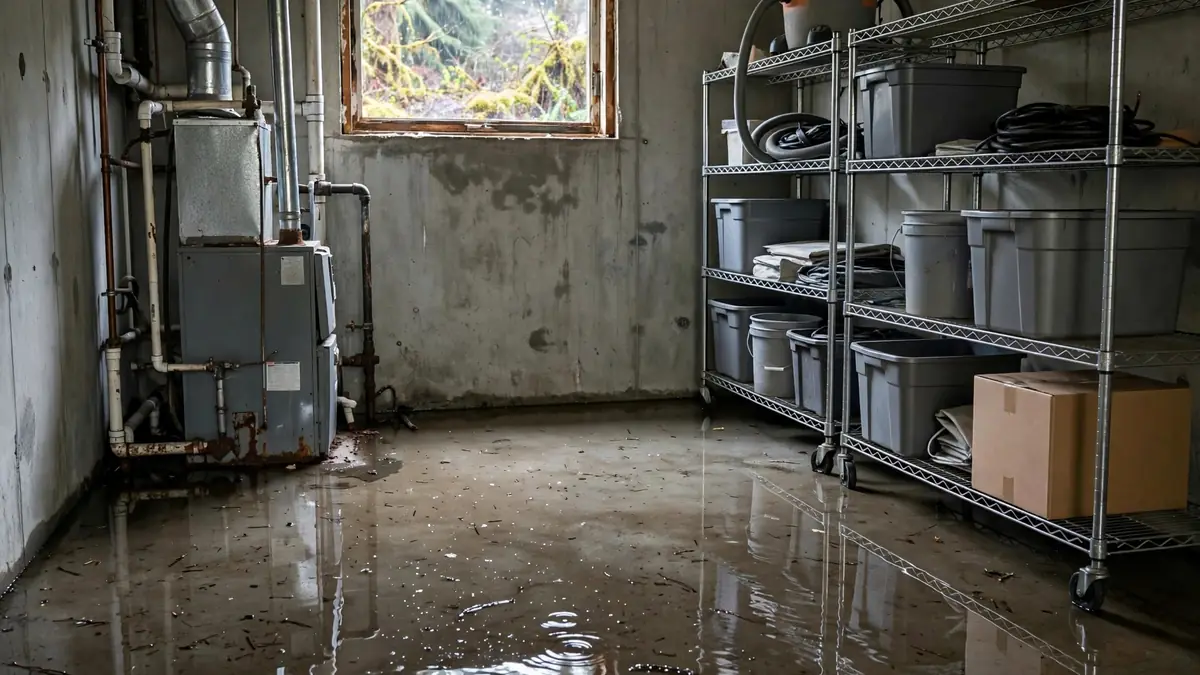
Sources
Where the water came from changes the job
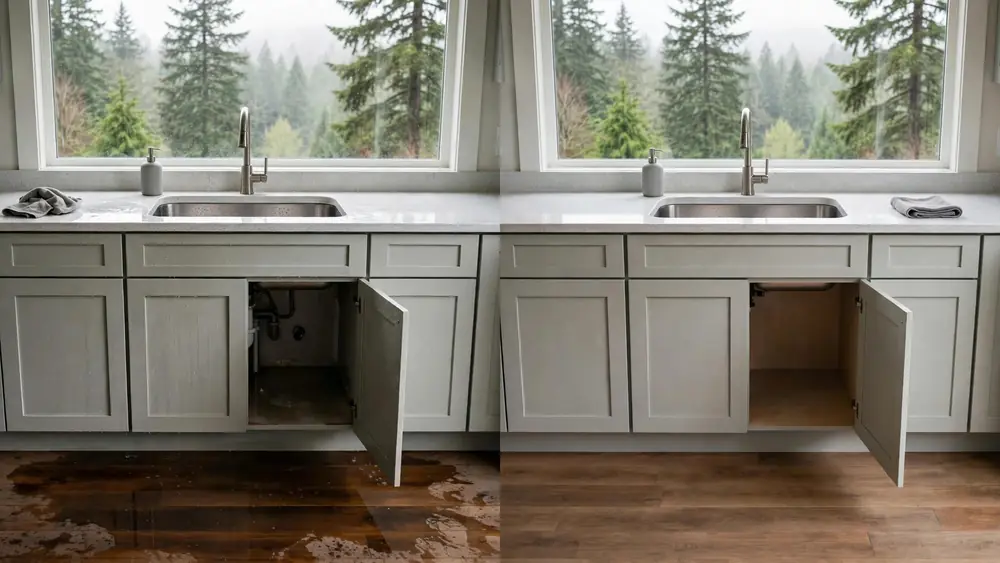
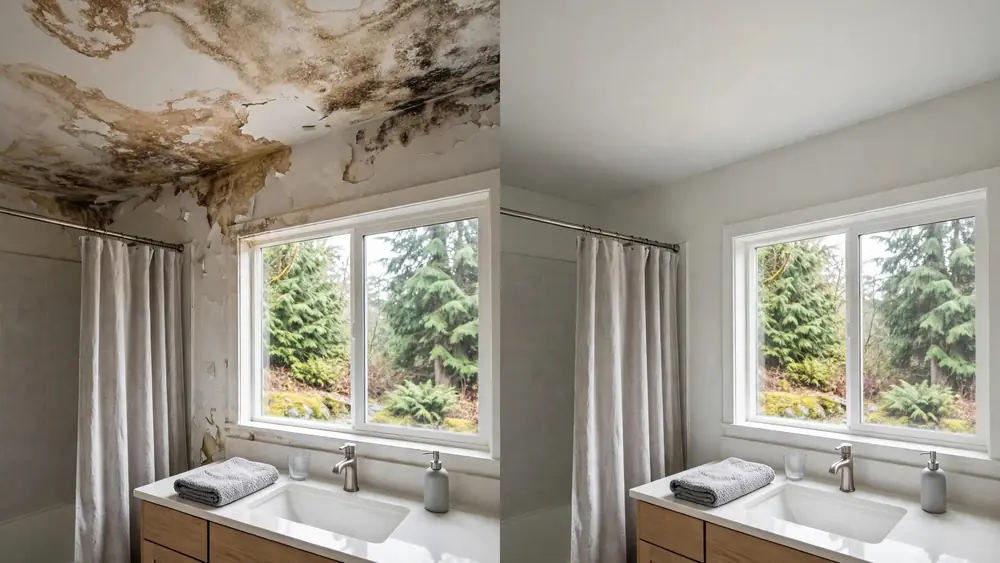
Roof leaks tend to wet insulation and ceilings first, and they may not show until the attic is saturated. Appliance failures usually spread across a floor and under cabinets, where toe kicks hide them. Slow leaks behind a shower or under a sink are a different problem again, because materials may have been damp for months and mold may already be present.
Storm and river water brings silt and contaminants, so cleaning takes a bigger share of the work. Ask the contractor to explain how they classified the water, since that one decision affects most of what follows.
Checklist
Questions worth asking a contractor
- Are you licensed where my home is, if my state requires it, and are you insured?
- Do your technicians follow the IICRC S500 standard?
- Will I get a written scope and copies of the drying logs?
- Who handles repairs after drying: your company or someone else?
- What should I keep, photograph or set aside for my insurer?
Prevention
Lowering the odds of a repeat
Replace rubber washer hoses with braided ones, know where your main valve is, and check under sinks a few times a year. Keep gutters clear and make sure the ground slopes away from the foundation. A leak alarm near the water heater is a small purchase that can catch a failure early, and mold prevention habits help after any wet event.
Is this what you need?
When you need water damage restoration, and when you do not
You likely need restoration when water has reached anything you cannot simply wipe and air out: drywall, insulation, subfloor, carpet pad or the space below a floor. A spill on sealed tile, caught within minutes, usually does not. The deciding question is not how much water you can see but where it may have travelled.
Three situations almost always justify a professional inspection: water from above, such as a ceiling leak; water that sat overnight; and any water with a smell, since that suggests contamination. If you are unsure, a moisture reading settles it better than a guess.
Compare
Restoration, mitigation and repair are different jobs
| Stage | Goal | Typical work |
|---|---|---|
| Mitigation | Stop the damage from growing | Water removal, tear-out, drying, tarps |
| Restoration | Return the structure to sound condition | Cleaning, drying checks, reassembly |
| Repair | Put finishes back | Drywall, flooring, paint, trim |
What to expect
What a thorough inspection should cover
- The source, and whether it has actually stopped
- The category of water and how it was decided
- Moisture readings in walls, floors and the rooms next door
- Which materials stay, which go, and why
- A written scope you can show your insurer
Questions
More questions about water damage restoration
How do I know if water got inside the wall?
Look for bubbling paint, a soft baseboard or a musty smell, but a moisture meter is the reliable check, because a wall can be wet and look normal.
Will my floors have to come out?
Not always. It depends on the material, the water category and how long it has been wet. Sealed tile often stays, while laminate and carpet pad often do not.
Can I stay at home during the work?
Often yes after a clean leak. Contaminated water, heavy tear-out or noisy equipment in bedrooms can make a short stay elsewhere more practical.
Guides
Guides for this job
Start with what to do in the first hours, then read how to find hidden moisture and who to call first after a leak.
Water categories
How the three water categories change a job
The S500 standard groups water into three categories by how contaminated it is. Water can also move to a worse category as it sits or as it travels through a building.
| Category | Typical source | What it means for the work |
|---|---|---|
| Category 1 | Supply lines, sink overflows with no contaminants | Often extracted and dried, with many materials kept if dealt with early |
| Category 2 | Dishwasher or washing machine discharge, some toilet overflows | Cleaning is added, and pad and other porous items are looked at more closely |
| Category 3 | Sewage, floodwater from outside, water with heavy contamination | Porous materials typically come out, and protective gear and sanitizing are required |
Timing
What changes hour by hour, and what does not
The first hours are about spread. Water soaks into carpet pad, moves under flooring and starts to wick up drywall. Fast extraction limits how far all of this goes. By the end of the first day, wood may begin to swell, and furniture legs can leave stains on damp carpet. Particleboard cabinet bases can start to show damage.
EPA and CDC both use a window of 24 to 48 hours for getting a home dried out, which is why the second day is such a common point for decisions. Past that point, materials are more likely to need removal, and a musty smell may start to show up. None of this means that the home is ruined, only that the work changes. A leak found after a week can still be dealt with, but expect more tear-out and more care around mold.
By property
How the job differs by type of property
The same leak plays out differently depending on what kind of building it happens in.
Single-family home on a slab
Water spreads across the floor and has nowhere to drain. Bottom plates, baseboards and flooring are the main concerns.
Home with a crawlspace
Floor leaks can pool on ground covers and soak insulation under the floor. The emergency crawlspace page covers urgent steps.
Older house with plaster
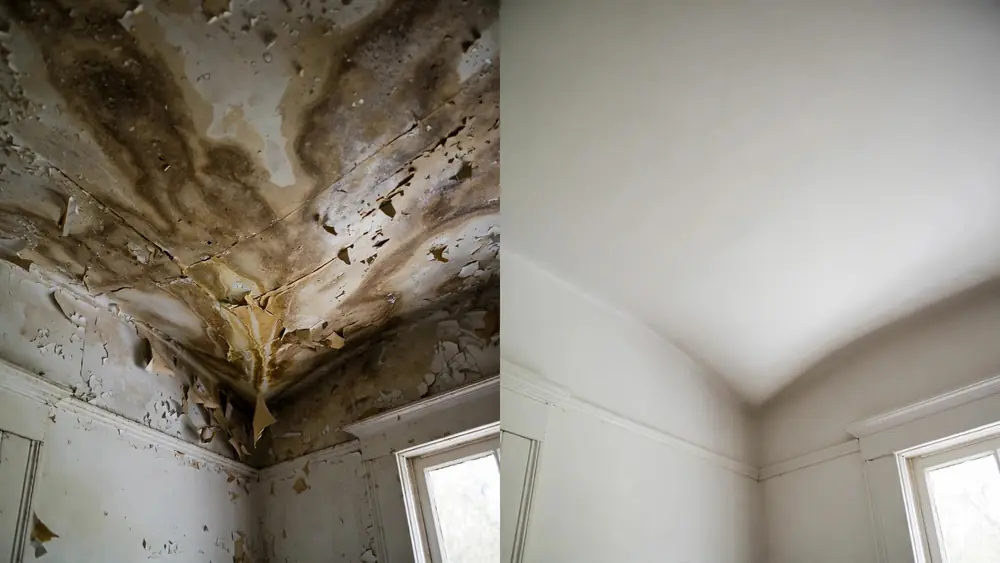
Plaster and lath hold water for a long time and may hide lead paint. Moves need to be careful and slow.
Condo or apartment
Water crosses unit lines, so the association and neighboring owners get involved. Ask who is responsible for which side of the drywall.
Manufactured home
Water often collects in the belly wrap under the floor, and many floors are made with particleboard, so check below as well as above.
Small commercial space
Inventory, tenants and reopening dates shape the plan, and shared HVAC systems can spread moisture and odor.
Keep or remove
Common materials and how they tend to fare
This is a general guide only. The water category, how long it has been wet and how the material was built can all change the answer.
- Solid wood furnitureOften recoverable. Lift it off wet floors, and wipe it down so stains do not set.
- Particleboard furnitureIt swells and crumbles, and it seldom comes back once it has soaked up water.
- Laminate flooringEdges usually swell and the planks may not lie flat again.
- Engineered woodThe result depends on the construction, so a contractor may test a few boards before deciding.
- Ceramic tileIt tends to survive, though the grout and whatever lies beneath still matter.
- Hollow-core doorsTheir thin skins can delaminate, and replacing them is often the simplest course.
- PlasterIt may be dried if it stays bonded. A hollow sound when tapped suggests it has let go.
- ElectronicsKeep them off and unplugged until they have been checked by someone qualified.
Owner's first day
What you can safely do on the first day
Ready.gov and CDC both stress electrical and contamination risks, so stop at any step that does not feel safe.
- 1
Check for electrical risk
Do not touch electrical equipment if it is wet or if you are standing in water, and shut off the power only when you can reach the switch safely.
- 2
Stop the water
Close the main, or a local valve at the fixture if you are sure of the source.
- 3
Record it
Take wide shots and close-ups, including the source, before anything moves.
- 4
Tell your insurer
Open a claim, and check what they want kept before removal. Keep a note of the claim number.
- 5
Protect belongings
Carry belongings to an unaffected room, starting with what would be hardest to replace.
- 6
Make the call
Phoning (833) 610-0241 gets you a referral to an independent contractor, who can go over the situation with you.
Paperwork
What a written scope should say
A good written scope names each room and each material, says what is being removed and why, and describes how drying will be verified. It should list who does which part, which firm is responsible for repairs and how changes get approved. Avoid signing anything that hands over control of your insurance claim without first reading it closely.
Ask for a copy of the moisture map and the logs when work wraps up, as well as photos of walls before they are closed. That packet is what a future buyer, your insurer or a second contractor will want to see. Keep it with your other home records.
Warning signs
Signs a restoration job is not going well
Most contractors do honest work, but it helps to know what a problem looks like early on.
- No moisture readings are taken, or the crew cannot show you any.
- Fans are set up but there is no dehumidifier in the room.
- Drywall goes back up before anyone has shown you dry numbers.
- A strong musty smell appears or builds after several days of drying.
- Nobody can tell you which category of water they think this is.
- You are pressured to sign the same day, or to hand over your claim.
- Equipment stays for days with no one coming back to check on it.
Living through it
What daily life looks like during restoration
Plan for noise, dust and loss of use of certain rooms. Bathrooms and kitchens are the hardest to live without, so sort out alternatives early. Keep a clear walking route through the house, and set up a dry room to serve as your base, with medication, chargers and paperwork in one place.
Children and pets need a plan because cords, open walls and equipment are tempting to both. Ready.gov advises that household members with breathing conditions or reduced immunity should stay out while leaks are active or mold is evident. In those cases, a stay with relatives or in temporary housing can be the right call, even for a clean-water leak. Ask your insurer whether the policy helps with that.
The rebuild stage
When drying ends and repairs start
Reconstruction is often a separate contract, and may involve a different firm. It helps to pick your approach early. One company handling both means a single point of contact, while a separate general contractor gives you more options on finishes. Either way, make sure the repair crew has the final moisture readings before it starts.
Matching can be the frustrating part. Paint may not blend across a wall, hardwood may need refinishing across a whole room and a discontinued tile may not be available anymore. Raise these concerns with your adjuster early. Permits may be required for electrical work, for structural work or for changes in layout, so ask your local building department before you assume you can skip them.
Reducing risk at home
A yearly water check for the whole house
An hour once a year finds most of the small leaks before they turn into restoration jobs.
- Look at the ceiling beneath each bathroom for fresh staining.
- Pull the washer out and examine the hoses and the valve box behind it.
- Check the base of the water heater for rust or dampness.
- Run the sump pump by pouring water into the pit.
- Open the attic hatch after a rain, and look at the underside of the roof.
- Walk the outside of the house to check gutters, downspouts and the slope of the ground.
- Turn the main valve off and on, so it does not seize when you need it.
Getting started
Questions callers often ask before work starts
Is Water Damage First the company doing the work?
No. Water Damage First only makes referrals by phone. Independent contractors carry out the jobs, so put questions about licensing, insurance and scope to them directly.
Should I wait for the adjuster before calling anyone?
Generally not. Policies commonly expect you to limit further damage. Take photos, tell your insurer and keep whatever you remove if they ask you to.
What about a leak that happened weeks ago?
It can still be assessed. Expect moisture readings, a closer look for mold and possibly a harder talk with your insurer about when it began.
Can water damage affect my electrical system?
Yes. Water can follow wiring into boxes and panels. Have an electrician check anything that was wet, even if it seems to be working.
How do I find out whether something needs replacing or just drying?
Ask the contractor to explain the decision for each material, based on the water category and on readings, and to show you photos. If you are unsure, read the guide on wet drywall.
Language you will hear
Restoration terms explained plainly
Contractors and adjusters use shorthand. These are the terms that come up most.
Flood cut
Removing the lower part of a wall in a straight line, so the wet section comes out and the rest stays.
Affected area
The part of the building that readings show to be wet, usually bigger than what you can see.
Dry standard
The reading from an undamaged material of the same type, which is used as the target.
Pack-out
Moving belongings off site for storage or cleaning while the work takes place.
Antimicrobial
A product applied to reduce microbial growth. It does not replace cleaning or drying.
Secondary damage
Harm caused by water left in place, such as swelling or mold, instead of the original event.
Second opinions
When another look at the job makes sense
A second set of eyes can help when a proposed tear-out seems larger than the damage, when an adjuster and contractor disagree, or when the smell has not gone away after drying. An independent reading is most useful before anything is closed up, so ask early. Give the second person the first contractor's logs and photos, because those make the comparison fair.
A difference of opinion is not always bad faith. Water behaves unpredictably and two honest technicians may read a wall differently. What you want from both of them is a clear reason based on readings and category, and not simply a verdict.
Before a long absence
Reducing water risk when you travel
Many of the worst losses start while no one is home. A few minutes before leaving can limit the damage.
- Close the main valve, unless a fire sprinkler system depends on it.
- Keep the heat set high enough in cold weather to protect pipes in outside walls.
- Ask someone to walk through the house and check ceilings and floors.
- Turn off the supply valves to the washing machine.
- Check your policy for any conditions on homes left empty.
Insurance timing
Keeping the claim and the work in step
Coverage questions and work decisions move at different speeds. Drying cannot wait for a full review, but larger rebuilding decisions usually should. Tell your adjuster what is being done and why, and send photos as you go. If they want to inspect before removal, ask how soon they can come, and explain what waiting would do to the materials.
Keep your own log of each call, with the date and who you talked with. It feels like overkill during the first week, and it is often the most useful document you have by the end.
Service areas
Water Damage Restoration service areas
Where you live changes water damage restoration. See Oregon, Connecticut, Delaware, Kansas, Louisiana, New Hampshire, Chicago, Dallas, Colorado Springs, Cedar Hill, Lake Stevens, Norcross, Port Charlotte, Prosper, Atlanta, Indianapolis.
Urgent?
If this is happening right now
Go straight to the first steps: emergency water damage services, emergency crawlspace water services.