Key facts: Oregon
Local risks
What drives damage in Oregon
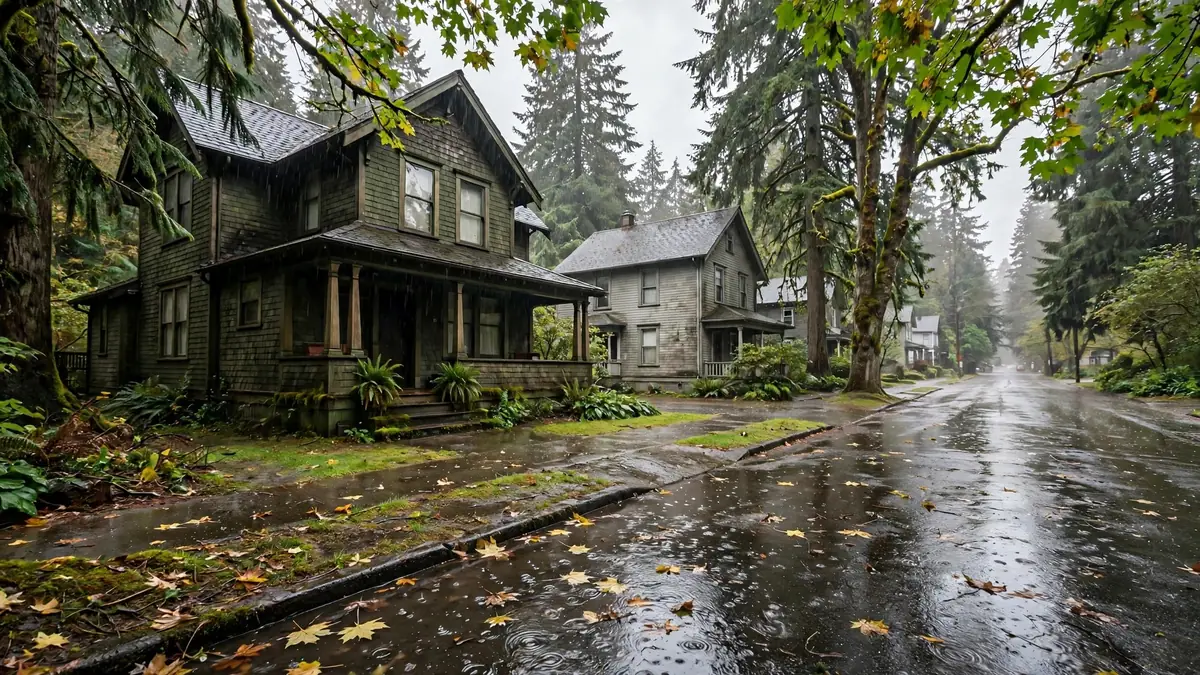
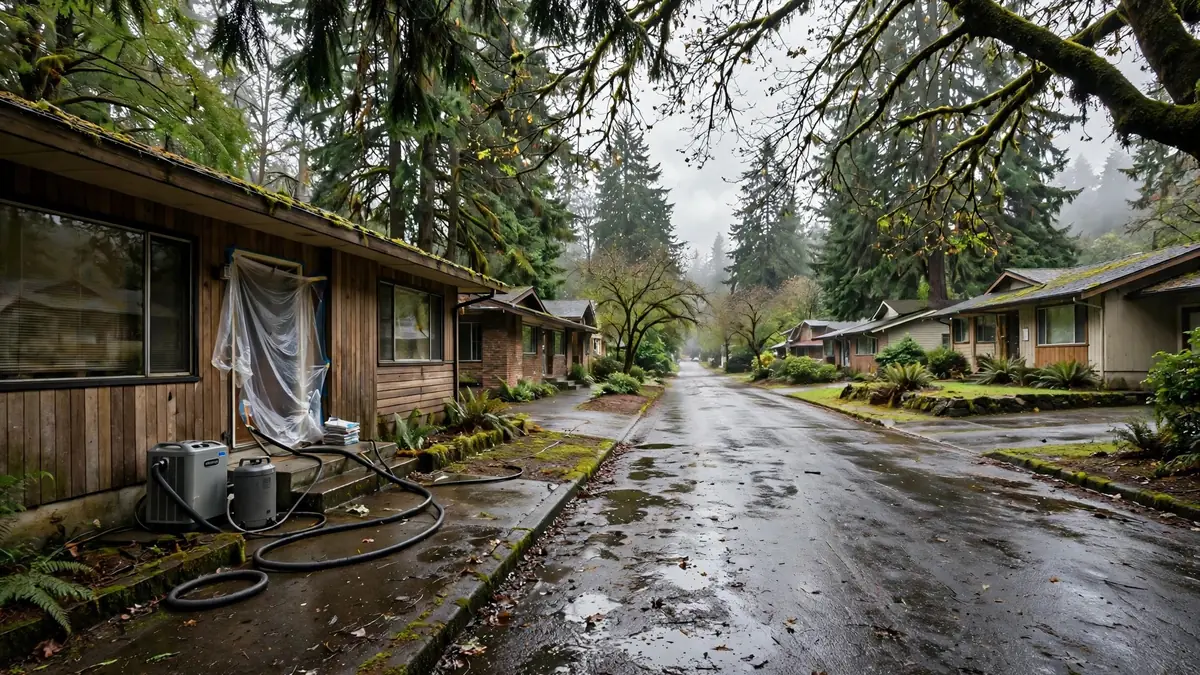
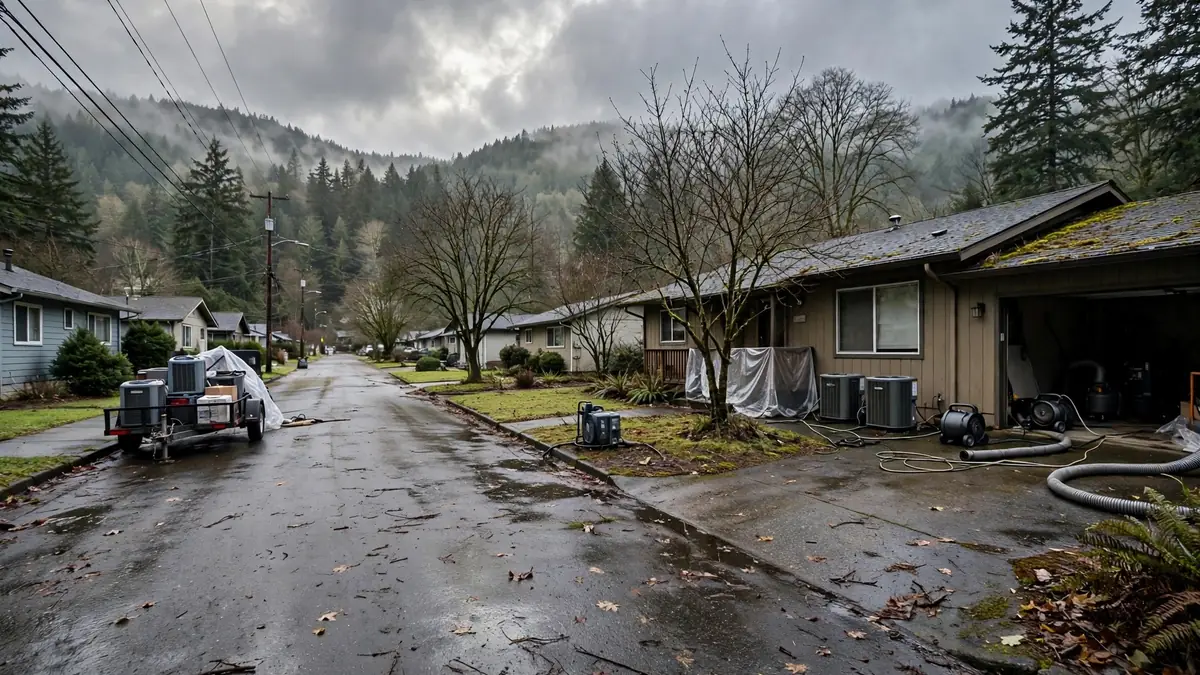
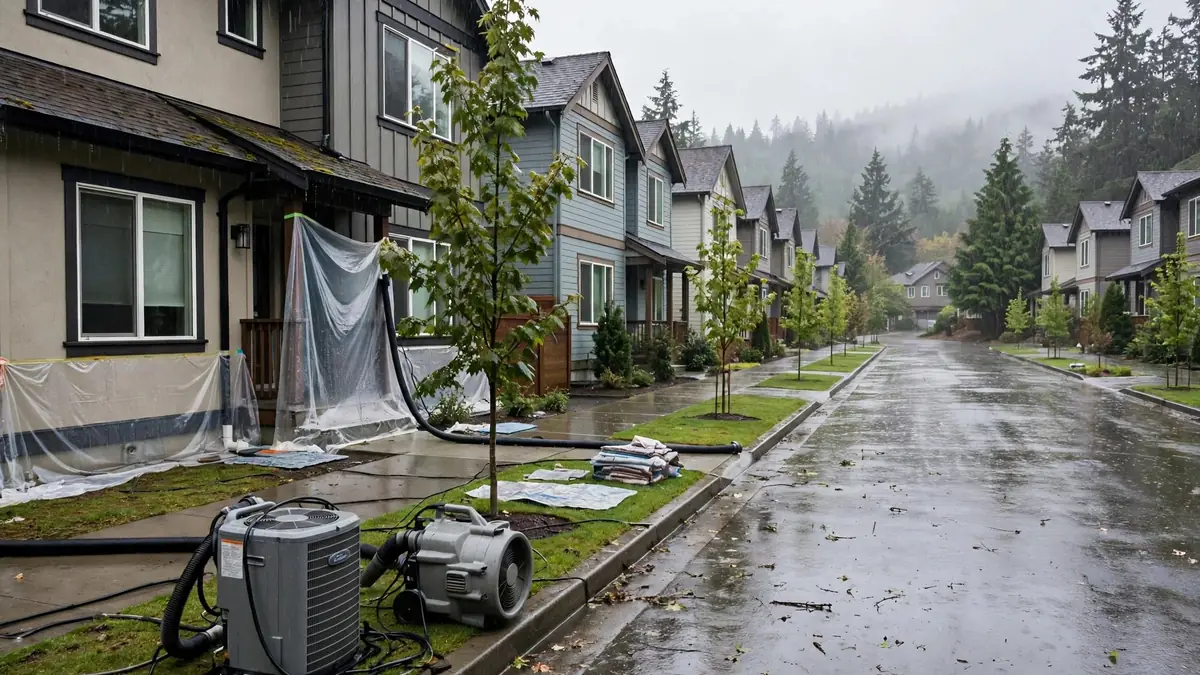
Portland's wet season runs roughly October through May, and the February 1996 flood remains a reference point for the Willamette. The 2021 freeze and January 2024 ice storm showed how cold can catch houses unprepared.
Southern valley towns such as Eugene see some of the wettest winters, while Bend's concern is more often cold than rain.
Housing
Homes and buildings here
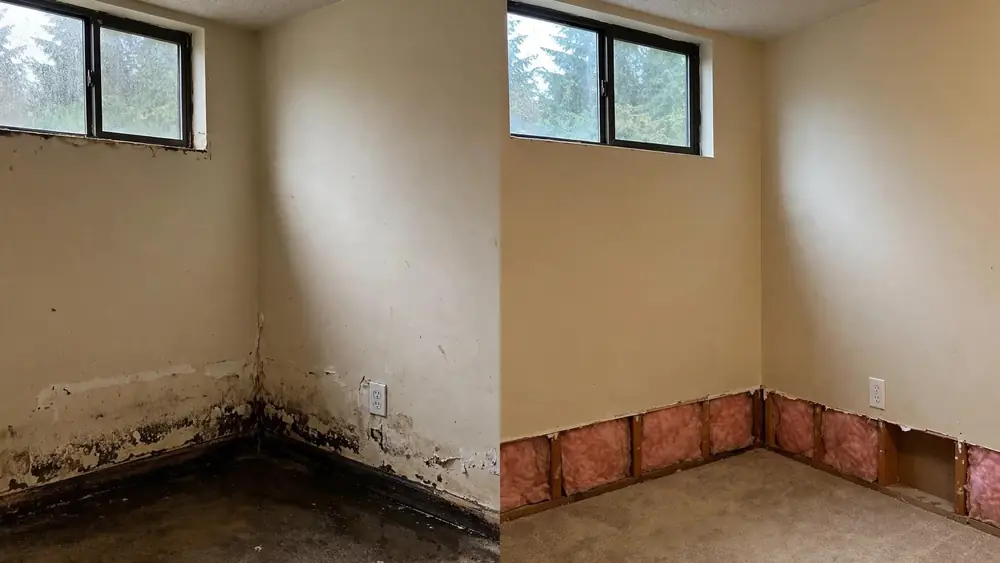
Portland has many older bungalows with basements, and combined sewers can back up there in heavy rain. Salem and Eugene have a lot of crawlspace housing, and Beaverton has newer tract homes in the Tualatin basin.
Common damage
Where to go next
Services people ask about
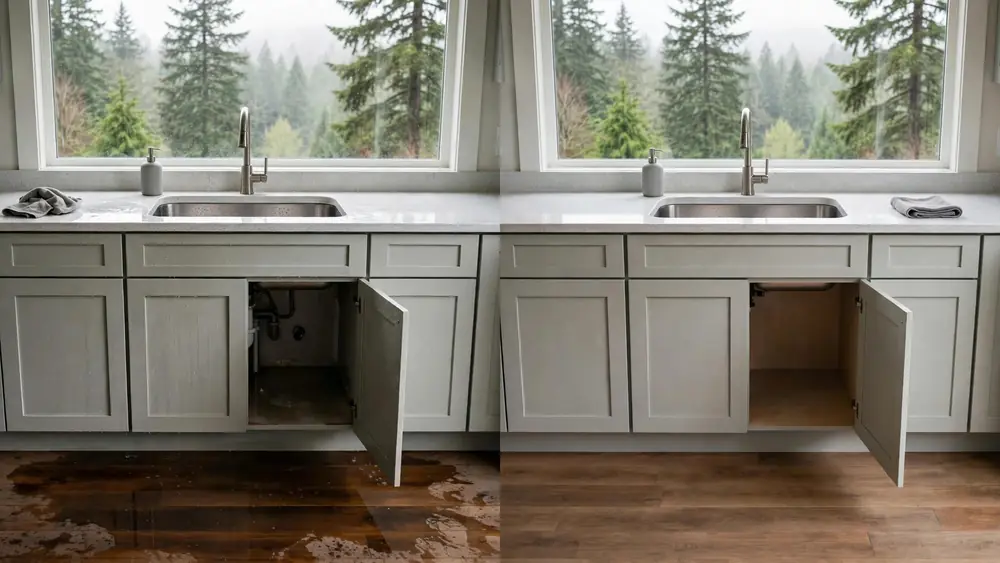
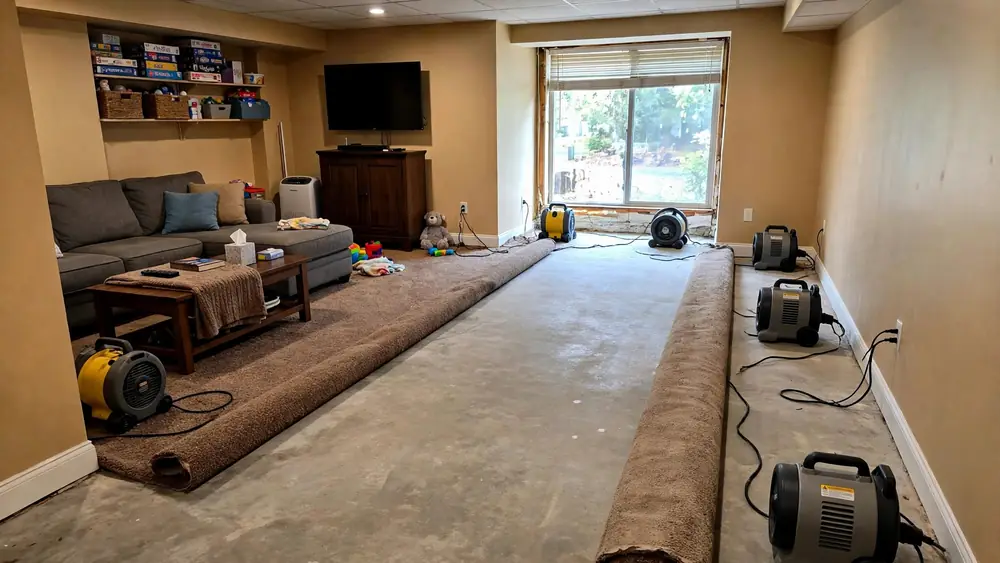
Start with water damage restoration, flooded basement cleanup or burst pipe water damage. Damp crawlspaces deserve a look after any long storm.
Service areas
Restoration service areas in Oregon
The short answer
Oregon has three different water problems, not one
West of the Cascades, the threat is months of steady rain punctuated by atmospheric rivers. East of them, it is a frozen pipe. In the Rogue Valley, it is a dry place that occasionally receives a very wet month. Your first move depends on which of those you are living with, so tell the contractor where the house is and describe the recent weather.
Portland's airport averages close to 37 inches of precipitation a year across roughly 157 wet days. Eugene gets about 40.8 inches, with December alone bringing around 7.2. Medford, sheltered between the Cascades and the Siskiyous, gets about 18.4 inches, and Bend, in the rain shadow, only about 10.6.
Climate by city
How the covered Oregon cities compare
The numbers come from long-term station records, and they explain why a drying plan in Eugene differs from one in Bend.
| City | Precipitation a year | What usually goes wrong |
|---|---|---|
| [Portland](/areas/oregon/portland/) | About 37 inches at the airport, about 44 downtown | Basement seepage, sewer backups, freezes in houses not built for them |
| [Beaverton](/areas/oregon/beaverton/) | Similar to the wider Portland area | Water in lower levels and shared-wall leaks in townhouses and condos |
| [Salem](/areas/oregon/salem/) | Wet winters on the valley floor | Crawlspace water, slow-draining yards |
| [Eugene](/areas/oregon/eugene/) | About 40.8 inches | Damp outdoor air that slows drying from November through January |
| [Medford](/areas/oregon/medford/) | About 18.4 inches | Runoff when a big storm lands on dry ground; cold nights on the valley hills |
| [Bend](/areas/oregon/bend/) | About 10.6 inches, plus about 21.6 inches of snow | Frozen and burst lines rather than rising water |
Flood memory
What 1964 and 1996 still teach Willamette homeowners
The Christmas flood of 1964 is the benchmark: warm rain landed on frozen soil and new snow, sending the Willamette roughly 12 feet past flood stage at Portland. Medford's wettest month on record, about 12.7 inches, was that same December.
February 1996 repeated the recipe. Rain and snowmelt lifted the river to 28.6 feet at Portland, about 10.6 feet over flood stage, and volunteers sandbagged the downtown seawall as water came within inches of the top. Oregon City's historic downtown sat underwater for several days. On February 10 of that year, the Tualatin recorded its highest flow, 26,400 cubic feet per second, near West Linn.
Neither event is a ceiling. Use the City of Portland's flood information and the FEMA map for your address instead of assuming that a block that stayed dry in 1996 always will.
Ice and snow
Why a mild-winter state still gets burst pipes
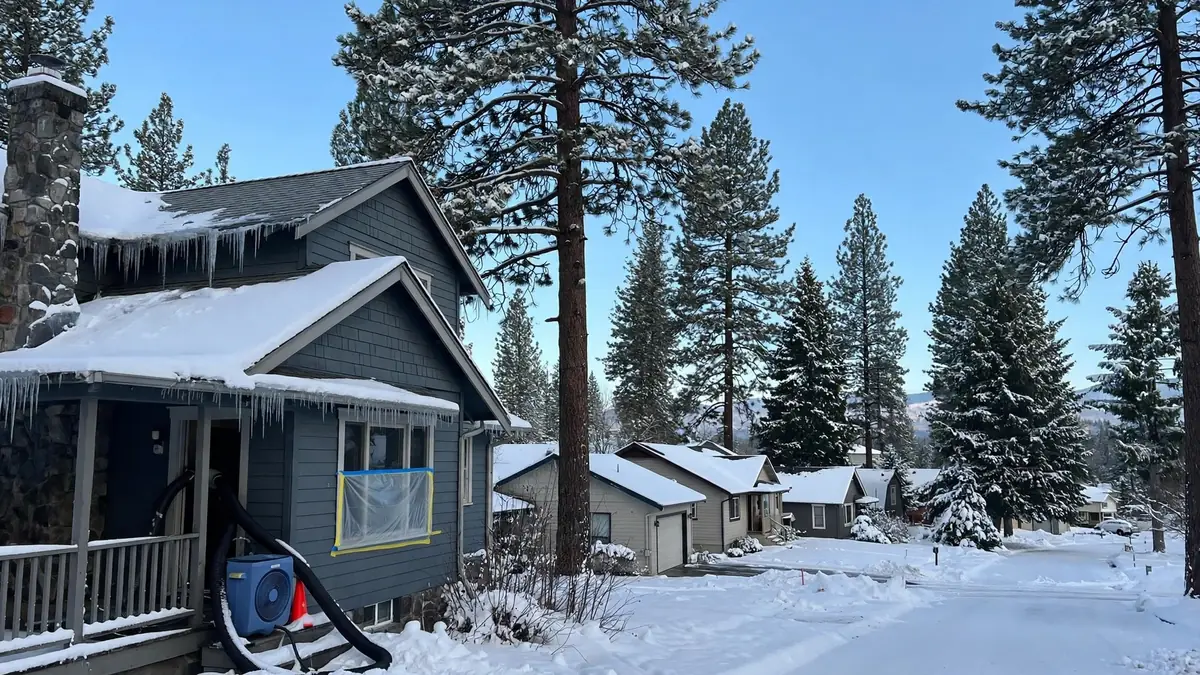
Snow is scarce in Portland, around four inches in a typical year, so many houses have plumbing in unheated crawlspaces and exterior walls. In February 2021, the city had 6.1 inches of snow in one day while ice up to an inch and a half thick built up elsewhere in the state. Mid-January 2024 delivered another damaging ice event.
Ice storms pair two failures: the outage removes heat, and then a line splits and nobody notices until the thaw. If you lose power in a cold spell, find your main shutoff before you need it. For a split line, go straight to burst pipe water damage after you have stopped the flow.
Bend's winters are a separate case. Snowfall there swings from about six inches in a lean season to over ninety in a big one, and a second home sitting empty is the classic place for a freeze to go unnoticed.
Housing
Oregon house types and where water hides
Construction decides where the contractor looks first.
- Pre-1940 Portland bungalowsFull basements, older drain lines and, in parts of the city, combined sewers that can back up in hard rain. See flooded basement cleanup.
- Salem and Eugene crawlspace homesStanding water under the floor can go unseen for days. Heavy valley clay is slow to drain, so a wet crawlspace stays wet. Ask about structural drying that reaches the joists.
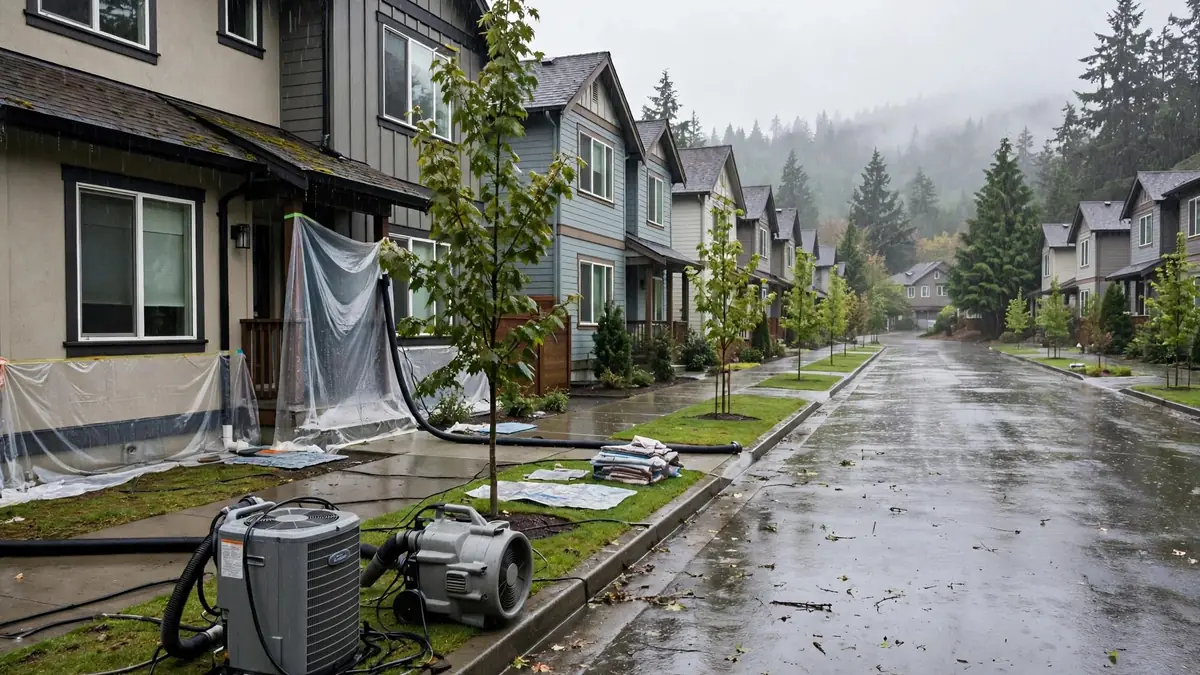
- Tualatin basin tract homesNewer Beaverton houses, townhouses and condos are where one unit’s supply-line failure can reach a neighbor, so tell the association early.
- Central Oregon second homesLines in garages, exterior walls and vacant houses are the weak point in Bend.
- Older Rogue Valley housesPaint from before 1978 may well contain lead, and old materials can hold asbestos, so ask about testing before Medford or Grants Pass walls get opened.
First hour
First steps when water reaches an Oregon home
Work through these in order, and skip nothing that involves electricity or sewage.
- 1
Stop the source or get out
Close the main for a plumbing failure. If river or creek water is rising, leave. Do not walk through basement water while the panel is energised.
- 2
Separate sewage from clean water
Portland Environmental Services publishes specific guidance for sewer backups. If your drains are backing up, stop using water and keep people away, then read sewage backup cleanup.
- 3
Call the public utility if the street is involved
Salem lists a contact for water, sewer and street emergencies, and Portland and Eugene have their own bureaus. A main problem belongs to them, not your plumber.
- 4
Photograph before anything moves
Wide shots first, then close-ups of the waterline and damaged items. Save receipts.
- 5
Start drying, whatever the weather
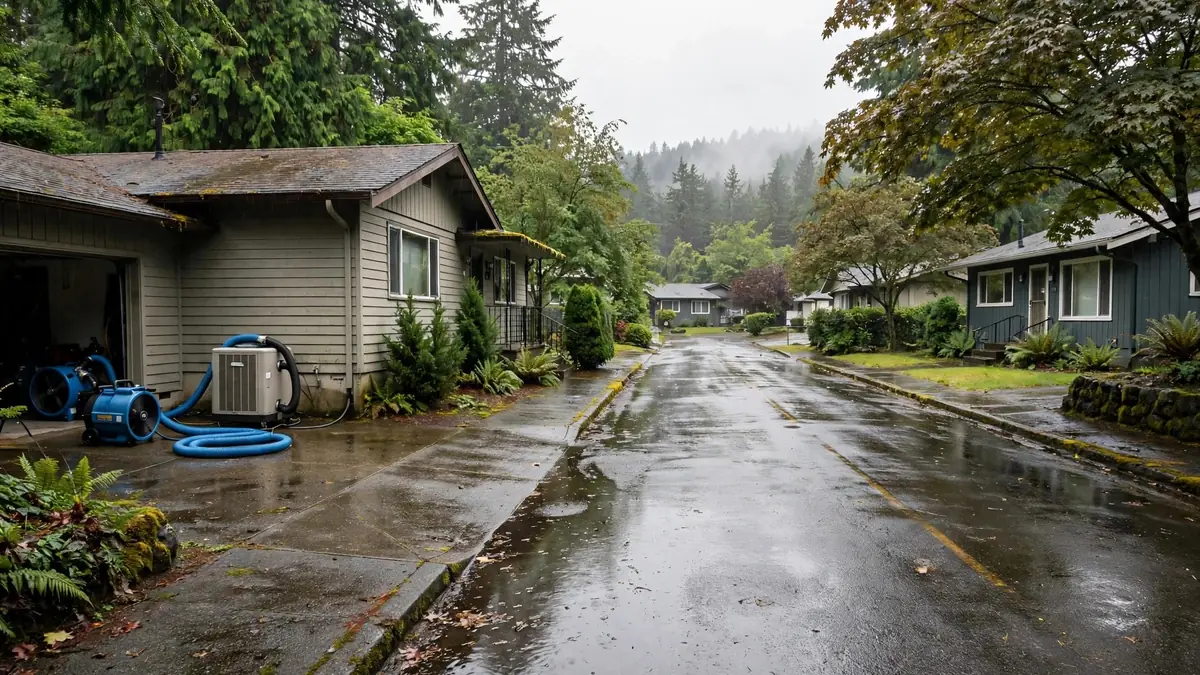
Opening windows in a Willamette Valley December adds moisture. Ask the contractor whether to close the house and run dehumidifiers. How long drying takes has more detail.
Rules and agencies
Who regulates contractors and insurers in Oregon
The Construction Contractors Board licenses residential contractors, and its website lets you confirm an active license and read any complaints. Use it before you sign, since Water Damage First only connects the call: the contractor you reach is independent, and any agreement is between you and them.
Permits run through the city or county where the house sits, so a Bend repair and a Portland repair go to different counters. The contractor should be able to say whether the job needs one.
Tenants have a statute to read: ORS 90.320 sets out what a landlord must maintain, including weatherproofing and working plumbing. Report damage in writing, and remember your belongings fall under your own renters policy.
Insurance notes
Reading an Oregon homeowners policy after a loss
Most standard policies treat a sudden pipe failure differently from rising floodwater, and flood usually needs its own policy, either federal or from a private flood carrier. Sewer backup is often an add-on, which matters in a city with combined sewers, so check for that endorsement today rather than after a storm.
Call your insurer early, describe what happened plainly, and read the guide to working with an adjuster. Claim disputes can go to Oregon's Division of Financial Regulation, the state's insurance watchdog.
Oregon questions
Oregon water damage questions, answered
Is my crawlspace really urgent if nothing inside looks wet?
Yes, when there is standing water under the floor. Oregon’s damp winter air gives it little chance to dry alone, and the EPA advises drying materials within 24 to 48 hours.
Does Water Damage First cover the whole state?
Calls are connected to independent contractors, and the listed cities are Portland, Beaverton, Salem, Eugene, Medford and Bend. Ask on the call whether your exact address is served.
Should I run the furnace to dry the house?
Heat alone can move moisture around rather than remove it. Do not run a forced-air system if ducts took on water, particularly sewage, until someone has checked them.
Sources and citations
- [1]U.S. EPA: A brief guide to mold, moisture and your home
- [2]Wikipedia: Willamette Valley flood of 1996
- [3]Wikipedia: Christmas flood of 1964
- [4]Oregon Construction Contractors Board
- [5]Oregon Division of Financial Regulation
- [6]City of Portland Environmental Services: What to do after a sewer backup
- [7]City of Portland: Flooding in Portland
- [8]City of Salem: Water, sewer or street emergency
- [9]Oregon Revised Statutes: ORS 90.320, landlord duty to maintain
- [10]Oregon State University Extension: Clay soil challenges