
Key facts: Uptown and Edgewater
- Uptown is Community Area 3, bounded by Foster, Montrose and Irving Park, Ravenswood and Clark, and the lake [1].
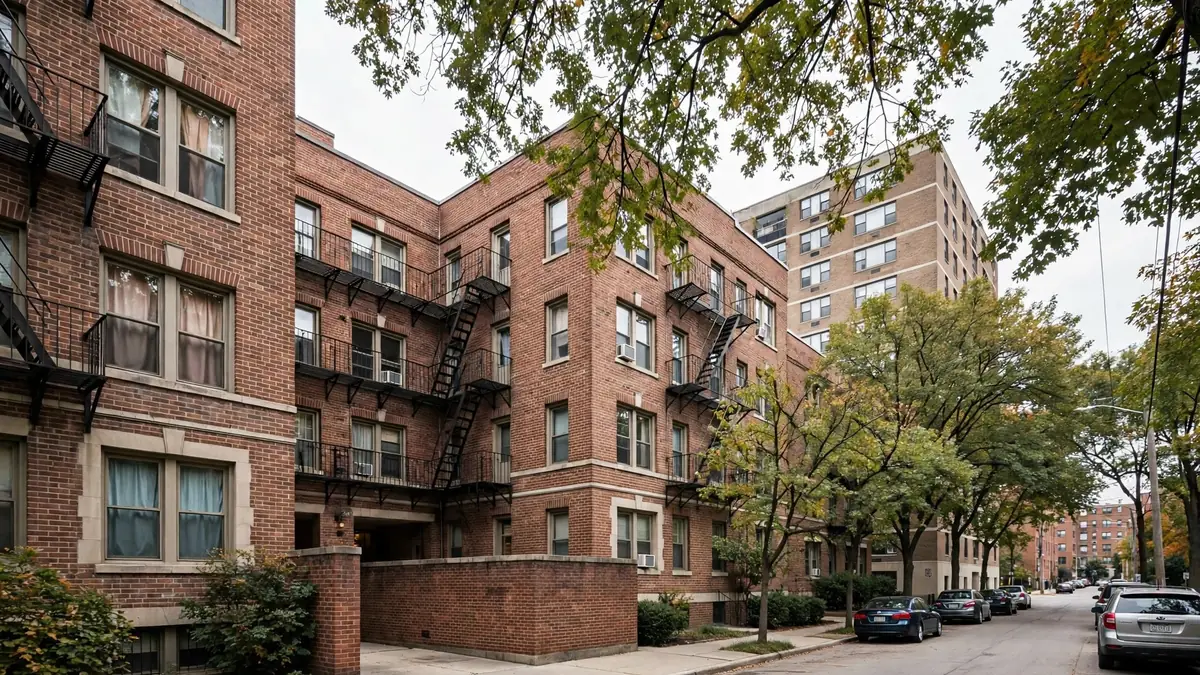
- Sheridan Park is largely six-flats, courtyard buildings and houses, while Margate Park's terracotta apartment hotels now serve as condos and co-ops [1].
- Foster and Devon bound Edgewater, Community Area 77, which split from Uptown in 1980 [2].
- Edgewater pairs lakefront high-rises with western blocks of houses and two- to four-story flats [2].
- Designated Chicago landmarks may require commission review for exterior repairs [3].
Who answers for your building
Four ownership setups to recognize
Uptown and Edgewater mix ownership forms more than most neighborhoods, and who pays and decides can vary accordingly. Check your documents, as these are only general patterns.
- Rental buildingThe owner handles structure and shared areas; your belongings fall to your renter's policy, since a landlord's policy will not cover them [5].
- CondominiumThe declaration divides shared elements from your interior. Ask the board for that clause on day one.
- Co-opYou hold shares and a proprietary lease rather than a deed to a unit, and the corporation's documents and insurance arrangements decide who repairs what, so ask the board or manager.
- Single-family or small flat buildingCommon in western Edgewater [2], this is the simple case: you decide, and you and your insurer work with the contractor directly.
Six-flats
One stair, six households
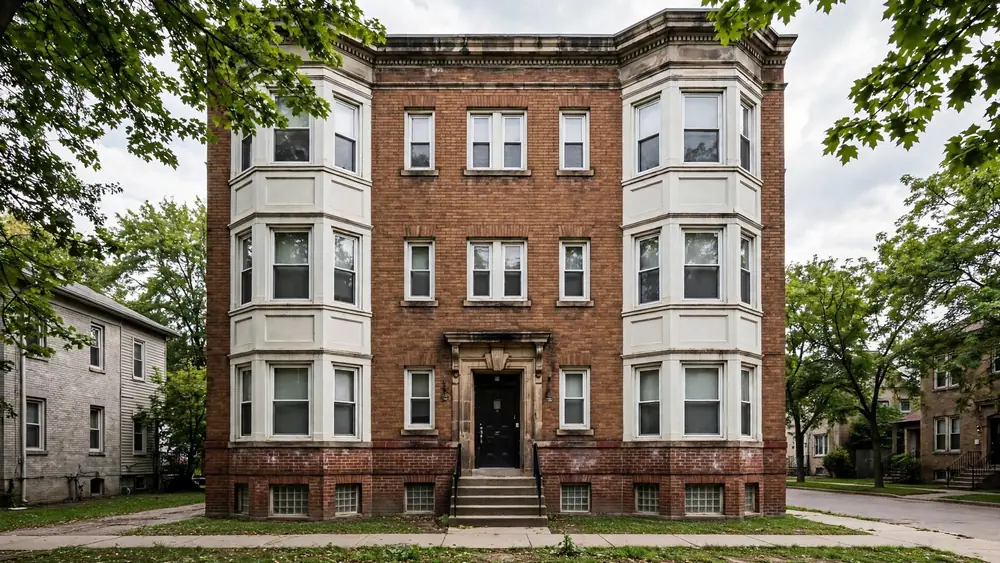
Sheridan Park is largely six-flats and courtyard apartments [1]. A six-flat is simple in plan: one central stair with two units per floor. That simplicity means a fire or leak affects everyone quickly. Smoke fills the only shared stair, and water runs down from the top floor toward the first-floor pair. If a back stair exists, it may be wood and exposed to weather, and it is the second way out, so report any burned or weakened section at once.
On a small building like this the owner is often close at hand, which can speed up decisions. Get all six households the same information on who the contractor is and when work will happen. Each tenant still needs to contact their own insurer [5].
Terracotta and old hotels
Margate Park's apartment hotels
Margate Park's terracotta apartment hotels, since converted into condos and co-ops [1], have small units along long interior corridors. They were designed for a different kind of living, and their mechanical systems may have been changed many times. Long corridors can carry smoke to units far from a fire, while vertical plumbing chases can bring water down through kitchens and bathrooms in a stack.
Glazed terracotta fronts should be cleaned only with methods that won't damage them. Where a building is a designated landmark or lies in a Chicago landmark district, outside repairs may go through commission review [3]. Uptown Square Historic District and other designations are worth checking; your contractor or the city can help you confirm what applies to your address.
Sheridan Road
Towers facing the lake
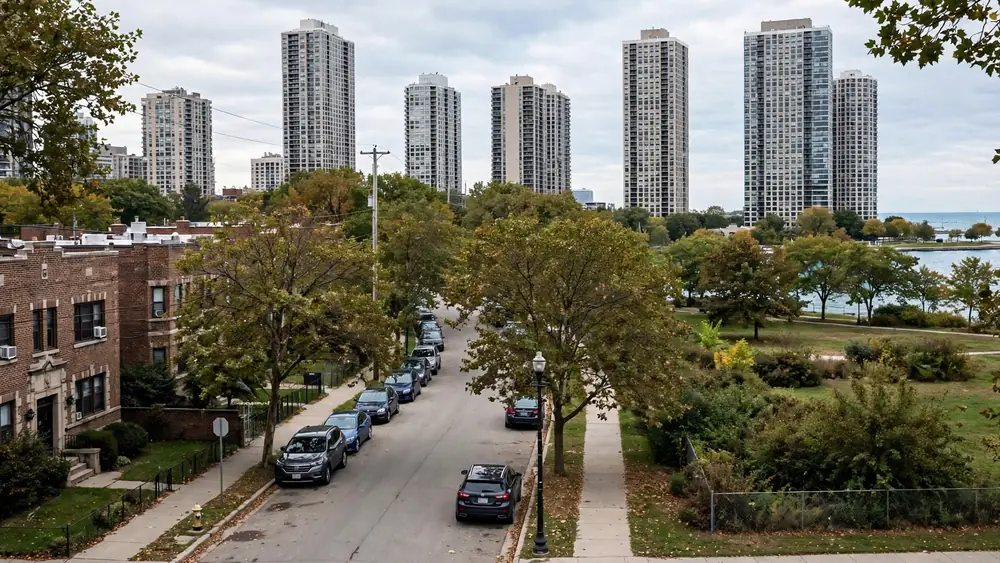
Edgewater's lakefront high-rises [2] present familiar tower issues: leaks crossing several floors, corridor smoke and scheduled freight elevators. There are also older buildings here with hot-water or steam risers that can fail in cold snaps, sending hot water into several units. If you see steam or hot water, leave the area and call the engineer.
Lake exposure can drive rain through old window assemblies during storms. That kind of leak often comes back, so ask whether the source is a window, a riser or something above you, and make sure it's fixed before the finishes go back. For drying details, read about structural drying.
Decide what's first
Common events and the right opening move
| What happened | Do this now | Then |
|---|---|---|
| Water through ceiling in a six-flat | Notify the owner and the unit above | Photograph; move belongings; call your insurer |
| Radiator or riser leak | Call engineer or owner to isolate it | Avoid hot water and wet floors; start extraction |
| Smoke in your unit from elsewhere | Follow fire department instructions | Record residue; read smoke cleanup |
| Backup in a basement laundry or unit | Keep out; report to 311 [8] | Tell the owner; arrange sewage cleanup |
| Burned rear stair | Do not use it | Ask owner about shoring and a permitted rebuild [9] |
The work itself
What the contractor handles
- 1
Survey beyond your door
Stairs, chases and homes above and below all get checked.
- 2
Set up protection
Floors and elevator cabs are covered, and any open window or roof area gets boarded or tarped.
- 3
Extract and dry
Water comes out first, then drying equipment goes in and readings are tracked each day.
- 4
Test old materials
Paint before 1978 may have lead, and federal rules set out lead-safe work [6]. Suspect asbestos is checked before disturbance [7].
- 5
Clean soot
Surfaces, contents and air pathways are treated, as described under fire damage restoration.
- 6
Document
Written scope, photos and moisture logs go to you and your insurer [5].
Plaster and radiators
Details of older apartments
Old apartments often have plaster walls, built-in cabinets, wood floors and radiators. Plaster can stay wet well after paint looks dry, and hardwood will cup if water sits under it. Slow, measured drying gives both the best chance. Wet drywall: save or replace explains the thinking for wall materials generally, and how long drying takes explains why a schedule can stretch. If the building's heat is off in winter, ask about freeze protection for pipes, since a second loss can follow the first.
FAQ
Uptown and Edgewater questions
I rent in a six-flat. Will the owner replace my things?
Generally not. The state insurance department notes that a landlord's policy doesn't cover a tenant's belongings [5], so call your renter's insurer.
Who decides in a co-op?
The corporation and your proprietary lease. Contact the board or manager early and ask for the relevant language.
Is a historic building harder to repair?
Inside, not necessarily. Exterior work on designated property may take longer because of review [3].
Where does Uptown stop and Edgewater start?
Foster Avenue divides them [1][2]. Give your address and the call will confirm coverage.
Can I stay in the unit during drying?
It depends on the damage, noise, air quality and any contamination. Ask the contractor and your insurer about temporary housing.
Nearby
Pages around Uptown and Edgewater
The Chicago overview has all areas. Directly south is Lakeview; to the west and southwest are Portage Park and Jefferson Park and Logan Square; downtown are River North and Streeterville and the Loop and South Loop.
Depending on what happened, read sewage backup cleanup, smoke damage cleanup, structural drying, fire damage restoration or water extraction. You can also start with what to do first after water damage.
Sources and citations
- [1]Wikipedia — Uptown, Chicago
- [2]Wikipedia — Edgewater, Chicago
- [3]City of Chicago — Commission on Chicago Landmarks
- [4]Ready.gov — Home fires
- [5]Illinois Department of Insurance — What to do after an insured homeowners loss
- [6]U.S. EPA — Lead Renovation, Repair and Painting Program
- [7]U.S. EPA — Protect your family from exposures to asbestos
- [8]City of Chicago — Water in basement service request
- [9]City of Chicago — Department of Buildings permits