
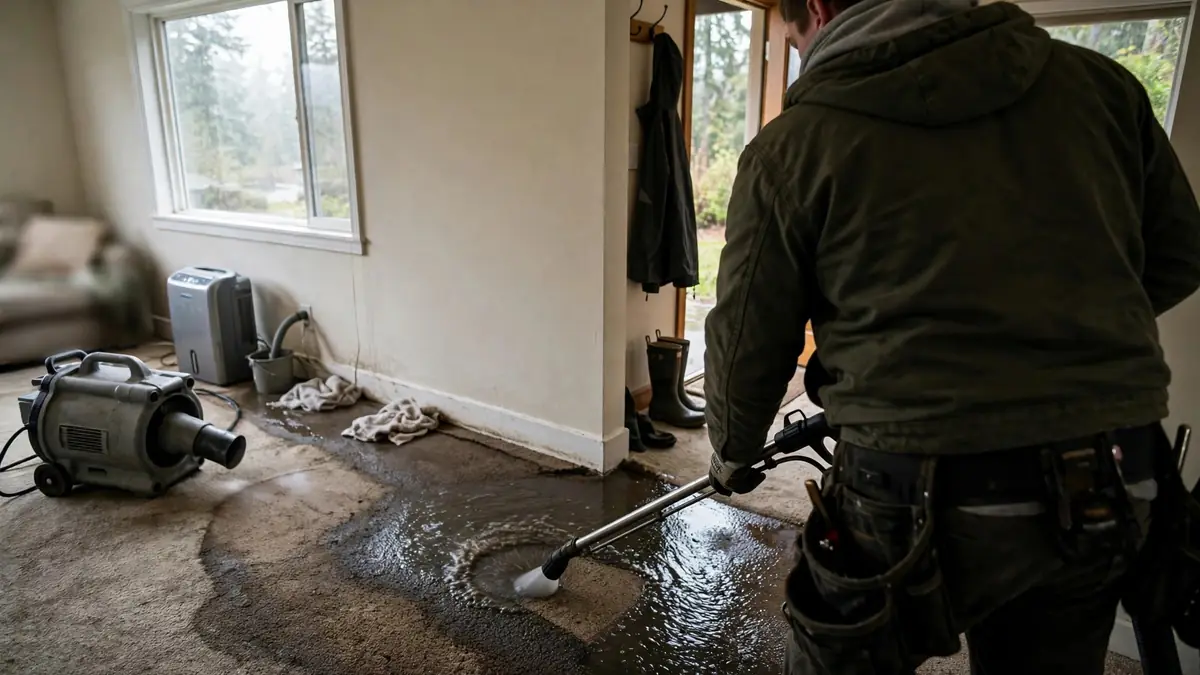
Key facts: Emergency Water Extraction
- Stay out if power is on: Standing water can be energized when it reaches outlets or cords.
- Stop the source: Removing water is pointless while more is coming in.
- Extraction requests go through to independent contractors, and local availability differs.
Right now
First steps for water extraction
- 1
Stay out if power is on
Standing water can be energized when it reaches outlets or cords.
- 2
Stop the source
Removing water is pointless while more is coming in.
- 3
Clear a path
Crews need a route from the door to the wet area for hoses.
- 4
Do not use a household vacuum
It is an electrical hazard and will not cope with water.
An inch of water waiting to come out
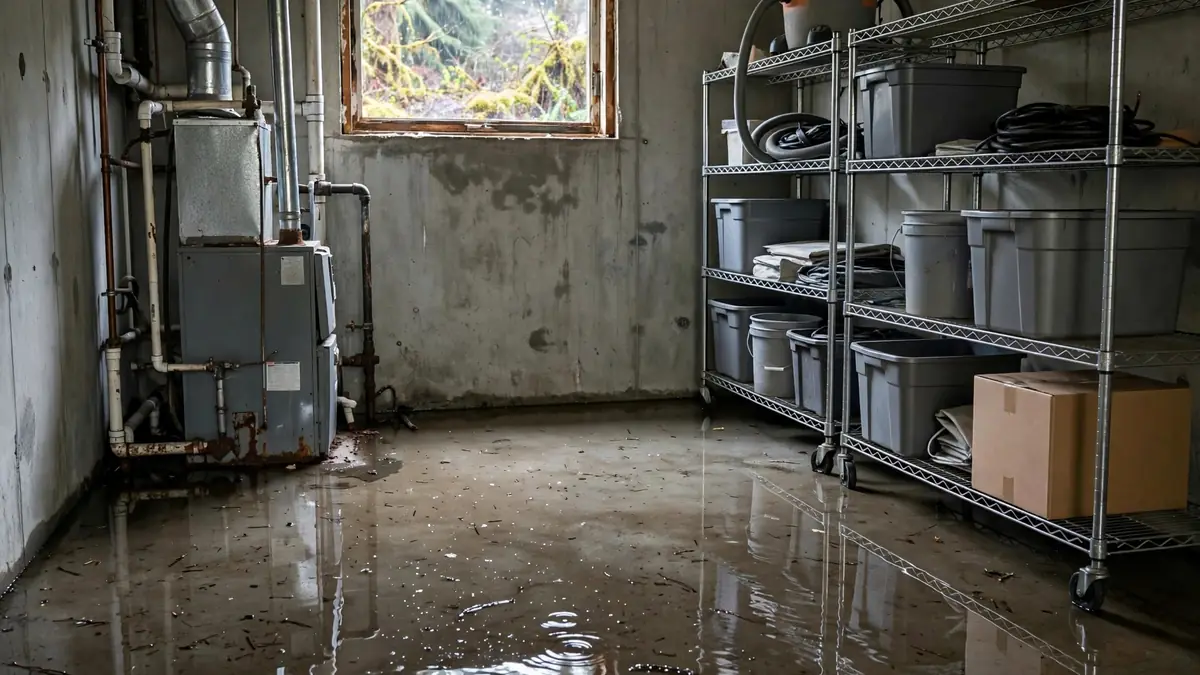
Is it safe?
Before anyone removes a drop of water
Extraction is mechanical work in a wet room, which is the riskiest place to use electricity. Answer these first.
- Is there live power in the wet area?If you cannot be sure, treat the water as dangerous. CDC guidance is that you should never switch power on or off while standing in water, and that you should call an electrician if reaching the breaker means entering it.
- Is the water clean?Water from a supply pipe starts clean. Water from a drain, toilet, flood or fire can be contaminated, and it changes who should handle it and how.
- Is the source stopped?Removing water while more is coming in wastes effort. Close the valve first, or wait for rain or flooding to stop.
- Could the walls be holding back outside water?In a flooded basement with saturated soil, pumping out fast can cause walls to fail. FEMA advises pumping gradually and waiting until surface water has receded.
- Will the floor hold?After fire or prolonged soaking, a floor may not be safe to walk on, let alone to carry equipment. Have someone check it.
Water type
How much, how clean, who should remove it
Choose by the worst condition that applies. If you are unsure, assume you need a professional.
| Situation | Reasonable first response | Why |
|---|---|---|
| Small clean spill on hard floor, safe power | Mop or wet-rated shop vacuum on a protected outlet | Low risk if handled quickly |
| Wet carpet across a room | Contractor | Pad holds water that surface tools will not reach |
| Water deeper than a puddle anywhere | Contractor once power is confirmed safe | Electrical risk and volume |
| Any water from a toilet or drain | Contractor with sewage experience | Contamination spreads with handling |
| Floodwater | Wait for local all clear, then contractor | Debris, contamination and possibly energized water |
| Water left by firefighting | Wait for building clearance, then contractor | Structural risk and residue in the water |
| Basement with saturated soil outside | Contractor, slowly | Risk to walls from pumping too quickly |
Getting ready
What you can do while waiting for extraction
Availability varies, so nobody can say exactly when a crew will reach you. These steps make the work go better when they do, and each one can be skipped if it would put you in the water.
- 1
Now
Stop the source and keep people and pets away. Photograph the room from the doorway, including the depth of water against a baseboard or table leg.
- 2
Within the first hour
Note where outlets and power strips sit relative to the water. Note which breakers you turned off. Tell anyone arriving about both.
- 3
Next
Clear a path from the nearest outside door to the wet room, since hoses and equipment need a route. Move parked cars from the driveway if you can. Have a key ready if you may not be there.
- 4
While you wait
Lift what you can from dry ground. Take curtains and dangling cords away from the floor. Put foil or plastic under furniture legs to keep stains off wet carpet.
- 5
Right before the crew starts
Tell them what is under the flooring, if you know, and about any older materials you have concerns about. Show them where the water started.
- 6
During the work
Stay out of the room. Ask what they are removing, how much they expect to take up, and whether anything needs to be lifted for the extraction to work.
- 7
Immediately after
Ask what the plan is for drying. Extraction removes liquid, while walls and floors stay damp, so the job is not done yet.
Tools and limits
Which equipment fits which job
- Mop and bucketFine for small clean spills on hard floors. It requires no electricity, and stops being realistic as soon as water spreads.
- Wet-rated shop vacuumUseful for small amounts of clean water. Plug it into a protected outlet on a dry circuit and keep the cord out of the water. Empty it often, and lift with care, since water is heavy.
- Household vacuum or carpet cleanerNot built for this. Leave it out.
- Submersible or utility pumpFor deeper water, once power is safe. It needs a discharge route that does not put the water back against the house or onto a neighbor.
- Gas-powered pumpsOnly outdoors, away from windows and vents. CDC warns against gasoline devices indoors, in basements and garages or near openings.
- Truck-mounted or portable extractorsWhat contractors commonly use. Ask which they will bring, and whether they need access to power or a place to park.
Hold off
Mistakes during water removal
- Walking through it to reach the far sideGo around if you can. Water can hide electrical risk, sharp objects or an open drain.
- Pushing water into the next roomSqueegeeing dirty water into a clean area spreads the loss. Ask where the water should go.
- Putting a pump outlet right beside the foundationThe water will come straight back. It may also add to the pressure outside the wall.
- Ignoring the weightA full bucket is heavy. CDC suggests limiting lifts to 50 pounds per person, and working in pairs for anything heavy.
- Assuming a dry surface means a dry floorCarpet pad and subfloor can stay wet after the surface looks fine. Ask for moisture readings.
- Pulling carpet out in a hurryTack strips can cut, and wet carpet is very heavy. Check with the contractor first, and record the type of carpet and pad before it goes.
- Dumping sewage-contaminated water down a floor drainAsk a contractor where it goes. Drains may be the source of the trouble.
Flooring
What extraction can and cannot do for your floor
Different floors respond differently. Carpet can sometimes be rescued if the water was clean and it was caught early, though the pad underneath may not be. Hardwood can absorb water from the edges and cup over the following days. Laminate and floating floors can hide water underneath them where no surface tool will reach. Tile and concrete are the most forgiving, but grout, cracks and wall bottoms can still hold moisture.
Tell the contractor what you have, and whether you know of layers below it. A floor that has been installed over an older one can trap water between the two. Ask how they plan to check for this, because it decides whether extraction alone will do or the flooring must come up.
Timing
Why hours matter more than the amount of water
A shallow sheet of water spreading under walls can do as much harm as a deeper pool in a concrete room. Water wicks upward into drywall, seeps beneath flooring, and soaks into cabinet bases. The longer it sits, the further it goes. The two-day drying window in EPA guidance starts when materials got wet, not when someone arrives, so getting liquid off the floor early buys time for the drying that follows.
That does not mean you should take risks to speed things up. It is far better to wait outside for a safe start than to hurry into a room with live current. Use the waiting time for the things that only you can do: documenting, calling your insurer, and getting belongings out of harm's way.
Log it
Records to keep during extraction
- Depth before and afterTake photos against a fixed reference, with the times visible on your phone.
- Source and stop timeSay when the water began and when it was stopped. If you do not know, explain what you do know.
- Which rooms and which floorsDo a short walkthrough video from dry spots, so that you do not need to rely on memory.
- What the crew took upAsk for a written note of materials removed, plus photos. Keep a sample of the carpet or flooring if the insurer needs one.
- How much water and what kindAsk whether the contractor recorded the water source and contamination level.
- Equipment left behindList each machine, the date it arrived and when it left. Note which outlets it uses.
Questions
Water Extraction: quick answers
How much water counts as an emergency?
Any standing water on carpet, or water spreading under walls, needs prompt removal.
Can I start with a shop vacuum?
For a small, clean spill on a safe circuit, yes. For more than that, call.
How deep does water have to be before I wait outside?
Any water near outlets, cords or appliances is reason to wait, whatever its depth, until the power question has been settled.
Do I need extraction if the carpet is only damp?
Possibly not, but damp carpet may hide a wet pad. A moisture meter is the quickest way of finding out.
Where does the water go?
For clean water, usually a suitable drain or outdoors, depending on local rules. Contaminated water needs a different plan, so ask the contractor.
Should I keep the heat on?
In freezing weather, keeping the house above freezing protects pipes and helps avoid ice. Otherwise, ask the contractor what temperature best suits the drying plan.
Next
When the floor is no longer under water
The water extraction page describes how removal works from start to finish. The wet carpet guide deals with what stays and what goes, and how long drying takes sets expectations for the next stage.