
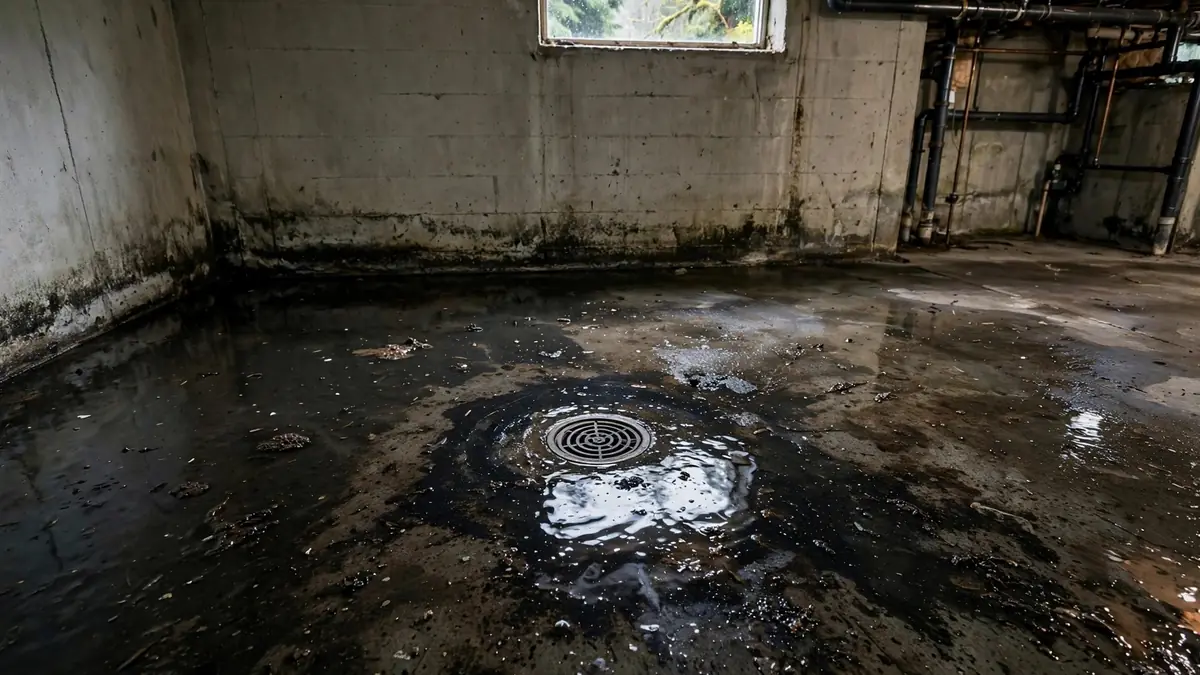
Key facts: Emergency Flooded Basement Services
- Stay on the stairs: Check from above, and cut the power at the panel if it is on a dry level.
- Call the utility if unsure: They can disconnect service from outside.
- Basement calls to (833) 610-0241 go to independent contractors, and coverage is not the same everywhere.
Right now
First steps for flooded basement services
- 1
Stay on the stairs
Check from above, and cut the power at the panel if it is on a dry level.
- 2
Call the utility if unsure
They can disconnect service from outside.
- 3
Smell for gas or fuel
If you notice either, leave and call the fire department.
- 4
Note the water color
Dark or foul water suggests a sewer backup.
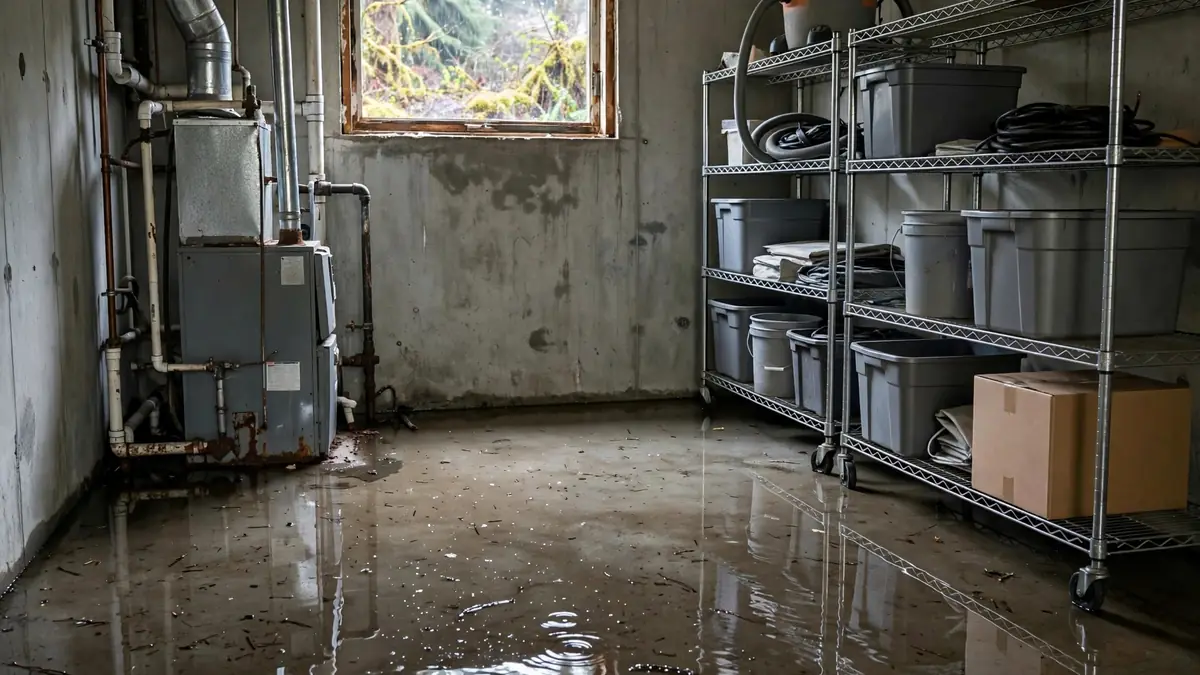
Water around the furnace and shelves
Three questions
Before a single foot goes on the basement floor
Each of these has a clear answer that decides your next move. If you do not know the answer, stay upstairs.
- Is the power off for the basement?Panels, outlets and equipment are often low. Water can carry current, and Ready.gov warns against touching electrical equipment that is wet or while standing in water. If the panel is in the flooded basement, do not go to it. CDC guidance is to call an electrician if you would need to enter standing water to reach the breaker, and your utility may be able to disconnect service from outside.
- Could there be gas or fuel?A furnace, water heater or oil tank may have shifted or lost its flame. If you smell gas, leave the home, contact emergency authorities, and avoid anything that could make a spark. Fuel smells deserve the same response.
- Where did the water come from?Rising groundwater, a burst line, a failed sump and a sewer backup each lead to a different plan. Dark or foul water, or toilet paper and debris, suggests sewage and should keep you out.
Source check
What the water is telling you
Look from the stairs with a flashlight, and let the signs point you to the right call.
| What you see | Likely cause | First response |
|---|---|---|
| Clean water spraying or running | Supply pipe or appliance | Close the main if reachable from a dry route |
| Water rising through the floor drain, dark | Sewer or drain backup | Stop using all plumbing; call plumber or sewer contractor |
| Clear seepage along walls after rain | Groundwater or surface runoff | Wait until flooding outside recedes before pumping |
| Pit full, pump silent | Sump failure or power outage | Do not wade in; ask a contractor or plumber about pumping |
| Water at window wells | Surface water pooling | Check gutters and grading once it is safe outside |
| Rainbow sheen or fuel smell | Oil or fuel in the water | Leave and call the fire department |
Pumping
Why pumping too fast can damage the walls
This is the decision people most often get wrong. After a flood, the ground outside can be saturated and pressing against the foundation. Water inside the basement pushes back. Pull the water out quickly and that balance is gone. FEMA warns that walls may collapse and the floor may buckle if a basement is pumped out while the surrounding ground is still waterlogged.
FEMA's public flood material says to pump gradually, removing about one-third of the water per day. Its urban flooding guidance adds that you should wait until surface flooding has stopped or receded below basement level, then pump no more than about one foot each day. Figures differ between documents because basements differ, so use them as a reason to go slowly and ask for professional advice. If walls are cracked, bowed or moving, stop and contact a structural engineer or your local building department.
This warning applies to basements flooded from outside, with saturated soil. A burst pipe in a dry season is a different situation, so tell the contractor which one you think you have. That distinction often determines how quickly water can safely come out.
Hour by hour
How the first two days usually go in a flooded basement
The aim is not speed for its own sake. It is to keep people off the basement floor until it is safe, and then to get wet material dealt with. Help availability varies, especially after a regional storm.
- 1
First 15 minutes
Stop at the top of the stairs. Check for gas smells, sparks, or sounds of running water. Keep kids and pets upstairs. If you are told to evacuate or water is rising fast from outside, leave right away.
- 2
First hour
Sort out the power question. Call the electric utility or an electrician if you cannot reach the panel from dry ground. Take photos from the stairs, including water depth against the steps or walls.
- 3
Hours 1 to 3
Call a plumber if the source is plumbing or drainage. Call your insurer and ask specifically about flood and sewer backup coverage, since these are often handled differently. Stop using drains if there is any chance of backup.
- 4
Hours 3 to 8
Move upstairs anything that stayed dry and is reachable from the stairs. Do not wade to rescue boxes. Use this time to gather records of what is stored down there, using old photos if you have them.
- 5
Hours 8 to 24
Once a qualified person has confirmed the area is safe, water removal can start. Ask about the pumping rate if the ground is still soaked. Wear rubber boots and gloves for any work you do, and keep your face away from splashes.
- 6
Days 1 to 2
Wet boxes, carpet and pad, drywall and insulation need decisions. CDC lists rugs, cloth, drywall and wall coverings among porous items that may need to go if they cannot be disinfected. Open windows if weather permits, and bring in dehumidifiers on dry, safe circuits.
- 7
After day 2
Have the furnace, water heater and electrical parts inspected before they return to use. Do not light a water heater or furnace that sat in water until a qualified technician checks it.
Off limits
Basement moves that have hurt people
- Wading in to place a pumpWater can hide live current, sharp debris and open floor drains. Run pumps only after power is confirmed safe, and stay out of the water while doing so.
- Running a gas pump or generator indoorsCDC warns against gasoline or propane devices indoors, in garages or basements, or close to open windows, doors or vents. Exhaust from a pump in a stairwell can poison the people upstairs.
- Connecting a generator to house wiringCDC says not to connect a generator to home circuits without approved automatic-interrupt devices. Ask an electrician.
- Restarting wet mechanical equipmentA furnace, water heater, sump or panel exposed to water needs checking first, by someone qualified.
- Pumping into the neighbor's yard or a sanitary drainLocal rules vary, and it can move the problem next door. Ask where the discharge should go, particularly with contaminated water.
- Letting children helpKeep the young ones upstairs. Ready.gov excludes children from cleanup, and a basement mid-job is no place for them.
- Going down aloneHave someone at the top of the stairs who can call for help, and bring a working light. Visit in daylight if the power is out.
Equipment
What sits in the basement and who clears it
Basements hold most of a home's mechanical systems, so the water may have reached more than you realize.
| Equipment | Risk once wet | Who to call before use |
|---|---|---|
| Electrical panel | Shock or fire | Licensed electrician, or the utility first |
| Gas furnace or boiler | Damaged controls and burners | HVAC technician |
| Water heater | Damaged controls or flame area | Plumber or gas technician |
| Oil tank | Shifted tank or leaks | Heating oil company and fire department if leaking |
| Sump pump | Failed pump or float | Plumber |
| Washer and dryer | Wet motors and wiring | Appliance technician |
| Well pressure tank and pump controls | Electrical damage; possible contamination of water | Well contractor; ask the local health department about testing |
Inventory
Writing down what the basement held
Basements are storage rooms, and many contents disappear from memory. Build the list soon.
- Water heightMark or photograph the highest wet line on the wall. Note the date and time beside it.
- Shelves, one by onePhotograph each shelf from the stairs or later when safe. Keep a list of what was in each bin.
- MechanicalsRecord make and model from labels where you can see them, and note whether each item was under water.
- Finished areasNote carpet type, wall covering, ceiling, built-ins and anything added since you bought the home. Old listing photos or receipts help.
- Sump detailsIf you have one, note whether it ran and whether a battery backup was present, and whether an alarm sounded.
- Weather and outage notesSave any local alert or utility notice with the date. It helps explain what happened and the order of events.
- DiscardsReady.gov advises listing items before throwing anything away. When health forces something out, photograph it beforehand.
Finished basements
When the basement is also a bedroom
A finished basement brings extra stakes. Walls may have insulation behind them that stays wet long after the drywall surface feels dry. Carpet pad holds water under an apparently clean surface. Laminate and floating floors can trap water beneath them. Tell the contractor about any finished space, including ceiling type and what lies under the flooring, because that determines what gets opened up.
If anyone sleeps down there, move them upstairs for now. Check that there are safe routes out, and do not let anyone sleep in a damp lower level during drying. Carbon monoxide risk is also a reason to keep working detectors in place. Ready.gov favors alarms with battery backup, one per level.
Fuel-burning equipment deserves one last word. A flood can move or damage vents and flues as well as the units themselves. Technicians should check those as part of the return to service, even if the appliance itself seems fine.
Outside
What you can do from the yard
If it is safe to be outdoors, walk around the house. Note whether downspouts are running against the foundation, whether window wells are full, and whether the ground slopes toward the house. Stay away from any downed lines, and do not walk through floodwater. Ready.gov warns it may contain debris and could be energized by damaged lines underground. CDC also says floodwater should be treated as unsafe. Save yard work and permanent fixes for later, and leave anything that requires getting in the water.
Questions
Flooded Basement Services: quick answers
Can I use my own sump pump?
Only with safe power and clean water, and never by wading in to place it.
Is basement flooding insured?
It depends on the cause. Check for flood or backup coverage.
How deep is too deep to go in?
Any depth is too deep until the power question is settled. Shallow water can still carry current.
The water has gone down on its own. Is it safe now?
Lower water is a better sign but does not clear the room. Wet panels, gas equipment and contaminated residue still need checking before anyone uses the space.
Should I open the basement windows?
Yes if the weather permits and you can reach them without entering water. CDC advises opening up to dry a flooded home, but wait if outside water or wind-driven rain could come in.
Do I need to test for mold right away?
Usually not. The EPA notes that when mold is visible, sampling is usually unnecessary. The priority is getting wet material dry or removed.
What should I do about my well if it flooded?
Do not assume the water is safe. Ask your local health department how to test, and follow local officials' advice on what water can be used for.
Next
After the water level is falling
The flooded basement cleanup page walks through removal and drying. If the sump let you down, the sump pump failure guide explains common reasons, and the water category guide covers why the source decides how materials are treated.