
Key facts: Emergency Structural Drying
- Open interior doors: Air movement helps while you wait.
- Run air conditioning if safe: It removes some moisture, unless the system got wet.
- Requests for emergency drying go to independent contractors, and coverage varies across areas.
Right now
First steps for structural drying
- 1
Open interior doors
Air movement helps while you wait.
- 2
Run air conditioning if safe
It removes some moisture, unless the system got wet.
- 3
Pull wet rugs and cushions
These hold water against the floor.
- 4
Do not close anything up
Painting or patching now traps moisture.
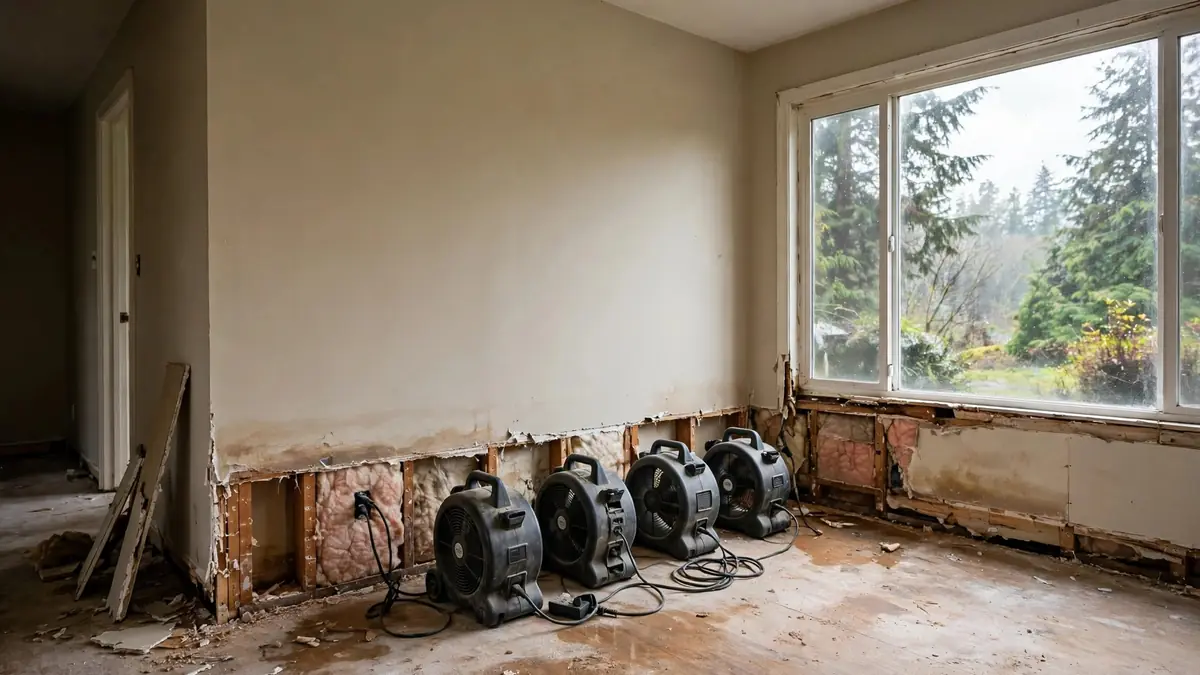
An opened cavity being dried
The real clock
Why drying is urgent after the water has gone
Once the floor is clear, it is tempting to think the emergency is over. The water you can no longer see has moved into drywall, framing, subfloors and insulation. EPA guidance gives a 24 to 48 hour target for drying, as a way to head off mold. That window is the reason the next decision matters: what needs to be opened, what can be dried in place, and who is going to measure the progress.
You do not need to be a drying specialist to protect your home in these hours. You need to keep things moving, keep wet rooms open, and push for measurements instead of impressions.
Materials
How different parts of the house take on and release water
This is a guide to the conversation you will have with the contractor. Every structure is different, and readings decide the actual plan.
| Material | How it behaves | Question to raise |
|---|---|---|
| Drywall | Wicks upward, can lose strength when soaked | Can it dry in place, or does it need to be cut? |
| Wall insulation | Holds water against studs and drywall | Is it wet, and does it need to come out? |
| Studs and joists | Absorb slowly, release slowly | What is the reading against dry wood? |
| Plywood or OSB subfloor | Can swell at the edges | Does anything on top have to come up? |
| Hardwood floors | May cup, sometimes settle after drying | Can they be dried in place? How long is the wait before deciding? |
| Tile over backer | Traps water below the surface | How do you check beneath it? |
| Concrete | Dries slowly | How will you test it before covering it? |
| Cabinet toe kicks | Hide wet material | Should the kicks come off for airflow? |
While you wait
What to do in each stretch of the drying window
Keep working through the list even if no contractor has been confirmed yet. Availability varies, and any progress you make safely still counts.
- 1
Hours 0 to 4
Confirm the source has stopped and that power in wet rooms is safe. Take wet rugs, cushions and movable items out of the room. Open interior doors and closets.
- 2
Hours 4 to 12
Run fans only from outlets in dry rooms, and keep cords off wet floors. Open windows if outside air is dry. CDC lists fans, air conditioners and dehumidifiers for drying a home, so use the air conditioner if the system stayed dry and is free from any contamination concern.
- 3
Hours 12 to 24
Pull baseboards only if the contractor has asked you to, and only if your home is not one where old paint or materials might be a concern. Note any new stains or warping. Empty and clean any portable dehumidifier reservoir.
- 4
Hours 24 to 48
Ask for moisture readings. Anything still wet should be either on a clear drying plan or removed. Keep an eye out for musty smells in closets and low cabinets.
- 5
Days 3 and onward
Expect equipment to be checked and moved. Ask for daily or regular logs. Report anything that seems to be getting worse, such as a new stain, a sagging ceiling or a bad smell.
- 6
Before anything closes up
Get final readings against a dry reference, in writing, before any drywall, flooring or paint goes on.
Hands off
Choices that slow drying or trap water
- Painting or patching earlySealing the surface stops the wall from releasing moisture. The EPA also warns that paint over mold will likely peel.
- Turning equipment off at nightUnless the contractor agrees, or there is a safety issue, drying relies on continuous airflow. If equipment has to go off, tell them so they can adjust.
- Opening windows without thinking about the weatherHumid outside air can slow things down. Ask whether windows should be open or shut once a dehumidifier is running.
- Using gas or kerosene heatFuel-burning devices can create carbon monoxide in a closed house, so do not use them for drying.
- Stacking wet items against wallsThis blocks airflow and traps moisture behind them. Move items into the middle of a dry room, or out of the house.
- Pushing heavy furniture across wet floorsHardwood and carpet are weakened when wet. Lift with a helper, keeping below 50 pounds per person.
- Running a fan in a contaminated roomWith sewage or known mold, moving air may spread the problem. Ask first.
Equipment
What the machines in your house are doing
If a crew sets up equipment, it helps to know what each piece does and what to report. Never move or unplug equipment without checking.
| Equipment | What it does | What to report |
|---|---|---|
| Air mover | Moves air across wet surfaces | Tripped breaker, strange smell, cord damage |
| Dehumidifier | Pulls moisture from the air | Hose off, overflow, or shutoff |
| Air scrubber or HEPA unit | Filters particles from the air | Clogged filter warning or shutoff |
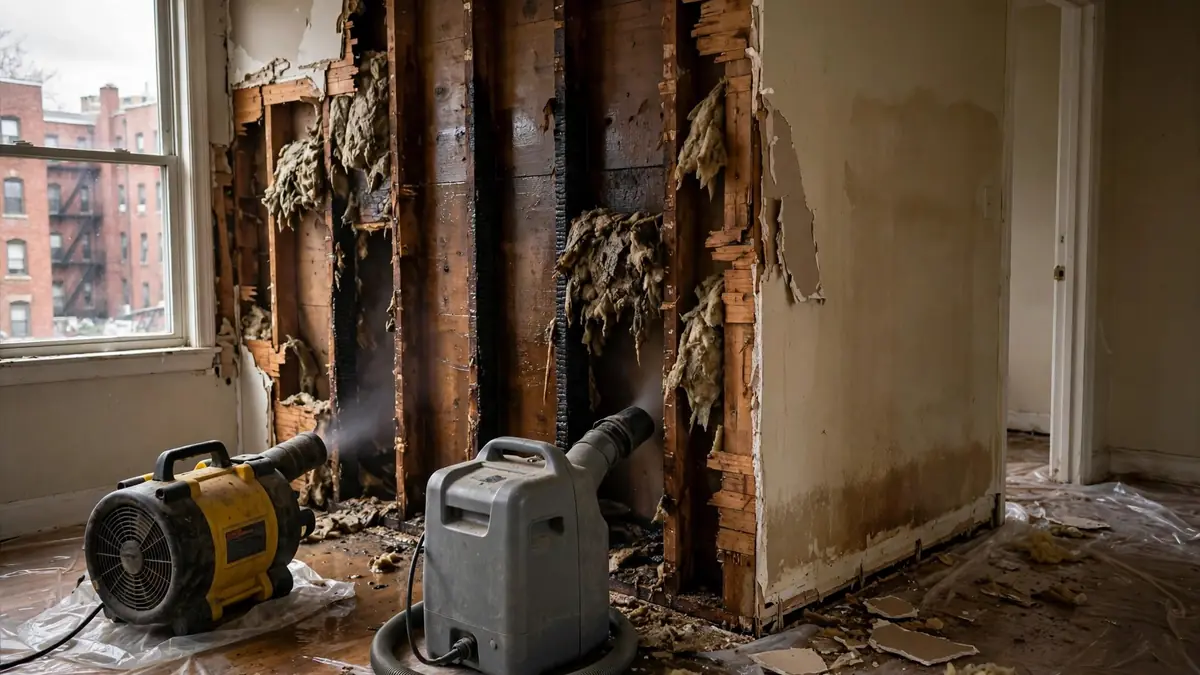
| Injection or cavity drying setup | Pushes air into walls and floors | Hoses that have come loose |
| Moisture meter | Measures wetness of materials | Ask to see the readings |
| Thermo-hygrometer | Measures temperature and humidity | Ask for the daily log |
Measuring
How a dry reading actually works
Dry is a measured condition. The contractor should take a reading from a similar, undamaged material in the same building, then use that as the target for the wet areas. A stud in a dry room gives a reference for a stud in a wet room. Ask for these numbers. Keep the log with your records, because it is how you and the insurer can see that the job reached its goal.
Beware of a declared finish with no numbers behind it, or a claim that a wall is dry since it feels dry to the hand. Surfaces can be dry while cavities stay wet. If you have questions about specific readings, ask them while the equipment is still in place, not after it has been pulled out.
The guide to finding hidden moisture goes into this further, including places that often get missed: under cabinets, behind tubs, at the top of a wet wall, and on the far side of a shared wall.
Living with it
Getting through days of noise and airflow
- Keep cords and hoses clearTell children and older family members where they are. Trips are a real hazard in a drying house.
- Close bedroom doors if allowedAsk which doors must stay open, then use the rest to get some peace and sleep.
- Expect heat and noiseRooms may become warm and loud. If this is a problem for anyone's health or sleep, make plans to stay elsewhere for a few nights, and ask your insurer what is covered.
- Protect petsMachines and hoses can frighten or injure animals, so keep them away from work areas.
- Report tripped breakersDon't keep resetting them. Tell the contractor, as the circuit may be overloaded, or there may be another problem.
- Watch for symptomsAnyone with asthma or breathing problems should avoid buildings with leaks or visible or smelly mold, Ready.gov says, so plan around this from day one.
Paper trail
What to save from a drying job
- Starting readingsInclude the map or list showing where each reading was taken.
- Daily logsHumidity, temperature and moisture numbers, along with who took them.
- Equipment listThe number of machines by type, plus when each one went in and came out.
- Removed materialsPhotos and a list of anything cut out, and the reason for removal.
- Power useNote your meter or bill changes during drying. Ask your insurer whether they should be raised.
- Final dry standardWritten final readings, and any sign-off before rebuild.
Questions
Structural Drying: quick answers
Why not wait until the weekend is over?
Mold can start on materials that stay wet for a day or two.
How will I know it is dry?
Ask for moisture readings against a dry reference area.
Can walls be dried without opening them?
Sometimes, depending on what is inside and how long they were wet. Ask how the contractor will verify that the inside of the wall is dry.
Should I leave my thermostat alone?
Ask. Many drying plans have a preferred temperature, and it depends on the weather and the equipment.
My neighbor says fans alone are fine. Are they?
Fans help with evaporation, but the moisture stays in the room's air unless something removes it. A dehumidifier or dry outside air is what takes it away.
Is living at home during drying realistic?
Often yes, if the conditions allow, but noise, heat, power use and any contamination all play a role. Those with health concerns should ask a doctor.
Next
When the readings come back clean
The structural drying page gives the full method. How long drying takes explains what affects the timeline, and the wet drywall guide covers the choice between drying and removing wallboard.