
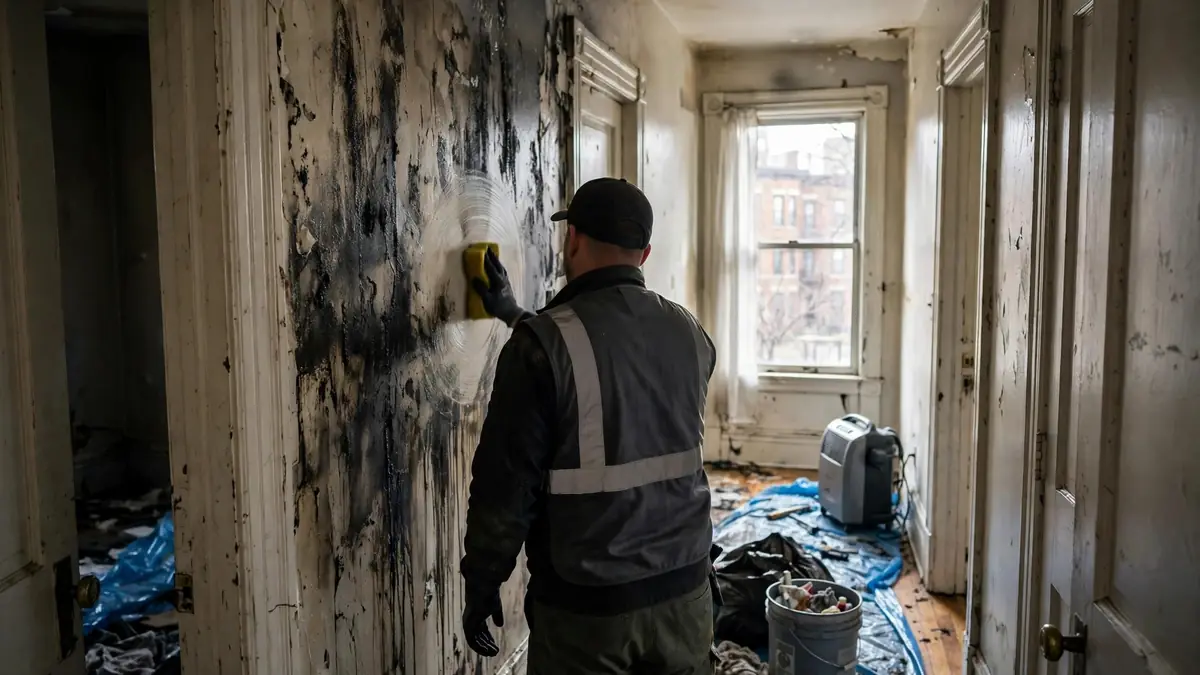
Key facts: Emergency Smoke Damage Services
- Limit exposure: Keep children and anyone with lung problems out.
- Keep HVAC off: This stops residue moving through ducts.
- Smoke damage calls are referred to independent contractors, and service varies by area.
Right now
First steps for smoke damage services
- 1
Limit exposure
Keep children and anyone with lung problems out.
- 2
Keep HVAC off
This stops residue moving through ducts.
- 3
Do not touch stained walls
Fingers leave marks in soot.
- 4
Throw out exposed food
Heat, smoke and soot can make it unsafe.
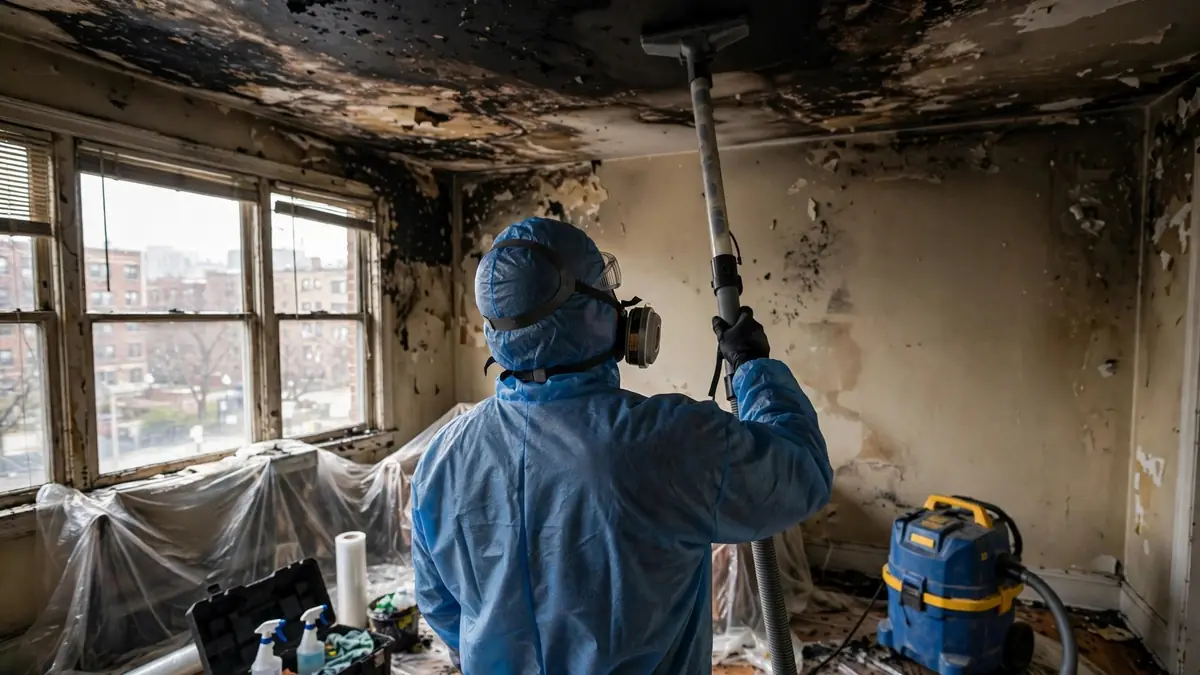
Residue being lifted from a ceiling
Sort it out
Which kind of smoke event you are dealing with
Smoke damage covers everything from a burned pot to a nearby house fire. The right first move depends on the source.
| Event | First concern | First call |
|---|---|---|
| House fire, even a small one | Clearance and safety | Fire department, then insurer |
| Kitchen fire, now out | Hidden heat in the hood or wall | Fire department if there is any doubt |
| Furnace puffback | Soot in ducts and on surfaces | HVAC technician, then contractor |
| Neighbor's fire or shared wall | Smoke through shared spaces | Fire department, manager, then your insurer |
| Wildfire smoke and ash | Air quality and local orders | Local officials; follow return instructions |
| Electrical burning smell, no visible fire | Hidden fire | Leave and call 911 |
Over the first day
Handling smoke damage from clearance to first cleaning
Cleaning methods come later. In the first hours, your work is protecting people and preventing the residue from spreading. Contractor availability varies.
- 1
Before anything
If a fire may still be burning or you smell burning you cannot explain, get out and call 911. Stay outside until firefighters give you the word.
- 2
First hour back
Keep the visit short. Keep children, older relatives and anyone with lung or heart problems away. Wear an N95 or better, as CDC lists for work in damaged buildings.
- 3
Next
Leave the HVAC off so it does not push residue through the ducts. If the fire department shut off utilities, leave them as they are.
- 4
Same day
Photograph walls, ceilings, vents and belongings. Then close doors between affected and unaffected rooms. Remove food exposed to smoke, since FoodSafety.gov advises throwing it out.
- 5
Same evening
Decide where everyone is sleeping. Anyone with breathing trouble should not spend the night in a smoky home. Report the event to your insurer and ask what they require.
- 6
Next day
Speak to the contractor about the type of residue and the plan. Ask whether surfaces need dry cleaning before any wet cleaning, and how they will protect clean rooms.
Hazards
Why residue deserves caution
- Fine particlesSmoke contains small particles that can irritate lungs. Those with asthma or heart or lung conditions need extra care, so take their symptoms seriously.
- Mixed chemistryModern homes burn plastics, foams and finishes. Do not assume the residue is simply wood ash. Keep your exposure low until it is cleaned.
- Hidden heatFire can smolder in walls and attics. Any new smell of burning or warm wall means a fresh 911 call.
- Damaged electricsHeat and residue can affect wiring. Ask for it to be checked before turning anything back on.
- Food and medicineHeat and fumes can spoil what you cannot see. If it was exposed, replace it.
- Carbon monoxideDo not bring a generator, grill or camp stove indoors for power or heat. Alarms with battery backup belong on each floor, Ready.gov advises.
Skip
Early mistakes with smoke-stained surfaces
- Running the furnace or AC to "air it out"This moves residue through the ducts into clean rooms.
- Wet-wiping walls straight awayWater and household cleaners can drive some residues deeper, making stains more stubborn. Ask for the plan first.
- Painting over itStains and smell may come through, and residue left under the paint remains in the home.
- Washing fabrics with regular laundryAsk first. Residue can transfer in the wash, and some fabrics respond better to specialist cleaning.
- Running ozone machines yourselfThe EPA says ozone can damage the lungs and that many odor chemicals are not removed at safe levels.
- Plugging in electronics to test themResidue and heat can damage them. Keep them unplugged until checked.
Surfaces
What residue does over time
The urgency of cleaning comes from the way residue reacts with what it touches. Tell the contractor which finishes matter most to you.
| Surface | What may happen | Ask about |
|---|---|---|
| Painted walls and ceilings | Staining and smell | Test cleaning in an unseen spot |
| Metal fixtures | Corrosion or pitting | How quickly they should be cleaned |
| Glass and mirrors | Etching over time | Protective cleaning early on |
| Grout and stone | Discoloration in pores | Which cleaning products are suitable |
| Soft furnishings | Odor held in the fibers | Whether cleaning off-site is an option |
| Electronics | Corrosive residue inside | Specialist assessment before use |
| Ducts | Residue carried through the system | Inspection before restarting |
Keep track
Evidence for a smoke claim
- Before cleaning photosClose-ups show residue patterns that cleaning will remove, so take them first.
- Rooms with no visible damageNote smell and any light film. Run a clean white cloth over a small hidden area and photograph it, if advised.
- HVAC statusWhen it was running, and when you turned it off.
- SymptomsKeep a note of any cough, headaches or doctor visits, with dates.
- Items listInclude clothes, bedding, rugs and things in closets, since smoke reaches enclosed spaces.
- Wildfire or neighbor detailsKeep any official notices and dates, plus any reports from the neighbor's event.
Whole-house spread
Why rooms far from the fire are affected too
Smoke follows pressure and temperature. It moves through small gaps in doors and walls, around pipes, up stairwells and into closets. It tends to collect on cooler surfaces. So a guest room at the far end of the house can have a film on it even when it looks fine at a glance. That is also why inspecting drawers and closets matters, and why rooms closed off at the time may still be affected.
Wildfire smoke brings its own version of this. Even without flames near your house, ash and smell can come in through vents and small gaps. Follow local officials' instructions about returning and air quality. Keep anyone vulnerable away until the home has been assessed, and avoid stirring up settled ash before you know how to deal with it safely.
Questions
Smoke Damage Services: quick answers
How soon should cleaning begin?
As soon as the building is safe, since acidic residue can stain and corrode over time.
Does nearby wildfire smoke count?
It can, if ash and odor have entered the home.
Should I open the windows?
If outdoor air is clean and the structure is safe, yes. Do not open them during wildfire smoke or poor local air quality.
Can I stay in a home with a smoke smell?
A faint smell is not always dangerous, but those who have symptoms or lung and heart conditions should stay elsewhere. Ask a doctor if unsure.
Does the smell mean the residue is still there?
Usually yes. Clearing the air alone will not remove what is on the surfaces.
Should I change the furnace filter?
Wait for a technician to look at the system, then change the filter as advised. Keep the old filter and photograph it for your records.
Next
Once the building is cleared for cleaning
The smoke damage cleanup page covers the methods in depth. Why smoke smell lingers explains what happens in porous materials, and the house fire first day guide helps when the smoke followed a fire in your home.