
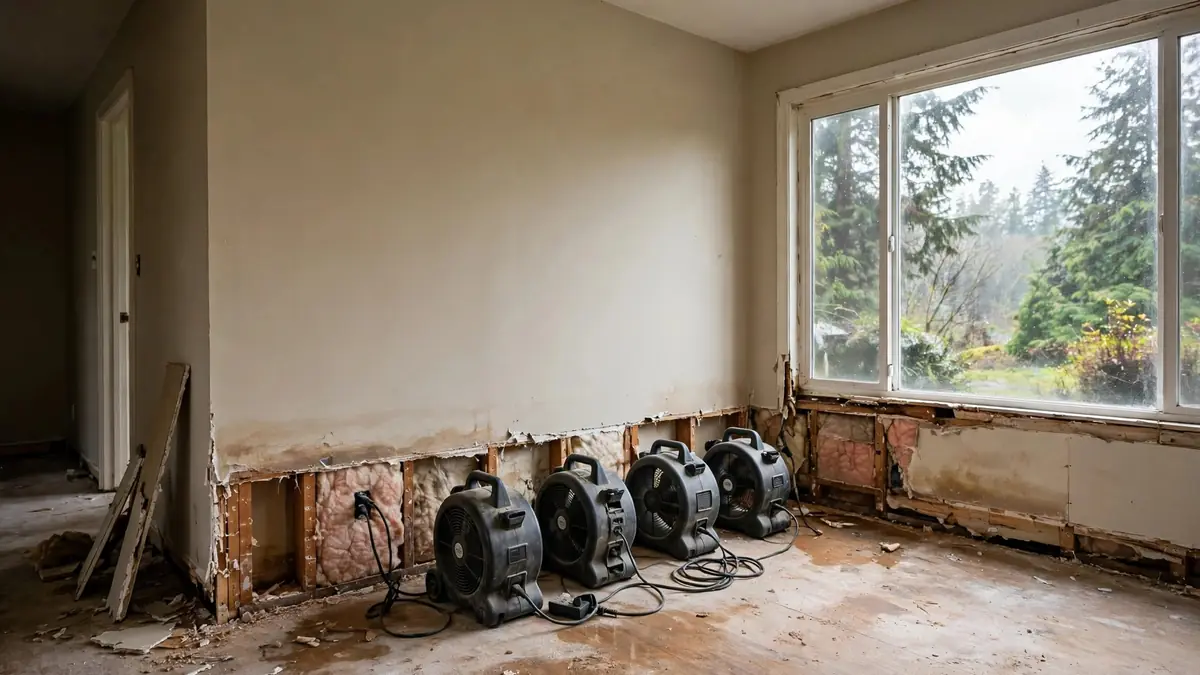
Key facts: Emergency Smoke Odor Removal
- Ventilate if safe: Open windows when outdoor air is clean.
- Isolate soft goods: Ask before bagging, as sealed bags can intensify odor.
- Smoke odor enquiries go to independent contractors, and who is available depends on your location.
Right now
First steps for smoke odor removal
- 1
Ventilate if safe
Open windows when outdoor air is clean.
- 2
Isolate soft goods
Ask before bagging, as sealed bags can intensify odor.
- 3
Replace HVAC filters
Do this only once the system is cleared for use.
- 4
Leave during any treatment
Ozone can harm health, and nobody should be inside while it runs.
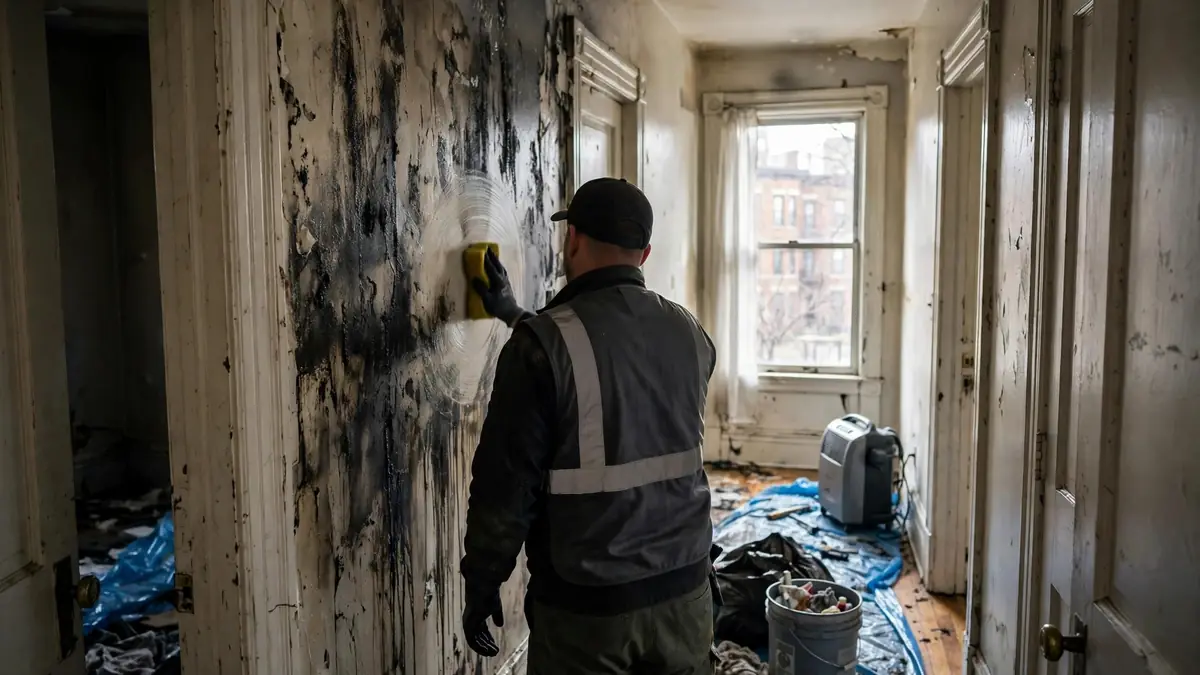
Taking the smell off the walls
Is it safe?
A smell that needs a different response
Most lingering smoke smell is a nuisance and a sign of residue. A few smells mean you need to act immediately.
- Fresh burning smell, no known causeLeave and call 911. Hidden fire can smolder in walls or wiring long after a blaze seems to be out.
- Fishy or sharp electrical odorTreat it as a possible overheating wire. Turn off power to that area from a safe place if you can, leave and call for help.
- Gas or rotten egg smellLeave, avoid anything that could make a spark, and contact emergency authorities, as CDC advises.
- Headaches, dizziness or nauseaGet into fresh air. Carbon monoxide has no smell at all, so symptoms matter more than odor. Get prompt medical attention if these persist.
- Old, stale smoke smell that gets stronger on warm daysThis is the usual residue problem. It is not an emergency, but it will not go away on its own.
Order of attack
Steps from first airing to lasting removal
Odor work goes wrong when it starts with the smell instead of the source. This is the order that tends to hold up. Availability of contractors varies.
- 1
Day one: air
Open windows and doors if it is safe and the outside air is clean. Use fans to pull air out, not through other rooms. Leave the HVAC off unless it has been checked.
- 2
Day one: people
Move anyone with breathing trouble out of the house, at least overnight. A smell that bothers someone is reason enough.
- 3
Days one to two: list
Walk through the home and note where the smell is strongest. Check closets, soft furniture, bedding, curtains and any room near a return vent.
- 4
Days two to three: residue
Have residue cleaned from hard surfaces. Ask the contractor which method suits your walls, ceilings and finishes. Ask how they will avoid driving residue deeper.
- 5
Days two to five: soft goods
Decide what is cleaned, what is sent off-site and what is replaced. Keep an itemized list before anything leaves the house.
- 6
Following that: system
Have the ducts inspected, and replace filters once the system is cleared. If the system ran during the fire, residue may be inside it.
- 7
Last: air treatments
Only after the source has been cleaned should anyone talk about treating the air. Ask what the treatment is and whether the home must be empty.
- 8
Afterward: a warm-day test
Warmth and humidity bring old odor out. Close up the house on a warm day, then walk in from outside and see what your nose tells you.
Where it hides
Places smell collects, and how to find them
Your nose gets used to a smell quickly. Go outside for ten minutes, come back in, and check these spots one at a time.
| Spot | Why it holds odor | What usually helps |
|---|---|---|
| Carpet and pad | Fibers and backing absorb residue | Cleaning or replacement, depending on severity |
| Curtains and soft furnishings | Large surface area | Off-site textile cleaning |
| Mattresses and pillows | Thick filling | Often replaced |
| Closets and drawers | Clothes, wood and enclosed air | Empty and clean; launder or send out contents |
| Attic insulation | Traps residue and odor | Evaluate for replacement |
| Ducts | Coated and recirculating | Inspection and cleaning if contaminated |
| Unsealed wood and framing | Porous, can stay smelly | Clean; ask about sealing only after cleaning |
| Behind outlet covers and in gaps | Air passes through | Ask how the contractor will reach them |
What to skip
Odor fixes that do little or do harm
- Candles, plug-ins and spraysThey cover the smell briefly and add more scents to a space you may be trying to clean. Some add new things for sensitive people to react to.
- Bowls of vinegar or coffeeThey may make a small dent in a room's air, but do nothing about the source.
- Running an ozone generator yourselfThe EPA calls ozone a toxic gas that can damage the lungs. Federal agencies have not approved these machines for occupied rooms, it adds, and levels that meet health standards leave many odor chemicals in place.
- Painting firstFresh paint can trap a smell for a while, but the smell tends to return if the residue was not removed first.
- Running the AC on recirculateThis can spread what is in the ducts. Have them checked first.
- Declaring it done because you stopped noticingNose fatigue is real. Ask someone who has not been in the house for an honest opinion.
Treatments
Questions to ask about air treatments
If a contractor proposes a deodorizing treatment, ask what it is and how you stay safe. A trustworthy answer is specific.
| Treatment | What to ask | Safety point |
|---|---|---|
| Ozone | Is the home empty, how is it controlled, how long until return? | The EPA warns of lung harm, and says levels are hard to control |
| Hydroxyl generators | What does it target, and how will you check results? | Follow the maker's instructions and ask about staying in the home |
| Thermal fogging | Which product, and what is the residue? | Stay out during and after; ask when it is safe to return |
| Air scrubbers | What filter is it using, and how long will it run? | Filters particles; odor may need other measures |
| Sealers | What has been cleaned before sealing? | Sealing is not a replacement for cleaning |
Ask for product names and safety sheets. If a contractor will not name what they plan to use, ask why.
Keep
What to record during odor removal
- Smell mapNote each room's smell on a simple 1 to 5 scale, with the date, and ask a second person to do it too.
- Materials removed or cleanedKeep a list by room, with photos.
- Treatment recordsProduct names, dates, who was in the home, and when you returned.
- SymptomsAny headaches, coughs or irritation, and whether they improve away from home.
- Warm-day notesRecord what you notice when the house heats up, particularly after the job has been declared finished.
- Follow-up termsAsk how the contractor handles an odor that comes back, and get the answer in writing.
Long term
When the smell keeps coming back
A returning smell tells you something was missed, not that the job was impossible. Warmth, humidity and closed-up rooms bring out odors held in materials that were never cleaned. Common culprits include cavities, the top of the insulation, unpainted surfaces in attics and basements, and ducts. Ask the contractor to look again, and bring your notes on where and when you noticed it.
Water plays a part too. If firefighting water got into materials, dampness can bring the smell back as well as encourage mold. Ask for moisture checks if a musty note mixes with the smoke. If someone's symptoms continue after the smell has faded, that is a matter for a doctor, whatever the state of the house.
Questions
Smoke Odor Removal: quick answers
Will candles or sprays help?
They only mask odor for a short time.
Why does the smell return on hot days?
Warmth releases odor from residue left in materials.
Will the smell go away by itself?
Light smells may fade with airing. Residue-based smells usually do not go away until the residue is removed.
Is it safe to sleep in a smoky-smelling house?
Anyone with lung or heart problems, infants and older adults should stay elsewhere until it is improved. Others should use their judgment, and leave if they have symptoms.
Do I have to throw out my clothes?
Often not. Many fabrics respond to specialist cleaning, so ask before disposing of them, and keep a list.
My new home smells of old cigarette smoke. Is that the same thing?
It is similar in that residue sits on surfaces, but it is not an emergency. Cleaning comes before sealing and painting.
Next
Once the smell has stopped coming back
Why smoke smell lingers explains the science in plain terms. The smoke damage cleanup page covers the broader job of residue removal, which is usually where odor work begins.