
Key facts: Waterbury
- Waterbury was a leading U.S. center of brass manufacturing, which earned it the nickname the Brass City [1].
- Frequent flooding of the Naugatuck River discouraged early settlement, and the town suffered a great flood in 1691 [1].
- After the 1955 disaster, a flood control dam upstream in Thomaston was finished in 1960 [2].
- Rain from Hurricanes Connie and Diane in August 1955 caused catastrophic flooding in Connecticut river valleys [3].
Coverage
Waterbury and nearby covered towns
Coverage is by ZIP code; the call confirms your address. Covered places in and around Waterbury include:
- WaterburySix Waterbury ZIP codes are covered.
- NaugatuckOne covered ZIP code down the valley.
- Cheshire and SouthingtonOne covered ZIP code each to the east.
- SouthburyOne covered ZIP code to the southwest.
- MeridenTwo covered ZIP codes further east.
- Torrington and LitchfieldOne covered ZIP code each to the north.
- Not listed?Ask when you call. An address outside coverage is told so immediately and your call is not handed on.
Waterbury homes
What Waterbury housing means for water damage
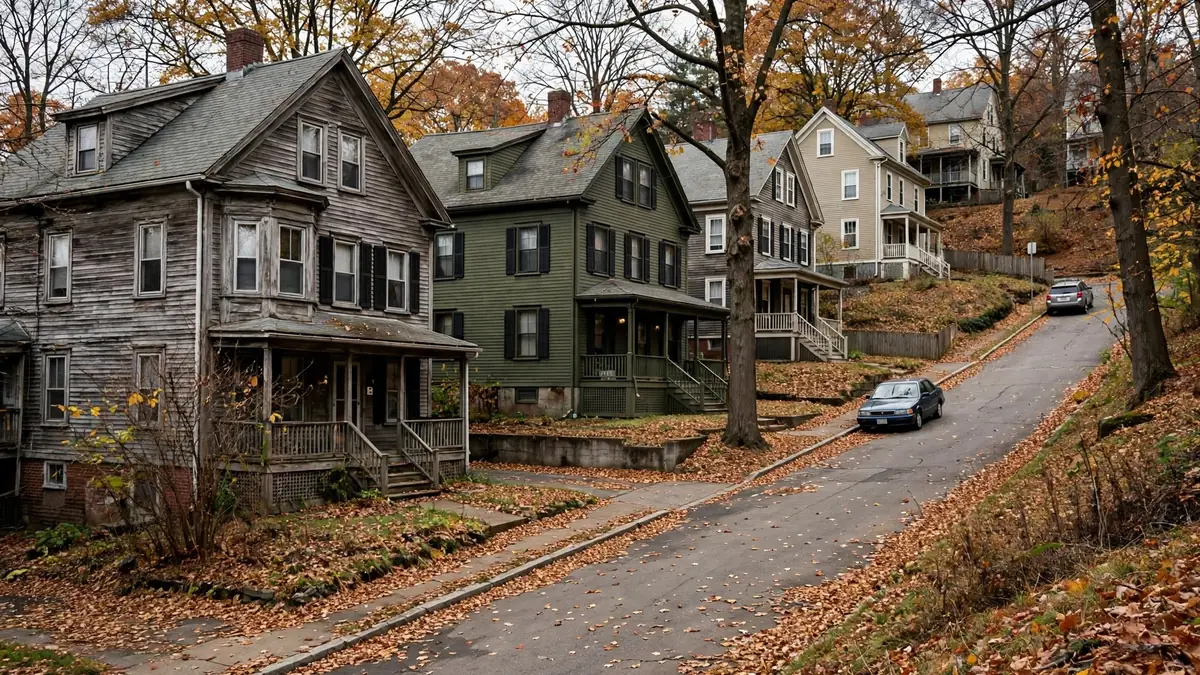
Waterbury grew into one of the country's leading brass manufacturing centers, the Brass City [1], and its neighborhoods were built to house the workers of that era. Many streets climb steep hills from the river and are lined with wooden two- and three-family houses, along with brick apartment blocks, older single-family homes and, on the edges of the city, mid-century and newer houses.
This housing stock is old, and old houses have particular water problems: aging supply and drain pipes, boilers and radiators, porous stone or brick foundations, plaster walls and roofs that have been patched for decades. In multi-family houses, a leak in one apartment usually becomes a problem for the units below.
The hills add their own twist. Houses built into slopes often have basements that are partly below grade on the uphill side, so groundwater running downhill presses against one wall. In wet seasons, that wall seeps.
Common jobs
Water damage Waterbury residents call about
The situations that come up most often.
Burst pipes in cold snaps
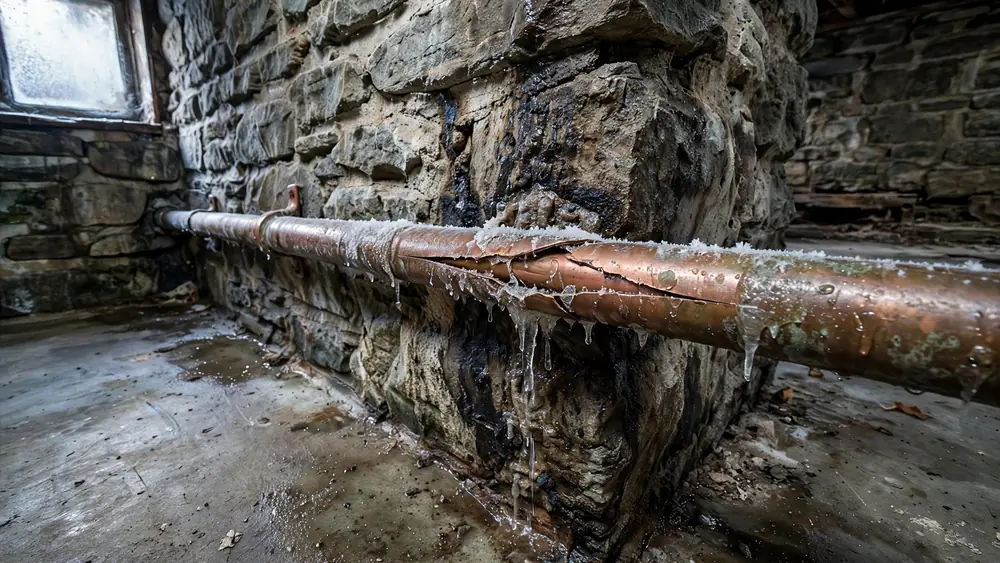
Inland winters freeze pipes in exterior walls, unheated hallways and vacant units.
Hillside basement seepage
Groundwater running downhill pushes through foundation walls on the uphill side.
Leaks between stacked apartments
Upper-floor kitchens and bathrooms leak into the units below.
Boiler and radiator leaks
Old heating systems leak slowly under windows and through floors.
Ice dam roof leaks
Heavy snow and cold eaves create ice dams on older roofs [5].
River-area flooding
Low areas near the Naugatuck and its tributaries take on water in extreme rain.
River history
The Naugatuck River and Waterbury's flood history
The Naugatuck River runs south through Waterbury on its way to join the Housatonic at Derby [2]. Its flooding shaped the city from the start: the lack of usable farmland caused by the river's constant floods discouraged early settlers, and a great flood struck in 1691 [1].
The worst modern flood came in August 1955, when rain from Hurricanes Connie and Diane caused catastrophic flooding in the Naugatuck and other Connecticut valleys [3] [4]. Flood control dams followed, including a Thomaston dam finished in 1960 [2]. Those dams reduce the risk, but heavy rain on saturated ground can still flood low streets and basements near the river and its brooks.
Winter
Waterbury winters and frozen pipes
Waterbury is inland and higher than the shoreline cities, and its winter nights are colder. That makes frozen and burst pipes one of the most common water damage calls in the area. Pipes in exterior walls, under sinks on outside walls, in unheated hallways and basements, and in houses or apartments left cold are most at risk.
Ready.gov recommends insulating pipes in unheated spaces, letting faucets drip in extreme cold and keeping heat steady [6]. In multi-family buildings, a vacant unit with the heat turned down is a common source of burst pipes that flood the occupied units around it. Our burst pipe water damage page covers what to do.
Basements
Hillside basements and groundwater in Waterbury
Houses built into Waterbury's hills often have basements where the uphill wall is fully below ground and the downhill side opens to daylight. Groundwater moving down the slope collects against the uphill wall and seeps through stone, brick or block, especially during spring thaw and long rains. Water then runs across the floor toward the lowest point.
Cleanup is usually extraction, removal of wet storage and finished materials, and drying. Long-term fixes, such as interior drains, sump pumps and grading, belong to a waterproofing contractor. See flooded basement cleanup.
A Waterbury job
How a burst pipe job usually runs in a Waterbury multi-family house
- 1
Shut off the water
At the unit valve or the building main in the basement.
- 2
Alert every unit
Water from upstairs reaches downstairs quickly.
- 3
Check the heat
If the boiler failed, heat has to come back before drying can work well.
- 4
Map all affected areas
Moisture readings in each unit and the basement.
- 5
Release and remove sagging ceilings
Plaster or drywall that has pulled loose is taken down safely.
- 6
Extract and dry
Water removed; equipment set in each affected space.
- 7
Monitor
Daily readings until each unit is dry.
- 8
Repair
Plumbing, plaster, drywall and floors once dry.
Housing types
How Waterbury housing types handle water damage
Generalizations only.
| Housing type | Common problems | Restoration notes |
|---|---|---|
| Wooden three-family | Stacked leaks, porch roofs, shared basements | Multi-unit mapping and drying |
| Brick apartment block | Riser and roof leaks, old plumbing | Building-wide coordination |
| Older single-family on a slope | Basement seepage, burst pipes | Basement drying, wall cavity drying |
| Mid-century cape or ranch | Finished basement water, appliance leaks | Flood cuts and slab drying |
| Newer suburban home | Sump failures, supply line leaks | Finished basement restoration |
Heating
Boilers, radiators and water damage
Many Waterbury buildings are heated by boilers feeding radiators. When a radiator valve leaks, water can soak the floor beneath it for weeks. When the boiler fails in a cold snap, pipes freeze throughout the building. And when the system is drained or refilled, leaks can appear in old fittings.
A heating contractor repairs the system. The restorer dries floors, subfloors and the ceilings below. Hardwood floors near radiators are frequently cupped from slow leaks; see hardwood floor drying.
Ice dams
Ice dams on Waterbury roofs
Heavy snow and cold nights make ice dams common in the Naugatuck Valley. Heat escaping into the attic melts snow on the roof; meltwater runs down to the cold eaves, refreezes and builds a ridge of ice that backs water under the shingles [5]. The leak shows up as stains along the top of exterior walls and ceilings near the eaves.
Restoration means removing wet attic insulation, drying the ceiling and wall cavities and checking for mold on roof sheathing. Better attic insulation and ventilation reduce future ice dams.
Waterbury checklist
First steps for Waterbury homeowners and tenants
In the first hour, if it is safe.
- Close the waterUnit valve or building main.
- Keep heat onIt helps drying and stops more pipes from freezing.
- Tell everyone affectedOther units, the owner and your insurer.
- Avoid sagging ceilingsKeep people and pets out of those rooms.
- PhotographEvery affected room and the source.
- Do not use open flame to thaw pipesUse gentle heat only.
Mold
Mold risk in Waterbury's older buildings
Damp basements, plaster walls and slow leaks give mold plenty of chances. The EPA advises drying within 24 to 48 hours and keeping humidity below 60 percent [7]. In older buildings, be careful with demolition: paint before 1978 may contain lead [8], and old pipe insulation may contain asbestos [9]. See mold prevention after water damage.
Naugatuck and the valley
Naugatuck and the lower valley
Down the valley, Naugatuck shares Waterbury's river and much of its history and housing. Older mill-era houses near the river, hillside basements and cold winters produce the same kinds of water damage. Homes close to the river and its brooks can see water in extreme rain, while those on the hills deal mostly with seepage and frozen pipes.
Cheshire, Southington and Southbury
Suburban towns around Waterbury
Cheshire, Southington and Southbury have more single-family homes on larger lots, many with finished basements and some on wells and septic systems. Water damage here usually involves basements, sump pump failures in storm outages, water heaters and washing machines, and winter pipe freezes. Septic systems can back up when leach fields are saturated after heavy rain; see sewage backup cleanup.
Torrington and Litchfield
North into Litchfield County
Torrington and Litchfield, to the north, are colder still, with older village houses, farmhouses and seasonal homes. Second homes left empty in winter are a classic burst pipe risk. Keep the heat on, consider a low-temperature alarm and arrange for someone to check the house regularly. If you find water after time away, close the main valve and call for help; long-running leaks usually mean more material has to be removed.
Waterbury symptoms
What Waterbury residents notice and what it usually means
A quick reference before calling.
| What you notice | Likely cause | What to do first |
|---|---|---|
| No water from a tap on a frigid morning | Frozen supply line | Keep the tap open; warm the line gently |
| Water across the basement from one wall | Groundwater on the uphill side | Move stored items; call for extraction |
| Stain spreading under a radiator | Leaking valve or vent | Call a heating contractor and restorer |
| Ceiling dripping in the unit below | Leak in the unit above | Alert upstairs; shut off water |
| Icicles and wall stains near the eaves | Ice dam | Call a roofer; check the attic for wet insulation |
| Muddy water after a downpour | Surface or river flooding | Stay out until safe; treat as contaminated |
Vacant units
Vacant apartments and empty houses in winter
A vacant unit is one of the biggest winter risks in Waterbury's multi-family housing. Between tenants, owners may lower the heat to save on bills or the gas may be shut off. Pipes along exterior walls freeze, split and then flood the unit and everything below it when temperatures rise. Because nobody is living there, the water can run for a day or more before anyone notices.
Owners can prevent most of this. Keep the heat at a steady minimum in empty units, or have a plumber drain and winterize the lines if the unit will be empty for a long time. Ask a tenant or neighbor to check the unit, and consider a low-temperature or leak alarm that sends an alert to your phone. If a vacant unit has flooded, tell the restorer how long the water may have been running so they can plan for more removal.
Older materials
Plaster, old floors and older materials in Waterbury homes
Waterbury's older houses often have plaster walls and ceilings on wood lath, hardwood or softwood floors under later coverings, and original trim. Plaster usually dries in place if it stays attached to the lath [14]. Old wood floors may cup but often flatten with careful drying. Linoleum, old vinyl tile and the adhesive beneath them can trap water underneath and may contain asbestos in older homes, so testing before removal is the safe approach [9].
Layers of later renovation are common: drywall over plaster, laminate over hardwood, drop ceilings under plaster ceilings. Each layer can hide water. The contractor should check behind and beneath them before deciding what to keep.
Porches and roofs
Porches and older roofs on Waterbury houses
The stacked porches on many Waterbury multi-family houses, and the low-slope roof sections over them, are frequent leak sources as they age. Water gets into the house wall where the porch roof meets it, around porch doors and through rotted deck boards. These leaks are slow, so damage builds inside walls before it shows. A carpenter or roofer fixes the source; the restorer opens and dries the affected walls and ceilings and checks the framing for rot and mold.
Meriden
Meriden and the eastern towns
Meriden, east of Waterbury, has two covered ZIP codes. Like Waterbury, it is an older industrial city with multi-family housing, hills and a cold inland climate, and its water damage calls look similar: burst pipes, basement seepage, leaks between stacked units and ice dams. Restoration steps are the same; the contractor you are connected with will ask about the building type and the source of the water.
Tenants and owners
Renting and owning in Waterbury's multi-family houses
Many Waterbury households rent, and many owners live in one unit of a two- or three-family house and rent the others. When water damage crosses unit lines, clear communication saves time. Tenants should report leaks to the owner in writing with photos. Owners should get the source fixed, arrange drying in every affected unit and keep tenants informed about how long equipment will run.
Insurance usually splits the same way: the owner's policy covers the building, and each tenant's renters policy, if they have one, covers their belongings. A restorer who documents each unit separately, with readings and photos, makes both claims easier.
Owners can reduce the risk with a few habits: checking basements after heavy rain, servicing the boiler before winter, keeping gutters clear, testing any sump pump and making sure every tenant knows where the water shutoff is.
Outages
Winter storms, outages and water damage
Ice storms and heavy snow can knock out power for long stretches in the hills around Waterbury. Without power, most boilers and furnaces stop, sump pumps stop and the house cools. If an outage drags on in very cold weather, pipes can freeze. Ready.gov advises never using a generator, grill or camp stove indoors because of carbon monoxide [15].
If you expect a long outage in deep cold and cannot keep the house warm safely, consider shutting off the main water and draining the lines by opening the lowest faucets. When power returns, check the house carefully for leaks as pipes thaw.
Walk every floor, look under sinks and along exterior walls, check the basement and listen for running water with all fixtures off. A water meter that keeps turning with everything closed is a sure sign of a hidden leak. Catching a split pipe in the first hour after the thaw can be the difference between a mopped floor and a ceiling coming down, so check again a few hours later as the house warms up, and once more the next morning before you leave for the day. Pipes inside exterior walls are often the very last to thaw out.
Belongings
Rescuing belongings after Waterbury water damage
Move belongings out of the wet area first, starting with electronics, documents and anything irreplaceable. Clothes and bedding should be washed and dried within a day or two. Solid wood furniture can usually be wiped and dried slowly away from direct heat. Upholstered furniture and mattresses that were soaked, especially by contaminated basement water, are usually not worth keeping [16].
Basement storage is often the hardest hit. Cardboard boxes on the floor soak through quickly and grow mold within days. Sort them promptly, photograph what you discard and repack what you keep in plastic bins on shelves. Old photographs and important papers can be frozen in sealed bags until they can be dried carefully.
Getting help
What to have ready when you call from Waterbury
Have your ZIP code, the type of home, whether it is owner-occupied or rented, and a short description of where the water came from. If the heat is off or the boiler has failed, say so; heat often has to come back before drying can work. Your call is connected to an independent local restoration contractor who can talk it through on that same call.
Permits
Permits and contractor checks around Waterbury
Drying and cleanup usually do not need a building permit; rebuilding, electrical and plumbing work often do. Waterbury's building department handles permits in the city, and each surrounding town has its own. Check that any home improvement contractor is registered with the Connecticut Department of Consumer Protection [10].
Insurance
Insurance after water damage in Waterbury
Sudden water damage from burst pipes is commonly covered, although damage tied to not heating a house may not be. River flooding generally requires flood insurance [11], and sewer or sump backup often needs an endorsement [12]. Tenants need renters insurance for belongings. The Connecticut Insurance Department can help [13].
FAQ
Questions from Waterbury residents
Why do pipes freeze so often in Waterbury?
Inland winters bring colder nights than the shoreline, and many older houses have pipes in poorly insulated exterior walls and unheated spaces.
My basement leaks on one side every spring. Why?
In hillside houses, groundwater flows downhill and presses against the uphill foundation wall, especially during snowmelt.
Water from the apartment above is coming through my ceiling. What do I do?
Alert the upstairs tenant and the owner so the water can be shut off, stay away from the wet ceiling, move belongings and take photos.
Does homeowners insurance cover frozen pipes?
Often, if the house was being heated. Damage from pipes that froze in a house left unheated may be excluded. Check your policy.
Is the Naugatuck River still a flood risk?
Flood control has reduced the risk since 1955, but extreme rain can still flood low areas near the river and its tributaries.
Are all Waterbury ZIP codes covered?
Six Waterbury ZIP codes are covered. Your call confirms your address.
Who comes out in the Waterbury area?
A Naugatuck Valley restorer who works independently of this site. Your call is connected to them, and the plan for your home is agreed between you and that contractor.
Nearby
More around Waterbury
Back to all of Connecticut. Nearby pages: Bridgeport, Danbury, New Haven, New London and Groton, Norwalk, Stamford.
Related help for Waterbury: water extraction, structural drying, sewage backup cleanup, fire damage restoration and smoke damage cleanup. First time dealing with this? Read the first hours after water damage.
Sources and citations
- [1]Wikipedia — Waterbury, Connecticut
- [2]Wikipedia — Naugatuck River
- [3]Wikipedia — Flood of 1955 (Connecticut)
- [4]Wikipedia — Hurricane Diane
- [5]Wikipedia — Ice dam (roof)
- [6]Ready.gov — Winter weather
- [7]U.S. EPA — A brief guide to mold, moisture and your home
- [8]U.S. EPA — Protect your family from sources of lead
- [9]U.S. EPA — Protect your family from exposures to asbestos
- [10]Connecticut Department of Consumer Protection
- [11]Wikipedia — National Flood Insurance Program
- [12]Wikipedia — Homeowner's insurance
- [13]Connecticut Insurance Department
- [14]Wikipedia — Lath and plaster
- [15]Ready.gov — Power outages
- [16]U.S. EPA — Flooded homes: cleanup and safety