
Key facts: Bridgeport
- Bridgeport is Connecticut's most populous city, where the Pequonnock River empties into Long Island Sound [1].
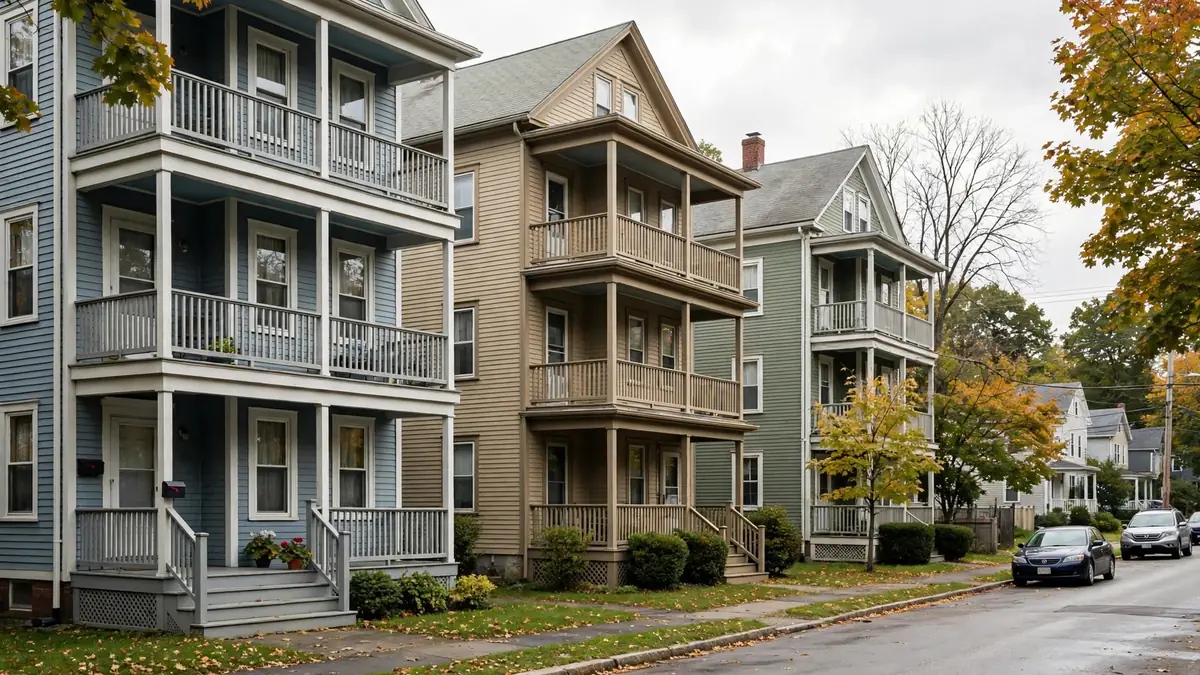
- The city's older neighborhoods include three-deckers, brick tenements and small houses [1].
- The Pequonnock River is prone to flooding, particularly in spring [3].
- In dense multi-family buildings, getting every affected unit dry within a day or two is the main defense against mold [4].
Coverage
Bridgeport and nearby covered towns
Coverage is by ZIP code; the call confirms your address. Covered places near Bridgeport include:
- BridgeportSix Bridgeport ZIP codes are covered. The call confirms whether yours is one of them.
- StratfordTwo covered ZIP codes east of the city along the Housatonic.
- FairfieldTwo covered ZIP codes to the west.
- Trumbull, Shelton and MonroeOne covered ZIP code each to the north.
- Not on the list?If your town is not named here, ask on the call. If it is not covered, you will be told so and not passed to anyone.
Bridgeport homes
What Bridgeport housing means for water damage
Bridgeport is the state's largest city by population, and much of it was built during its industrial growth in the late nineteenth and early twentieth centuries [1]. Housing from that era is dense and varied. Many streets are lined with three-deckers, the stacked three-family houses common across New England [2], along with brick tenements, two-family houses and small single-family homes [1].
That mix shapes how water damage behaves. In a three-decker, a burst pipe or overflowing tub on the third floor can soak ceilings and walls in all three apartments. Kitchens and bathrooms are typically stacked one above the other, so plumbing runs through the same wall cavities floor to floor. A small leak upstairs often first appears as a stain on a first-floor ceiling.
Basements in older Bridgeport houses are usually shared, used for laundry, storage and building mechanicals, and often have stone, brick or block foundation walls that let water through in wet seasons. Many have been partly finished over the years.
Common jobs
Water damage patterns common in Bridgeport
These are the situations that come up most often.
Leaks between stacked units
Water from an upper apartment travels down through ceilings and wall cavities into the units below.
Shared basement flooding
Groundwater, a failed sump or a drain backup soaks storage and laundry areas used by every unit.
Winter pipe bursts
Pipes on exterior walls and in unheated hallways freeze during cold snaps.
Storm water along the shore
Low-lying blocks near the harbor and the Sound take on water during coastal storms.
Older drain lines
Aging sewer laterals and floor drains back up during heavy rain.
Roof and porch leaks
Flat roofs and stacked porches on multi-family houses let water into top-floor ceilings.
Stacked units
Water moving between Bridgeport apartments
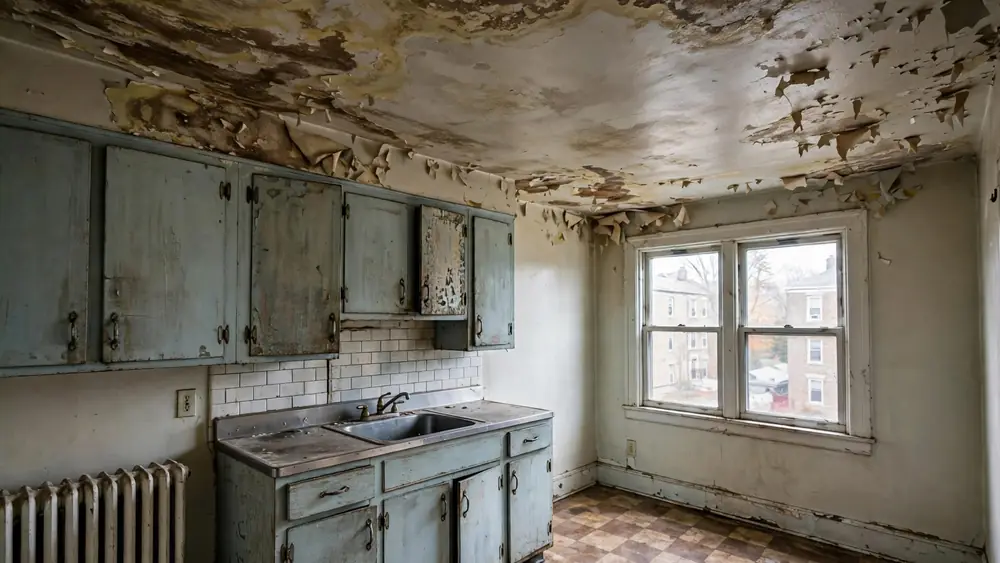
When water damage crosses unit lines, the first job is finding the true source. A stain on a first-floor ceiling may come from a second-floor bathroom or from a third-floor radiator valve. The restorer traces the path with moisture meters and, where needed, small inspection openings. Every affected unit is mapped and photographed.
Drying is then planned across the whole building rather than one room. Equipment may run in two or three apartments at once, which means coordinating access with the owner and tenants. The contractor should explain how long equipment will run in each unit and what each household needs to do.
For owners, this is also where records matter. A clear moisture map and photos showing the source and the path of the water help sort out insurance between the building's policy and tenants' renters policies.
Basements
Bridgeport basements and groundwater
Older Bridgeport basements were built for coal storage and utilities, not living space. Stone and brick foundations are porous, and many basements have floor drains connected to old sewer lines. During long rains and spring thaws, water seeps through walls and up through cracks in the floor. A failed sump pump, where there is one, can turn seepage into a flood within hours.
When these basements flood, the cleanup usually involves pumping, removing soaked storage and any finished materials, cleaning the floor and walls and running dehumidifiers until the framing above and the masonry are dry. Because these spaces are often shared, every household's belongings may be involved. See flooded basement cleanup for the full process.
River and harbor
The Pequonnock River and the Bridgeport shoreline
The Pequonnock River runs south through Trumbull and into Bridgeport, reaching Long Island Sound at Bridgeport Harbor [3]. It has a record of flooding, especially in spring, and a major flood in 1905 caused deadly damage along its banks [3]. Homes in low areas near the river and its tributaries are more likely to see water during heavy rain.
Along the shoreline, coastal storms bring a different risk. Hurricane Sandy in 2012 led to evacuations in towns across Connecticut [5], and storm surge can push saltwater into low-lying streets and basements [6]. Saltwater flooding adds corrosion and residue to the usual cleanup, and anything it soaked is treated as contaminated.
A Bridgeport job
How a water damage job usually runs in a Bridgeport multi-family house
- 1
Find and stop the source
The tenant or owner shuts off the water to the unit or the building; a plumber fixes the break.
- 2
Notify everyone affected
The owner tells tenants in units below and above; tenants tell the owner in writing.
- 3
Map every unit
Moisture readings and photos in each affected apartment and the basement.
- 4
Extract water
Standing water removed from floors and the basement.
- 5
Remove what will not dry
Sagging ceilings, soaked pad and wet insulation are taken out.
- 6
Dry across units
Air movers and dehumidifiers set in each affected space, with access arranged.
- 7
Check daily
Readings recorded in every unit until all materials are dry.
- 8
Rebuild
Repairs follow once every affected area is confirmed dry.
Housing types
How Bridgeport housing types handle water damage
Generalizations only; each building differs.
| Housing type | Common water issues | What restoration usually involves |
|---|---|---|
| Three-decker | Leaks through stacked kitchens and baths, porch and roof leaks | Multi-unit moisture mapping, ceiling repairs, coordinated drying |
| Brick multi-family | Leaks through masonry, older plumbing, shared basements | Masonry drying, plumbing coordination, basement cleanup |
| Small single-family | Basement seepage, burst pipes in exterior walls | Basement drying, wall cavity drying |
| Newer condo | Appliance and supply line leaks between units | Association coordination, drywall and floor drying |
| Shoreline home | Coastal flooding, salt residue | Contaminated water cleanup, thorough rinsing and drying |
Plaster
Plaster walls and ceilings in older Bridgeport buildings
Many older Bridgeport houses still have plaster on wood lath. Plaster is dense and slow to absorb water, which helps, but it is also slow to dry and heavy when wet. A plaster ceiling that has been soaked can lose its grip on the lath, and a sagging section can fall.
Restorers often dry plaster in place, sometimes drilling small holes to vent the cavity behind it [7]. Paint layers in buildings this old may contain lead, which matters if plaster has to be cut or sanded [8]. The contractor should ask about the building's age before demolition.
Winter
Frozen pipes in Bridgeport winters
Shoreline winters are milder than inland Connecticut, but cold snaps still freeze pipes, especially in older buildings with plumbing on exterior walls, in unheated common hallways or near poorly sealed basement windows. Vacant units are a particular risk; if a tenant moves out and the heat is turned down, pipes can freeze and burst unnoticed.
Keeping heat steady, sealing drafts near pipes and letting faucets drip during extreme cold help [9]. Owners of multi-family buildings should know where every unit's shutoff is and where the building main is.
Bridgeport checklist
First steps for Bridgeport tenants and owners
Do these in the first hour if you can.
- Shut off the waterUse the unit's shutoff if there is one; otherwise the building main, usually in the basement.
- Tell the other unitsKnock on doors below and above. They may not know yet.
- Tell the owner in writingA text or email with photos creates a record.
- Keep away from wet ceilingsPlaster and drywall ceilings holding water can fall.
- Protect belongingsMove valuables and electronics out of the path of the water.
- Photograph everythingEach affected room in each unit, before anything is moved.
Sewer backups
Drain backups in Bridgeport basements
Heavy rain can overload sewer systems in older cities, and some older systems carry sewage and storm water together [10]. When pipes surcharge, water can come up through basement floor drains. Older sewer laterals made of clay or cast iron also crack and let tree roots in.
Sewage is the most contaminated category of water, and cleanup involves protective gear, removing porous materials and disinfection. Our sewage backup cleanup page explains it. A plumber can tell you whether a backwater valve would help your building [11].
Tenants
Water damage for Bridgeport renters
Many Bridgeport residents rent. In general, the landlord is responsible for the building and its plumbing, and for arranging repairs to the structure. Tenants are responsible for their own belongings, which renters insurance may cover. Report water damage to your landlord in writing right away, with photos, and keep copies.
If drying equipment needs to run in your unit, the contractor and landlord should explain how long it will be there. If the unit is not livable, talk to your landlord and your renters insurer about temporary housing.
Owners
For owners of Bridgeport multi-family buildings
If you own a two- or three-family building, you are dealing with your own unit, your tenants' units, common areas and the basement. Your insurer will want to know the source, the scope in each unit and the steps you took to prevent further damage. A restorer who provides a clear moisture map and drying log for each unit makes that much easier.
Make sure tenants know where shutoffs are. Consider leak sensors near water heaters and washing machines in shared basements, and a high-water alarm in any sump pit.
Mold
Mold risk in Bridgeport's older buildings
Older buildings with damp basements, plaster walls and limited ventilation can hold moisture for a long time after a leak. The EPA advises drying wet materials within 24 to 48 hours and keeping humidity below 60 percent to prevent mold [4]. In multi-family buildings, a leak that is dried in one unit but missed in another can grow mold behind a wall for weeks.
That is why every affected unit should be checked and documented. See mold prevention after water damage.
Permits
Repairs and permits in Bridgeport
Drying and cleanup usually do not need a building permit, but rebuilding often does, especially for electrical, plumbing and structural work. The City of Bridgeport's building department handles permits. Your contractor should know when one is required. Check that any contractor doing home improvement work is registered with the Connecticut Department of Consumer Protection [12].
Black Rock and the West End
Shoreline neighborhoods on Bridgeport's west side
The western shoreline of the city, around Black Rock harbor and Seaside Park, mixes older single-family homes with multi-family houses close to the water. Coastal flooding and wind-driven rain are the main storm risks here. After a storm, check basements and lower floors for water that came in through foundation openings, doors and windows, and treat any seawater or street flooding as contaminated [13].
Homes here often have finished lower levels, which means more material to remove after a flood. Raising utilities and storing belongings off the floor can reduce future damage.
East Side and East End
Older housing on Bridgeport's east side
The East Side and East End include some of the city's oldest working neighborhoods, with dense blocks of multi-family housing. Basements here are often shared and sometimes poorly drained. Water damage frequently involves aging plumbing, roof leaks on older buildings and basement seepage. Restoration in these buildings usually involves several households and close coordination with the owner.
North End
Single-family streets in the North End
The North End has more single-family homes, many from the mid-twentieth century, with full basements that are often finished. Water damage here tends to look like suburban Connecticut jobs: finished basement flooding, washing machine and water heater leaks, and burst pipes in winter. The Pequonnock and its tributaries run nearby, so low lots can take on water in heavy rain.
Insurance
Insurance after water damage in Bridgeport
Homeowners and landlord policies typically cover sudden water damage from burst pipes and appliances, while flood damage from rising water usually needs separate flood insurance [14]. Sewer and sump backup often require an endorsement [15]. Tenants need renters insurance for their belongings. The Connecticut Insurance Department can help with claim questions [16].
Bridgeport symptoms
What you see in a Bridgeport home and what it usually means
Use this to describe the problem when you call.
| What you see | Likely cause | First step |
|---|---|---|
| Brown ring spreading on a first-floor ceiling | Leak in a bathroom or kitchen above | Alert the unit above; shut off water |
| Water along the basement floor after rain | Groundwater through an old foundation | Move belongings; check the sump if there is one |
| Water rising from the basement floor drain | Sewer surcharge or blocked lateral | Stop water use in every unit |
| Wet top-floor ceiling after a storm | Flat roof or porch roof leak | Bucket, photos, roofer and restorer |
| Dripping from a radiator valve or pipe | Failed valve or frozen line | Close the valve or the main |
| Musty smell weeks after a leak | Missed wet material in a wall or ceiling | Ask for moisture readings in every affected unit |
Heating systems
Radiators, boilers and water damage in older Bridgeport buildings
Many older multi-family houses in Bridgeport are heated by hot water or steam boilers feeding radiators in each room. These systems hold water year-round, and leaks from radiator valves, vents and old piping are a common source of slow damage under windows and along exterior walls. A radiator that has leaked quietly for weeks can soak a floor and the ceiling below without anyone noticing.
When a system is drained for repair, or a pipe in an unheated area freezes, water can come out quickly. A heating contractor repairs the system; the restorer dries the floors and ceilings. Tell the restorer if the building has radiators, because the floor around them is often wetter than it looks.
Porches
Stacked porches and exterior water entry
The stacked front and back porches that define many Bridgeport three-deckers are a frequent source of water problems. Porch roofs and decks that pitch toward the house, failed flashing where the porch meets the wall and rotted posts let rain into exterior walls and the rooms behind them. The damage often shows up as staining around doors and windows that open onto the porch, or as soft floors near the porch door.
These leaks are slow, so the concern is less standing water and more wet framing and hidden mold. A restorer can dry and assess the interior, while a carpenter or roofer repairs the porch itself.
Getting help
Getting connected with a Bridgeport restorer
When you call, have your ZIP code, the type of building and a quick description of where the water came from and which units it reached. Your call is connected to an independent local restoration contractor who can talk through the situation on that same call. If you are a tenant, the owner may already have a contractor; check with them first so two crews are not sent.
If you own the building, mention how many units there are and whether tenants are home, so the contractor can plan access. If water reached the shared basement, say what is stored there and whether the boiler, water heaters or electrical panels got wet. Those details shape who needs to be on site first: a plumber, an electrician, the restorer or all three. A few minutes of detail on the call usually saves hours once the crew arrives, especially on narrow streets where parking and hose runs need planning. Mention any pets, young children or people with breathing problems in the building as well, since that can change how the work is planned.
FAQ
Questions from Bridgeport residents
Water is coming through my ceiling from the apartment above. What should I do?
Tell the upstairs tenant and the owner right away so the source can be shut off. Keep away from the wet ceiling, move belongings and take photos. The owner usually arranges the restoration for the building.
Who is responsible for water damage in a rented apartment?
Generally the owner handles the building and its repairs, and tenants handle their own belongings, often through renters insurance. Leases and policies vary.
My basement floods every spring. Can that be fixed?
Often it can be reduced with gutters, downspouts, grading, a sump pump and drainage work. A restorer handles the cleanup; a waterproofing contractor handles the long-term fix.
Is floodwater from a storm safe to clean up myself?
Storm floodwater is treated as contaminated. Wear protective gear and consider professional cleanup, especially if it soaked carpet or drywall.
Do I need a permit for water damage repairs in Bridgeport?
Drying usually does not. Rebuilding, especially electrical and plumbing work, often does. Your contractor should know.
Are all Bridgeport ZIP codes covered?
Six Bridgeport ZIP codes are covered. Call and you will be told whether your address is served.
Who comes to a Bridgeport building?
A Bridgeport-area restoration contractor who runs their own business. Your call is routed to them, and any arrangement for your building is made directly with that contractor.
Nearby
More around Bridgeport
Back to all of Connecticut. Nearby pages: Danbury, New Haven, New London and Groton, Norwalk, Stamford, Waterbury.
Related help for Bridgeport: water extraction, structural drying, sewage backup cleanup, fire damage restoration and smoke damage cleanup. First time dealing with this? Read the first hours after water damage.
Sources and citations
- [1]Wikipedia — Bridgeport, Connecticut
- [2]Wikipedia — Triple-decker
- [3]Wikipedia — Pequonnock River
- [4]U.S. EPA — A brief guide to mold, moisture and your home
- [5]Wikipedia — Hurricane Sandy
- [6]Wikipedia — Storm surge
- [7]Wikipedia — Lath and plaster
- [8]U.S. EPA — Protect your family from sources of lead
- [9]Ready.gov — Winter weather
- [10]Wikipedia — Combined sewer
- [11]Wikipedia — Backwater valve
- [12]Connecticut Department of Consumer Protection
- [13]U.S. EPA — Flooded homes: cleanup and safety
- [14]Wikipedia — National Flood Insurance Program
- [15]Wikipedia — Homeowner's insurance
- [16]Connecticut Insurance Department