
Key facts: Danbury
- In August 1955, the Still River overflowed through downtown Danbury when Hurricane Diane dropped about six inches of rain, days after Hurricane Connie [1].
- In January 1869, the Kohanza Reservoir dam broke and sent a deadly flood of icy water into the town [1].
- Candlewood Lake, the largest lake in Connecticut, was created as a pumped-storage power project approved in 1926 [2].
- Well water and septic systems serve many homes outside city utility lines; flooding can affect both [4].
Coverage
Danbury and nearby covered towns
Coverage is by ZIP code; the call confirms your address. Covered places in the Danbury area include:
- DanburyTwo Danbury ZIP codes are covered.
- BethelOne covered ZIP code to the east.
- Ridgefield and ReddingOne covered ZIP code each to the south.
- NewtownOne covered ZIP code to the east.
- New MilfordOne covered ZIP code to the north.
- Not listed?Check on the call. If your ZIP code is outside coverage you will be told plainly, and no one else receives your details.
Danbury homes
Danbury-area housing and water damage
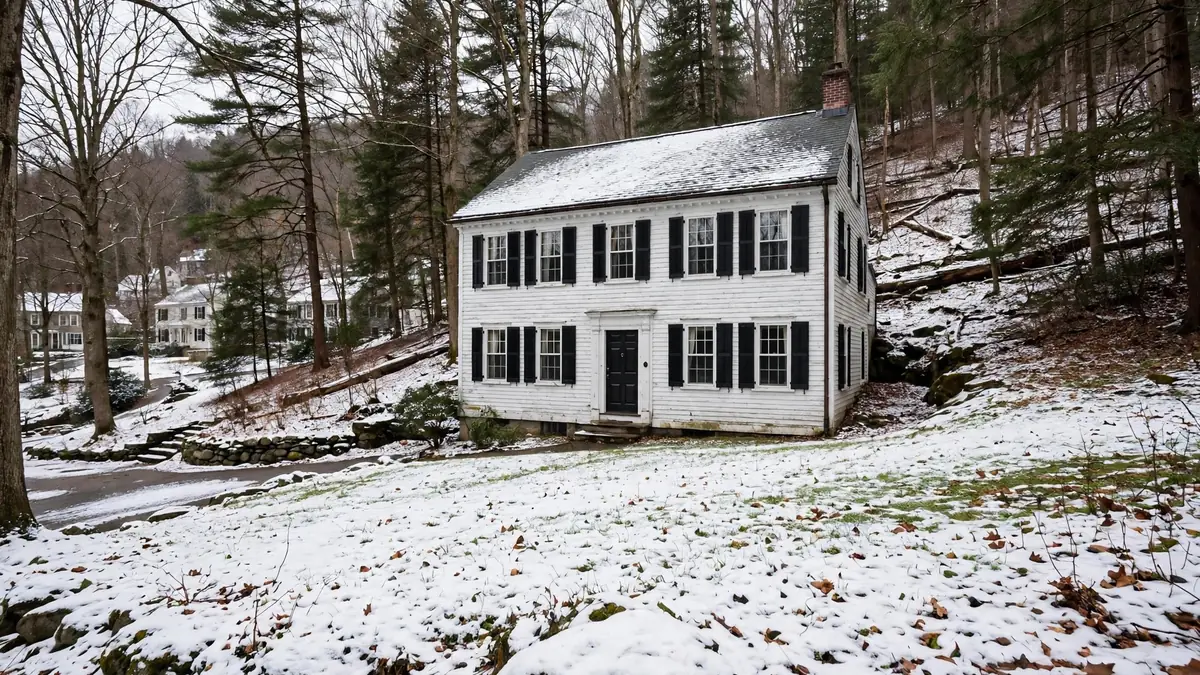
Danbury's old nickname, the Hat City, comes from its long run as the heart of American hat making [1], and the city center still has older multi-family houses, brick buildings and early twentieth-century homes. Around it, the city and neighboring towns spread into hills and woods, with capes, colonials, raised ranches and newer houses, many with finished basements. Condo and apartment complexes fill in between.
Water damage follows the housing type. Older downtown buildings see stacked leaks, aging plumbing and damp basements. Suburban houses see finished basement flooding, sump pump failures, washing machine and water heater leaks and frozen pipes. Homes on private wells and septic systems add their own risks. And in severe storms, low areas near the Still River and its tributaries can flood.
Common jobs
Water damage calls common around Danbury
These come up most often.
Frozen and burst pipes
Inland winters freeze pipes in exterior walls, garages and crawl spaces.
Finished basement water
Groundwater and failed sump pumps flood finished lower levels.
Well system leaks
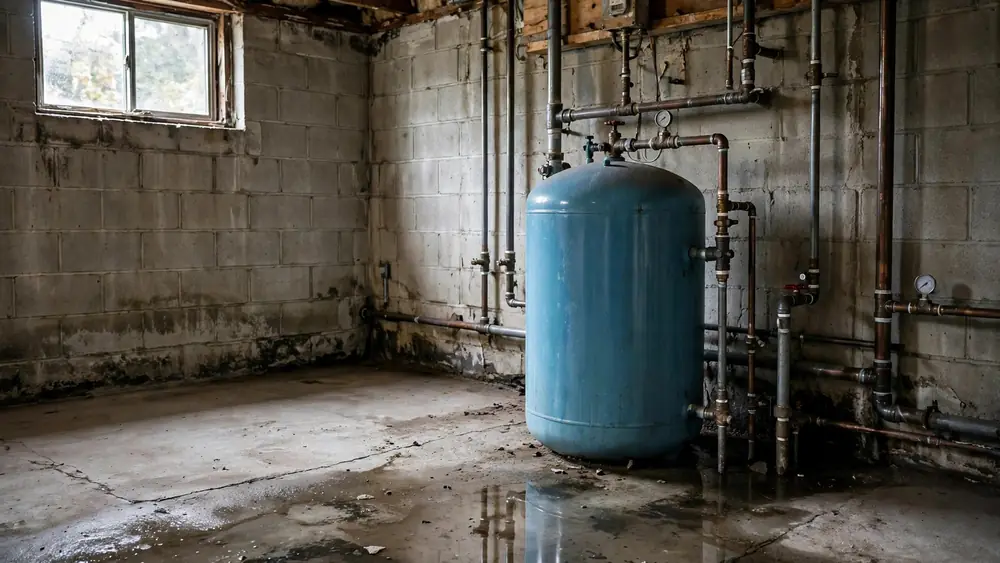
Pressure tanks, well lines and treatment equipment leak in basements.
Septic backups
Saturated leach fields and full tanks push wastewater back into the house.
Ice dam leaks
Snowy winters cause ice dams on roofs, leaking into ceilings and walls [5].
River-area flooding
Heavy rain can raise the Still River and its brooks into nearby properties.
Flood history
The Still River, the Kohanza dam and Danbury's floods
The Still River normally meanders slowly through downtown Danbury. On August 18 and 19, 1955, it overflowed its banks when Hurricane Diane dropped about six inches of rain on the city, on top of nine inches from Hurricane Connie five days earlier [1]. The 1955 floods devastated river valleys across Connecticut [3].
Danbury also suffered one of the state's early dam disasters. On January 31, 1869, the Kohanza Reservoir dam broke, and icy floodwater swept through the town and 11 people died within half an hour and damaged homes and farms [1]. Today the bigger risks for most homes are everyday ones, but heavy rain on saturated ground can still flood low streets and basements near the river.
Winter
Cold winters and burst pipes around Danbury
Danbury's inland, hilly setting brings colder winter nights than the shoreline. Pipes in exterior walls, in rooms over garages, in crawl spaces and in houses left empty during trips are the usual failures. When a pipe bursts in a house with a full finished basement, water often runs down into it and does more damage there than at the break.
Keep heat steady, open sink cabinets during cold snaps, let faucets drip in extreme cold and insulate pipes in unheated spaces [6]. If you travel, keep the heat on and arrange checks, or shut off and drain the water.
Wells
Homes on private wells
Many homes in the Danbury area outside city water lines rely on private wells. A well system includes a pump in the well, a line to the house, a pressure tank and often treatment equipment, all of which can leak. When a pipe bursts in a well house, the pump keeps refilling the system, so turn off the well pump at its breaker as well as closing the main valve.
If a flood covers the wellhead or the basement where the well equipment sits, have the system checked and the water tested before drinking it. Flood guidance treats wells near floodwater as possibly contaminated until tested [4].
Septic
Septic systems and backups
Septic systems are common in the towns around Danbury. Heavy rain can saturate the leach field so it cannot accept more wastewater, and a full or neglected tank can back up into the lowest drains in the house. A backup in a septic home is still sewage, the highest contamination category, and cleanup follows the same protective steps as any sewage backup [7].
Limit water use, call a septic contractor to pump and inspect the system and call a restorer for the cleanup. See sewage backup cleanup.
A Danbury basement job
How a finished basement flood is usually handled around Danbury
- 1
Control the source
Restore or replace the sump pump, shut off the well pump or close the main as needed.
- 2
Make it safe
Power to the basement off from a dry location; gas and oil equipment left off.
- 3
Document
Photos and readings before anything is moved.
- 4
Extract
Water removed from carpet and the slab.
- 5
Remove wet finishes
Pad, lower drywall and wet insulation removed.
- 6
Clean
Surfaces cleaned; disinfected if the water was contaminated.
- 7
Dry
Dehumidifiers and air movers until the slab and framing are dry.
- 8
Rebuild
With water-tolerant materials where possible.
Housing types
How Danbury-area housing handles water damage
Generalizations only.
| Housing type | Common problems | Restoration notes |
|---|---|---|
| Older downtown multi-family | Stacked leaks, damp basements | Multi-unit coordination |
| Raised ranch | Lower level partly below grade, seepage | Lower-level drying, flood cuts |
| Colonial with finished basement | Sump failures, groundwater | Finished basement restoration |
| Home on well and septic | Pressure tank leaks, septic backups | Shut off well pump; septic contractor |
| Condo complex | Unit-to-unit leaks | Association coordination |
| Lake-area house | Seasonal use, frozen pipes | Winterizing and checks |
Candlewood Lake
Lake homes near Candlewood
Candlewood Lake, just north of Danbury, is the largest lake in Connecticut; it was created after the Connecticut Light and Power Company approved a pumped-storage power plan in 1926 and the valley was flooded [2]. Homes around it range from small seasonal cottages to large year-round houses. Seasonal homes are a burst pipe risk when they are left with the heat off and the water on. Year-round homes near the water may have damp basements and crawl spaces.
If you use a lake house seasonally, have the plumbing winterized, or keep heat on with a low-temperature alarm and regular checks.
Basements
Finished basements and raised ranches
Raised ranches and split-levels are common around Danbury. Their lower levels sit partly below ground and are often finished as family rooms, bedrooms or offices. Groundwater from the hillside, a failed sump pump or a laundry leak can soak carpet and drywall quickly. Cleanup usually means removing pad and lower drywall and drying the slab and framing. See flooded basement cleanup and sump pump failure cleanup.
Danbury checklist
First steps for Danbury-area homeowners
In the first hour, if safe.
- Stop the waterClose the main valve; on a well, shut off the well pump breaker.
- Keep heat onIt helps drying and prevents more freezes.
- Cut power to wet areasOnly from a dry location.
- Limit drains on septicIf drains back up, stop using water.
- PhotographBefore cleanup.
- Move belongingsOut of the wet area and off basement floors.
Mold
Mold prevention around Danbury
Basements, crawl spaces and humid summers make mold the main follow-up risk. The EPA advises drying within 24 to 48 hours and keeping humidity below 60 percent [8]. A basement dehumidifier through the humid months helps a great deal. See mold prevention after water damage.
Bethel and Newtown
Bethel and Newtown
East of Danbury, Bethel and Newtown are largely residential, with village centers of older houses and larger outlying neighborhoods of colonials and capes, many on wells and septic systems. Water damage calls here usually involve finished basements, sump pumps during storm outages, frozen pipes and well equipment.
Ridgefield and Redding
Ridgefield and Redding
South of Danbury, Ridgefield and Redding are wooded towns with many older houses and larger homes on big lots, often on wells and septic. Houses here can have long plumbing runs, multiple water heaters and finished lower levels. Seasonal travel and cold snaps make burst pipes a common call.
New Milford
New Milford
North of Danbury, New Milford is a large town with a historic center and rural outskirts. Homes near its rivers and brooks can see flooding in extreme rain; most other calls involve basements, wells, septic and winter freezes.
Danbury symptoms
What Danbury-area homeowners notice and what it usually means
A quick reference before calling.
| What you notice | Likely cause | What to do first |
|---|---|---|
| Well pump running constantly, low pressure | Leak somewhere in the well system or house | Shut off the pump breaker; look for water |
| Slow drains and sewage smell after rain | Saturated leach field or full septic tank | Stop water use; call a septic contractor |
| Water across the lower level of a raised ranch | Groundwater or failed sump pump | Restore pumping; move belongings |
| Ceiling stain below a bathroom in winter | Frozen and split supply line | Close the main; keep heat on |
| Wet attic insulation after a thaw | Ice dam or roof leak | Call a roofer; remove wet insulation |
| Water in a lake cottage in spring | Pipes that froze over winter | Close the main; call for drying |
Oil heat
Oil tanks and heating equipment in Danbury basements
Many older homes in western Connecticut heat with oil, and the tank often sits in the basement. When a basement floods, an oil tank can shift, a fill or vent line can break, or water can reach the burner. If you smell fuel oil after a flood or see a sheen on the water, keep everyone out, avoid sparks and call your fuel supplier and the fire department.
Oil mixed with floodwater makes cleanup much more involved and changes what can be saved, so tell the restorer right away. Burners, boilers and furnaces that sat in water should be inspected before they are restarted.
Seasonal homes
Second homes and seasonal cottages around Danbury
The lakes and hills around Danbury draw weekend and summer homeowners. A house used only part of the year is at real risk in winter: a furnace that fails, a power outage or a thermostat set too low can freeze pipes, and nobody notices until the next visit. By then, water may have run for days through ceilings, walls and floors.
Winterizing is the safest choice for houses left empty for long periods: a plumber shuts off and drains the water system and adds antifreeze to traps. If you keep the house heated, a low-temperature alarm, a leak sensor with phone alerts and a neighbor who checks the house regularly are worth the effort. If you do find water, close the main, switch off the well pump if there is one and call for help.
Downtown
Downtown Danbury and its older buildings
The older blocks around downtown Danbury include multi-family houses and mixed-use buildings close to the Still River. In these buildings, the usual problems are leaks between units, aging plumbing, roof leaks and damp shared basements. When a leak crosses unit lines, the owner and every affected household need to know quickly so the source can be shut off and drying planned across the building.
Condos
Condo and apartment complexes around Danbury
Danbury has many condo and apartment complexes. Leaks from dishwashers, washing machines, water heaters inside units and toilet supply lines can travel into neighboring units below or beside. Association rules and master policies come into play, and each owner may also have a unit policy. Documenting each unit separately keeps the claims clear.
Outages
Storm outages, sump pumps and well pumps
Storms that knock out power in the wooded hills around Danbury stop two pumps that many homes depend on: the sump pump that keeps the basement dry and the well pump that supplies water. With no sump pump, groundwater can flood a finished lower level within hours. With no well pump, there is at least no water to leak, but there is also no water for cleanup.
A battery backup sump pump and a high-water alarm protect the basement during outages. A generator connected safely by an electrician can run both pumps and the heating system. Never run a generator in the house, basement or garage, or near windows, because of carbon monoxide [13]. When power returns after a long winter outage, check for leaks from pipes that froze while the house was cold.
Crawl spaces
Crawl spaces and additions
Many Danbury-area houses have additions built over crawl spaces next to the original full basement. Crawl spaces stay damp, collect water during wet seasons and hold pipes that freeze in winter. A burst pipe in a crawl space can soak the insulation and subfloor for a long time before anyone notices. Signs include a musty smell in the room above, cupping floors and condensation on windows.
Drying a crawl space means pumping any standing water, removing wet insulation and torn vapor barrier, and running dehumidifiers inside the space. Insulating pipes and sealing vents in winter help prevent the next freeze.
Belongings
Belongings stored in Danbury basements
Finished lower levels around Danbury often hold home offices, playrooms and guest rooms, and unfinished areas hold years of storage. After water damage, move electronics, papers and anything irreplaceable first. Soaked cardboard, paper, upholstered furniture and mattresses are usually discarded, especially after groundwater or septic water [4]. Photograph and list what you discard, and repack what you keep in plastic bins on shelves.
Prevention
Preventing water damage in a Danbury-area home
Most of the water damage calls around Danbury can be prevented or made smaller with a short list of habits. Before winter, disconnect garden hoses, shut off and drain outdoor faucets, insulate pipes in garages and crawl spaces and have the heating system serviced. Before spring, clean gutters, extend downspouts, test the sump pump and check its backup battery. Pump the septic tank on schedule and keep heavy vehicles off the leach field.
Inside, put leak sensors near the water heater, washing machine, well pressure tank and sump pit. Replace rubber washing machine hoses with braided ones. Know where the main valve is and make sure everyone in the house can find it. A smart water shutoff valve that closes automatically when a sensor detects a leak is worth considering in homes with finished basements or long periods away.
Keep the drying report from any past water damage. If you sell the house, it shows the problem was handled properly, and if water returns, it gives the next contractor a head start.
Getting help
What to have ready when you call from the Danbury area
Have your ZIP code, the type of home, whether you are on a well and septic or city utilities, and a short description of where the water came from. Your call is connected to an independent local restoration contractor who can talk it through on that same call.
It also helps to mention whether the house has a finished lower level, whether the heat is working and whether any oil tank, boiler or water heater sat in the water. Those details tell the contractor which trades may need to be involved and what equipment to bring for drying. If the driveway is long, steep or icy, say so too; it affects how equipment gets to the house, where the truck can park and where hoses and power cords can run safely to the house.
Permits
Permits and contractor checks around Danbury
Drying and cleanup usually do not need a building permit; rebuilding, electrical and plumbing work often do. Each town has its own building department. Check that any home improvement contractor is registered with the Connecticut Department of Consumer Protection [9].
Insurance
Insurance after water damage near Danbury
FAQ
Questions from Danbury-area residents
A pipe burst and we are on a well. What do I shut off?
Close the main valve and switch off the well pump at its breaker so it stops refilling the system.
Is my well water safe after a flood?
If floodwater reached the wellhead or the basement equipment, have the system checked and the water tested before drinking it.
My septic is backing up after heavy rain. What should I do?
Stop using water, call a septic contractor and keep everyone away from any wastewater in the house.
Why does my raised ranch lower level get wet?
A raised ranch lower level sits partly below grade, so groundwater presses on its walls during wet seasons. Gutters, grading and a sump pump usually help.
Does insurance cover a septic backup?
Often only with a water backup endorsement. Check your policy.
Are all Danbury ZIP codes covered?
Two Danbury ZIP codes are covered. Your call confirms your address.
Who serves homes around Danbury?
An independent contractor who handles water damage around Danbury, including homes on wells and septic. The call is routed through this site; any agreement is made directly with them.
Nearby
More around Danbury
Back to all of Connecticut. Nearby pages: Bridgeport, New Haven, New London and Groton, Norwalk, Stamford, Waterbury.
Related help for Danbury: water extraction, structural drying, sewage backup cleanup, fire damage restoration and smoke damage cleanup. First time dealing with this? Read the first hours after water damage.
Sources and citations
- [1]Wikipedia — Danbury, Connecticut
- [2]Wikipedia — Candlewood Lake
- [3]Wikipedia — Flood of 1955 (Connecticut)
- [4]U.S. EPA — Flooded homes: cleanup and safety
- [5]Wikipedia — Ice dam (roof)
- [6]Ready.gov — Winter weather
- [7]Wikipedia — Water damage
- [8]U.S. EPA — A brief guide to mold, moisture and your home
- [9]Connecticut Department of Consumer Protection
- [10]Wikipedia — National Flood Insurance Program
- [11]Wikipedia — Homeowner's insurance
- [12]Connecticut Insurance Department
- [13]Ready.gov — Power outages