
Key facts: New Haven
- New Haven faces Long Island Sound from the head of New Haven Harbor [1].
- The city covers only about 17 square miles, which pushed much post-1950 housing growth into neighboring towns [1].
- The Quinnipiac River flows through Wallingford and North Haven into New Haven Harbor, east of downtown [2].
- Storms including the 1938 hurricane, Hurricane Carol in 1954 and Hurricane Gloria in 1985 struck the New Haven area [1].
Coverage
New Haven and nearby covered towns
Coverage is by ZIP code; the call confirms your address. Covered places in and around New Haven include:
- New HavenFive New Haven ZIP codes are covered.
- HamdenThree covered ZIP codes to the north.
- West Haven, East Haven and North HavenOne covered ZIP code each.
- Branford, Guilford and MadisonOne covered ZIP code each along the shoreline to the east.
- MilfordTwo covered ZIP codes to the west.
- Not listed?Mention your town on the call; if it falls outside the covered ZIP codes you will hear that right away, and nothing is forwarded.
New Haven homes
What New Haven's older housing means for water damage
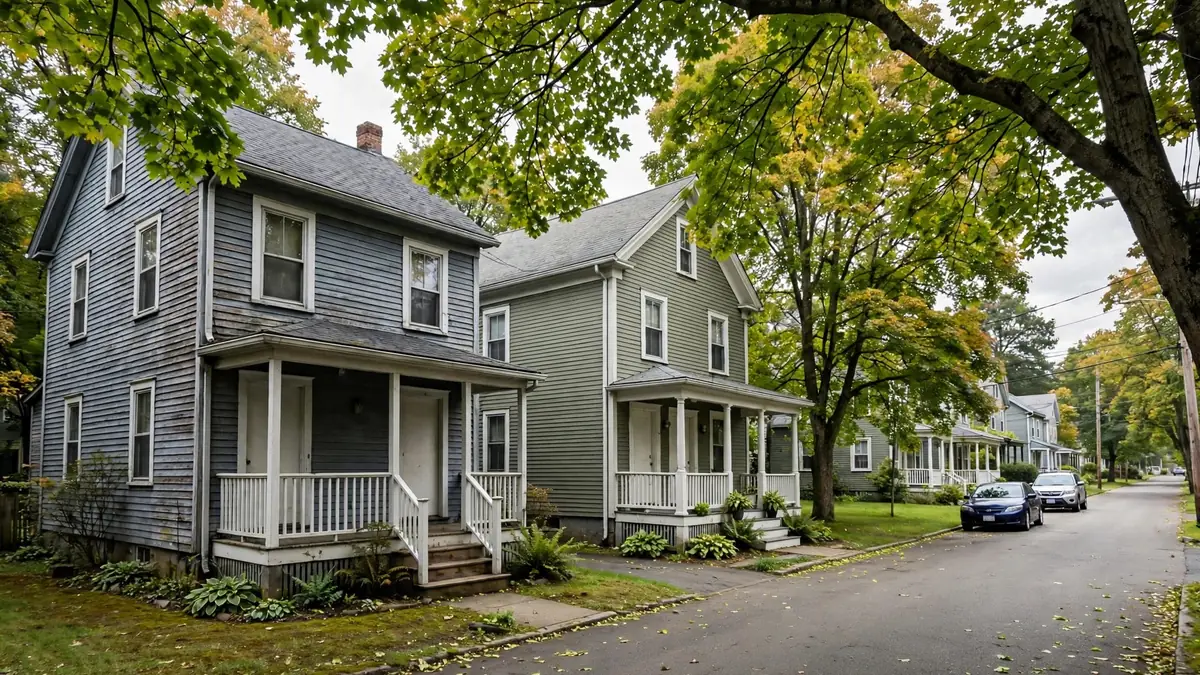
New Haven is a compact city, roughly 17 square miles, and its small size meant that much new housing after 1950 was built in the surrounding towns instead [1]. What remains inside the city is largely older: wooden two- and three-family houses, brick row houses and apartment buildings, Victorian single-family homes and converted houses divided into apartments. Some of that housing has been well kept; some has struggled with decades of deferred maintenance [1].
Older housing behaves in specific ways when it gets wet. Plaster on wood lath absorbs water slowly and dries slowly. Balloon-framed walls can let water and moist air travel from one floor to the next. Old plumbing, including galvanized and cast iron pipes, fails at joints. Boilers and radiators hold water in every room. Basements are often damp and shared.
Restoration in these buildings takes patience and an eye for what is worth keeping. Plaster, old wood trim and original floors can often be dried rather than replaced, and the contractor needs to plan around lead paint in buildings of this age [3].
Common jobs
Water damage calls common in New Haven
The situations that come up most often in the city's housing.
Upstairs leaks into downstairs units
A tub, toilet or kitchen leak in an upper unit soaks the ceiling and walls below.
Radiator and boiler leaks
Old valves, vents and pipes leak slowly and stain floors and ceilings.
Frozen pipes in vacant units
Apartments left empty between tenants or over winter break freeze when heat is lowered.
Damp and flooded basements
Groundwater, storm water and drain backups in shared basements.
Roof and gutter leaks
Older roofs and clogged gutters push water into top-floor ceilings and walls.
Shoreline and river flooding
Low areas near the harbor and the Quinnipiac River take on water in big storms.
Plaster
Plaster ceilings and walls in New Haven apartments
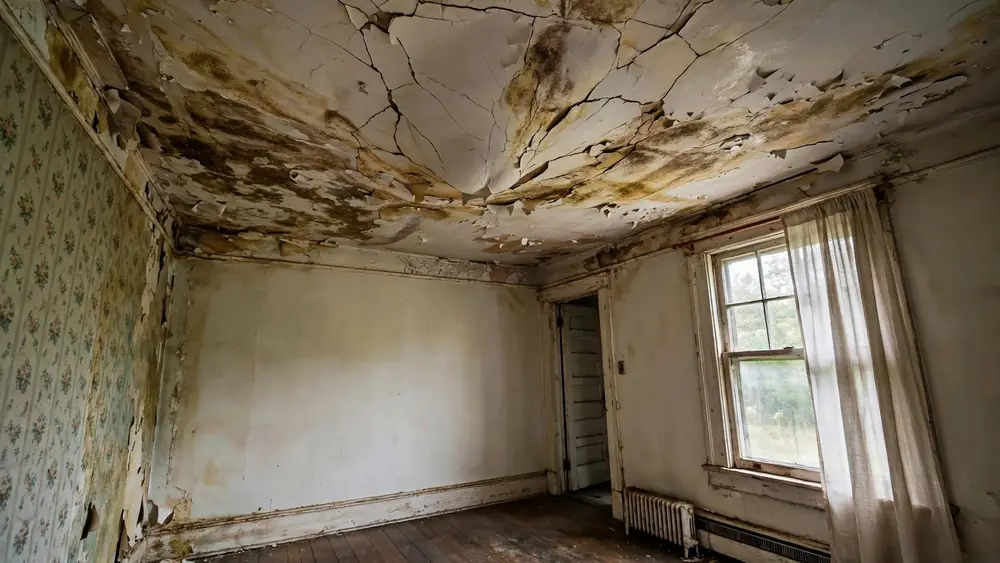
Plaster on wood lath is common in New Haven's older buildings. When it gets wet, it usually stains, softens slightly and may crack, but it often holds together and can be dried in place. The danger is a ceiling that has absorbed a lot of water and starts to sag: the plaster keys that hold it to the lath can break, and a section can fall [5].
Restorers judge plaster by readings and by pressing gently to see whether it has separated from the lath. Small vent holes help dry the cavity behind it. Sagging sections are removed. Because paint and plaster in older buildings may contain lead, any cutting or demolition should use lead-safe practices [3], and tenants, especially young children, should stay away from the work area.
Rentals
Landlords, tenants and water damage in New Haven
A large share of New Haven residents rent, including many students and university staff. When water damage happens in a rental, the landlord is generally responsible for the building, its plumbing and repairs, and the tenant is responsible for their own belongings. Renters insurance, if the tenant has it, usually covers personal property, and sometimes temporary living expenses.
Tenants should report water damage in writing with photos as soon as they find it. Landlords should get the source fixed and drying started quickly, both to protect the building and because mold in a rental becomes a much harder problem. A restorer who documents each unit separately helps both sides.
Harbor and rivers
New Haven Harbor, the Quinnipiac and storm history
New Haven wraps around its harbor, a bay opening onto Long Island Sound [1]. The Quinnipiac River runs down through Wallingford and North Haven and enters the harbor east of downtown [2]. Low-lying neighborhoods near the river mouths and along the harbor shoreline are the most exposed to flooding.
Tropical storms have hit the city before, including the 1938 hurricane, Hurricane Carol in 1954 and Hurricane Gloria in 1985 [1]. Storm surge and heavy rain together can flood basements and streets near the water [6]. Floodwater is treated as contaminated, and flood damage is usually covered by flood insurance rather than standard policies [7].
A New Haven job
How a water damage job usually runs in a New Haven two-family
- 1
Shut off the water
Close the unit shutoff or the building main, often in the basement.
- 2
Tell the landlord and other tenants
In writing, with photos.
- 3
Map both units
Moisture readings in the leaking unit, the unit below and the basement.
- 4
Protect people from the ceiling
Sagging plaster or drywall is released or removed safely.
- 5
Extract and dry
Water removed and drying equipment set, often in both units.
- 6
Check for lead before demolition
Older paint and plaster are handled with lead-safe practices.
- 7
Monitor daily
Readings until both units are dry.
- 8
Repair
Plaster, drywall and paint repaired once dry.
Housing types
How New Haven housing types handle water damage
Generalizations only.
| Housing type | Common water problems | What restoration usually involves |
|---|---|---|
| Wooden two- or three-family | Stacked leaks, porch roofs, shared basements | Multi-unit mapping and drying |
| Victorian single-family | Old plumbing, radiators, plaster | Plaster drying, cavity venting, lead-safe work |
| Brick apartment building | Riser leaks, roof leaks, basement water | Building-wide coordination |
| Converted house with many units | Added bathrooms and kitchens over old floors | Tracing leaks through irregular framing |
| Newer apartments downtown | Appliance and sprinkler leaks | Unit-to-unit drying, management rules |
Heating
Radiators, steam and hot water heat in New Haven buildings
Older New Haven buildings often have steam or hot-water heat from a basement boiler. Radiator valves and air vents leak, old supply pipes corrode and the system can lose water slowly for weeks. The first sign is often a dark stain on the floor around a radiator or a brown ring on the ceiling below it.
Steam systems also produce condensation and can spit water from failing vents. When a heating system leaks, a heating contractor repairs it; the restorer dries the floor, subfloor and the ceiling below. Hardwood floors around radiators are frequently cupped from long-term slow leaks. See hardwood floor drying.
Winter
Winter breaks and frozen pipes in New Haven
New Haven has a large student population, and many apartments sit partly empty over winter break. If heat is turned down to save on bills, pipes on exterior walls can freeze. When students return and the heat comes back on, the burst pipes thaw and flood. Landlords and tenants can prevent most of this by keeping heat at a steady minimum, opening sink cabinets and letting a faucet drip during extreme cold [8].
If you find water when you return from a break, shut off the water first, then document everything and tell your landlord. Our burst pipe water damage page covers the rest.
New Haven checklist
First steps for New Haven tenants and owners
In the first hour, if safe.
- Close the waterUnit shutoff if there is one; otherwise the building main.
- Tell the landlord in writingText or email with photos and the time you found it.
- Warn neighborsKnock on the door of the unit below.
- Stay clear of sagging ceilingsPlaster and drywall can fall without warning.
- Move belongingsLaptops, documents and furniture out of the wet area.
- Do not sand or scrapeOlder paint may contain lead.
Basements
New Haven basements and seasonal water
Shared basements in older New Haven buildings hold boilers, water heaters, laundry and tenant storage. They are often damp, with stone or brick foundation walls and floor drains connected to old sewer lines. Heavy rain and spring thaw push groundwater in; storms can cause drain backups when sewers surcharge, and older city systems sometimes carry storm water and sewage together [9].
When these basements flood, every household's stored belongings may be affected, along with the building's mechanicals. Cleanup involves pumping, removal of soaked storage and materials, cleaning, disinfection if the water was contaminated, and drying. See flooded basement cleanup and sewage backup cleanup.
Mold
Mold risk in New Haven rentals
Older buildings, damp basements and the long gap that sometimes passes before a leak is reported make mold a frequent concern in rentals. The EPA advises drying within 24 to 48 hours and keeping humidity below 60 percent [10]. Tenants should report leaks quickly; landlords should act on them quickly. See mold prevention after water damage.
Hamden and North Haven
Hamden, North Haven and the Quinnipiac valley
North of the city, Hamden and North Haven have more single-family homes, many with full and often finished basements. The Quinnipiac River runs through North Haven on its way to the harbor [2], and homes in low areas along it and its tributaries can see basement water in heavy rain. Water damage here tends to involve finished basements, sump pumps, washing machines and water heaters, and winter pipe freezes.
The shoreline towns
West Haven, East Haven, Branford and the shoreline
The shoreline towns around New Haven, including West Haven, East Haven, Branford, Guilford and Madison, have neighborhoods built right up to the water, with cottages that have been converted to year-round homes. Those houses often sit low, on shallow foundations or crawl spaces, and are exposed to storm surge [6]. After coastal storms, the usual work is removing soaked materials, rinsing salt and drying crawl spaces and lower floors.
Permits
Repairs, permits and contractors in New Haven
Drying and removal of damaged materials generally do not need a building permit, while rebuilding, electrical and plumbing work often do. New Haven's building department handles permits in the city. For home improvement work, check that the contractor is registered with the Connecticut Department of Consumer Protection [11]. In older buildings, ask how they will handle lead paint during demolition [3].
New Haven symptoms
Signs New Haven residents notice and what they usually mean
A quick reference before you call.
| What you notice | Likely cause | What to do first |
|---|---|---|
| Dark stain on the floor around a radiator | Leaking radiator valve or vent | Tell the landlord; call a heating contractor |
| Bulging plaster ceiling | Water pooled above from a leak upstairs | Leave the room; shut off water upstairs |
| Water in the basement after rain | Groundwater through old foundation walls | Move stored items; check the sump if any |
| Water from the basement floor drain | Sewer surcharge or blocked lateral | Stop water use throughout the building |
| Brown streaks below top-floor windows | Roof, gutter or window leak | Bucket and photos; roofer and restorer |
| Musty smell in a closet on an outside wall | Slow leak or condensation in the wall | Ask for moisture readings |
Converted houses
Leaks in houses divided into many apartments
Many large old New Haven houses have been divided into four, six or more apartments over the years. Bathrooms and kitchens were added wherever they fit, often above rooms that were never meant to sit under plumbing, with drain lines running through old joists and closets. When those fixtures leak, the water can travel in unexpected directions, following old framing, chases and gaps between floors.
Tracing the source in these buildings takes care. The restorer may check several units above and beside the damage before finding the leaking fixture. Small inspection openings in ceilings and closets are common. Once the path is known, drying is planned for every space along it, not just the room with the stain.
Student housing
Student apartments and water damage
Student renters often share an apartment with several people and may not know where the water shutoff is or who to call. If you rent near campus, find the shutoff on move-in day and save the landlord's or management company's emergency contact. When something leaks, close the valve, take photos and tell the landlord in writing right away.
Electronics, textbooks and documents are the items students most often lose. Keep laptops and papers off the floor, especially in basement or ground-floor units, and back up important files. Renters insurance is worth checking, because a landlord's policy usually does not cover tenants' belongings.
Porches and roofs
Porches, flat roofs and gutters on older New Haven houses
Many New Haven two- and three-family houses have stacked porches and low-slope or flat roof sections that are prone to leaks as they age. Clogged gutters overflow against the walls, and water finds its way into window frames and wall cavities. These leaks are slow but steady, and the result is often hidden rot and mold in exterior walls. A roofer or carpenter fixes the outside; the restorer opens, dries and assesses the inside.
Owners
For owners of New Haven rental buildings
If you own a multi-family building in New Haven, water damage affects your tenants' homes as well as your property. Move quickly: get the source fixed, arrange drying in every affected unit and keep tenants informed about how long equipment will run. Prompt action protects the building, limits mold and reduces disputes.
Keep good records for each unit: when the leak was reported, when work started, moisture readings and photos. Make sure tenants know where shutoffs are. Leak sensors near water heaters and washing machines, a high-water alarm in any sump pit and regular checks of radiators, roofs and gutters prevent many claims.
Older buildings also bring compliance questions. If demolition is needed in a building built before 1978, plan for lead-safe work practices [3], and if pipe insulation or old floor tile is involved, have it tested for asbestos before disturbing it [4].
Downtown
Downtown apartments and newer buildings
Downtown New Haven and the blocks around the universities include newer apartment buildings and converted commercial buildings alongside older stock. In these, water damage usually comes from appliance lines, plumbing fixtures, sprinklers and HVAC condensate lines, and it spreads between units below. Building management rules govern access, equipment placement and working hours, and the restorer works through them.
Contents
Rescuing belongings after a New Haven leak
Books, papers and electronics are the things New Haven tenants most often lose. Move them out of the wet area first, stand wet books upright with pages slightly fanned in a dry room, and keep laptops and phones off until they have been checked. Clothes and bedding should be washed and dried completely within a day or two so they do not start to smell.
Furniture in older apartments is often the tenant's own. Solid wood pieces can usually be wiped and dried; upholstered pieces and mattresses soaked by water from a ceiling leak may not recover, especially if the water came through old plaster and dust. Photograph everything you discard and keep a list with rough ages for the renters insurance claim. Receipts, bank records and old photos of your rooms all help show what you owned, even years later when memories of specific items have faded. Start the list the same day, while the details are still fresh.
Getting help
What to have ready when you call from New Haven
Have your ZIP code, the type of building, whether you rent or own and a short description of the water and where it came from. If you rent, check whether your landlord has already called a contractor. Your call is connected to an independent local restoration contractor who can talk it through on that same call.
Insurance
Insurance after water damage in New Haven
FAQ
Questions from New Haven residents
My ceiling is leaking from the apartment above. What do I do?
Tell the upstairs tenant and your landlord immediately so the water can be shut off. Stay away from the wet ceiling, move belongings and take photos.
Can water-damaged plaster be saved?
Often, yes. Plaster that is stained but firm can usually be dried in place. Sagging plaster that has separated from the lath is removed.
Who pays for water damage in a rental?
Generally the landlord handles the building and repairs, and tenants handle their own belongings, often through renters insurance. Leases and policies vary.
My pipes froze over winter break. What now?
Shut off the water, tell your landlord in writing with photos, and keep away from wet ceilings. Drying usually takes several days.
Is lead paint a concern during repairs?
In buildings built before 1978, yes. Ask the contractor how they will handle older paint during demolition.
Are all New Haven ZIP codes covered?
Five New Haven ZIP codes are covered. Your call confirms whether your address is served.
Who restores New Haven apartments and houses?
A New Haven-area contractor working on their own account. The call reaches them through this referral line, and owners or tenants agree any work with them directly.
Nearby
More around New Haven
Back to all of Connecticut. Nearby pages: Bridgeport, Danbury, New London and Groton, Norwalk, Stamford, Waterbury.
Related help for New Haven: water extraction, structural drying, sewage backup cleanup, fire damage restoration and smoke damage cleanup. First time dealing with this? Read the first hours after water damage.
Sources and citations
- [1]Wikipedia — New Haven, Connecticut
- [2]Wikipedia — Quinnipiac River
- [3]U.S. EPA — Protect your family from sources of lead
- [4]U.S. EPA — Protect your family from exposures to asbestos
- [5]Wikipedia — Lath and plaster
- [6]Wikipedia — Storm surge
- [7]Wikipedia — National Flood Insurance Program
- [8]Ready.gov — Winter weather
- [9]Wikipedia — Combined sewer
- [10]U.S. EPA — A brief guide to mold, moisture and your home
- [11]Connecticut Department of Consumer Protection
- [12]Wikipedia — Homeowner's insurance
- [13]Connecticut Insurance Department