Key facts: Nashua
- The Nashua River roughly bisects the city, and the Merrimack forms its eastern boundary [1].
- Nashua averages 48.19 inches of precipitation and about 52.9 inches of snow per season [1].
- Lows drop below 0°F on about 8.7 days a year on average [1].
- The Nashua Manufacturing Company was incorporated in 1823, and the last nearby mill closed in 1949 [1].
The water
Two rivers and several brooks
Dunstable, the settlement that became Nashua, was settled about 1654 where the Nashua meets the Merrimack. [1] Salmon Brook and Pennichuck Brook also drain the city. [1] That leaves many low spots near water, while other parts rise well above it. Check the official flood map for your address and do not rely on what the neighbors remember.
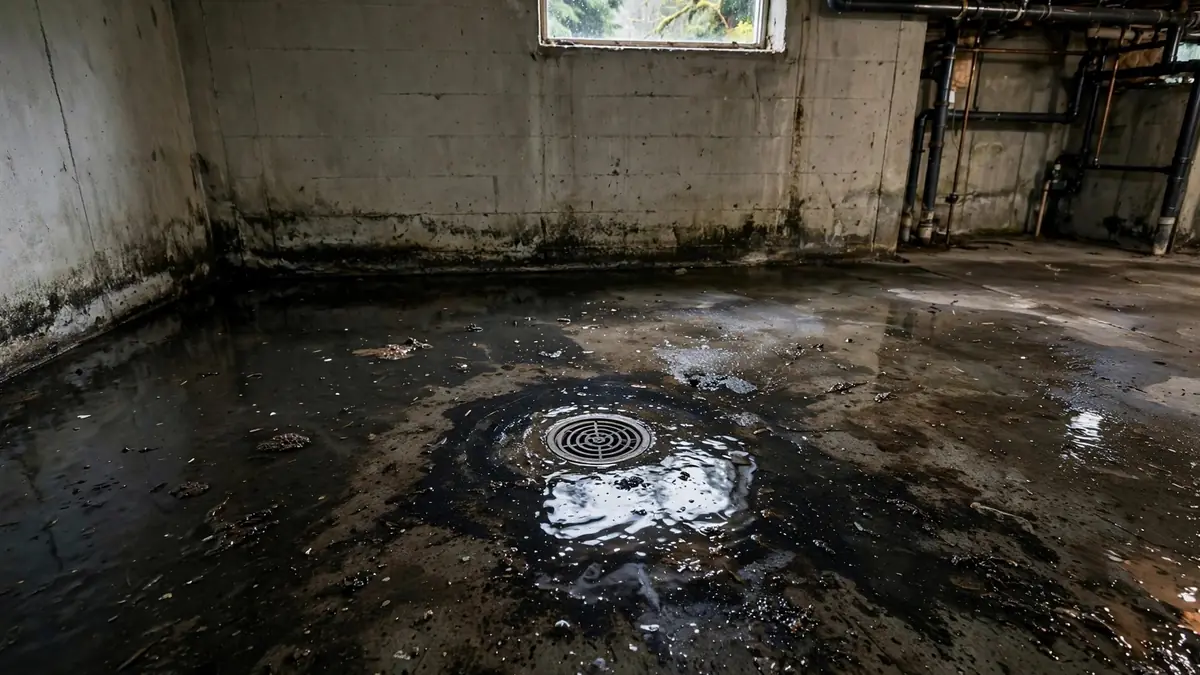
Rain and snowmelt are the common triggers. In May 2006, heavy rain brought flooding throughout the region, [2] and storms in July 2023 led to a federal disaster declaration for New Hampshire. [3] Even without a named event, rapid thaw on frozen ground can fill a cellar. See flooded basement cleanup.
Common situations
What Nashua water damage tends to involve
General patterns from local conditions.
Wet cellars in thaw season
Older foundations and high groundwater let water in.
Read moreSump pump failures
Newer homes with sump pits depend on working pumps during storms.
Ice dam ceiling stains
Snowy winters and warm attics make leaks at the eaves common.
Finished basements gone damp
Carpet and drywall below grade hold moisture.
Read more
Housing
From the Tree Streets to South Nashua
Downtown's Tree Streets neighborhood and French Hill have many older homes, reflecting the mills that drew workers from about 1823 onward. [1] Expect stone or brick foundations, old plumbing and multi-family layouts. Lead paint may be present in homes built before 1978. [4]
Further from downtown, newer suburban subdivisions and those near the Massachusetts border are more likely to have poured foundations, sump pits and finished basements. A sump failure may cause more damage there, because the space below grade holds carpet, drywall and belongings.
Compare
Older downtown homes and newer subdivisions
Generalized.
| Detail | Older downtown | Newer suburban |
|---|---|---|
| Foundation | Stone or brick more likely | Poured concrete more likely |
| Typical water entry | Through walls and floor joint | Sump overflow, cracks |
| What gets damaged | Stored items, timbers | Finished walls and carpet |
| Special checks | Lead, old wiring | Pump and backup |
How it usually runs
A cellar job in Nashua
- 1
Make electrics safe
Do not wade in if the panel or outlets may be wet.
- 2
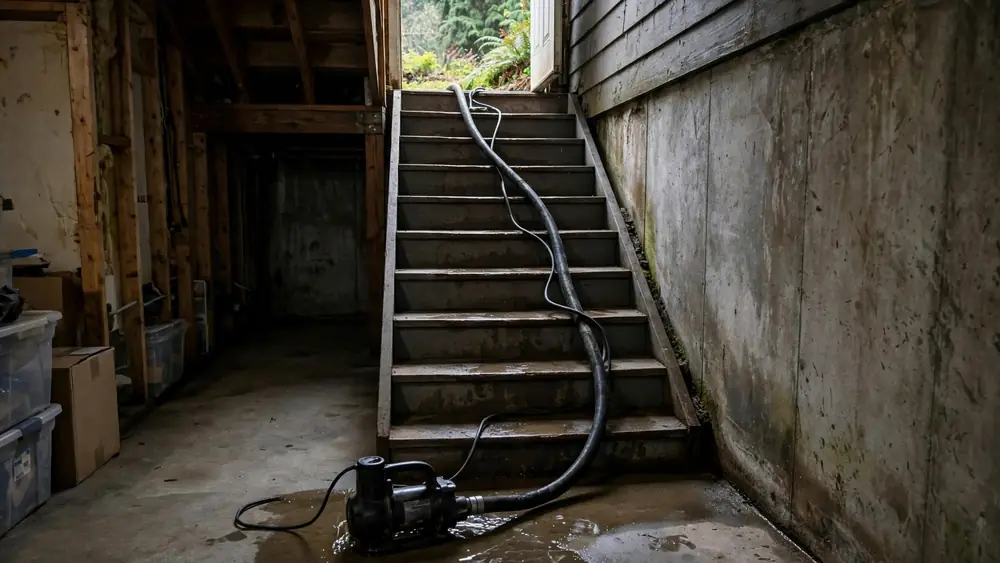
Pump out
Send water well away from the foundation.
- 3
Sort belongings
Photograph, then keep or discard.
- 4
Clean if needed
River or surface water means extra cleaning. [5]
- 5
Dry
Run dehumidifiers until readings reach the goal.
Permits
Local offices
Nashua has its own city government. Hudson, Merrimack and other nearby towns on the coverage list have their own offices, so confirm where your address falls before major repairs.
Nearby
Areas near Nashua
Upstream along the Merrimack is Manchester. Further north is Concord.
Brooks
Salmon Brook, Pennichuck Brook and smaller waterways
Salmon Brook, a Merrimack tributary, drains part of the city, and Pennichuck Brook forms its northern boundary. [1] Homes that are nowhere near the main rivers may still back onto one of these smaller waterways or the wetlands around them. Smaller streams react faster to a thunderstorm than a big river does, so a yard can flood with little warning and then drain the next day, and a cellar may stay wet well after the water outside has gone.
Ask neighbors whether their properties have taken on water in the past, and read official flood maps for your address. If you have a stream or wetland behind your lot, keep culverts and grates clear where it is safe and allowed. Do not place stored items, a furnace or anything valuable on a cellar floor. Nashua's average of 48.19 inches of precipitation [1] gives plenty of chances for a low lot to show its limits.
Mills and downtown
Living in and around the old mill neighborhoods
The Nashua Manufacturing Company, incorporated in 1823, grew to four mills and about 1,000 employees, and Jackson Manufacturing followed in 1824. [1] Workers' housing grew up nearby, and neighborhoods such as the Tree Streets and French Hill still reflect it. [1] Such areas have a lot of older multi-family homes with stone or brick foundations and plumbing added in stages over many years.
Water in those buildings often raises more than one question. Lead paint and old insulation may be present, [4] [6] and old fuse panels can sit in damp cellars. Tell the contractor about the age of the building and how many households share it. Downtown's Main Street is the oldest commercial district, [1] so apartments above shops are common, and a leak upstairs may affect a business below. Tell the shop owner as soon as you know.
Southern edge
Newer homes and commercial corridors
Away from downtown, the Amherst Street corridor and South Nashua near the Massachusetts line are largely commercial, [1] with residential neighborhoods behind them. Many homes there are newer and have poured foundations, sump pits and finished lower levels. These homes usually stay drier than old stone cellars, right up to the moment a pump fails or a crack lets water through, when a much larger area of finished material can get wet.
If your lower level is finished, test the pump before spring and keep a backup plan for outages. See sump pump failure cleanup. Water heaters and laundry units in finished spaces should have drain pans and leak alarms, since they can run unnoticed for hours. Water in carpet and walls down there behaves as described on the structural drying page, and quick action makes a real difference to what can be kept.
Winter
Nashua's winter, by the numbers
Public climate figures, and what they mean at home.
- About 52.9 inches of snow a seasonEnough for ice dams on poorly insulated roofs. [1] See ice dam water damage.
- About 8.7 days below 0°FCold enough to freeze exposed pipes. [1] Check the frozen pipes guide.
- A January mean of 24.1°FGround and foundations stay cold for months, [1] so thaw water has limited places to go.
Neighbors
Hudson, Merrimack and town lines
The Merrimack River separates Nashua from Hudson, and the town of Merrimack lies just to the north. All appear on the coverage list, along with Milford, Salem, Derry and Londonderry. Each has its own town offices and sewer or septic arrangements. A home in a rural part of one of these towns is more likely to be on a private well and septic system, which adds its own questions after a flood or backup.
Tell the contractor your town and whether you are on city sewer or septic. It changes who to call first when dark water appears at a drain, and whether drinking water needs testing after high water. If a well was flooded, do not drink from it until it has been tested. Your town's health officer can tell you how to go about that.
First calls
Who to call first in Nashua-area situations
A practical order; safety always comes first.
| Situation | Call first | Then |
|---|---|---|
| Water over the floor from a pipe | Plumber | Restoration contractor, insurer |
| Water near the electrical panel | Utility or electrician | Everyone else |
| Sewage at a floor drain | Plumber or septic service | Restoration contractor |
| Ceiling leak after snow | Roofing help for the ice | Restoration contractor |
FAQ
Questions from Nashua
Do I need flood insurance away from the river?
Consider it. Officials note homes outside floodplains can still be at risk. [7]
My sump ran all night. Is that a problem?
It shows the water table is high. Check the discharge line and think about a backup.
Should I finish my basement?
Fix water entry first, and choose materials that tolerate damp.
Are older homes harder to dry?
Often slower, with dense materials and hidden cavities, so readings matter.
Will snow on my roof cause leaks?
It can, if heat escaping into the attic creates ice dams. [8]
Nearby
More around Nashua
Back to all of New Hampshire. Nearby pages: Concord, Keene, Laconia, Lebanon and Hanover, Manchester, Portsmouth.
Related help for Nashua: water extraction, structural drying, sewage backup cleanup, fire damage restoration and smoke damage cleanup. First time dealing with this? Read the first hours after water damage.
Sources and citations
- [1]Wikipedia — Nashua, New Hampshire
- [2]Wikipedia — 2006 New England flood
- [3]FEMA — New Hampshire Severe Storms and Flooding (DR-4740)
- [4]U.S. EPA — Protect your family from sources of lead
- [5]U.S. EPA — Flooded homes cleanup guidance
- [6]U.S. EPA — Protect your family from exposures to asbestos
- [7]New Hampshire Bulletin — Time to consider flood insurance, NH officials say
- [8]Insulation Institute — Ice dams and how to prevent them