
Key facts: Manchester
- Many of Manchester's 19th-century mill tenements have been converted into residential condominiums [1].
- The Great Flood of 1936 destroyed the McGregor Bridge and damaged the city's mills and buildings [1].
- Manchester's record low is −29°F, and average precipitation is about 40 inches a year [1].
- In May 2006, the Merrimack rose about 10 feet above flood stage in Manchester [2].
The city
How the mills shaped Manchester's water problems
The Merrimack and its tributaries, the Piscataquog River and Cohas Brook, drain the city. [1] The Amoskeag Manufacturing Company once ran the largest cotton textile plant in the world here, with canals feeding its mills. [3] Those canals were later filled in during urban renewal, and the Millyard now holds offices, campus space and apartments. [1]
The river has flooded badly. The 1936 flood destroyed the McGregor Bridge, [1] and in May 2006 the Merrimack rose around 10 feet above flood stage. [2] Properties near the river and its tributaries should look at official flood maps, and remember that a wet cellar may just as easily come from groundwater or a blocked drain.
Common situations
Water damage patterns in Manchester housing
General patterns from local building types.
A leak from the unit above
Shared ceilings and stacked plumbing carry water between floors, so several households can be affected.
Read moreFrozen lines on outside walls
Older walls and additions can leave plumbing exposed in deep cold.
Read moreWet cellars on the East and West Sides
Old foundations let in groundwater during thaw and heavy rain.
Read moreSewer trouble in heavy rain
Older urban sewers can be strained when rain is intense.
Read more
Multi-unit
Condominiums, tenements and who reports what
When water crosses from one home to another, responsibilities overlap. An association's master policy may apply to the building and your own policy to your interior and belongings, while a landlord and tenant split things differently. Notify everyone early, and photograph your own space even if the leak began elsewhere.
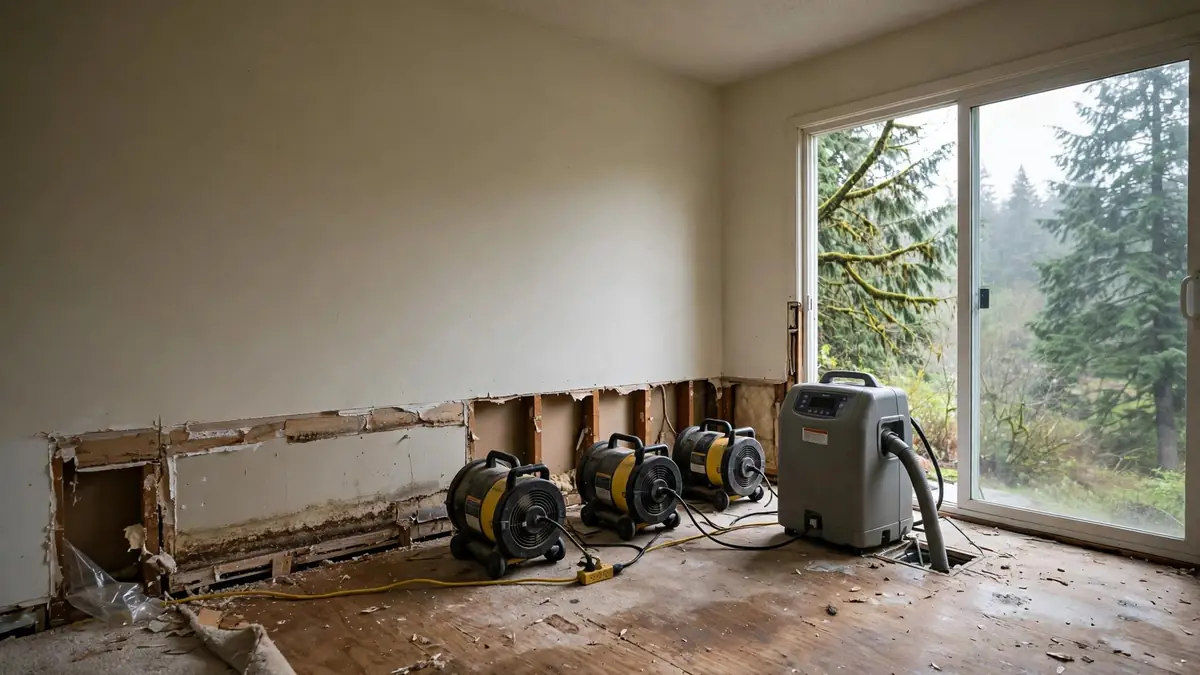
Older brick buildings also dry on their own terms. Masonry holds moisture and gives it up slowly, and thick walls may hide old pipes. Converted mill spaces may have exposed timber and old floors that react slowly to wetting. Ask your contractor how they will check these and how they will keep dust and noise from affecting neighbors.
Neighborhoods
Named Manchester areas and points to consider
The city's master plan defines 25 neighborhoods; these are general points, not surveys. [1]
| Area | Consideration |
|---|---|
| Amoskeag, Rimmon Heights | West Side homes above the river; check cellars and old lines |
| Piscataquog | Near the Piscataquog River; review flood maps |
| Hallsville, Bakersville | Older East Side housing; shared walls and cellars |
| Youngsville, Goffes Falls | Outer neighborhoods; more single-family homes |
How it usually runs
A typical job in a Manchester building
- 1
Stop and notify
Close the valve and alert your association, landlord or neighbors.
- 2
Trace the path
Meters follow water through floors and walls, including next door if allowed.
- 3
Extract and open
Remove standing water and open wet cavities if required.
- 4
Check old materials
Lead paint and asbestos are possible in older buildings. [4] [5]
- 5
Dry and record
Readings for each unit help separate claims.
Permits
City offices and permits
Manchester has its own city government, so repairs inside city limits go through city offices. Ask whether a permit is needed for anything beyond replacing finishes. Historic buildings or those in river flood zones may involve added review.
Nearby
Areas near Manchester
2006 and 1936
What two Merrimack floods say about the city
In May 2006 the Merrimack caused the most serious flooding in the state, reaching 10 feet above flood stage in Manchester, with dozens of homes flooded and electricity cut along several sections of the river. [2] Seventy years earlier, the 1936 flood had destroyed the McGregor Bridge and damaged mills and buildings. [1] Neither event needs to repeat exactly for the lesson to hold: low ground along the river and its tributaries can flood fast, and power can go with it.
Cohas Brook and the Piscataquog bring local variations. [1] A home near a tributary may be affected by rain that does not move the Merrimack much. In 2006 the Piscataquog was also gauged at the Goffstown dam, upstream of the city. [2] If you live along it, keep an eye on that river as well as the larger one, and find out where your property stands on official flood maps.
Rain and temperature
Manchester's climate and what it does to buildings
Manchester averages about 40 inches of precipitation over roughly 130 days a year, with a January mean of 25.6°F and a July mean of 73.8°F. [1] Those swings work on masonry, roof flashing and old window frames. Each cycle of freezing and thawing can open small gaps in mortar, and these then let in water during the next rain. Inside, you may see this as damp plaster along a brick wall, peeling paint under a window or a persistent stain with no plumbing nearby.
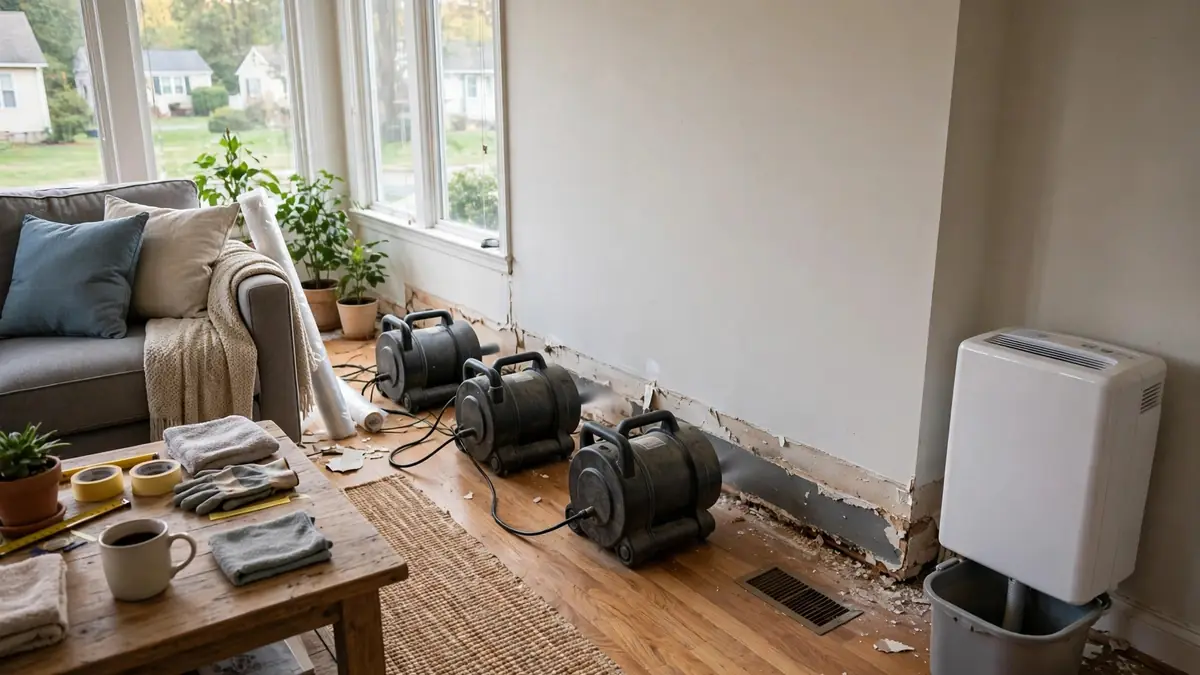
Summer humidity brings another issue. With 26 to 30 days at or above 90°F in a typical year, [1] warm wet air meets cold cellar walls and pipes, and water drips with no leak involved. Ask for humidity readings before assuming that a damp cellar in July is a plumbing fault. A dehumidifier with a drain hose, kept running through the warm months, often does more than repair work would.
Mill conversions
Water in converted Millyard apartments
Brady Sullivan opened its first Millyard apartments in 2013, and other mill buildings hold offices and campus space. [1] Big open floors, heavy timber, brick and modern sprinkler systems make these buildings quite different from a house. A failed sprinkler head or supply line can spread over a large area in minutes and pass down through floorboards to the unit below. Tenants should report leaks to building management at once, since management controls the shutoffs.
As a tenant or owner, your own job is your belongings and your records. Take photos, move items to dry ground and check whether renters or condo insurance applies. Thick timber and masonry dry slowly, so expect equipment to stay for a while. Building managers will normally choose the contractor for common areas, but you can still ask for moisture readings that affect your own space.
Tenements
Checks for older multi-family houses
Common points in the city's older three-deckers and tenement blocks.
- Stacked bathroomsBathrooms placed above each other share chases, so a leak on the top floor can show up two floors down.
- Shared cellarsOne tenant's stored items may be on the floor beside another's, so everyone needs to know about water.
- Back porchesEnclosed rear stairs and porches can hold plumbing with little insulation, a known freezing spot.
- Old shutoffsEach unit may lack its own valve, so someone must know where the building's main is.
- Lead paintCommon in pre-1978 housing, so tell the contractor about any children in the building. [4]
Drainage
Street flooding and older sewer lines
In older parts of cities, combined sewers can carry both stormwater and sewage. [6] When heavy rain overloads a system like this, a floor drain in a low cellar can back up. Water coming up through a drain should be treated as contaminated and handled through the sewage backup process. Contact the city's public works department if you suspect the main is involved, and keep notes on the date and time.
Check also where your downspouts discharge. In a dense neighborhood, roof water sent onto a narrow side yard may end up against your foundation or your neighbor's. Extending a downspout or fixing a low spot in the side yard can do as much for a damp cellar as anything inside. Ask the city before connecting anything to a storm drain or sewer line.
Compare
Single homes and multi-unit buildings in Manchester
Why the same leak plays out differently.
| Question | Single-family house | Multi-unit building |
|---|---|---|
| Who chooses the contractor | You | Owner, association or you, depending on the area |
| Who gets notified | Your insurer | Insurer, association, neighbors, landlord |
| Where to shut off water | Your main | Unit valve or building main |
| Drying logistics | Your circuits and schedule | Shared access and noise rules |
FAQ
Questions from Manchester
The leak came from upstairs. Whose insurance applies?
It depends on the building documents and the cause. Tell your own insurer and the association or landlord, and keep records.
Can old brick walls be dried?
Usually yes, though slowly. The priority is protecting wood and finishes touching the masonry.
Is my street in a flood zone?
Check FEMA's official maps. Flooding can happen outside mapped zones too.
Can the contractor work around neighbors?
Ask about noise and access, since equipment often runs continuously.
How cold do pipes need to get?
It varies with exposure. Read the frozen pipes guide for what to watch.
Nearby
More around Manchester
Back to all of New Hampshire. Nearby pages: Concord, Keene, Laconia, Lebanon and Hanover, Nashua, Portsmouth.
Related help for Manchester: water extraction, structural drying, sewage backup cleanup, fire damage restoration and smoke damage cleanup. First time dealing with this? Read the first hours after water damage.