Key facts: Lebanon and Hanover
- Lebanon averages 72.1 inches of snow a year, with a record low of −34°F [1].
- Hanover's record low is −40°F, set in February 1943 [2].
- The Connecticut River forms Lebanon's western boundary and the Vermont state line [1].
- The July 2023 storms saw major waterways, including the Connecticut, overflow, and a federal disaster was declared for New Hampshire [3].
Two towns
Lebanon on the rivers, Hanover on the plain
Lebanon's early settlement clustered along the Connecticut in what is now West Lebanon, and downtown lies about 3 miles east along the Mascoma River, where a mill district grew at the falls. [1] A home's distance from either river matters, so check official flood maps. Hanover's original center, the Plain, sits around 150 feet above the Connecticut, [2] while other parts of town, such as Etna, are rural.
July 2023 storms flooded waterways in the region, and a federal disaster declaration followed for New Hampshire. [3] Hillside rain can move quickly into brooks, and road washouts can complicate access, so describe your road when you call.
Cold
Serious cold and serious snow
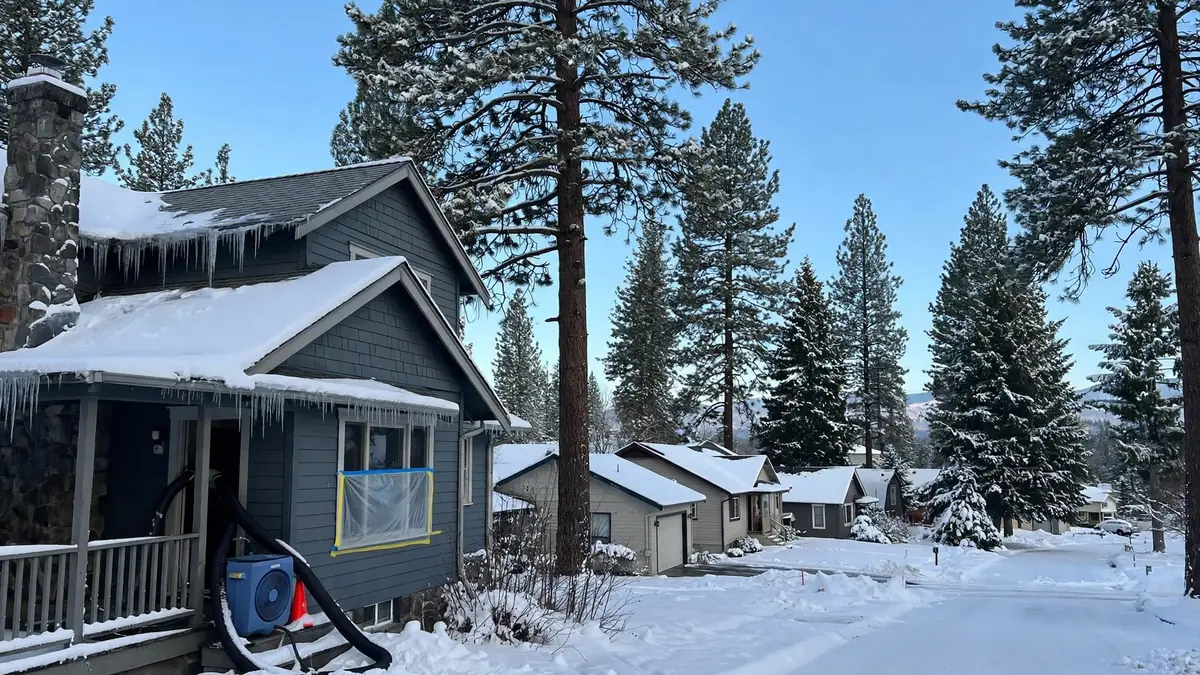
Lebanon's coldest recorded temperature is −34°F and Hanover's is −40°F. [1] [2] Snow averages 72.1 inches in Lebanon and 60.6 inches in Hanover. [1] [2] That means long ice dam seasons and deep frost, so exposed pipes in ells, porches and old cellars are at real risk. See burst pipe water damage.
Drying also has to respect the weather. Ventilating a wet house at these temperatures risks freezing other lines. A contractor should explain how heat and airflow will be managed while protecting plumbing.
Common situations
Water damage typical in the Upper Valley
General patterns.
Burst lines in deep cold
Very low temperatures expose weak spots in older houses.
Read moreIce dams
Heavy snow and heat loss cause eave leaks.
Rental housing leaks
Owners and tenants need a clear reporting plan.
Read moreSpring and storm cellars
Saturated valley ground can push water in.
Read more
Buildings
Mill-district Lebanon and college-town Hanover
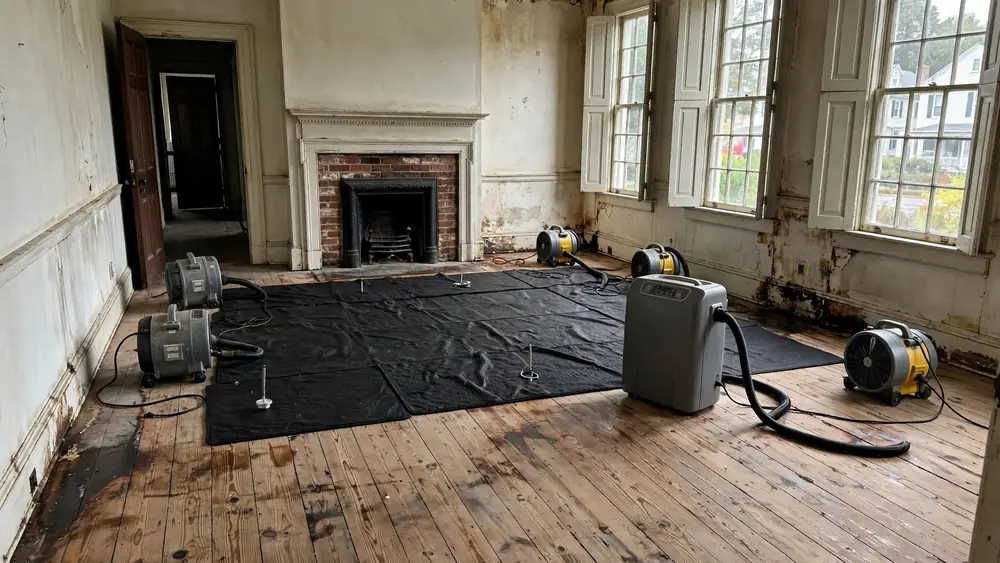
Lebanon's mill district declined in the 1950s and 1960s, and a 1964 fire destroyed a large part of it, leading to urban renewal. [1] The Colburn Park Historic District, listed on the National Register in 1986, sits at the city's center. [1] Older buildings may need the kinds of checks described in our wet drywall guide.
Hanover is home to Dartmouth College, established in 1769. [2] Rental houses and apartments near campus raise the same questions as elsewhere about who reports what, and college-owned property will have its own process. Long breaks can leave homes unattended, so plan for winter checks.
Compare
Lebanon and Hanover compared
From public reference figures.
| Detail | Lebanon | Hanover |
|---|---|---|
| Average snowfall | 72.1 inches | 60.6 inches |
| Record low | −34°F | −40°F |
| Precipitation | 38.07 inches | 40.15 inches |
| Main water | Connecticut, Mascoma | Connecticut |
How it usually runs
A deep-winter leak in the Upper Valley
- 1
Close the main
Then check whether heat is still safe to run.
- 2
Protect other lines
Keep the house warm while the leak is dealt with.
- 3
Extract
Remove water before it freezes on cold floors.
- 4
Dry
Control ventilation and use dehumidifiers with care.
- 5
Follow up
Check other exposed lines before the next cold snap.
Permits
Local offices
Lebanon is a city and Hanover is a town, each with its own offices. Claremont and other nearby towns on the coverage list also have their own. Confirm permit needs before major repairs, particularly in flood zones or historic districts.
Nearby
Areas near Lebanon and Hanover
West Lebanon
West Lebanon's rail town and river plain
West Lebanon grew into a railroad hub on the Connecticut River, with its own identity and its own ZIP code, 03784. [1] A major shopping district stands at the Route 12A and I-89 junction, just south of the village. [1] Older homes in the village date from the railroad years, and low-lying land near the river should be checked against official flood maps. Commercial buildings around Route 12A have flat roofs, on which snow load and drain blockages are the most common water concerns.
Flat and low-slope roofs need particular attention in this much snow. Drains can freeze or clog, water ponds behind snow, and leaks then show up far from the roof's weak spot. Keeping the drains clear and having snow removed by a qualified crew helps. For a business, water on the sales floor may also affect stock and fixtures. Keep an inventory, photograph everything first and ask your insurer about business interruption coverage.
Downtown Lebanon
The Mascoma, the mills and the Mall
Downtown grew around falls on the Mascoma, where furniture mills, a tannery, machine shops, a woolen mill and a clothing factory all operated at one time. [1] Fires, including one in 1964 that destroyed much of the old mill district, led to an urban renewal project with a closed-off district called The Mall. [1] As a result, downtown mixes 19th-century survivors with later buildings, and old foundations may lie beneath newer structures.
Former industrial land can mean old drains and fill that may not behave as expected when water rises. If you own a building near the river, ask what lies below. The Colburn Park area, a National Register district since 1986, [1] also has older buildings where repairs should be handled with care. City Hall houses the Lebanon Opera House, [1] showing how long-standing public buildings often have several uses at once, and each of those uses matters when water gets in.
Hanover and Etna
The Plain, the college and the rural parts of town
Dartmouth's original site on the Plain sits about a mile from the river and 150 feet above it, [2] so central Hanover is largely safe from river flooding. Its water concerns are mainly snow, old buildings and plumbing. Hanover Water Company is 52.8 percent owned by the college and 47.2 percent by the town, [2] so if you are in the service area, questions about mains and shutoffs may go there.
Etna and Hanover Center are smaller villages within the town limits. [2] Rural homes there may be on private wells and septic systems, with long driveways and hillside brooks. Washouts can complicate access in big storms, so describe your road clearly on the call. Average extreme snow depth is 17.8 inches, [2] and snow may hide a septic cover or a discharge line, which helps to mark before winter arrives.
Upper Valley winters
Ways the climate affects a job here
Public climate figures, and what they imply.
- Record lows of −34°F and −40°FExposed plumbing faces real danger, so insulate and keep steady heat. [1] [2]
- About 72 inches of snow in LebanonRoofs and eaves need attention, and ice dams are a common source of leaks. [1]
- About 38 to 40 inches of precipitationSomewhat lower than parts of southern New Hampshire, [1] [2] but it often falls as snow, which melts all at once.
- Warm summersLebanon's record of 100°F [1] shows why cellars can see condensation during muggy spells.
Connecticut River
Living by the state line
The Connecticut forms Lebanon's western boundary and the state line, and both Lebanon and Hanover lie wholly within its watershed. [1] [2] In July 2023, heavy storms flooded major waterways in the region, and a federal disaster covering July 9 to 17 was later declared for New Hampshire. [3] Rain that falls in Vermont also reaches this river, so your forecast should take in more than your own town.
People who live near the river also cross state lines for work and services. Keep in mind that this site's coverage is by New Hampshire ZIP code, and that insurance rules and contractor requirements differ between the two states. If you own property on both sides, deal with each separately. Your insurer can explain, and the New Hampshire Insurance Department answers questions for New Hampshire policyholders. [4]
Compare
Where in the Upper Valley you live and what to watch
General guidance only.
| Location | Watch for | Read |
|---|---|---|
| West Lebanon near the river | River flooding and old cellars | Flooded basement cleanup |
| Downtown Lebanon | Mascoma high water, older buildings | Structural drying |
| The Plain in Hanover | Rental leaks, ice dams | Ice dam water damage |
| Etna and rural hills | Frozen pipes, wells, septic | Frozen pipes guide |
FAQ
Questions from the Upper Valley
Can a pipe freeze in a heated house?
Yes, especially in exterior walls and drafty corners at extreme temperatures.
How do I protect a home during a long break?
Keep steady heat, use a freeze alert and have someone check it, or winterize it.
Does Vermont fall under this service?
This site covers listed New Hampshire ZIP codes. Ask on the call if you are unsure.
My road washed out. Can anyone reach me?
Tell the contractor about access. No timing can be promised on this site.
Do I need flood insurance on a hill?
Risk is lower but not zero, and runoff can still reach homes. Talk with your agent.
Nearby
More around Lebanon and Hanover
Back to all of New Hampshire. Nearby pages: Concord, Keene, Laconia, Manchester, Nashua, Portsmouth.
Related help for Lebanon and Hanover: water extraction, structural drying, sewage backup cleanup, fire damage restoration and smoke damage cleanup. First time dealing with this? Read the first hours after water damage.