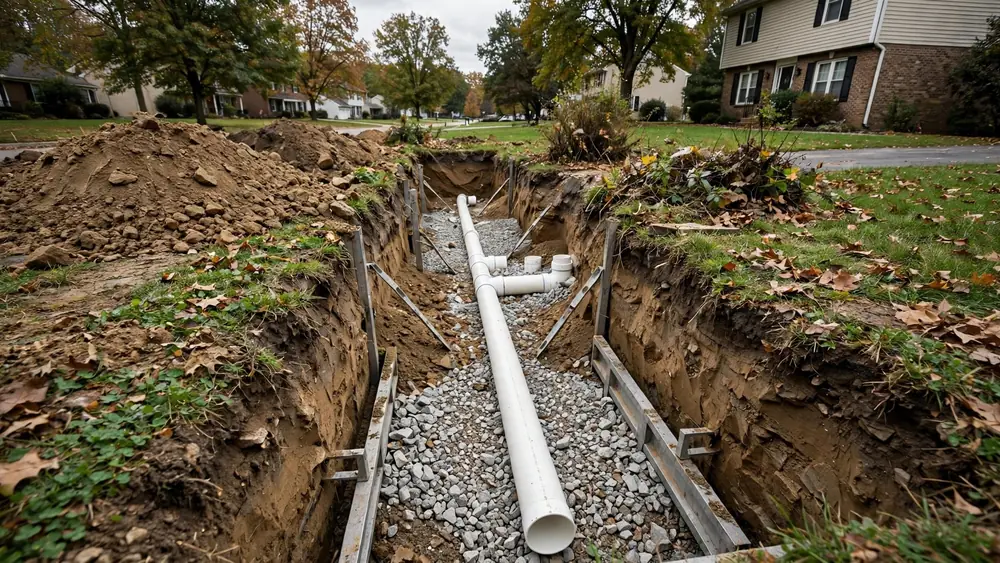
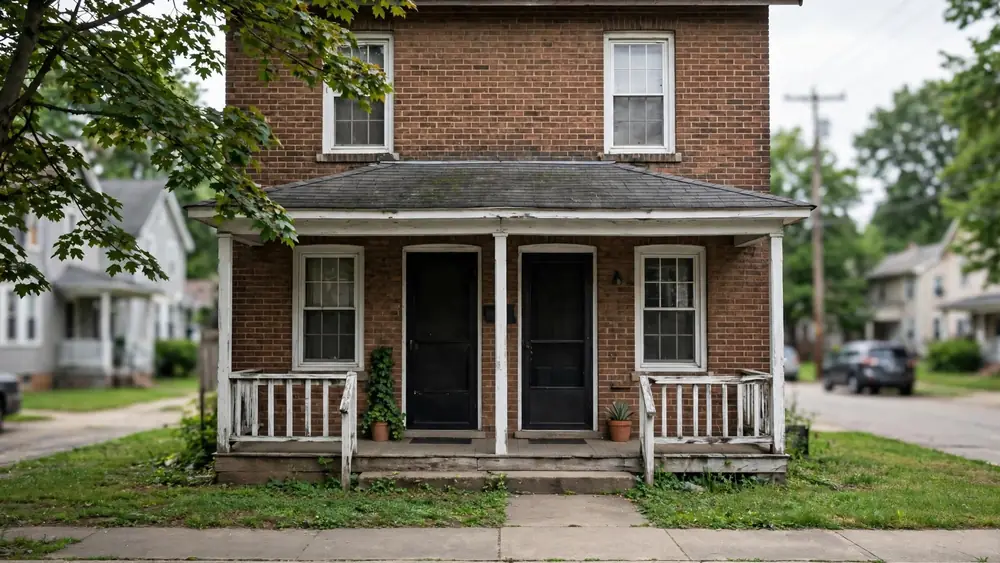
Key facts: West End
- West End was annexed by Atlanta in 1894 after growing as a streetcar suburb from the 1870s [1].
- Its houses include Queen Anne, Stick, Folk Victorian, Craftsman bungalow, foursquare and Colonial Revival styles [1].
- West End's historic district joined the National Register in 1999 and was the first one Atlanta designated locally [1].
- Houses of these eras were typically connected with clay laterals, prone to root intrusion and cracked joints [2].
Coverage
West End and nearby streets covered
West End is in ZIP code 30310, which this service covers. Neighbouring streets in the same ZIP share many of the same conditions; call to confirm your address.
- West End historic coreThe streets around Gordon Street (now Ralph David Abernathy Boulevard) and the Wren's Nest [1].
- Toward WestviewResidential blocks on the western side of the neighborhood [1].
- Toward Adair ParkStreets on the eastern side near the BeltLine Westside Trail [1].
- Toward Oakland CitySouthern blocks; confirm your ZIP when you call [1].
Overview
One of Atlanta's oldest neighborhoods, on some of its oldest laterals
West End began as a crossroads, with an inn and tavern opened around 1830 at what became known as Whitehall, and the area was renamed West End in 1867 [1]. In 1871, a horse-drawn streetcar line connected it to Five Points, and in the 1880s wealthy Atlantans built estates there. The City of Atlanta annexed West End in 1894, and by 1930 it had more than 22,000 residents [1].
The houses from those decades cover a wide range of styles: Queen Anne, Stick style, Folk Victorian, Craftsman bungalows, American foursquares, Colonial Revival and Neoclassical Revival [1]. That variety means a wide range of plumbing layouts, from large Victorian houses with many later additions to simple bungalows with short, direct laterals.
What most of them share is age. A house built in the 1890s or 1910s was connected with the materials of its day, typically clay outside and iron inside. Some laterals have been replaced; many have not. Roots, cracked and offset joints, sags where old trenches settled and scaled iron drains are the everyday findings.
The neighborhood was reshaped in the mid-twentieth century by Interstate 20 and a mall completed in 1973, which closed in January 2025 to make way for redevelopment, and more recently by the BeltLine and new projects nearby [1]. Construction and renovation are again common, which brings new plumbing into contact with very old pipe.
Common calls
What contractors see most in West End
Roots in old clay laterals
Clay lines under mature yard and street trees, with roots at many joints.
Converted Victorian houses
Large houses divided into apartments, with several households on one original lateral.
Iron drains under raised floors
Corroded and scaled cast iron in crawl spaces and basements.
Restoration plumbing on old pipe
Restored houses with new bathrooms and kitchens tied into original drains.
Vacant-period damage
Houses that stood empty for years, where lines dried out, roots grew unchecked or pipe was disturbed.
Redevelopment nearby
Construction close to older lines, sometimes disturbing laterals on neighbouring lots.
Housing
Victorian houses, bungalows and their plumbing
West End's larger Victorian houses, the Queen Anne and Stick-style homes built for the neighborhood's prosperous early residents, often have the most complicated plumbing. Bathrooms were added as indoor plumbing became standard, then moved and multiplied, and many of these houses were later divided into apartments. Each change tended to connect to the same building drain and lateral.
Folk Victorian cottages and shotgun-style houses are simpler: a raised floor, a short drain underneath, and a clay lateral to the street. Craftsman bungalows and foursquares from the early 1900s follow the same pattern with slightly later materials.
On camera, West End laterals often show their history: iron changing to clay, a repaired section in newer pipe, connections at odd angles where an addition was tied in, and roots wherever a joint has loosened. Locating the line from the surface matters, because sewers on older lots do not always run straight to the street.
By house type
West End house types and their laterals
| House type | Typical lateral | Problems to expect |
|---|---|---|
| 1880s–1900s Queen Anne or Stick-style house | Iron drain with additions, clay lateral | Patched sections, roots, odd connections |
| Victorian divided into apartments | One lateral for several units | Overloading, grease, lowest-unit backups |
| Folk Victorian cottage | Short iron drain, clay lateral | Roots at joints near the street |
| Early-1900s bungalow or foursquare | Iron drain, clay lateral | Roots, scaled iron, settled sections |
| Restored or rebuilt house | New plumbing to an older connection | Old section near the street |
Historic district
The city's earliest locally protected historic district
West End's historic district joined the National Register in 1999, and it was the first district the City of Atlanta protected under its own historic preservation rules [1]. Local designation means exterior changes visible from the street are subject to the city's historic review.
Buried sewer repairs are not usually the focus of that review. Restoring the surface afterwards can be, if it changes walls, steps, walkways, fences or other features. Before a repair that will disturb visible features, ask the contractor how they will protect and rebuild them, and check with the city whether any review applies to the restoration.
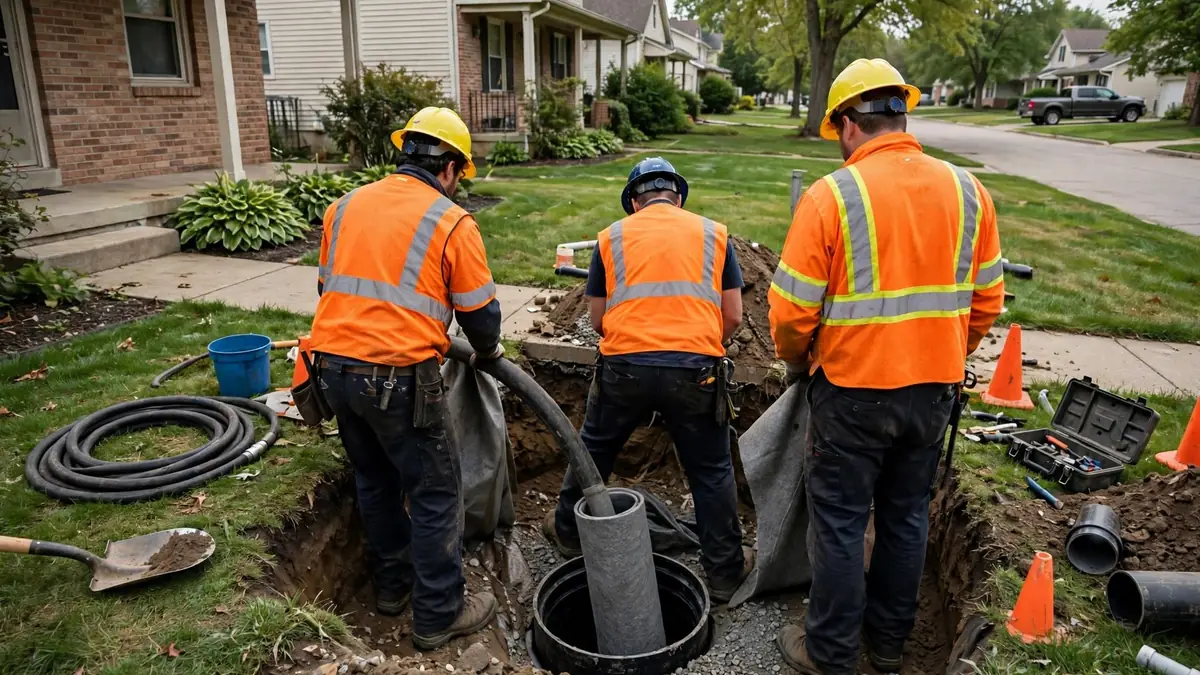
This is one reason trenchless sewer repair is worth asking about here. Lining from a cleanout, or bursting a new pipe through the old one from small pits, can leave historic front yards almost untouched.
The Wren's Nest
Around the Wren's Nest and Abernathy Boulevard
The Wren's Nest, home of author Joel Chandler Harris, is West End's best-known landmark [3]. The streets around it, and along the commercial corridor that began as Gordon Street, have some of the neighborhood's oldest houses and some of its busiest traffic [1].
For sewer work, busy streets mean planning: where a truck can park, whether a pit near the curb will block a lane, and what time of day is quietest. Mention your street when you call so the contractor can plan access.
Trees
Mature trees over West End laterals
Atlanta's canopy is among the densest of any large U.S. city [4], and West End's older blocks have large oaks and other hardwoods in front yards and along streets. Their roots find the loosened joints in clay laterals and grow into the pipe [2].
Where houses stood vacant for a time, roots may have grown unchecked in the lateral for years. Lines in recently restored houses sometimes block soon after the house is occupied again, simply because no one had used or cleared the pipe in a long time.
Clearing roots restores flow; sealing or replacing the affected joints keeps them out. The tree can usually stay.
Warning signs
Sewer warning signs in a West End house
- The lowest unit in a converted house backing up first
- Gurgling toilets when other fixtures drain
- Sewer odour under the raised floor or around the porch
- Slow drains everywhere after a stretch of rain
- A recently restored house whose drains slow soon after move-in
- Damp or sunken ground over the route to the street
History
The city's sewer programmes and West End laterals
The City of Atlanta spent years under federal consent decrees to reduce sewer overflows, separating parts of its combined sewer system, building storage tunnels and repairing sanitary sewers. It completed the combined-sewer work by 2009, and the deadline for remaining sanitary sewer repairs was extended to 2027 [5].
That work improved the public system. It did not replace private laterals, which is why so many West End houses still use original or partly original lines. If a contractor finds your lateral clear and the problem in the public sewer, the city's Department of Watershed Management handles it, and may send a crew to check which side of the connection a problem is on.
Redevelopment
Redevelopment, the BeltLine and old pipe
West End has seen renewed investment in recent years, including the Lee + White development, the BeltLine Westside Trail and the planned redevelopment of the former mall site [1][6]. New construction brings new utilities, heavy equipment and new driveways near older houses.
Construction near an old clay lateral can crack or shift it, particularly where the lateral runs close to a property line. If problems began during or after nearby work, mention it when you call. A camera inspection can show whether damage looks recent.
Restored houses also bring new plumbing into old systems. A complete restoration is the ideal time to inspect the lateral, add an exterior cleanout and decide whether to line or replace the line while the property is already under construction.
The visit
How a West End sewer call usually unfolds
- 1
Tell the contractor about the building
Say whether it is a single-family home or divided into units, how old it is, whether it was recently restored and what the drains are doing.
- 2
Find access
Look for an exterior cleanout; older houses may need access through a crawl space fitting or a toilet.
- 3
Open the line for the camera
Roots or debris are cut or jetted so the line drains and the camera can see.
- 4
Inspect to the main
A camera inspection records the full lateral, including any old section near the street.
- 5
Locate the route
The camera head is traced from above, important on older lots where the sewer may not run straight.
- 6
Discuss options with the surface in mind
The contractor explains maintenance, spot repair, lining or replacement and how each affects historic features.
Options
Repair choices for West End conditions
| Situation | Approach often considered | Why |
|---|---|---|
| Roots at many joints, round pipe | Pipe lining | Covers every joint without opening the historic yard |
| Line under historic steps or walls | Lining or pipe bursting | Avoids disturbing visible features |
| Single broken joint in open yard | Spot repair | One small excavation |
| Converted house with heavy use | Inspection, then lining or replacement | Line must carry several units |
| Problem in the public main | Report to the city | Public side is the utility's |
Digging safely
Utility locating on West End lots
Before any digging, utility lines must be marked through Georgia 811, a free service the contractor normally contacts in advance [8]. Old lots can have gas services, water lines, communication cables and abandoned pipes near the sewer route.
Private lines, such as irrigation or a feed to an outbuilding, are not marked by 811. Point them out if you know where they run.
Prevention
Keeping a West End lateral working
- Where the house holds several apartments, agree house rules on grease, wipes and paper towels with every tenant.
- Add an exterior cleanout during the next repair or restoration.
- Have the line inspected before reoccupying a house that stood empty.
- Keep a log of root clearings and camera findings.
- Keep downspouts out of the sewer.
- Keep the camera recordings for future owners and contractors.
- If the line runs to a rear alley or easement, keep access to that area clear for future inspection.
Repair or replace
Repair or replace an old West End lateral?
A clay lateral that is still round and graded can often be cleared and lined, keeping the surface untouched. A lateral with several collapses, sags or badly damaged sections usually needs sewer line replacement, ideally by a method that respects the historic yard.
Ask the contractor to show you the footage behind the recommendation and explain how each option would treat your walls, steps and trees.
Buying here
Buying or restoring a West End house
Many West End buyers are restoring older houses. A sewer camera inspection before closing tells you whether the lateral is original, what it is made of and what condition it is in, which can change a restoration plan considerably.
If you are buying a house that has already been restored, ask whether the lateral was inspected or replaced during the work, and ask for any footage or paperwork.
Vacant houses
Bringing a long-empty West End house back into use
Some West End houses stood empty for years before being restored. An unused sewer line does not rest quietly. Traps dry out and let sewer gas into the house, roots grow without the scouring effect of regular flow, and debris or animals can enter through broken cleanouts or vents.
Before move-in, have the lateral cleared and inspected, fill every trap with water, and check that vents are open. Doing that first avoids the common pattern of a freshly restored house backing up within weeks of being occupied.
Streetcar roots
How the streetcar shaped West End's sewer routes
West End grew along a horse-drawn streetcar line that opened in 1871 and connected the area to Five Points [1]. Houses went up along and near that route first, and the street grid filled in around it over the following decades. The oldest laterals are therefore concentrated near the original corridor, where houses have had the longest time to accumulate repairs, additions and roots.
Lots laid out at different times have slightly different patterns. Some early lots are deep, with houses set back from the street and long laterals; later lots are narrower, with houses closer to the sidewalk and shorter runs. A long lateral has more joints and more chance of a sag; a short one is easier to inspect but often sits right under a street tree.
Either way, locating the line from the surface is worthwhile. On some West End lots the sewer runs to a main in a rear alley or easement rather than the front street.
Soil
West End's clay soil and settled trenches
Like the rest of the Atlanta Piedmont, West End sits on dense red clay subsoil that holds moisture and compacts poorly once disturbed [9]. Laterals that were dug up and repaired decades ago often sit in trenches that were not compacted well when they were backfilled. Over the years those trenches settle, and the pipe settles with them, leaving a low spot that collects debris. On camera, a settled section shows as water standing in the pipe. Correcting it means digging at that spot and re-bedding the pipe at the right slope.
FAQ
Sewer questions from West End homeowners
Who runs the public sewer in West End?
West End is inside the City of Atlanta, so the public sewer is run by the city's Department of Watershed Management. The private lateral is generally the owner's responsibility.
Does West End's historic designation affect sewer repairs?
Buried repairs are not usually what historic review focuses on, but restoring visible features afterwards can be. Ask the contractor and the city if walls, steps or walks will change.
Why does the bottom apartment in my house back up first?
The lowest drains are where wastewater rises when a shared lateral is blocked. The cause is usually in the line, not that unit.
My restored house started backing up after move-in. Why?
Lines in houses that stood empty often fill with roots or debris. Clearing and inspecting the lateral usually reveals the cause.
Can a sewer line be replaced without disturbing a historic front yard?
Often. Lining and pipe bursting work from small pits that can be placed away from walls, walks and steps.
Did BeltLine or redevelopment work affect my sewer?
Usually not directly, but construction close to an old lateral can damage it. Mention any nearby work when you call.
Should I inspect the sewer before buying in West End?
For an older house it is a sensible step, since home inspections usually do not look inside the lateral.
What should I do before reoccupying a vacant house?
Have the lateral cleared and inspected, refill all traps with water and check the vents before moving in.
Does my West End sewer line run to the street or an alley?
It depends on the lot. Some older West End lots drain to a main in a rear alley or easement. Tracing the camera head from the surface shows exactly where your line goes.
Why does water stand in part of my sewer line on camera?
Standing water usually marks a sag, often where an old repair trench settled in the clay soil. Debris collects there, so the low spot is dug up and re-bedded at the correct slope.
Nearby
More around West End
Back to all of Atlanta. Nearby pages: Brookhaven, Buckhead, East Atlanta, Grant Park, Inman Park & Candler Park, Kirkwood, Virginia-Highland & Morningside.
Related help for West End: water extraction, structural drying, sewage backup cleanup, fire damage restoration and smoke damage cleanup. First time dealing with this? Read the first hours after water damage.
Sources and citations
- [1]Wikipedia — West End, Atlanta
- [2]Wikipedia — Vitrified clay pipe
- [3]Wikipedia — Wren's Nest
- [4]Wikipedia — Atlanta tree canopy
- [5]U.S. EPA — Atlanta sewer consent decree modification (May 2012 news release)
- [6]Wikipedia — Atlanta BeltLine
- [7]Virginia Department of Health — Sewage backup fact sheet
- [8]Georgia 811 — How it works
- [9]Wikipedia — Cecil (soil)