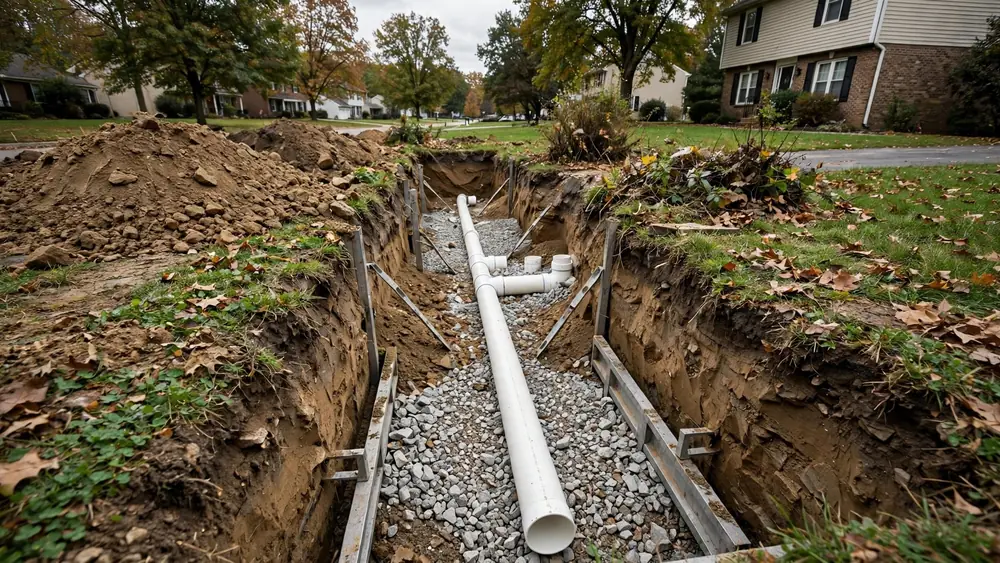
Key facts: Kirkwood
- Residential development in Kirkwood began in the 1870s, and the former City of Kirkwood was annexed by Atlanta between 1922 and 1924 [1].
- The Craftsman bungalow is Kirkwood's most prominent house style; infill homes in traditional styles have been built since the mid-1990s [1].
- Kirkwood's historic district earned National Register status in 2009 [1].
- Kirkwood lies entirely in DeKalb County but inside Atlanta's city limits [1].
Coverage
Where this Kirkwood page applies
Kirkwood is in ZIP code 30317, which is covered by this service. Neighbouring areas in the same ZIP share many of the same conditions; call if you are unsure about your address.
- KirkwoodBetween DeKalb Avenue to the north, Memorial Drive and I-20 to the south, Montgomery Street to the west and 1st Avenue to the east [1].
- Edgewood edgesNeighbouring streets to the west with a similar mix of older homes and infill [1].
- Toward Oakhurst and East LakeAdjacent streets to the east; confirm your ZIP when you call [1].
- Lake Claire edgesStreets to the north across DeKalb Avenue in the same general housing pattern [1].
Overview
From streetcar town to bungalow neighborhood
Kirkwood's residential story begins in the 1870s, when it was described as an area of suburban villas along the rail line east of the city [1]. It became an early streetcar suburb and incorporated as its own town around the turn of the century, before a long, contested process brought it into the City of Atlanta between 1922 and 1924 [1].
Most of the neighborhood's character comes from the early twentieth century. The Craftsman bungalow is its most prominent house style, alongside Victorian houses from the earlier period [1]. From the mid-1990s onward, infill construction has added new single-family houses built in traditional styles on vacant and redeveloped lots [1].
For sewer lines, that history creates three groups of houses. The oldest have laterals that may date to the early 1900s or before, likely clay with cast iron inside. The bungalows have similar materials from a slightly later era. The infill houses have modern plastic pipe on the lot, but they often connect to the public sewer at the point where an older house once did.
Kirkwood is also a neighborhood of mature street trees and compact lots, which puts roots and laterals close together almost everywhere.
Common calls
What contractors see most in Kirkwood
Roots in bungalow laterals
Clay lines under front-yard and street trees, with roots at multiple joints.
New house, old connection
Infill homes with sound plastic pipe on the lot that meets an aging connection at the street.
Scaled cast iron in crawl spaces
Original iron drains under bungalows and Victorian houses, narrowed by corrosion.
Construction damage
Laterals cracked or shifted by heavy equipment during nearby building work.
Additions on original lines
Expanded bungalows with extra bathrooms feeding a lateral sized for a smaller house.
Mixed materials along one line
Laterals repaired in sections over the years, changing material several times.
Bungalows
Kirkwood's bungalows and their sewer lines
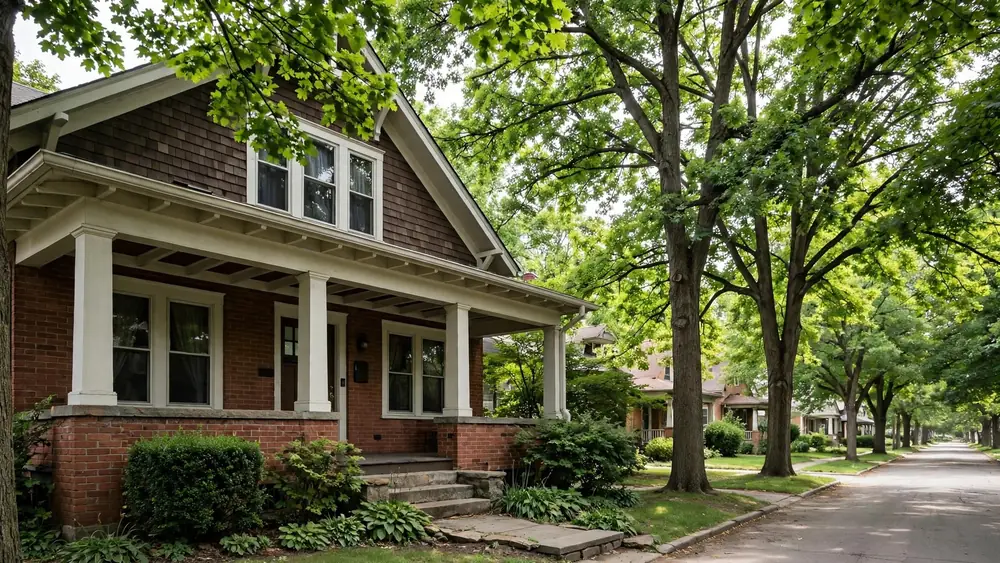
A typical Kirkwood bungalow sits on a raised foundation over a crawl space, with a porch facing the street and a front yard of modest depth. The building drain runs under the floor toward the street and leaves the house as the lateral. In houses of this era the drain inside is usually cast iron and the lateral outside is typically clay.
Clay laterals are made of short sections with a joint every few feet [2]. On a bungalow lot the run to the street is short, but it can still have a dozen or more joints, and every one is a potential entry point for roots.
Many Kirkwood bungalows have been expanded, with rear additions, second storeys or attic conversions, adding bathrooms that feed the same original line. A camera inspection before or after an expansion shows whether that line can cope.
Crawl space access in older bungalows is often tight, which affects how easily the building drain can be inspected or repaired from inside. Mention the crawl space access when you call.
Infill
Infill houses and the old connection problem
Kirkwood has seen steady infill construction since the mid-1990s [1]. A new house built on an old lot gets new plumbing from the building to some point on the property. What happens at the street end varies: in some cases the whole lateral was replaced to the public sewer; in others, the new pipe was connected to an older section or an existing tap.
This creates a pattern contractors recognise: a modern house with a clean plastic line that still backs up. The camera often shows the problem in the last few feet, where the new pipe meets an old clay section or a deteriorated connection at the main.
If you own a newer Kirkwood house and have sewer trouble, mention the age of the house when you call. Ask the contractor to follow the camera all the way to the public sewer, not just to the end of the plastic pipe.
By house type
Kirkwood house types and what is under them
| House type | Typical lateral | Problems to expect |
|---|---|---|
| Late 1800s or early 1900s Victorian | Iron inside, clay outside, often patched | Roots, cracked joints, odd connections |
| 1910s–1930s Craftsman bungalow | Iron drain, clay lateral | Roots at joints, scaled iron |
| Expanded bungalow | Original lateral, more fixtures | Overloading, slow drains |
| 1990s and later infill | Plastic on the lot | Old section or connection near the street |
| Recent rebuild on a cleared lot | Plastic, sometimes to the main | Construction damage, settling backfill |
County and city
DeKalb County land, City of Atlanta sewer
Kirkwood lies entirely in DeKalb County, but it is inside Atlanta's city limits [1]. For sewers, the city boundary is what matters. Inside the city, the public sewer is run by the City of Atlanta's Department of Watershed Management, not by DeKalb County's watershed department, which serves unincorporated DeKalb and some of its cities [3].
That distinction matters when a problem is found at or beyond the point where your lateral meets the public sewer. If the camera shows that your line is clear but the main is blocked or damaged, the city is the agency to contact. If you live close to the city line, the contractor can usually tell from the location of the main and the manholes which system serves your street.
Trees
Kirkwood's street trees and root intrusion
Atlanta's urban canopy is among the densest of any major U.S. city [4], and Kirkwood's older streets carry their share. Street trees, front-yard oaks and backyard hardwoods crowd around short laterals on compact lots.
Roots enter clay laterals at loosened joints and grow into mats that catch waste. In Kirkwood, symptoms often appear in the growing season and in wet spells, when the dense clay soil around the pipe stays damp [5].
Clearing roots restores flow but does not seal the openings. Lining the line or replacing the worst sections keeps the roots out while the tree stays. Removing a tree does not fix the pipe.
Warning signs
Kirkwood sewer warning signs
- Gurgling toilets when the shower or washing machine drains
- Several fixtures slowing at the same time
- A sewer smell in the crawl space or near the front of the house
- Water backing up in the lowest drain after heavy use
- Damp or sunken ground over the route to the street
- In a newer house, backups despite modern plumbing
History
Atlanta's sewer programmes and Kirkwood laterals
The City of Atlanta spent years under federal consent decrees to reduce sewer overflows. It separated parts of its combined sewer system, built storage tunnels and repaired sanitary sewers, completing the combined-sewer work by 2009 and receiving more time, to 2027, for remaining sanitary sewer repairs [6].
That work covered the public system. Private laterals were not part of it, so the original clay line under a Kirkwood bungalow may never have been touched. If a contractor finds the problem is on the public side, the city's Department of Watershed Management is the agency to contact; the city may send a crew to check where the problem lies.
Historic district
Sewer work in the Kirkwood Historic District
Kirkwood's historic district earned National Register status in 2009, with well over a thousand contributing buildings [1]. National Register listing generally recognises historic character rather than regulating buried utilities on private lots.
Owners still care about the surface: front walks, low walls, porches and mature trees. Where a lateral runs under those, trenchless sewer repair is worth discussing. Where digging is needed, agree with the contractor how features will be protected and restored.
The visit
How a Kirkwood sewer visit usually goes
- 1
Describe the house and its age
Tell the contractor whether it is an older house or newer infill, whether it has been expanded and what the drains are doing.
- 2
Find access
An exterior cleanout is ideal; older houses may need crawl space or toilet access.
- 3
Clear any blockage
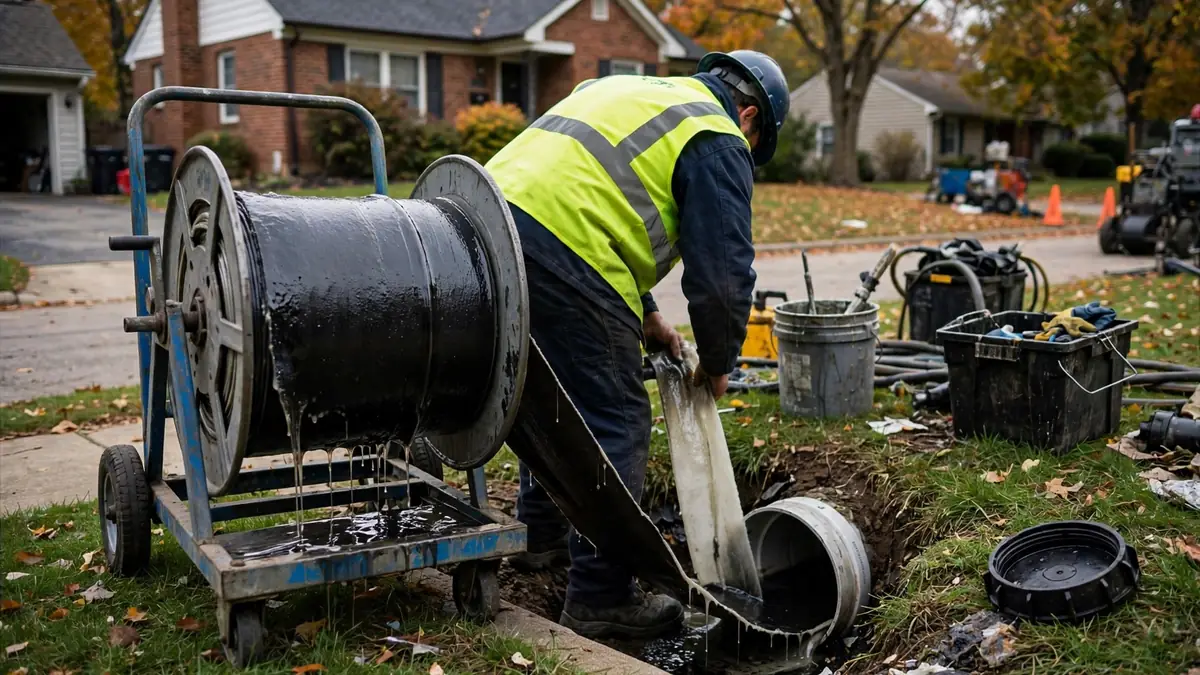
Any root mass or grease plug is cleared first, so wastewater drains away and the Kirkwood line can be filmed.
- 4
Inspect all the way to the main
A camera inspection should follow the line to the public sewer, including any old section at the street end.
- 5
Mark the route and defects
The camera head is traced from above so the location and depth of any problem are known.
- 6
Talk through the options
Maintenance, spot repair, lining or replacement are explained using the footage.
Options
Repair approaches for Kirkwood lines
| Finding | Approach often considered | Why |
|---|---|---|
| Roots at many joints in a round clay line | Pipe lining | Seals every joint at once |
| Old clay section beyond new plastic pipe | Spot repair or short replacement | Fixes only the failed part |
| Collapsed or deformed section | Excavation or pipe bursting | Liner needs a sound host |
| Settled backfill causing a sag | Excavate and re-bed | Restores the slope |
| Problem at the public connection | Contact the city | Public side is the utility's |
Digging safely
Utility locating before Kirkwood repairs
Any repair pit or trench must wait until underground utilities are marked. Georgia 811 is the free statewide locate service, and the contractor normally submits the request before digging [8]. On infill lots, new gas, water and communication services may run alongside an older sewer route.
Private lines, such as irrigation or a feed to a garage, are not marked by 811. Tell the contractor about them.
Prevention
Keeping a Kirkwood sewer line healthy
- Keep grease and wipes out of the drains.
- If the bungalow has no outdoor cleanout, plan one into the next repair.
- If roots are present, set a maintenance interval until the joints are sealed.
- Have the line checked before adding bathrooms or an accessory unit.
- Keep new trees off the sewer route.
- Keep camera footage and repair records with the house documents.
Repair or replace
Repair or replace a Kirkwood lateral?
An old clay lateral that is still round and well graded can often be lined, keeping it in service for many years. A lateral with collapsed sections, sags or deformed pipe usually needs sewer line replacement. On infill lots, the answer is often a targeted repair of the old section near the street rather than anything on the newer part of the line.
Ask the contractor to show you the footage that supports their recommendation, and to explain why other options would not work as well.
Buying here
Buying in Kirkwood: older house or infill
For an older Kirkwood house, a sewer camera inspection before closing shows whether the original lateral is still in service and what condition it is in. For a newer infill house, ask the seller whether the lateral was replaced all the way to the public sewer; if they do not know, the camera can answer it.
Either way, a general home inspection usually does not look inside the lateral, so the camera fills a real gap.
Construction nearby
When building work next door affects your sewer
Infill construction often happens right next to occupied older houses. Heavy equipment, new foundations and driveways, and trenching for new utilities can disturb old clay laterals on neighbouring lots, especially where lines run close to a side boundary. If your drains began to misbehave during or soon after building work nearby, mention it to the contractor.
A camera inspection can show whether the damage is recent, such as a fresh crack or a section pushed out of line, or long-standing. That record is useful if you need to discuss the problem with a neighbour or builder.
Victorian houses
Kirkwood's earliest houses and their drains
Before the bungalow era, Kirkwood was a place of suburban villas and Victorian houses along the rail line [1]. The survivors of that period are some of the oldest homes on the east side. Their plumbing usually arrived after the house was built, then changed several times as bathrooms were added, kitchens moved and porches enclosed.
On camera, these lines often tell a long story: an iron building drain with later branches cut in, a transition to clay outside the foundation, a patched section from a repair decades ago and, sometimes, a stretch of newer plastic where a previous owner fixed the worst spot. Each transition is a place where alignment can be off and roots can enter.
Because the layout of these houses is less predictable than a bungalow's, locating the line from the surface is especially useful. The sewer may leave the house at the side or rear rather than the front, and on corner lots it may run toward a side street.
Memorial Drive and I-20
Southern Kirkwood near Memorial Drive
Kirkwood's southern edge runs along Memorial Drive and Interstate 20 [1]. Houses on the blocks nearest those corridors tend to sit on lower ground than those toward DeKalb Avenue, and some streets were redeveloped earlier than others. Lot sizes, house ages and sewer routes vary more here than in the bungalow core.
Lower ground can mean shallower fall between the house and the public sewer, and on some lots the lateral runs a long way to reach a main. A camera with a locator gives the depth at each point, which tells the contractor whether a sag has developed and how any repair should be graded.
Accessory units
Adding an accessory unit or carriage house in Kirkwood
Garage apartments, carriage houses and other accessory dwellings are increasingly common on intown lots. A new unit at the back of a Kirkwood lot has to drain somewhere, and the simplest route is often into the existing house lateral. Before committing to that, have the existing line inspected. A clay lateral that just about copes with one household may not cope with two, and joining a new branch to an old line is a common source of problems if the old pipe is fragile.
If the inspection shows the lateral is in poor condition, it may make sense to replace or line it as part of the accessory unit project, while the yard is already being disturbed.
FAQ
Sewer questions from Kirkwood homeowners
Who runs the public sewer in Kirkwood if it is in DeKalb County?
Kirkwood is inside the City of Atlanta, so the city's Department of Watershed Management runs the public sewer. The private lateral is generally the owner's responsibility.
My Kirkwood house is new. Why does the sewer back up?
The new plumbing on the lot may connect to an older section or connection near the street. A camera inspection all the way to the main usually finds it.
Are roots the main sewer problem in Kirkwood?
In older houses, yes. Clay laterals under large street and yard trees commonly have roots at several joints.
Does the historic district affect sewer repairs?
Buried repairs are not usually what National Register listing regulates, but owners often want walks, walls and trees protected, which can favour trenchless methods.
Can construction next door damage my sewer line?
It can, especially if the lateral runs near the side boundary. A camera inspection shows whether the damage looks recent.
Should I add a cleanout to my bungalow?
If it has none, adding an exterior cleanout during a repair makes future inspection and clearing much easier.
Is it worth inspecting the sewer before buying in Kirkwood?
Yes for older houses, and also for infill homes where it is unclear whether the whole lateral was replaced.
Do I need 811 before a sewer repair?
The contractor doing the digging normally contacts Georgia 811 so public utility lines are marked before work starts.
Can my Kirkwood carriage house share the main house sewer line?
It often can, but the existing lateral should be inspected first. An old clay line that copes with one household may struggle with two, and tying a new branch into fragile pipe causes problems.
Why does the sewer leave my older Kirkwood house from the side?
Victorian-era houses and corner lots often had plumbing added later, routed to whichever side was most convenient. Tracing the camera from the surface shows where your line actually runs.
Nearby
More around Kirkwood
Back to all of Atlanta. Nearby pages: Brookhaven, Buckhead, East Atlanta, Grant Park, Inman Park & Candler Park, Virginia-Highland & Morningside, West End.
Related help for Kirkwood: water extraction, structural drying, sewage backup cleanup, fire damage restoration and smoke damage cleanup. First time dealing with this? Read the first hours after water damage.
Sources and citations
- [1]Wikipedia — Kirkwood, Atlanta
- [2]Wikipedia — Vitrified clay pipe
- [3]DeKalb County — Department of Watershed Management
- [4]Wikipedia — Atlanta tree canopy
- [5]Wikipedia — Cecil (soil)
- [6]U.S. EPA — Atlanta sewer consent decree modification (May 2012 news release)
- [7]Virginia Department of Health — Sewage backup fact sheet
- [8]Georgia 811 — How it works