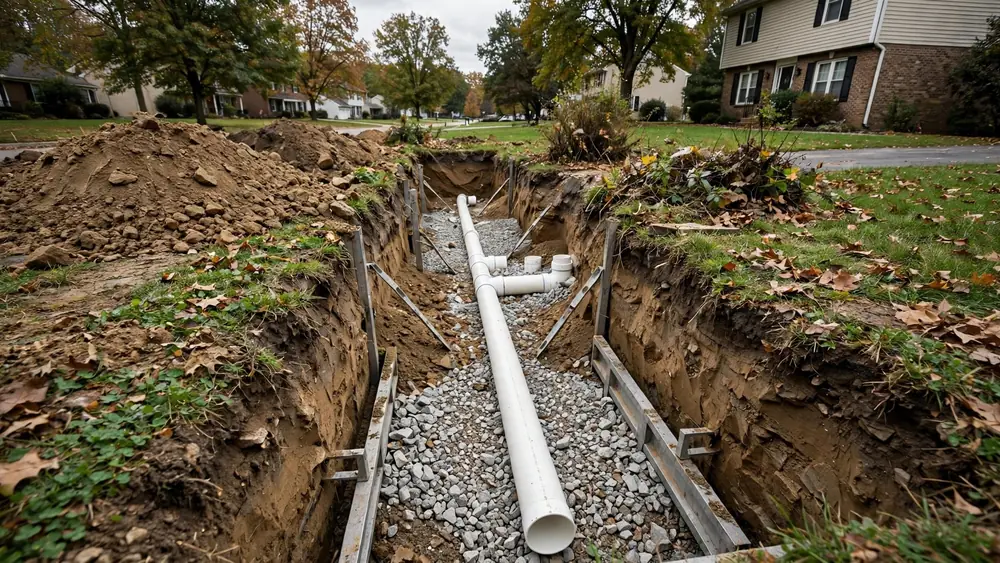
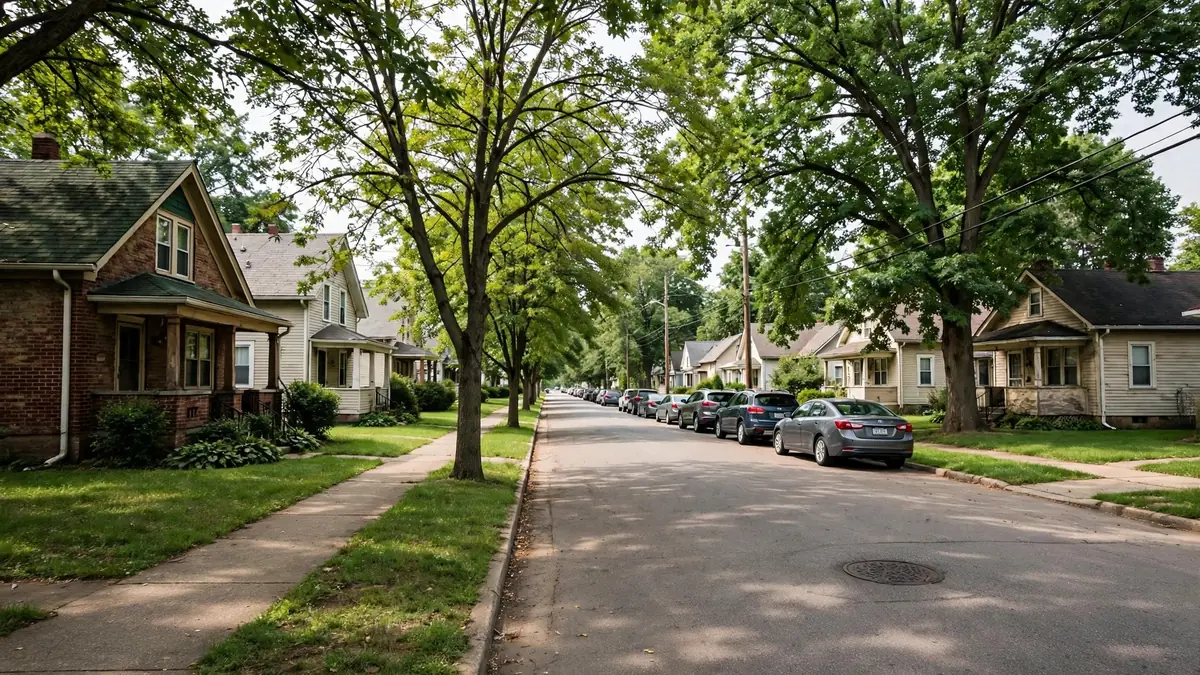
Key facts: East Atlanta
- East Atlanta joined the City of Atlanta through a series of votes after 1915; water and sewer service followed annexation [1].
- Early-1900s houses were built in the McPherson Park subdivision near the streetcar line; the neighborhood's centre was developed after World War II [1].
- Bituminized fibre (Orangeburg) pipe was used in some houses into the 1970s and tends to deform with age [2].
- East Atlanta lies entirely in DeKalb County, inside Atlanta's city limits [1].
Coverage
East Atlanta streets covered here
East Atlanta lies in ZIP code 30316, which is part of this service's coverage. If you live near the neighborhood's edges, call and the contractor will confirm whether they serve your address.
- East Atlanta Village areaResidential streets around the commercial district at the heart of the neighborhood [1].
- Older northern blocksEarly-1900s houses near the former McPherson Park subdivision and the old streetcar route [1].
- Post-war centreHouses built in the late 1940s and 1950s on land subdivided after the war [1].
- Edges toward Ormewood Park and unincorporated DeKalbNeighbouring streets; note that addresses outside the city limits may be on a different sewer system.
Overview
Two eras of housing, two kinds of sewer pipe
East Atlanta lies on the city's east side, entirely within DeKalb County, bordered by I-20, Edgewood and Kirkwood to the north and Moreland Avenue to the west [1]. Its history includes the Battle of Atlanta, which took place on July 22, 1864, partly on ground the neighborhood now covers [1].
Residential growth came in stages. In the early 1900s, developers connected with the streetcar company laid out the McPherson Park subdivision near the line [1]. After 1915, residents voted in a series of elections to join the City of Atlanta, seeking fire protection and schools, and water and sewer service followed [1]. After the Second World War, local builders subdivided and developed the neighborhood's undeveloped centre [1].
Each period used the sewer materials of its time. Houses from the streetcar era are likely to have clay laterals with cast iron inside, the same pattern found across intown Atlanta. Post-war houses could have clay, cast iron or bituminized fibre pipe, often called Orangeburg, which was widely used until the 1970s and is known to soften and deform over the decades [2].
That makes East Atlanta one of the places where the camera's first job is simply to identify the pipe. The material says a lot about what is likely to go wrong and which repairs are realistic.
Common calls
What contractors see most in East Atlanta
Flattened fibre pipe
Post-war laterals of bituminized fibre that have gone oval or blistered, slowing flow and catching debris.
Roots in streetcar-era clay
Streetcar-era and some post-war clay lines with roots at the joints under mature trees.
Sloping lots and long runs
Houses on rolling streets where laterals run a long way or change depth.
Renovated houses on old lines
Updated post-war houses with new bathrooms feeding an original lateral.
Infill on old connections
Newer houses whose plumbing meets an older section near the street.
Slab and crawl space mixes
Post-war houses on slabs or low crawl spaces where the building drain is hard to reach.
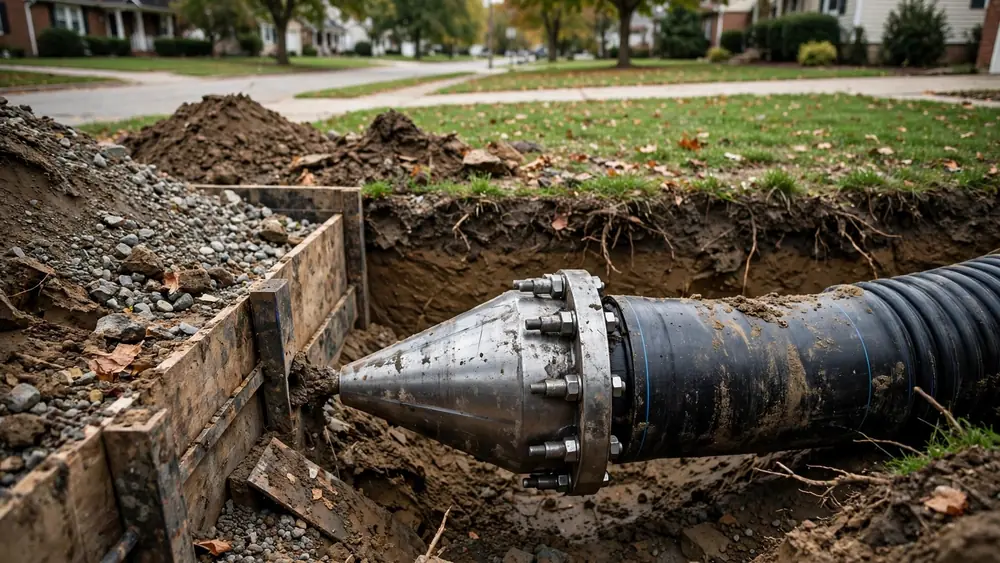
Fibre pipe
Orangeburg pipe in post-war East Atlanta houses
Bituminized fibre pipe was made from layers of wood pulp and other fibres bound together and impregnated with coal tar pitch [2]. It was light and easy to handle and lay, and it was used for house sewers from the early twentieth century into the 1970s, when plastic pipe replaced it [2].
Its weakness is that it is not very strong. Over time, the weight of soil and the moisture around it can make it soften, blister on the inside and deform into an oval or flattened shape. Under good conditions it can last decades; failures have been reported in as little as ten years [2].
On camera, deformed fibre pipe looks unmistakable: the round pipe becomes an oval, the walls show bubbles or flaking, and in bad cases the pipe has nearly closed. Roots also enter fibre pipe readily where its joints or walls have failed.
Because a liner takes the shape of its host, flattened fibre pipe is usually a poor candidate for lining. Replacement, often by pipe bursting along the old route, is the usual recommendation.
By house type
East Atlanta house types and their laterals
| House type | Likely lateral | Common problems |
|---|---|---|
| Early-1900s house near the old streetcar line | Iron inside, clay outside | Roots at joints, scaled iron |
| 1920s–1930s bungalow | Iron drain, clay lateral | Roots, cracked joints |
| Late-1940s–1950s post-war house | Clay, iron or bituminized fibre | Deformed fibre pipe, offsets, roots |
| Renovated post-war house | Original lateral with added fixtures | Overloading, old pipe under new plumbing |
| Recent infill | Plastic on the lot | Old connection near the street |
Streetcar era
East Atlanta's older northern streets
The earliest East Atlanta houses went up near the streetcar line in the early 1900s, in the McPherson Park subdivision [1]. These houses share the pattern seen in Kirkwood and Grant Park: raised floors, cast-iron drains underneath and clay laterals to the street.
Their laterals are now around a century old. The usual findings are roots at loosened joints, sections that have shifted slightly out of line and iron drains narrowed by scale. Many of these lines are still round and well graded, which makes them reasonable candidates for clearing and lining.
Because the water and sewer service followed annexation, some of these houses may have been connected to the public sewer some years after they were built. That can mean the lateral is a little younger than the house, or that the original connection was later reworked.
Trees
Pines, oaks and roots in East Atlanta
East Atlanta's streets have a mix of tall pines and hardwoods, part of an Atlanta canopy that is among the densest of any large U.S. city [3]. Front yards on post-war streets are often a little larger than in the older intown neighborhoods, and many have mature trees planted when the houses were new.
Roots find their way into clay joints and failed fibre pipe alike. In fibre pipe, roots sometimes enter through the wall itself once it has blistered or cracked. Clearing restores flow; sealing or replacing the pipe keeps roots out.
Dense red clay subsoil keeps soil around leaking pipes damp for long periods [4], which encourages root growth at those points.
Warning signs
East Atlanta sewer warning signs
- Drains that have slowly got worse over months, not days, which is typical of deforming fibre pipe
- Gurgling from toilets when other fixtures drain
- Backups in the lowest drain after laundry or heavy use
- A sewer smell near the foundation or in the yard
- Soft or sunken ground along the route to the street
- Repeat clogs shortly after the line was cleared
County and city
Inside the city, inside DeKalb County
East Atlanta lies entirely in DeKalb County, but it is inside the City of Atlanta [1]. For sewers, that means the public system is the City of Atlanta's, run by its Department of Watershed Management, rather than DeKalb County's watershed department [5].
The neighborhood borders unincorporated DeKalb County to the south and east [1]. Addresses on the other side of that line may be served by the county's sewer system instead. When a problem turns out to be on the public side, the contractor can usually tell from the main's location and the manholes which utility to involve.
History
Atlanta's sewer improvements and East Atlanta homes
Under federal consent decrees, the City of Atlanta separated parts of its combined sewer system, built storage tunnels and repaired sanitary sewers to reduce overflows. The combined-sewer work was finished by 2009, and the deadline for the remaining sanitary sewer repairs was extended to 2027 [6].
Those programmes improved the public system. They did not replace private laterals, which is why many post-war East Atlanta houses still drain through the pipe they were built with. If a contractor finds the problem in the public sewer, the city's Department of Watershed Management handles it.
East Atlanta Village
Homes near East Atlanta Village
East Atlanta Village, the commercial heart of the neighborhood, has restaurants, bars and shops close to residential streets [1]. Commercial kitchens are subject to the city's grease management rules, but grease that does escape into the public sewer can contribute to blockages in mains downstream.
If several houses near the Village back up at the same time, that pattern is worth reporting to the city. A contractor can confirm whether your own lateral is clear to the connection.
Streets close to the Village are often busy and parking is tight. Mention it when you call so the contractor can plan for equipment and any pit near the curb.
The visit
How an East Atlanta sewer visit usually goes
- 1
Tell the contractor the house's age
Whether it is an early-1900s house, a post-war house or newer infill is a strong clue to the pipe material.
- 2
Find access
An exterior cleanout is best; post-war houses on slabs may need access at a cleanout near the foundation or through a toilet.
- 3
Clear old pipe gently
If fibre pipe is suspected, the contractor may choose gentler methods to avoid damaging weakened pipe.
- 4
Film the line and name the pipe
A camera inspection shows whether the lateral is clay, iron, fibre or plastic and records every defect.
- 5
Locate the line
The locator follows the camera head across the yard so the line's path and depth under an East Atlanta lot are known.
- 6
Discuss the options
The contractor explains whether lining, bursting, a spot repair or replacement fits the pipe that was found.
Options
Repair options by pipe material in 30316
| Material and condition | Approach often considered | Why |
|---|---|---|
| Clay with roots, still round | Clear, then pipe lining | Seals all joints without digging |
| Fibre pipe, deformed | Pipe bursting or replacement | Lost shape rules out lining |
| Fibre pipe, still round | Inspection and monitoring, or replacement | It may deform further over time |
| Cast iron with heavy scale | Descale and line, or replace section | Depends on remaining wall |
| One collapsed section | Spot repair | Single excavation |
Digging safely
Marking utilities before East Atlanta digging
Before any pit or trench, utility lines must be marked. Georgia 811 is free, and the contractor doing the digging normally submits the request in advance [8]. Post-war streets often have gas and water services running close to sewer laterals.
Private lines, such as irrigation or a feed to a shed, are not marked by 811. Tell the contractor where you know they run.
Prevention
Protecting an East Atlanta sewer line
- If your house is post-war and the pipe material is unknown, a camera inspection tells you whether it is fibre pipe.
- Keep grease and wipes out of the drains.
- Add an exterior cleanout if there is none.
- Keep new trees off the sewer route.
- Avoid parking heavy vehicles over a shallow lateral.
- Keep camera recordings with the house records.
- Ask neighbours on post-war streets what their sewer inspections found; similar houses often share similar pipe.
Repair or replace
Repair or replace an East Atlanta lateral?
The answer depends heavily on the material. A round clay line with roots can often be lined. A deformed fibre line usually needs replacing. A cast-iron section can be descaled and lined or replaced depending on its condition. A single break can be spot-repaired.
Ask the contractor to show you the footage that supports the recommendation. For the trade-offs between methods, see sewer line replacement and the trenchless vs excavation guide.
Buying here
Buying a post-war East Atlanta house
Post-war houses can look well maintained above ground while hiding a fibre lateral that is close to failing. A general home inspection rarely looks inside the sewer. A camera inspection before closing identifies the material and condition, which is especially useful in houses from the late 1940s to the 1970s.
If the seller has replaced the lateral, ask for the paperwork and any footage.
Slabs and crawl spaces
Post-war foundations and where the drain runs
Many post-war East Atlanta houses were built on low crawl spaces or concrete slabs rather than the raised floors of older bungalows. On a slab, the building drain runs through or under the concrete, and access to it is limited to cleanouts and fixture openings. On a low crawl space, it can be reached, but only in tight conditions.
This matters when the problem is under the house rather than in the yard. A camera inspection from a cleanout near the foundation shows where the trouble is. If it is under a slab, the options and the disruption are different from a yard repair, and the contractor should explain them clearly before any work is agreed.
Battlefield ground
Building on historic ground in East Atlanta
The Battle of Atlanta ranged across ground that East Atlanta's streets cover today, and historic markers in the neighborhood note where generals on both sides were killed [1]. For homeowners, the history is mostly a point of local pride rather than a practical concern, but it is a reminder that this ground has been dug, built on and reworked many times since the 1860s.
Old fills, buried foundations and abandoned utility lines are not unusual when older lots are excavated. If a repair turns up something unexpected underground, the contractor will stop and reassess. Most sewer repairs are shallow enough that this is rare, but it is one more reason to start with a camera and a locate rather than a guess.
Post-war builders
The post-war centre and its sewer layouts
After the Second World War, local builders subdivided and developed the undeveloped centre of the neighborhood [1]. Houses from this period were typically built quickly and in numbers, often to similar plans, on lots laid out at the same time as the streets.
That has two practical effects. First, houses on the same street often share the same lateral material and layout, so if a neighbour has found fibre pipe or a particular problem, yours may well be similar. Second, the laterals were laid when the streets were new, so many run in predictable lines from the house to a main in the street, which makes locating and planning repairs easier than on irregular older lots.
Ask your neighbours what their sewer inspections have found. It is not a substitute for your own camera run, but it can tell you what to expect.
Ormewood Park and edges
Streets toward Ormewood Park and the city line
To the west and south, East Atlanta meets neighbouring areas, including Ormewood Park, with similar early-twentieth-century and post-war housing. Toward the south and east, the neighborhood borders unincorporated DeKalb County [1]. Houses close to these edges can look identical across a street while being served by different public sewer systems.
For a lateral repair, that rarely changes the work itself, but it changes who you contact if the public side is involved. The contractor can usually tell from the main and the manholes which system serves your address.
FAQ
Sewer questions from East Atlanta homeowners
Who runs the sewer in East Atlanta?
East Atlanta is inside the City of Atlanta, so the public sewer is run by the city's Department of Watershed Management. The private lateral is generally the owner's responsibility.
How do I know if my house has Orangeburg pipe?
A camera inspection identifies it. Houses built from the late 1940s to the 1970s are the most likely to have it.
Can Orangeburg pipe be lined?
Usually not once it has deformed, because a liner takes the shape of the old pipe. Replacement, often by pipe bursting, is the common answer.
Why have my drains slowed gradually over months?
Gradual slowing can come from roots growing at joints or from fibre pipe slowly deforming. A camera inspection shows which.
Is East Atlanta in the DeKalb County sewer system?
No. Although it is in DeKalb County, East Atlanta is inside the City of Atlanta and on the city's sewer system. Some nearby unincorporated areas are on the county's.
My house is on a slab. Can the sewer still be inspected?
Yes, usually from an exterior cleanout or a fixture opening. The camera shows whether the problem is under the house or in the yard.
Do restaurants in East Atlanta Village affect my sewer?
Grease from commercial kitchens can contribute to blockages in public mains. If several neighbours back up together, report it to the city.
Should I inspect the sewer before buying a post-war house here?
Yes. A camera inspection shows whether the lateral is fibre pipe and what condition it is in.
If my neighbour found fibre pipe, will my house have it too?
Post-war houses on the same street were often built at the same time with the same materials, so it is a reasonable clue. Only a camera inspection of your own line confirms it.
How long does a fibre sewer line last?
Under good conditions it can last decades, but it is known to deform with age and some lines have failed far sooner. Its current shape on camera matters more than its age.
Nearby
More around East Atlanta
Back to all of Atlanta. Nearby pages: Brookhaven, Buckhead, Grant Park, Inman Park & Candler Park, Kirkwood, Virginia-Highland & Morningside, West End.
Related help for East Atlanta: water extraction, structural drying, sewage backup cleanup, fire damage restoration and smoke damage cleanup. First time dealing with this? Read the first hours after water damage.
Sources and citations
- [1]Wikipedia — East Atlanta
- [2]Wikipedia — Orangeburg pipe
- [3]Wikipedia — Atlanta tree canopy
- [4]Wikipedia — Cecil (soil)
- [5]DeKalb County — Department of Watershed Management
- [6]U.S. EPA — Atlanta sewer consent decree modification (May 2012 news release)
- [7]Virginia Department of Health — Sewage backup fact sheet
- [8]Georgia 811 — How it works