Key facts: Inman Park & Candler Park
- Joel Hurt laid out Inman Park toward the end of the 1880s as Atlanta's first planned suburb and first streetcar suburb; it was listed on the National Register in 1973 [1].
- Its housing mixes Victorian mansions with bungalows, shotgun houses and foursquares built in the first decades of the 1900s [1].
- The Candler Park Historic District, listed in 1983, has Craftsman and late Victorian houses and lies in DeKalb County [2].
- Houses of these eras were generally connected with clay laterals, whose joints admit roots as they age [3].
Coverage
Neighborhoods included in this area
These neighborhoods sit within ZIP code 30307, which is covered by this service. If you are unsure whether your address is included, call and the contractor will tell you.
- Inman ParkThe 1889 planned suburb between the BeltLine Eastside Trail, Freedom Parkway, Moreland Avenue and DeKalb Avenue [1].
- Candler ParkBungalow and Victorian streets east of Moreland Avenue, around the 55-acre park of the same name [2].
- Little Five PointsThe commercial crossroads between the two, with older houses on the surrounding blocks.
- Lake ClaireNeighbouring streets partly included in the expanded Candler Park Historic District [2].
Overview
Why sewer lines here are among the oldest in Atlanta
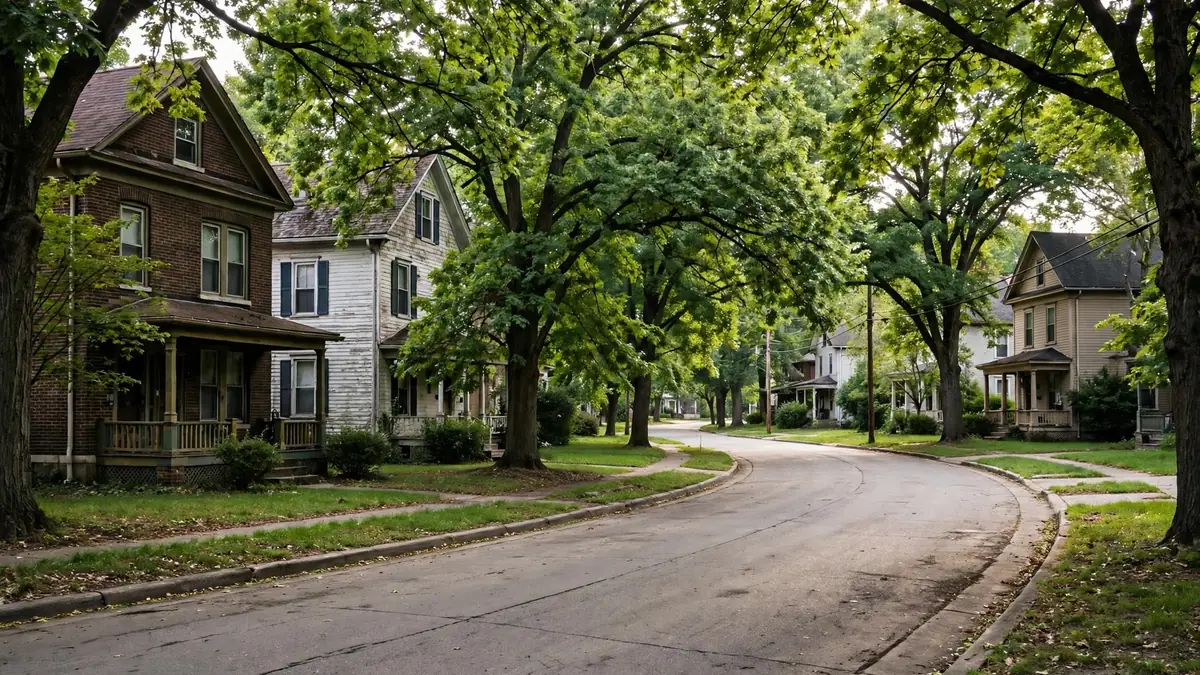
Joel Hurt laid out Inman Park at the end of the 1880s as a suburb served by its own streetcar line, and building began in 1889 [1]. The first houses were large Victorian homes in Queen Anne and Shingle styles. Over the next three decades the neighborhood filled in with bungalows, shotgun houses and foursquares, giving it the mix of grand and modest houses it has today [1].
Candler Park grew up to the east, named for the park Asa Candler gave the city in 1922. Its historic district, listed on the National Register in 1983 and expanded in 2005, is mostly Craftsman bungalows and late Victorian houses [2].
A house built in the 1890s or 1910s was connected to the sewer with the materials of its day, typically clay pipe outside the foundation and cast iron within. Many of those connections have been repaired in places over the years, but a surprising number remain largely original. That means laterals that are more than a century old, under trees that are nearly as old.
The result is that root intrusion, cracked clay joints, scaled iron drains and repeat backups are everyday problems in 30307. So are the complications of old houses: crawl spaces with tight access, additions tied into original drains, and front yards with steps and walls that owners do not want disturbed.
Common calls
What contractors see most in Inman Park and Candler Park
Century-old clay laterals
Short sections of clay pipe with many joints, often with roots at several of them.
Iron drains in tight crawl spaces
Cast-iron building drains under Victorian and bungalow houses, corroded and scaled after decades of use.
Multi-unit conversions
Large Victorian houses divided into apartments, sending several households' waste down one original lateral.
Infill tied to old connections
New houses and rebuilds with modern pipe on the lot that still meet an aging connection near the street.
Rear and side sewer routes
Irregular lots and the neighborhood's curving streets mean some laterals do not run straight to the front.
Root-damaged joints near the street
Street trees and front-yard oaks concentrate root problems near the connection to the public sewer.
Inman Park
Victorian houses and their plumbing in Inman Park
Inman Park's Victorian houses were built before indoor plumbing was standard in every room. Bathrooms were added, moved and expanded over the following century, and kitchens were rebuilt many times. Each change usually tied into the same original building drain and lateral.
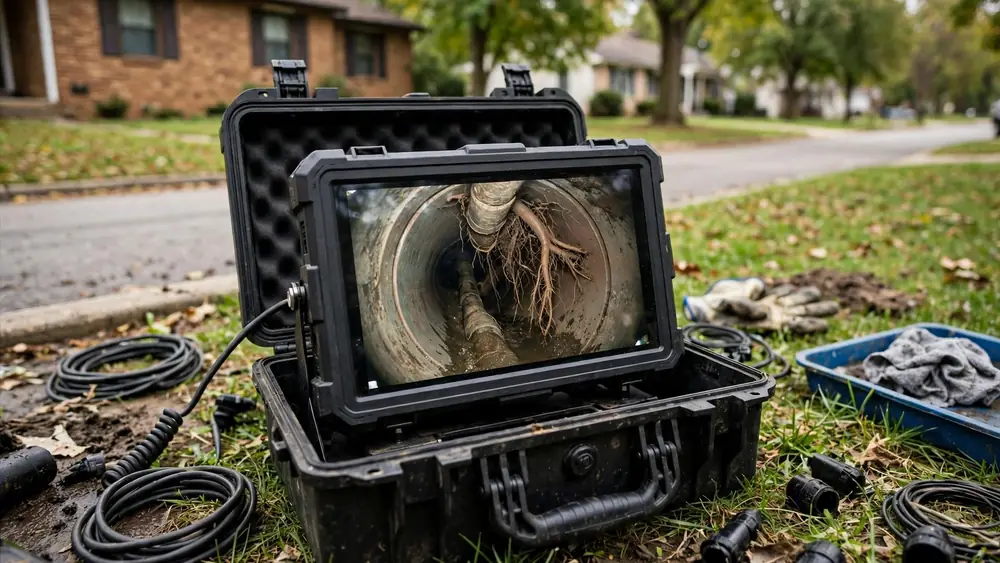
Many of the neighborhood's larger houses were later divided into apartments, and some have since been converted back into single-family homes [1]. A lateral sized for one household in the 1890s may have spent decades carrying the waste of several, then been reconnected again during restoration. On camera, those histories show up as patches, changes in material and connections at odd angles.
The bungalows, shotgun houses and foursquares built in the early 1900s have simpler layouts: a building drain under a raised floor, leaving the house toward the street, and a clay lateral down to the sewer. They are easier to diagnose, but their laterals are often just as old.
Because Inman Park was laid out with curving streets and irregular lots, the sewer does not always run straight from the front of the house to the street. Locating the camera head from the surface is the only reliable way to know where the line goes.
Candler Park
Bungalow streets and the county line in Candler Park
Candler Park's streets are lined mostly with Craftsman bungalows and some late Victorian houses [2]. Lots are compact, front porches sit close to the sidewalk and trees crowd the narrow front yards. A typical bungalow lateral here is short and runs through the root zone of at least one large tree.
Candler Park sits in DeKalb County, while much of Inman Park is in Fulton County, but both are inside the City of Atlanta [2]. For sewers, the city boundary is what usually matters: inside the city limits, the public system is run by Atlanta's Department of Watershed Management. That is different from DeKalb County addresses outside the city, where the county runs the public sewer.
Lake Claire, partly included in the expanded historic district, has a similar mix of early houses and later infill, with some lots dropping toward the low ground around the old Candler Park golf course.
Because the park itself is large and wooded, some streets near it back onto green space, with trees on several sides of the lateral.
By house type
Typical laterals by 30307 house type
| House type | Typical drain and lateral | Common problems |
|---|---|---|
| 1890s Queen Anne or Shingle-style house | Iron building drain, clay lateral, many later changes | Patched sections, root intrusion, odd-angle connections |
| Victorian converted to apartments | One original lateral carrying several units | Overloading, grease, repeat backups in the lowest unit |
| 1900s–1920s Craftsman bungalow | Iron under a raised floor, clay to the street | Roots at clay joints; scaled iron |
| Shotgun house | Short drain and lateral on a narrow lot | Roots from neighbouring trees; old connection at the street |
| Recent infill or rebuild | Plastic on the lot | Problems where new pipe meets an old street connection |
The BeltLine
BeltLine-era building and old sewer connections
The Atlanta BeltLine's Eastside Trail runs along Inman Park's western edge [4], and the years since it opened have brought renovation, rebuilding and new construction to the surrounding blocks. New houses on old lots get new plumbing on the property, but the connection at the street, and sometimes part of the lateral, can still be decades old.
Construction activity itself can affect old laterals. Heavy equipment, new driveways and foundation work near a clay pipe can crack or shift it, and new landscaping can put trees right over it. If problems began after work on your lot or the lot next door, mention it when you call.
Renovations that add bathrooms or convert a basement into living space increase the load on an original lateral. If you are planning such work, a camera inspection of the line beforehand tells you whether it can take the extra flow.
Warning signs
Signs of sewer trouble in an Inman Park or Candler Park house
- The lowest unit in a converted house backing up while upstairs units seem fine
- Gurgling from a tub or toilet when another fixture drains
- A sewer smell in the crawl space or near the front steps
- Slow drains throughout the house that return weeks after clearing
- Damp or sunken ground along the route between the house and the street
- Problems that started after construction on your lot or a neighbour's
Trees
The canopy over 30307's laterals
Both neighborhoods are known for their trees, part of an urban canopy that is among the densest of any large American city [5]. Front-yard oaks, street trees and backyard hardwoods all crowd around laterals that, on these compact lots, run only a short distance to the street.
Older clay joints are the entry points [3]. Once roots are inside, they form mats that catch paper and grease, and a line can go from slow to fully blocked within a few days in the growing season. Clearing restores flow; sealing or replacing the joints keeps the roots out. The tree can usually stay.
Because lots are narrow and trees large, roots in your line may come from a tree on a neighbouring lot or in the street. Knowing which tree is involved helps plan any digging so roots near the trunk are spared.
History
The city's sewer improvements and private laterals
Atlanta's older intown areas were built with combined sewers, carrying both stormwater and wastewater, and the city spent years under federal consent decrees to reduce overflows. It separated parts of the system, built storage tunnels and repaired sanitary sewers, finishing the combined-sewer work by its 2009 deadline and receiving an extension to 2027 for the remaining sanitary sewer repairs [6].
That investment was in the public system. Private laterals, the pipes from each house to the public sewer, are the property's own, which is why many 30307 houses still drain through their original clay.
If a contractor finds your lateral clear but sees a problem in the public main or at the connection, the City of Atlanta's Department of Watershed Management handles it. The city may send a crew to confirm which side the problem is on.
Historic districts
Sewer work in historic Inman Park and Candler Park
Both neighborhoods carry National Register listings [1][2]. Where a street is also a locally designated historic district, city review focuses on exterior changes visible from the street, such as facades, porches, fences and site features. Buried sewer lines are not usually its focus, but restoring the surface after digging can touch walls, steps and walkways.
That is one reason owners here often ask about trenchless sewer repair. A lateral running under a historic front walk or a stone retaining wall can often be lined or burst from small pits placed in a planting bed or at the street. If digging is needed, ask the contractor how they will protect and rebuild features, and whether any local review applies to that restoration.
The visit
How an Inman Park sewer call usually unfolds
- 1
Explain the house
Say how old the house is, whether it is divided into units, which fixtures are affected and what work has been done recently.
- 2
Find access
Look for an exterior cleanout; older houses often have only a crawl space fitting or none at all.
- 3
Cut out roots and grease
Roots or grease are cut or jetted so wastewater drains and the camera can see.
- 4
Inspect the full lateral
A camera inspection shows the materials, joints, patches and defects from the house to the main.
- 5
Map the route
The camera head is located from above to show where the line actually runs on an irregular lot.
- 6
Choose an approach
The contractor explains maintenance, spot repair, lining or replacement in terms of what the footage shows.
Options
Repair choices that fit 30307 lots
| Condition | Often considered | Reason |
|---|---|---|
| Roots at many joints, pipe still round | Pipe lining | Seals all joints from small access points |
| Line under a historic walk or wall | Lining or pipe bursting | Avoids disturbing the feature |
| One collapsed section in open yard | Spot repair | Single small excavation |
| Shared lateral in a converted house | Inspection, then lining or replacement | Line must carry several households |
| Old connection under the street | Coordination with the city | Public side handled by Watershed Management |
Digging safely
Utility lines under 30307 yards
Old neighborhoods have layered utilities. Gas services, water lines, buried power and communication cables can all cross a sewer route in a small front yard. Before any repair pit is dug, the contractor normally submits a Georgia 811 request so public utility lines are marked; the service is free [8].
Private lines such as irrigation, landscape lighting and feeds to garages or studios are not marked by 811. Tell the contractor about any you know of.
Prevention
Keeping an old Inman Park lateral working
- In converted houses, remind every household to keep grease and wipes out of the drains.
- Add an exterior cleanout at the next repair if there is none.
- If roots are a known problem, keep a maintenance schedule and a log of findings.
- Have the line inspected before adding bathrooms or finishing a basement.
- Keep new trees and large shrubs off the sewer route.
- Keep camera recordings with the house records for future owners.
Repair or replace
What a century-old lateral in 30307 really needs
Age makes a lateral suspect, not condemned. Many old clay lines are still round and well graded, with roots as their main problem; lining them can be a lasting answer. Others have cracked, sagged or collapsed, and a sewer line replacement is the honest recommendation.
In a neighborhood where the surface is often the most valuable part of the yard, the method matters as much as the decision. Ask the contractor to show you the footage behind their recommendation and explain how each option would treat your steps, walls and trees.
Buying here
Before buying an older Inman Park or Candler Park house
A home inspection rarely looks inside the sewer lateral, and in 30307 that pipe may be the oldest working part of the house. A sewer camera inspection before closing shows the material, any roots, cracks or sags, and how the line meets the public sewer.
If the house has been converted into units and back again, or recently renovated, the footage also shows how well the old and new plumbing were joined. That knowledge is useful whether the line turns out to be sound or needs work.
Little Five Points
Older houses around Little Five Points
The blocks around Little Five Points, where Inman Park and Candler Park meet, mix early-1900s houses with small commercial buildings, restaurants and shops. Residential laterals on these streets share the area's age and its trees, and they also sit close to commercial kitchens whose grease, if it escapes into the public sewer, contributes to blockages in the mains downstream.
For a homeowner, the practical point is that a backup on a street near commercial activity is worth reporting if several neighbours see it at the same time. A contractor can confirm whether your own lateral is clear to the connection; if it is, the City of Atlanta's Department of Watershed Management is the agency for the public line.
Houses here are often close to the sidewalk with very little front yard, which limits where a repair pit can go and makes trenchless methods worth asking about even for short laterals.
FAQ
Sewer questions from Inman Park and Candler Park residents
Who handles the public sewer in Candler Park if it is in DeKalb County?
Candler Park is inside the City of Atlanta, so the public sewer is run by the city's Department of Watershed Management even though the neighborhood lies in DeKalb County.
Why are sewer lines in Inman Park so old?
The neighborhood was built from 1889 onward, and many houses still drain through laterals laid in the early 1900s or before. Private laterals were not part of the city's public sewer improvements.
My Victorian is split into units. Why does only the bottom unit back up?
The lowest drains are the first place wastewater rises when the shared lateral is blocked. The cause is usually in the line, not that unit.
Can a sewer line be replaced without tearing up a historic front walk?
Often, yes. Lining or pipe bursting work from small pits, which can be placed away from walks, steps and walls.
Did BeltLine construction affect my sewer line?
Not directly in most cases, but construction near an old clay line on your own lot or a neighbour's can crack or shift it. Mention any nearby work when you call.
Are tree roots the main sewer problem here?
Roots are the most common problem, because old clay joints sit under large trees. Grease, scaled iron and sags are the other usual causes.
Should I get a sewer inspection before buying in 30307?
It is a sensible step for an older house, since standard home inspections usually do not look inside the lateral.
Does historic district status require approval for sewer repairs?
Buried repairs are not usually the focus of historic review, but restoring visible features afterwards can be. Ask the contractor and check with the city if surface features will change.
Where is the sewer cleanout on an old Inman Park house?
Many older houses have no exterior cleanout at all. Look near the front foundation, in the crawl space or at the base of the main stack; if there is none, adding one during a repair makes future inspections and clearing much simpler.
Nearby
More around Inman Park & Candler Park
Back to all of Atlanta. Nearby pages: Brookhaven, Buckhead, East Atlanta, Grant Park, Kirkwood, Virginia-Highland & Morningside, West End.
Related help for Inman Park & Candler Park: water extraction, structural drying, sewage backup cleanup, fire damage restoration and smoke damage cleanup. First time dealing with this? Read the first hours after water damage.
Sources and citations
- [1]Wikipedia — Inman Park
- [2]Wikipedia — Candler Park
- [3]Wikipedia — Vitrified clay pipe
- [4]Wikipedia — Atlanta BeltLine
- [5]Wikipedia — Atlanta tree canopy
- [6]U.S. EPA — Atlanta sewer consent decree modification (May 2012 news release)
- [7]Virginia Department of Health — Sewage backup fact sheet
- [8]Georgia 811 — How it works