

Key facts: Wichita
- Wichita flooded at least seven times between 1877 and 1955, three of them within eleven days in 1944 [1].
- The Wichita–Valley Center Floodway, locally called the Big Ditch, was completed in 1958 and routes some Arkansas River water around the west-central city [1].
- Wichita frequently sees spring and summer thunderstorms that can bring large hail [1].
- Standard homeowners policies generally exclude flooding; NFIP policies usually take 30 days to start [2].
- Calls are connected for covered ZIP codes in Wichita and nearby towns including Derby, Haysville, Maize, Valley Center, Goddard and Mulvane.
Covered
Covered places in the Wichita area
Calls are connected for covered ZIP codes in these communities. Coverage can change; the call confirms your address.
- WichitaMost of the city's ZIP codes, from the older neighborhoods near downtown to the east and west side suburbs.
- Derby and MulvaneSouth of Wichita along the Arkansas River corridor.
- HaysvilleJust south of the city, near the river.
- Maize, Valley Center and KechiNorth of Wichita, including communities near the Little Arkansas River and the floodway.
- Goddard, Cheney, Clearwater and AndaleSmaller towns to the west and southwest.
Water history
How rivers and floods shaped Wichita
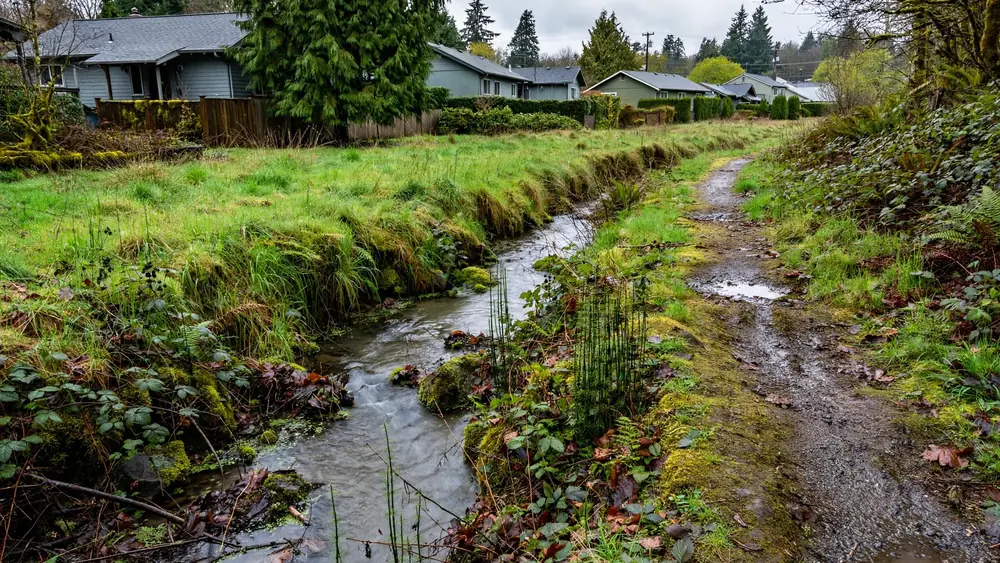
Wichita grew up on flat ground at the meeting of the Arkansas and Little Arkansas rivers, and that location brought repeated flooding. The city flooded repeatedly between 1877 and 1955, and during 1944 alone the water came three times within eleven days [1]. Those floods led to the Wichita–Valley Center Floodway, known locally as the Big Ditch, which was completed in 1958 and carries some of the Arkansas River's water around the west-central part of the city, roughly parallel to the Interstate 235 bypass [1].
The floodway changed the city's risk, but it did not remove water from the picture. Large river floods are far less common in the protected areas, while most water damage calls in Wichita today come from storms, plumbing and basements. Heavy rain still overwhelms storm drains, low streets and yards, and parts of the metro area outside the protected zones, near creeks or in low-lying ground, carry their own flood risk. Your flood zone status is something to check with the city or your insurance agent, not something to assume.
This history also matters for older homes. Neighborhoods close to the rivers were built before the floodway existed, and some houses have been through more than one flood in their lifetimes. A restorer working there may find old water lines on foundations, repaired framing or materials that tell the house's story.
Storms
Wichita storms, hail and wind-driven rain
Without mountains or a large body of water nearby to moderate the weather, Wichita often experiences severe thunderstorms in spring and summer, sometimes with large hail and frequent lightning [1]. Those storms cause water damage in three main ways.
First, hail and wind damage roofs, skylights, siding and windows. A bruised or cracked shingle may not leak right away, but it can let water into the attic during the next storm, soaking insulation and staining ceilings. Second, intense rain in a short time overwhelms gutters, window wells and yard drainage, pushing water into basements. Third, storms knock out power, which stops sump pumps at exactly the wrong time.
After a major hail storm, roofers and restoration companies are busy across the city. Document storm damage with photos as soon as it is safe, cover openings to limit further water entry if you can do it safely from the ground, and talk to your insurer about roof and interior water damage together.
Housing
Wichita housing and how it handles water
Each type of house in the Wichita area tends to fail in its own way.
Post-war ranch homes
Single-story homes from the 1950s and 1960s, often with full or partial basements, original or updated plumbing, and floor drains near the laundry.
Older homes near downtown
Early twentieth-century houses with older foundations, plaster walls and sometimes galvanized supply pipes.
Suburban homes, 1980s onward
Larger homes with finished basements, sump pumps and, in some, polybutylene supply piping from the late 1970s to mid-1990s [4].
Newer subdivisions
Homes with PEX plumbing, finished lower levels and sump systems; failures more often come from fittings, appliances and storm runoff.
Slab homes
Homes without basements, where leaks show up in flooring, cabinets and walls rather than below grade.
Mobile and manufactured homes
Supply lines under the floor that are exposed to freezing if skirting is damaged.
Basements
Wichita basements: sump pumps, window wells and floor drains
Many Wichita homes have basements, from small partial basements under 1950s ranches to large finished lower levels in newer east and west side subdivisions. Basement water in Wichita usually comes from one of four sources: storm runoff entering through window wells or along foundation walls, groundwater rising through the slab or walls when the soil is saturated, a sump pump that fails or loses power, or a floor drain backing up.
The flat terrain in much of the city means water has fewer places to drain away quickly during intense rain. Downspouts that dump next to the foundation, yards that slope toward the house and window wells without covers are common culprits. Inside, a single sump pump without battery backup is a weak point in storms that also cut power.
Our flooded basement cleanup page explains the cleanup process in detail, and sewage backup cleanup covers what happens when the floor drain is the source.
Winter
Freezing pipes in Wichita winters
Wichita winters are usually milder than northern Kansas, but cold snaps still bring days well below freezing, and arctic outbreaks can push temperatures below zero [3]. Pipes at risk include those in exterior walls, under sinks on outside walls, in garages, along basement rim joists and in crawlspaces under additions.
Ranch homes with long runs of plumbing near exterior walls and homes with plumbing over unheated garages are particularly exposed. When a pipe freezes and splits, it often leaks only when it thaws, sometimes days later. See burst pipe water damage for what to do first.
Typical calls
The water damage calls Wichita homeowners make most
Across the Wichita area, the most common situations are a basement that took water during a spring storm, a ceiling stain after hail damaged the roof, a frozen pipe that split in January, a water heater or washer that failed in the basement, and a floor drain that backed up during heavy rain.
Each of those needs a slightly different response. A roof leak after hail usually means drying ceilings, insulation and walls under the leak once the roof is covered. A basement flood means pumping, extraction and drying concrete and framing. A burst pipe means finding all the water in walls and ceilings. A floor drain backup means treating the water as sewage. When you call, say which of these it is.
Wichita water sources
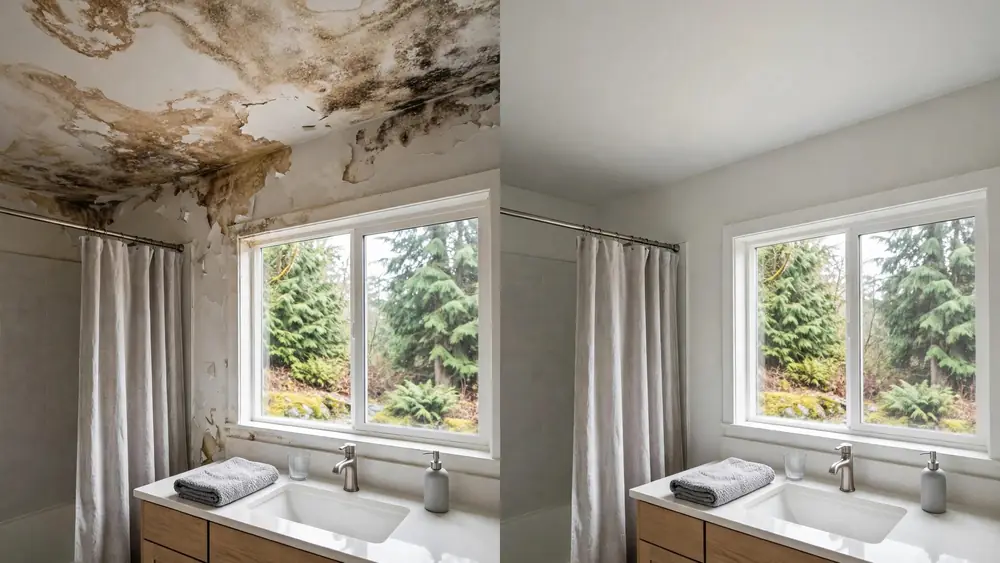
Wichita water sources and what they usually affect
Matching the source to the damage helps the call go faster.
| Source | Common in Wichita when | What usually gets wet |
|---|---|---|
| Hail-damaged roof | After spring and summer storms | Attic insulation, ceilings, upper walls |
| Window well flooding | During intense rain | Foundation walls, carpet and boxes on the floor |
| Sump pump failure | Storms with power outages | Basement floor, finished lower levels |
| Frozen pipe burst | Arctic cold snaps | Exterior walls, floors, ceilings below |
| Water heater failure | Any time; older tanks | Basement or utility room floor |
| Floor drain backup | Heavy rain or a blocked line | Basement floor, contaminated materials |
| Appliance leak | Any time | Kitchen cabinets, laundry rooms, subfloor |
Wichita first steps
First steps after water damage in a Wichita home
- 1
Stay safe
Keep out of standing water near electricity. Shut off power at the panel from a dry spot or call the utility.
- 2
Stop the water
Close the main valve for a plumbing leak. For a roof leak, put buckets down and move belongings.
- 3
Document
Photograph everything, including the outside of the house after a storm.
- 4
Call your insurer
Report the loss and ask which coverage applies: storm, plumbing, sewer backup or flood.
- 5
Call for restoration
One call connects you with an independent contractor who serves your Wichita ZIP code.
Wichita permits
Permits for Wichita repairs after water damage
Drying and cleaning usually do not need permits, but repairs often do. Replacing a water heater or furnace, repairing or replacing plumbing, electrical work on circuits that got wet, and structural repairs commonly require permits and inspections. In Wichita and most of Sedgwick County, building permits are issued through the Metropolitan Area Building and Construction Department; suburban towns may have their own departments. Ask the contractor who will pull the permits for any repair they do, and keep the permit records.
Flood insurance
Flood insurance and Wichita properties
Floodwater from rising rivers, creeks or surface runoff is generally excluded from homeowners insurance and needs a separate flood policy, usually through the National Flood Insurance Program [2]. New NFIP policies typically have a 30-day waiting period [2], so buying one when a storm is in the forecast is too late. Even homes protected by the floodway can see surface flooding from intense local rain. Our insurance adjuster guide explains how to work through a claim.
Older neighborhoods
Wichita's older neighborhoods and their particular water risks
The older parts of Wichita near downtown and the rivers include early twentieth-century homes with features that change a restoration job. Plaster walls behave differently from drywall: they tolerate brief wetting better but are harder to repair when damaged. Older foundations may have cracks and joints that seep during wet periods. Supply plumbing may be galvanized steel, and drain lines may be cast iron or clay, which can lead to slow leaks and root intrusion.
Before materials are removed in homes built before 1978, ask about lead-safe work practices [5], and in older homes ask about materials that may contain asbestos, such as some floor tiles, pipe insulation and textured ceilings [6]. A good contractor will raise these questions without being asked.
Suburbs
Derby, Haysville, Maize and the other covered towns around Wichita
The towns around Wichita share the city's weather but not always its housing or drainage. Derby and Mulvane, to the southeast and south, grew quickly in recent decades, so many homes there are newer builds with finished basements, sump pumps and PEX plumbing. In those houses the usual water problems are a sump that cannot keep up in a cloudburst, a failed fitting or appliance hose, or storm water running toward a walkout or window well from a neighboring yard.
Haysville, just south of the city, sits near the Arkansas River and has a mix of older and newer homes. Maize and Valley Center to the north are near the Little Arkansas River and the floodway, and include established neighborhoods alongside new subdivisions. Goddard, to the west, has grown with newer housing, while Cheney, Clearwater, Andale and Kechi are smaller communities where some homes may be on private wells or septic systems, which changes how a backup or contaminated water is handled.
Distance matters a little too. Restoration contractors serving the metro area often cover the suburbs routinely, but tell the contractor on the call exactly where the house is so they can plan equipment and timing. If you are on a well, mention it; if floodwater reached the wellhead, the water should be tested before drinking it again.
Ranch homes
What a restorer checks in a typical Wichita ranch house
The single-story ranch is the backbone of Wichita's housing, and it has predictable weak spots. Plumbing in many ranches runs through the basement ceiling or a crawlspace and up into the kitchen and bathrooms, so a leak in the main floor bathroom often shows first as a stain on the basement ceiling below. Water heaters and furnaces usually sit in the basement or a utility room, close to the laundry and the floor drain.
Attics in ranch homes are long and low, and insulation is spread over a large area. After hail damage, a small roof leak can spread across insulation before any ceiling stain appears, so a restorer will usually look in the attic as well as at the ceiling. In finished basements, they check the bottom of walls, the carpet pad, and any paneling or foam board against the foundation, since moisture trapped there is easy to miss.
Additions are another common feature. A family room or bedroom added to the back of a ranch may sit over a crawlspace rather than the basement, with pipes running through an exposed, colder space. That is a frequent site of frozen-pipe bursts in January. If your home has an addition, mention it on the call, along with whether the crawlspace has a vent or access door that was left open.
Rentals and businesses
Water damage in Wichita rentals, duplexes and small commercial buildings
Wichita has a large rental market, from single-family houses and duplexes to apartment complexes near the universities, the hospitals and the aviation plants. Water damage in a rental involves at least two parties. The owner or property manager is usually responsible for the building, its plumbing and its flooring, while a tenant's belongings fall under a renters policy if they have one. Tenants should report water to the landlord in writing as soon as possible and photograph the damage; owners should arrange extraction and drying promptly, because delays make the damage and the dispute worse.
In duplexes and small apartment buildings, water from one unit often reaches another through shared walls and floors. The restorer will need access to every affected unit, and each household may need to talk to its own insurer. Small commercial buildings, such as offices, shops and churches, face the same water sources as homes, plus roof drains on flat roofs that clog with debris and back up in heavy storms.
Whoever calls, the contractor should keep separate documentation for each unit or tenant where possible, so each claim can be handled cleanly. Ask about that on the call if more than one household is involved, and tell the contractor who owns the building and who manages it so the right people can approve the work.
Prevention
Protecting a Wichita home from the next storm or freeze
- RoofAfter any major hail storm, have the roof inspected even if you see no leak.
- Gutters and downspoutsKeep them clear and extend downspouts several feet from the foundation.
- Window wellsFit covers and keep well drains clear.
- Sump pumpTest it each spring and add a battery or water-powered backup.
- PipesInsulate pipes in exterior walls, garages and crawlspaces; disconnect hoses before the first freeze.
- Floor drainIf it has backed up before, ask a plumber about a backwater valve [7].
Related
Water damage services for Wichita homes
Flooded basement cleanup
Storm runoff, groundwater or sump failure.
Read moreBurst pipe water damage
Frozen and failed pipes.
Read moreStructural drying
Drying walls, ceilings and floors.
Read moreSewage backup cleanup
Floor drains and toilets pushing back.
Read more
FAQ
Wichita water damage questions
Does this site cover all of Wichita?
Most of the city's ZIP codes are covered, along with nearby towns such as Derby, Haysville, Maize, Valley Center, Goddard and Mulvane. Call to confirm your address.
Does the Big Ditch mean my Wichita home cannot flood?
No. The floodway reduces river flooding in the areas it protects, but heavy rain, poor drainage, basements and plumbing failures still cause water damage, and some areas sit outside its protection.
Is hail damage to my roof and ceiling covered?
Storm damage to the roof and the resulting interior water damage are commonly covered by homeowners policies, but check your deductible and terms. Document everything.
Who handles permits for repairs in Wichita?
Most building permits in Wichita and Sedgwick County go through the Metropolitan Area Building and Construction Department. Ask the contractor who will pull them.
My Wichita basement floods every spring. What should I do?
Have the cleanup done properly, then fix the cause: grading, downspouts, window wells, sump capacity and backup power.
Do you promise a response time in Wichita?
No. This site does not promise response times. Ask the contractor on the call when they can come.
Can a Wichita contractor help with my insurance claim?
Restoration contractors typically document the damage and drying for your insurer. The claim itself is between you and your insurer.
Why is there water on my Wichita basement ceiling?
In many ranch homes the main floor plumbing runs through the basement ceiling, so a leak from a bathroom, kitchen sink, dishwasher or toilet above often shows there first. Shut off the water to the fixture or the main valve and look at what sits directly above the stain.
Should I tarp my roof after a Wichita hail storm?
Only if you can do it safely, and never during a storm or on a wet, steep roof. Many homeowners leave tarping to a roofer. Inside, put buckets under drips, move belongings and photograph the leak and the hail damage outside.
How long will drying take in a Wichita basement?
Clean water in an unfinished basement caught early may dry in a few days. A finished lower level, a cold basement in winter or water that sat for a while usually takes longer, because concrete releases moisture slowly. Readings, not the calendar, decide when it is done.
What if my town near Wichita is not listed?
Call anyway. Coverage is by ZIP code, and you will be told on the call whether your address is served.
Nearby
More around Wichita
Back to all of Kansas. Nearby pages: Kansas City, KS, Lawrence, Overland Park, Shawnee, Topeka.
Related help for Wichita: water extraction, structural drying, sewage backup cleanup, fire damage restoration and smoke damage cleanup. First time dealing with this? Read the first hours after water damage.