
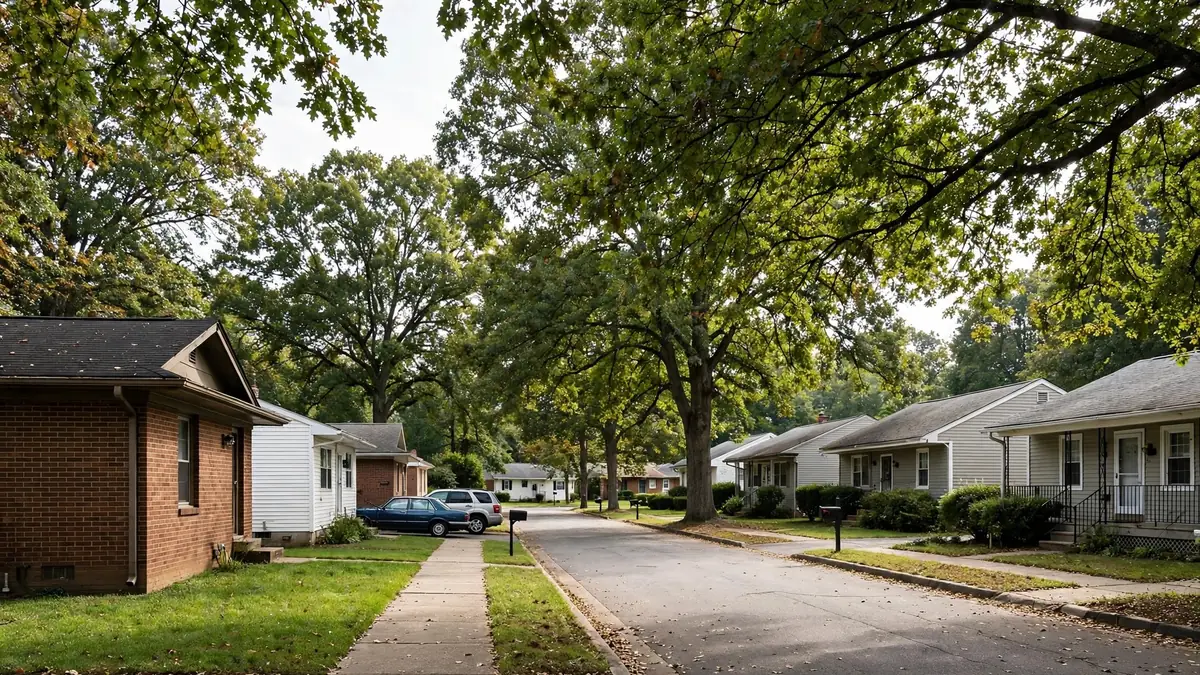
Key facts: Lawrence
- North Lawrence lies on the north side of the Kansas River, on lower ground than most of the city [1].
- The 1951 Kansas River flood caused heavy damage in Lawrence as well as in Topeka and Kansas City, Kansas [2].
- Old West Lawrence is one of the city's historic residential districts [1].
- The University of Kansas campus sits in Lawrence, which shapes the city's large rental housing market [3].
- Homes built before 1978 may contain lead-based paint, which calls for lead-safe work when materials are removed [4].
Covered
Covered places in and around Lawrence
The call confirms your exact address.
- Central Lawrence and downtownOlder neighborhoods around Massachusetts Street, Old West Lawrence, East Lawrence and the university.
- North LawrenceThe neighborhoods across the Kansas River from downtown.
- West and south LawrenceNewer subdivisions and apartment communities.
- EudoraEast along the Kansas River toward Johnson County.
- Baldwin CitySouth of Lawrence in Douglas County.
River
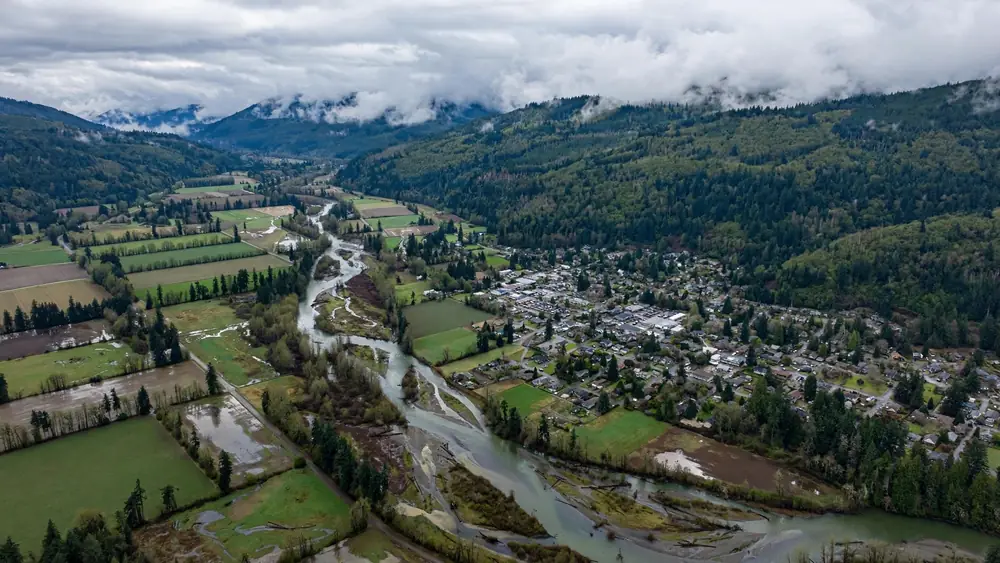
North Lawrence and the Kansas River
Downtown Lawrence sits on the south bank of the Kansas River, on a rise above the water. North Lawrence, across the bridges, sits on lower, flatter ground on the north side of the river [1]. The 1951 flood that devastated Topeka and Kansas City, Kansas also caused heavy damage in Lawrence [2], and the low areas along the river have been the focus of levees and drainage work since.
Today, the large-river flood risk in protected areas is far lower than it was in 1951, but heavy local rain can still overwhelm drainage on flat ground, and some properties remain in mapped flood zones. If your home is in North Lawrence or near a creek, check your flood zone, and remember that flood damage is generally not covered by homeowners insurance and that new flood policies usually take 30 days to start [6].
Elsewhere in Lawrence, the hills shape water damage more than the river does. Water runs downhill toward foundations, collects against the uphill side of basements and finds its way through old stone walls.
Historic homes
Historic houses in Old West Lawrence and East Lawrence
Lawrence has some of the oldest housing in Kansas. Old West Lawrence, one of the city's historic residential districts [1], and East Lawrence include houses from the late nineteenth and early twentieth centuries: limestone and brick foundations, wood frame and stone houses, plaster walls, tall windows and original wood floors and trim. Many have basements or cellars that were dug for storage, not living space, and have since been partly finished.
Older foundations made of stone set in lime mortar are porous by design. They breathe, and when the soil around them is saturated, they seep. Painting or sealing them from the inside can trap moisture in the wall. Plaster walls upstairs handle short wetting fairly well but can crack or separate from the lath if soaked. Original plumbing may be galvanized steel, cast iron or a patchwork of later repairs.
In houses built before 1978, removing wet drywall, plaster or trim calls for lead-safe practices [4], and older homes may contain asbestos in pipe insulation, floor tile or textures [5]. Ask the contractor about their experience with historic houses and how they protect original materials.
Stone basements
Limestone basements and cellars
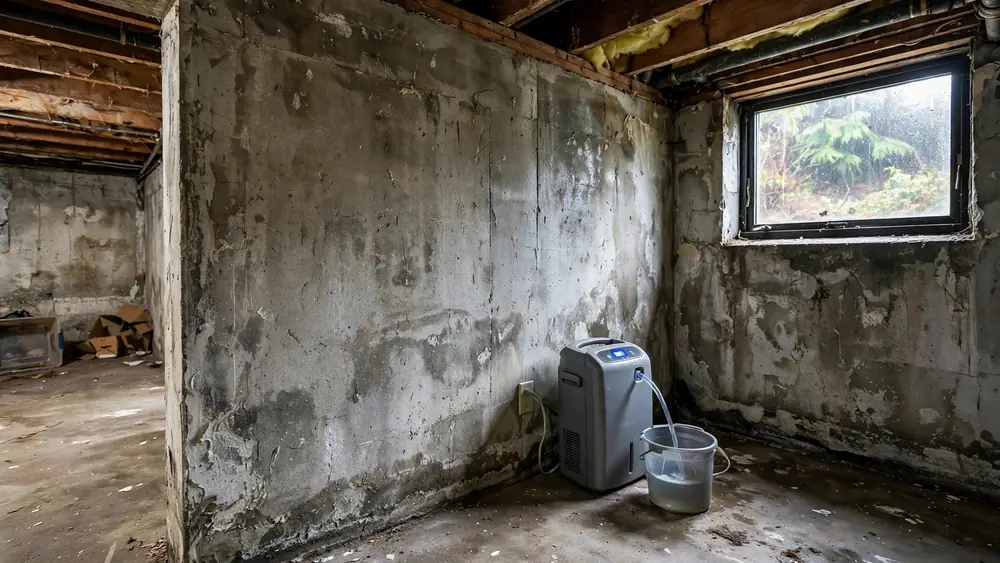
Many older Lawrence homes sit on limestone foundations. Limestone walls with lime mortar joints let groundwater through slowly when the ground is wet, so these basements often have a damp band along the base of the walls or small puddles after long rainy periods. That is usually a drainage issue rather than a crisis, but it becomes water damage when the space has been finished, when belongings sit on the floor, or when a heavy storm pushes much more water through.
Cleanup in a stone basement focuses on extraction, removing any finished materials that got wet and drying with dehumidification. Long-term, outside drainage, gutters and downspouts do more than interior sealants. A restorer familiar with older foundations will avoid recommending coatings that could trap water in the stone.
Housing
Lawrence housing and water risks
Nineteenth-century homes
Limestone foundations, plaster, original wood floors and old plumbing.
Early 1900s bungalows
Basements with floor drains, often partly finished, near the university and downtown.
Converted houses and duplexes
Older houses split into rental units, where water crosses unit lines.
Apartment complexes
Stacked units where one leak can affect several floors.
West Lawrence subdivisions
Newer homes with finished basements, sump pumps and PEX plumbing.
North Lawrence homes
Low ground near the river; check flood zones.
Rentals
Water damage in Lawrence student rentals
With the University of Kansas in the middle of the city [3], Lawrence has a very large rental market: houses shared by several students, older homes divided into apartments, duplexes and large apartment complexes. Water damage in rentals has its own challenges. Tenants may be away over winter break when pipes freeze, nobody may notice a slow leak in a basement unit for weeks, and responsibility is split between the landlord, the property manager and each tenant's renters insurance.
If you rent, report water to your landlord or manager in writing right away and photograph your belongings and the damage. Do not wait for someone else to notice. If you own or manage rentals, make sure tenants know where the main water shutoff is, set thermostats for break periods, and act quickly on any report of water: the faster extraction and drying start, the less damage there is to the building and to everyone's belongings.
Winter break
Frozen pipes over winter break
Winter break is a particularly risky time in Lawrence. Many rentals are empty for weeks just as northeast Kansas sees its coldest weather [7]. A thermostat turned down to save energy, a furnace that fails, or a window left cracked can let pipes freeze in exterior walls, under kitchen sinks and in older basements. When temperatures rise, the split pipes leak into an empty house. By the time someone returns, water may have run for days.
Simple steps help: keep the heat at a steady, reasonable temperature, open cabinet doors under sinks on exterior walls, ask someone to check the property, and consider shutting off the main water valve and draining the lines if the house will be empty for long. See burst pipe water damage.
Lawrence water sources
Common water sources in Lawrence homes
| Source | Common when | What usually gets wet |
|---|---|---|
| Frozen pipes in empty rentals | Winter break cold snaps | Walls, floors, ceilings, multiple units |
| Stone foundation seepage | Long wet periods | Basement walls, floors and stored items |
| Hillside runoff | Heavy storms | Uphill foundation walls and basements |
| Roof and gutter leaks on old houses | Storms and hail | Attics, plaster ceilings, upper walls |
| Appliance and fixture leaks in stacked units | Any time | Ceilings and walls of units below |
| Sump pump failure | Storms (newer homes) | Finished basements |
| Floor drain backup | Heavy rain or blocked lines | Basement floors |
Lease turnover
Move-in and move-out water checks for Lawrence rentals
Lawrence's rental calendar is unusually concentrated. Leases often turn over at the start of summer and around the academic year, and for a few weeks many houses are empty, half-moved or full of new tenants who do not yet know the building. That is a good time to catch slow problems before they become water damage. Landlords and incoming tenants can walk through together and look at the same few things: stains on ceilings under bathrooms, soft spots in floors around toilets and tubs, the condition of washer hoses, drips under sinks, the age of the water heater and whether the basement smells musty.
Show every tenant the main water shutoff and how to turn it, and leave a written note near it. Point out the floor drain and the sump pump if there is one, and explain what a backup looks like. Agree how water problems should be reported and who to call if the landlord cannot be reached. When tenants leave for the summer or winter, agree on the thermostat setting and who will check on the house.
Photographs at move-in and move-out help everyone. If water damage happens later, they show what was already there and what is new, which makes conversations with insurers and each other far easier.
Old floors and trim
Original wood floors, trim and built-ins in older Lawrence homes
Older Lawrence houses often still have their original oak or pine floors, tall baseboards, door and window casings and built-in cabinets. These are worth protecting during a water loss. Solid wood floors that get wet will cup as the bottoms of the boards swell; dried slowly and carefully, many flatten again and can be refinished rather than replaced. Sanding too early, before the wood has fully dried, can leave boards crowned once they finish drying, so patience matters.
Trim and built-ins that were wet can usually be removed carefully, labeled, dried and reinstalled. Ask the contractor to save original pieces rather than discard them, and to photograph and number each piece so it goes back where it came from. Matching old millwork later is difficult, and the originals are part of what makes these houses valuable.
Porches and additions
Porches, sleeping porches and rear additions
Many older Lawrence houses have enclosed porches, former sleeping porches and rear kitchen or bathroom additions built over crawlspaces or on separate foundations. These spaces are often colder than the main house, with less insulation and plumbing that was added later. They are prime spots for frozen pipes in winter and for roof leaks where a low-slope porch roof meets the main wall.
When water damage shows up in one of these spaces, the restorer will check the crawlspace below and the joint where the addition meets the original house, because water often travels along that seam into the main structure. Tell the contractor if part of your house sits over a crawlspace.
Old roofs
Storms, old roofs and box gutters on historic Lawrence houses
Lawrence shares the spring and summer storm season of eastern Kansas, with hail, strong winds and heavy downpours [7]. Older houses meet those storms with roofs and gutters that are more complicated than a modern subdivision home's. Steep roofs with many valleys, dormers and chimneys have more places for water to get in. Some historic houses have built-in box gutters hidden behind the roof edge; when their linings fail or they clog with leaves, water overflows into the wall or the ceiling below rather than off the eave.
Chimneys are another weak point. Flashing around an old brick chimney can crack or pull away, letting water run down inside the chimney chase and stain plaster on several floors. After a storm, look at ceilings near chimneys and exterior walls, as well as in the attic, and photograph anything new.
Inside, water from a roof leak in an older house often spreads across plaster ceilings and down inside walls before it shows. Ask the restorer to check the full path, including the attic, the wall cavities below the leak and any rooms underneath, and to coordinate with a roofer who works on older roofs, so the leak is fixed before the ceilings are repaired, primed and painted again by the trades who follow.
West Lawrence
Newer homes in west and south Lawrence
West and south of the older city, Lawrence has grown with subdivisions and apartment communities built in recent decades. These homes look more like Johnson County than Old West Lawrence: poured concrete basements, many of them finished, sump pumps, PEX plumbing and attached garages. Their water problems are the modern ones. A sump pump that loses power in a storm, a window well that fills, a failed fitting on a supply line, a water heater that leaks into a finished lower level or a washing machine hose that bursts while nobody is home.
Prevention is straightforward: test the sump pump each spring and add a battery backup, fit window well covers, replace washer hoses with braided ones, put leak sensors near the water heater and washer, and extend downspouts away from the foundation. In apartment communities, tenants should know where the shutoff valve for their unit is, often under the sink or in a utility closet.
Apartments
Leaks in stacked apartment buildings
In apartment buildings, water from one unit often affects several. A washing machine overflow, a toilet supply line failure or a bathtub overflow on an upper floor can soak the ceiling and walls of every unit below it. The restorer needs access to all of them, and building management usually coordinates. Tenants in affected units should photograph their belongings and contact their renters insurer; the building's insurer usually handles the structure.
Drying stacked units involves extraction from the floors, opening ceilings that are holding water, and drying several layers of ceiling and floor at once. Readings in each unit show when it is dry.
Lawrence first steps
First steps after water damage in Lawrence
- 1
Make it safe
Stay out of water near electricity; shut power off from a dry spot.
- 2
Stop the water
Close the main valve or the unit's shutoff for plumbing leaks.
- 3
Tell the right people
Tenants: tell the landlord or manager in writing. Owners: notify tenants who may be affected.
- 4
Document
Photograph the damage, the source and belongings before cleanup.
- 5
Call for restoration
One call connects you with an independent contractor who serves your Lawrence ZIP code.
Historic review
Historic districts and permits in Lawrence
Drying and cleaning do not usually need permits, but repairs to plumbing, electrical systems, furnaces, water heaters and structure often do. Lawrence has historic districts and individually listed properties where exterior changes, such as replacing water-damaged siding, windows or porches, may need historic review before work starts. Interior repairs usually do not. Ask the contractor who will pull permits and check with the city before committing to exterior work on a historic house.
Nearby towns
Eudora and Baldwin City
Eudora, east of Lawrence along the Kansas River, has an older core near the river and newer neighborhoods on higher ground. Baldwin City, to the south, is a small college town with older homes near downtown and newer housing on its edges. Some properties around both towns use private wells or septic systems, which changes how a backup or contaminated floodwater is handled. If your home is on a well and floodwater reached the wellhead, have the water tested before drinking it. Each town has its own permit office for repairs.
Prevention
Protecting a Lawrence home
- Winter break planKeep heat on, have someone check, and consider shutting off the main valve in empty houses.
- Gutters on old housesKeep them clear and downspouts extended away from stone foundations.
- Do not seal stone walls from insideManage water outside; interior coatings can trap moisture.
- Shutoff knowledgeMake sure every tenant knows where the main water shutoff is.
- Washer and toilet hosesReplace them with braided hoses and check them each year.
- Flood zone checkEspecially in North Lawrence and near creeks [6].
Related
Water damage services for Lawrence homes
Burst pipe water damage
Frozen pipes in empty rentals and old walls.
Read moreStructural drying
Drying plaster, old wood and stacked units.
Read moreFlooded basement cleanup
Seepage and storm water in stone basements.
Read moreMold prevention
Keeping damp cellars and rentals from growing mold.
Read more
FAQ
Lawrence water damage questions
Is all of Lawrence covered?
Lawrence has 5 covered ZIP codes on this site, plus Eudora and Baldwin City. Call to confirm your address.
My Lawrence rental flooded while I was away. What do I do?
Tell your landlord or manager in writing right away, photograph the damage and your belongings, and contact your renters insurer if you have one.
Is my stone basement supposed to be damp?
Some dampness is common in old limestone foundations, but standing water, mold and wet finished materials should be dealt with. Outside drainage helps most.
Can plaster walls in my old Lawrence house be dried?
Often, if they dried quickly and remain firmly attached. A contractor experienced with older homes can tell you.
Do I need historic review to repair water damage?
Interior repairs usually do not. Exterior changes in historic districts may. Check with the city first.
Is North Lawrence in a flood zone?
Parts of it may be. Check the flood map for your address and ask your agent about flood insurance.
How soon can a Lawrence contractor arrive?
That depends on the contractor and the day; this site does not set or promise response times. Ask on the call.
Water is staining the plaster near my chimney. What is happening?
Flashing around older brick chimneys often cracks or pulls loose, letting rain run down inside the chimney chase. Have a roofer check the flashing, photograph the stains, and have the wet plaster and framing dried so the damage does not spread.
Where is the water shutoff in my Lawrence apartment?
Many units have a shutoff valve for the whole apartment in a utility closet, near the water heater or under the kitchen sink, plus small valves behind each toilet and under each sink. Ask the manager to show you before you need it.
Can my cupped original wood floors be saved?
Often. Solid wood that cups after getting wet frequently flattens again if it is dried slowly and thoroughly. Refinishing should wait until readings show the wood is dry, or the boards can crown afterward.
Why do pipes freeze in the back porch of my Lawrence house?
Enclosed porches and rear additions are often colder, less insulated and sit over crawlspaces, so plumbing there is exposed. Insulating the pipes and the crawlspace and keeping heat in that room during cold snaps helps.
Nearby
More around Lawrence
Back to all of Kansas. Nearby pages: Kansas City, KS, Overland Park, Shawnee, Topeka, Wichita.
Related help for Lawrence: water extraction, structural drying, sewage backup cleanup, fire damage restoration and smoke damage cleanup. First time dealing with this? Read the first hours after water damage.