
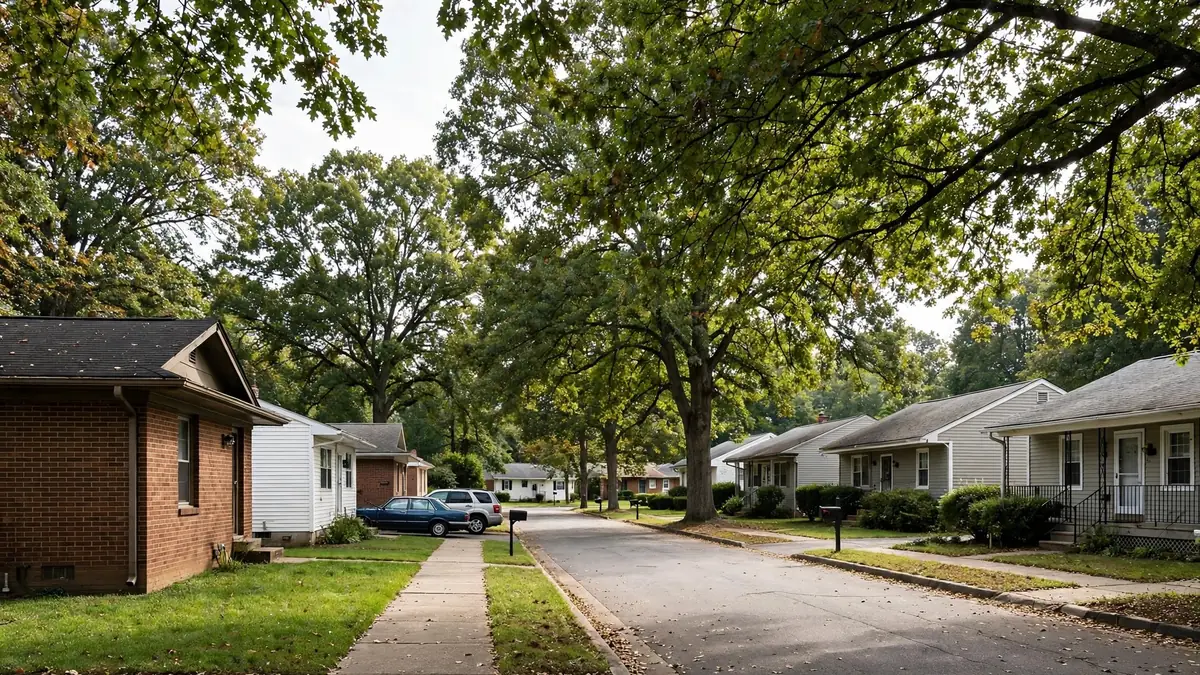
Key facts: Kansas City, KS
- In the 1951 flood, the Kansas River overtopped the levees protecting Argentine and Armourdale, about 15,000 people were evacuated and Armourdale homes were submerged up to their roofs [1].
- Armourdale, Argentine, Rosedale and Strawberry Hill are long-established districts of Kansas City, Kansas [2].
- Combined sewers carry stormwater and wastewater in the same pipe and can overflow during heavy rain [3].
- A backwater valve stops sewage from flowing back into a building through its drain line [4].
- Flooding from rising water is generally excluded from homeowners policies and covered by separate flood insurance [5].
Covered
Covered areas in and near Kansas City, Kansas
Kansas City, Kansas has 12 covered ZIP codes on this site. The call confirms your address.
- Central and northeast KCKOlder neighborhoods north of the Kansas River, including Strawberry Hill and the areas around downtown.
- Armourdale and ArgentineRiver-bottom and bluff neighborhoods south of the Kansas River.
- RosedaleThe neighborhood in the southeast of the city, near the state line.
- Western Wyandotte CountyNewer neighborhoods west toward the Legends area and beyond.
- Nearby covered townsBonner Springs to the west, and Leavenworth and Lansing to the north, have covered ZIP codes too.
River history
The 1951 flood and Kansas City, Kansas
Kansas City, Kansas lies where the Kansas River empties into the Missouri. Its industrial heart grew on the flat river bottoms: rail yards, packing plants and the neighborhoods where workers lived. In July 1951, after weeks of rain across the Kansas River basin, the river overtopped the levees protecting Argentine and Armourdale. About 15,000 people were evacuated, Armourdale homes were submerged up to their roofs, and the flood devastated the stockyards in the West Bottoms [1].
The flood led to major improvements in levees and upstream reservoirs, and the river-bottom districts are far better protected today. But low-lying areas near the rivers and the creeks that feed them still carry flood risk in extreme rain, and some properties remain in mapped flood zones. If you live in or near the river bottoms, check your flood zone and talk to your agent about flood insurance, which is separate from homeowners coverage [5].
For most households, though, everyday water damage comes from storms, basements, plumbing and drains. The city's geography and age make some of those more common here than in newer suburbs.
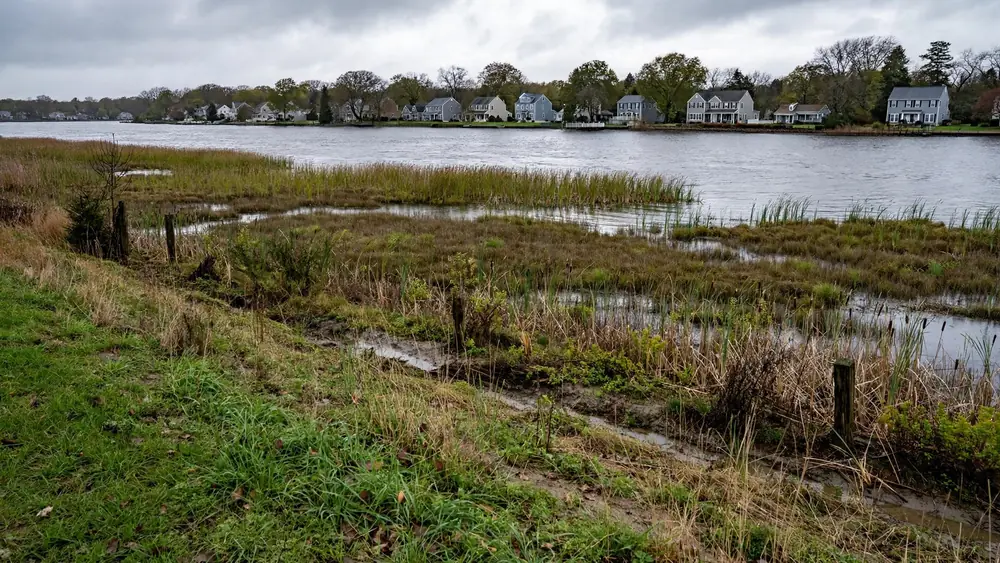
Hillside homes
Hillside basements and bluff neighborhoods
Much of Kansas City, Kansas is built on hills and bluffs above the river valleys. Neighborhoods such as Strawberry Hill and the older parts of Rosedale climb steep slopes, and houses there often sit on raised lots with basements cut partly into the hillside. That layout means one basement wall may be fully below ground on the uphill side while the downhill side is close to grade.
Hillside basements take on water in particular ways. Rain running down the slope collects against the uphill foundation wall and seeps through joints and cracks. Driveways and walks that slope toward the house funnel water to the foundation or a garage door. Retaining walls can fail or push water sideways. Downhill neighbors receive runoff from uphill properties. When the soil is saturated after a long wet spell, older foundations may seep for days.
Fixing the cause often means work outside: regrading, extending downspouts, adding drainage along the uphill side and repairing walls. Inside, cleanup follows the usual steps described on our flooded basement cleanup page.
Housing
Kansas City, Kansas housing and water risks
Early 1900s frame houses
Two-story wood frame houses with basements, older plumbing and often plaster walls.
Brick and stone foundations
Older foundations with mortar joints that seep when the soil is wet.
Post-war bungalows and ranches
Basements with floor drains and laundry, often with original drain lines.
Hillside homes
Raised lots, partial walkouts and runoff from uphill neighbors.
Western Wyandotte subdivisions
Newer homes in the west of the county, built with finished lower levels, sump pits and PEX.
Duplexes and small apartments
Shared walls and floors where water moves between units.
Sewers
Older sewers and basement backups in Kansas City, Kansas
Sewer backups are one of the most unpleasant forms of water damage, and older cities are more prone to them. Many older American cities were built with combined sewers that carry both stormwater and wastewater in the same pipe, which can overflow during heavy rain [3]. Even separate sanitary sewers can be overwhelmed when rainwater leaks in through cracked pipes, manholes and old connections. When the system surcharges, sewage can push back up house laterals and come out of the lowest drain, usually the basement floor drain.
Private lines add to the risk. Older homes often have clay or cast-iron sewer laterals that roots can penetrate, joints that separate and sections that sag. Those problems cause slow drains, gurgling and eventually backups even in dry weather.
If your basement floor drain backs up during rain, or several neighbors have the same problem, contact the Unified Government's sewer or water pollution control department and ask about the system on your street. Ask a licensed plumber about a backwater valve, which lets wastewater out but closes when the sewer surges [4]. Our sewage backup cleanup page explains cleanup and safety.
Drain backups
What a basement backup looks like in an older KCK house
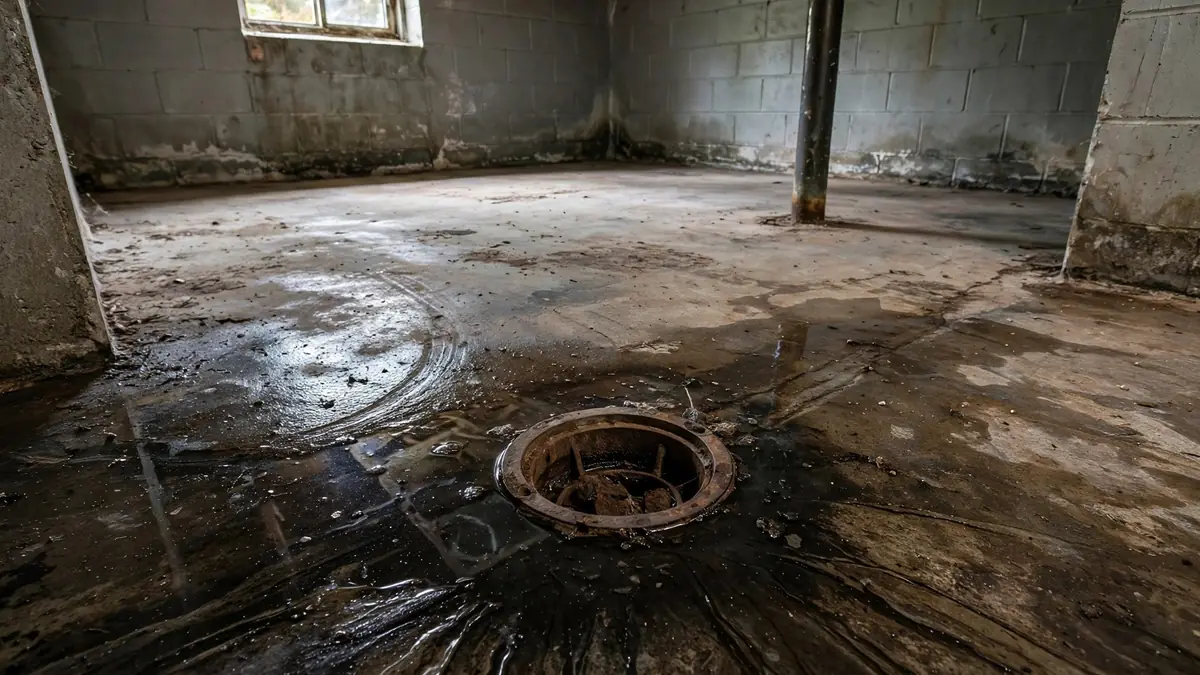
In many older Kansas City, Kansas homes the basement floor drain is the lowest opening on the sewer line, often beside the laundry tub and the water heater. A backup typically starts as water rising around the drain grate, sometimes with an odor, then spreads across the floor toward the walls and any finished areas.
Treat that water as sewage. Stop using water in the house, keep children and pets away, and do not walk through it near electricity. Photograph it, call a plumber or the sewer department, and arrange professional cleanup, which involves removing porous materials it touched, cleaning and disinfecting, and drying.
KCK water sources
Common water sources in Kansas City, Kansas homes
| Source | Common when | What usually gets wet |
|---|---|---|
| Floor drain backup | Heavy rain or a blocked lateral | Basement floor; porous materials removed |
| Hillside runoff and seepage | Long wet periods and downpours | Uphill basement walls, floors, stored items |
| Burst pipe in an older wall | Winter cold snaps | Walls, floors, basement ceilings |
| Roof and window leaks | After storms and hail | Attics, ceilings, walls |
| Water heater or washer failure | Any time | Basement and laundry areas |
| Sump pump failure | Storms with power loss (newer homes) | Finished basements |
| River or creek flooding | Extreme rain in flood-prone areas | Lower levels and main floors |
Winter
Freezing weather and older KCK plumbing
Northeast Kansas winters bring stretches of hard cold [6], and older frame houses lose heat through thin walls and around windows. Pipes along exterior walls, in kitchens on the back of the house, in enclosed porches and along basement rim joists freeze first. Some older homes still have galvanized steel supply lines, which corrode from the inside and are more likely to fail at threaded joints. Polybutylene may also be present in homes plumbed or remodeled between about 1978 and 1995 [7]. See burst pipe water damage for first steps.
KCK first steps
First steps after water damage in Kansas City, Kansas
- 1
Make it safe
Stay out of standing water near electricity. Treat any floor drain water as sewage.
- 2
Stop the source
Close the main valve for plumbing leaks; stop using water if drains are backing up.
- 3
Document
Photograph the water, its source and everything damaged.
- 4
Report
Call your insurer, and call the sewer department if the backup happened during rain or neighbors are affected.
- 5
Call for restoration
One call connects you with an independent contractor who serves your ZIP code.
Older-home safety
Lead, asbestos and older Kansas City, Kansas homes
Most of the older housing in Kansas City, Kansas was built long before 1978, which means lead-based paint is likely somewhere in the house. Cutting out wet drywall or plaster, pulling trim and sanding in these homes calls for lead-safe work practices, especially where children live [8]. Older homes may also contain asbestos in pipe insulation, boiler wrap, some floor tiles and textured surfaces, which should not be disturbed without testing [9]. A good contractor will ask about the age of the house and plan around both.
Wyandotte permits
Permits and repairs in Wyandotte County
Extraction, cleaning and drying do not usually need permits, but repairing plumbing, electrical circuits, furnaces and water heaters, and structural framing often does. In Kansas City, Kansas, building permits go through the city-county Unified Government in Wyandotte County. Bonner Springs and the Leavenworth County towns have their own departments. Ask the contractor who will pull permits for any repair work.
Frame houses
What a restorer checks in an older Kansas City, Kansas frame house
The two-story wood frame house on a narrow lot is a common sight in the older parts of Kansas City, Kansas. Many have a full basement under the main block and a shallow crawlspace under a rear kitchen or porch addition. That mix matters, because the crawlspace is colder and harder to reach, so pipes running through it are prone to freezing and leaks there can go unnoticed until the kitchen floor softens.
Inside, a restorer will look at how the plumbing was updated over the years. It is common to find a patchwork of galvanized, copper and plastic lines, with old drain stacks of cast iron and newer branches of plastic. Leaks often start at the joints between materials. Water from an upstairs bathroom in an older frame house can run down inside the wall all the way to the basement, so the contractor will check the wall and the sill plate below any leak, not just the ceiling under it.
Floors and finishes need care too. Original pine or oak floors under later coverings can cup when water gets between the layers. Plaster walls and ceilings may hold up well to a short leak but crack or separate from the lath if soaked. Wood trim and doors in older homes are often worth keeping, and a careful contractor will pull and store them rather than tearing them out. Ask on the call how they handle original materials, and whether they label and photograph each piece before removing it from the wall.
Western Wyandotte
Newer homes in western Wyandotte County
West of the older city, toward the Legends area and the county's western edge, the housing changes. Subdivisions built in recent decades have larger homes, finished basements, sump pumps, PEX plumbing and attached garages. Water damage there looks more like it does in Johnson County: a sump pump overwhelmed or without power in a storm, a failed fitting on a PEX line, a washing machine or water heater leak in a finished lower level, or storm runoff reaching a walkout or window well.
Finished basements in these homes are often the most valuable space in the house, with carpet, drywall, a bathroom and sometimes a kitchenette or theater room. Quick extraction and careful drying are what keep the damage limited. A battery backup sump pump, leak sensors near the water heater and washer, and downspouts extended away from the foundation are the most effective protections.
Shared walls
Duplexes, fourplexes and rentals in Kansas City, Kansas
Older parts of Kansas City, Kansas have many duplexes, fourplexes and single-family houses that are rented out. In a building with shared walls, water does not respect unit lines. A supply line that fails in an upstairs unit soaks the ceiling below; a floor drain backup in a shared basement affects every household's storage and laundry; a roof leak over one unit can run along a ceiling into the next.
That means more people need to act at once. Tenants should tell the owner or manager in writing as soon as they see water and should photograph their own belongings. Owners should get extraction and drying started quickly and make sure the contractor can enter every affected unit. Each household's renters insurance, if they have it, deals with their own possessions, while the owner's policy usually covers the building. Ask the contractor to keep their notes and photos separated by unit so each claim is clear, and share contact details between households so nobody is left waiting for access to a unit that needs drying.
River-bottom businesses
Warehouses, shops and churches on the river bottoms
The flat ground along the Kansas River still holds much of the city's industry and many small businesses, along with older churches and community buildings. These structures often have flat or low-slope roofs with internal drains that clog with leaves and debris and back up into the building during heavy rain. Large open floors of concrete can take on water from loading docks and overhead doors. Older masonry walls can wick moisture for a long time.
The restoration approach is the same in principle, with more equipment and more attention to stock, records and machinery. If you manage a commercial or community building, mention the size of the affected area and what is stored there when you call. Say whether the building has a sprinkler system, whether any power or gas equipment sat in water, and whether you need to keep operating while drying is under way, because those details change how the contractor plans containment, equipment placement and the order of work. Keep records of any stock or equipment that was damaged, with photos, for your insurer.
Nearby towns
Bonner Springs, Leavenworth and Lansing
Several towns near Kansas City, Kansas also have covered ZIP codes. Bonner Springs, west along the Kansas River, has a mix of older homes near the river and newer neighborhoods on higher ground. Leavenworth, one of the oldest cities in the state, sits on the Missouri River north of Wyandotte County and has a large stock of nineteenth- and early twentieth-century houses with stone and brick foundations, where seepage, old plumbing and freezing pipes are common. Lansing, just south of Leavenworth, is mostly newer suburban housing with basements and sump pumps.
The same rules apply in each: stop the water, make electricity safe, document the damage and call. Building permits for repairs go through each town's own building department, and the contractor you are connected with should know which applies to your address.
Prevention
Reducing water damage risk in a KCK home
- Backwater valveIf the floor drain has ever backed up, ask a plumber about one [4].
- Sewer lateral inspectionHave an older clay or cast-iron line camera-inspected for roots and breaks.
- Uphill drainageRegrade, extend downspouts and add drainage on the uphill side of hillside homes.
- Pipe protectionInsulate pipes on exterior walls and rim joists; keep the heat steady in cold snaps.
- Keep things off the floorStore belongings on shelves in plastic bins, not on the basement floor.
- Flood insuranceIf you are near the rivers or a creek, consider flood coverage before you need it [5].
Related
Water damage services for Kansas City, Kansas homes
Sewage backup cleanup
Floor drains and toilets backing up.
Read moreFlooded basement cleanup
Hillside seepage and storm water.
Read moreBurst pipe water damage
Frozen and corroded supply lines.
Read moreStructural drying
Drying framing, plaster and concrete.
Read more
FAQ
Kansas City, Kansas water damage questions
Is all of Kansas City, Kansas covered?
The city has 12 covered ZIP codes on this site. Bonner Springs, Leavenworth and Lansing also have covered ZIP codes. Call to confirm your address.
Are Armourdale and Argentine still at risk of flooding?
Levees and reservoirs built after 1951 greatly reduced river flood risk, but low-lying areas can still flood in extreme events. Check your flood zone and consider flood insurance.
Why does my KCK basement drain back up when it rains?
Rain can overload the sewer system or enter through cracked pipes, pushing sewage back up house laterals. A blocked private line can also be the cause. Call the sewer department and a plumber.
Is a sewer backup covered by insurance?
Often only with a sewer and drain backup endorsement. Check your policy and ask your agent.
My hillside basement leaks on one side. Why?
Water running downhill collects against the uphill wall. Grading, downspouts and drainage on that side usually help most.
Who handles building permits in Kansas City, Kansas?
The city-county Unified Government in Wyandotte County. Ask the contractor who will pull them.
Does this site promise emergency response?
No. Scheduling is set by the Wyandotte County contractor on your call; ask them directly when they can be there.
Why is my kitchen floor soft in my older KCK house?
In many older frame houses the kitchen sits over a crawlspace where pipes and drains run through a colder, hidden space. A slow leak there can soak the subfloor for weeks. Shut off the water to the kitchen fixtures and have the crawlspace and subfloor checked.
Water from the upstairs unit came through my ceiling. Who do I call?
Tell the owner or property manager right away, in writing if possible, and photograph the damage and your belongings. The owner usually arranges restoration of the building; your renters policy, if you have one, deals with your own possessions.
Can original wood trim be saved after water damage?
Often, yes. Trim and doors that got wet can usually be removed carefully, dried, stored and reinstalled. Ask the contractor to number and save original pieces rather than discarding them.
Do Leavenworth and Bonner Springs homes have the same issues?
Many of the same: older foundations and plumbing in the historic parts of town, and finished basements and sump pumps in newer areas. Permits go through each town's own department.
Nearby
More around Kansas City, KS
Back to all of Kansas. Nearby pages: Lawrence, Overland Park, Shawnee, Topeka, Wichita.
Related help for Kansas City, KS: water extraction, structural drying, sewage backup cleanup, fire damage restoration and smoke damage cleanup. First time dealing with this? Read the first hours after water damage.
Sources and citations
- [1]Wikipedia — Great Flood of 1951
- [2]Wikipedia — Kansas City, Kansas
- [3]Wikipedia — Combined sewer
- [4]Wikipedia — Backflow prevention device
- [5]FEMA — Flood insurance
- [6]Wikipedia — Climate of Kansas
- [7]Wikipedia — Polybutylene
- [8]U.S. EPA — Protect your family from sources of lead
- [9]U.S. EPA — Protect your family from exposures to asbestos