Key facts: Lakeshore
- Lake Stevens covers 1,040 acres with 7.1 miles of shoreline and is the county's biggest and deepest lake.
- All of the lake drains through one outlet channel along Hartford Drive into Catherine Creek.
- A 2020 outlet study found the weir does not adequately control the lake during the wet season.
- FEMA map updates moved some lakeside homes into a flood hazard area, the Everett Herald reported in 2021.
The homes here
What the shoreline is like
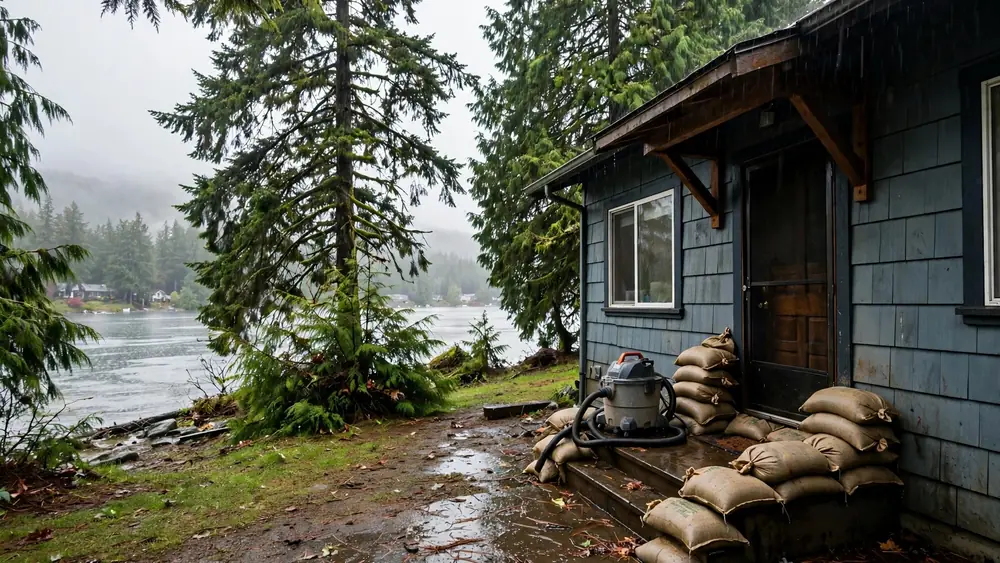
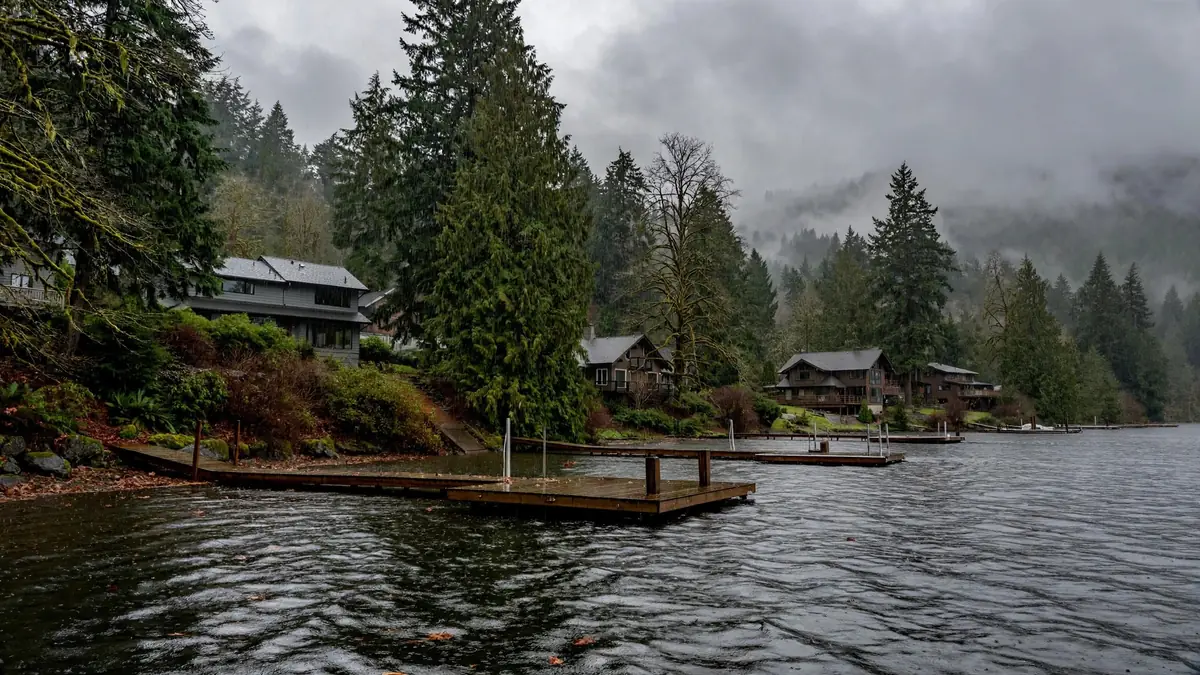
The lake's shoreline was cut up early. Summer-home tracts were being platted from 1891, and by 1926 nearly all the shoreline had been divided into small lots, HistoryLink records. Over time, small cabins were replaced by larger year-round homes, and few nearshore lots kept their native vegetation. Bulkheads and fill became common. That history is why the lakefront today is a mix of narrow lots, homes that have been extended more than once, and newer houses built close to the water on land that was shaped by people.
This matters when water gets in. A home that started as a cabin may have foundation sections from several periods, with an old crawlspace under one wing and a newer one under another. Filled shoreline ground can behave differently from native soil, draining more quickly in some spots and more slowly in others. A bulkhead holds the land back from the water, but it does not make the ground behind it dry. And houses on narrow lots tend to shed roof water toward neighbors or toward the lake, which gives runoff little room to soak away.
North Cove is the original heart of the town. Charles Missimer bought land there in 1889, and the Rucker Brothers built a sawmill on pilings there in 1907, which burned in 1925 and was never rebuilt. The older buildings and low ground in that part of the city are close to the outlet channel, which is a large part of the downtown flooding story discussed below. The city says its 2021 annexation brought its boundaries around all sides of the lake, though unincorporated land remains in the wider growth area, so the agency that handles a question can still depend on your exact address.
What is common here
Water problems most typical of shoreline lots
Lawns and yards under water
One resident described nearly a foot of standing water on their lawn in recent winters, the Herald reported in 2021.
Wet crawlspaces
A high water table and saturated soil can bring water up from below long before the lake reaches the house.
Drainage and sewer concerns
Saturated ground can make low drains slower. Dirty water always needs different handling.
Read moreLong drying times
Damp winter air next to the water makes drying a closed house slower.
Read more
Lots on the lake drain toward the lake
How the lake behaves
Why the lake rises and stays up
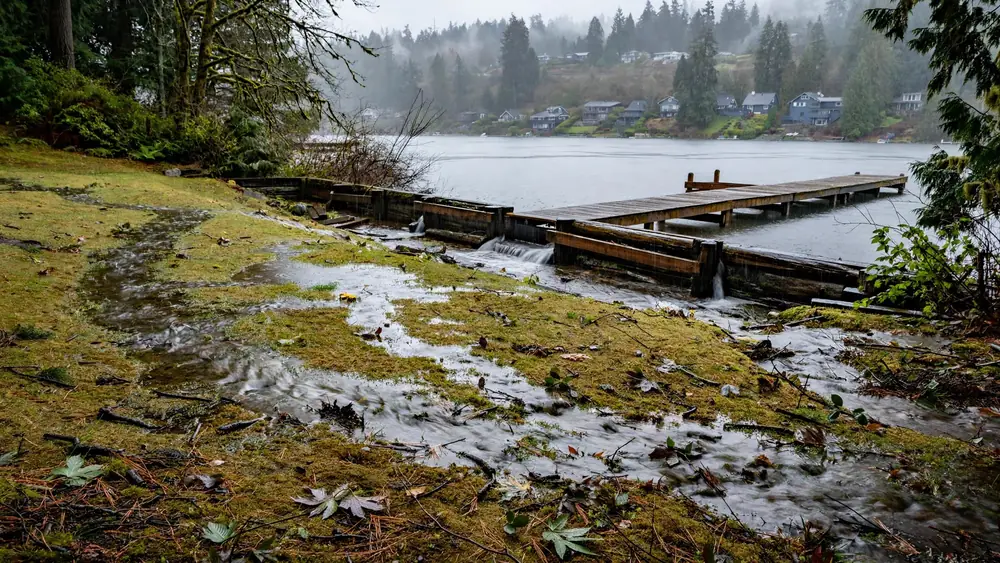
About 1,000 acres of water leaves by a single route. The outlet channel, which was dug for the Rucker Mill and runs parallel to Hartford Drive, is the lake's only outflow, according to reporting by the Everett Herald. A wood-plank weir at the northeast corner helps manage the level. Each spring the city adds boards to hold water for summer use, and in fall it takes out all the boards to allow as much water out as possible.
What happens in winter surprises people. A 2020 outlet study concluded that the weir does not adequately control the lake in the wet season, because the width, height and slope of the channel are then what limit outflow. [3] In other words, pulling the boards helps, but there is no valve anyone can open during a big storm. That is why the lake can stay high for days after the rain has stopped. The channel itself overtopped Hartford Drive during the record rainfall of November 2021, even though 300 feet of it had recently been dredged.
Numbers vary with the datum used, so be careful comparing them. In 2015, the Herald reported a peak of about 212.5 feet that December, close to the December 2012 high of 212.8 feet since tracking began in 2010, and said the city regards 211.8 feet as high. In that storm, some private docks along Vernon Road and North Lakeshore Drive were partly under water. Later city documents may use other figures or references, so ask the city what today's level means for your property.
Diagnosis
Sources of water for a house near the lake
| What you notice | Likely cause | First thing to do |
|---|---|---|
| Water rising in the crawlspace in a storm | High water table or surface water | Stay out, photograph it from the hatch and check electric |
| Water on the lawn near the bulkhead | High lake level or poor yard drainage | Look at the city's lake reports and watch the house's edge |
| Musty smell after a wet month | Damp crawlspace or insulation | Check from the hatch for fallen batts |
| Water coming through the door or garage | Surface flooding | Treat it as contaminated, and call your insurer |
| Dirty water up a floor drain | Sewer or drain backup | Stop using plumbing and keep people away |
| Wet wall in dry weather | Plumbing leak or roof leak | Close the main and read your water meter |
Flood hazard and insurance
The flood map question
Reporting by the Everett Herald in 2021 said some lakeside homeowners learned from their mortgage companies that FEMA's updated maps now put their homes in a designated flood hazard area, and that flood insurance is required for such homes with mortgages. Rebuilding in a mapped floodplain can also bring extra rules, so ask the city what applies to your lot.
For a homeowner with damage, the practical split is simple. Washington's Office of the Insurance Commissioner says a typical home policy does not cover flooding. [7] If the water came from a broken pipe inside your house, your home policy is where you start. If it came from a rising lake or across the ground, you need a separate flood policy. Those policies through the National Flood Insurance Program generally start 30 days after purchase unless a mortgage triggered the requirement, so they cannot be bought once water is already rising. Look up your address on FEMA's map and read our guide to flood or water damage claims before the next big rain.
First moves
What to do when lake water reaches the house
- 1
Get out if it is unsafe
If water is rising fast, or if you smell gas or see sparks, leave and call 911 from outside.
- 2
Protect what you can early
Lift belongings and move vehicles if you still have time, and only if it is safe.
- 3
Do not pump too soon
With a basement or deep crawlspace, draining while outside water is high can push walls in or heave floors, state guidance warns. [11]
- 4
Document it
Photograph the water line, the yard and the rooms, with dates on your images.
- 5
Tell your insurers
Contact both your home and flood insurers, if you have both, and describe the source honestly.
- 6
Plan the cleanup
Porous materials touched by floodwater generally get removed, and the structure gets dried afterward.
Pumping safely
Basements and pumping near the shore
Most houses here have crawlspaces rather than deep basements, but there are lower levels on sloped lots. If you have a below-grade room and water is outside as well as inside, read Washington's guidance before you pump. The state health department explains that water inside helps brace the walls against the waterlogged soil outside, and that draining too soon can push the walls in or make floors heave. It says to wait until most floodwater outside has receded, to start pumping only when the water inside is higher than the water outside, and to pump at about the rate the outside water falls.
Be careful with electric pumps, too. If the panel is in the flooded area, state guidance says not to use an electric sump pump unless it runs on a 12-volt auto battery, and any gasoline pump's exhaust has to be vented outdoors. Never run a generator or gasoline pump indoors. Once you have the water out, shovel out mud, rinse down concrete or masonry and then dry it as quickly as you can. Most of this is hard physical work with some real risk, so it makes sense to ask for help.
Drying
Drying a house next to the water
Drying depends on the air you have to work with. A home next to a big body of water in November is sitting in damp air, so opening the windows may not be much help. A closed room with dehumidifiers tends to work better, as the structural drying page explains. Crawlspaces take longer still, particularly if the soil beneath is saturated, since moisture keeps coming up until the water table falls.
There is one more wrinkle. If the lake stays high for days, it may not make sense to finish drying the crawlspace until the ground stops supplying water. Removing wet insulation early and getting the first floor dry can still help. Ask your contractor about staging the work when the lake is high.
- Closed rooms and dehumidifiers tend to work better
- Crawlspaces dry after the water table falls
- Staging the job can make sense
Creeks
Stitch, Lundeen and Mitchell: the creeks that feed the lake
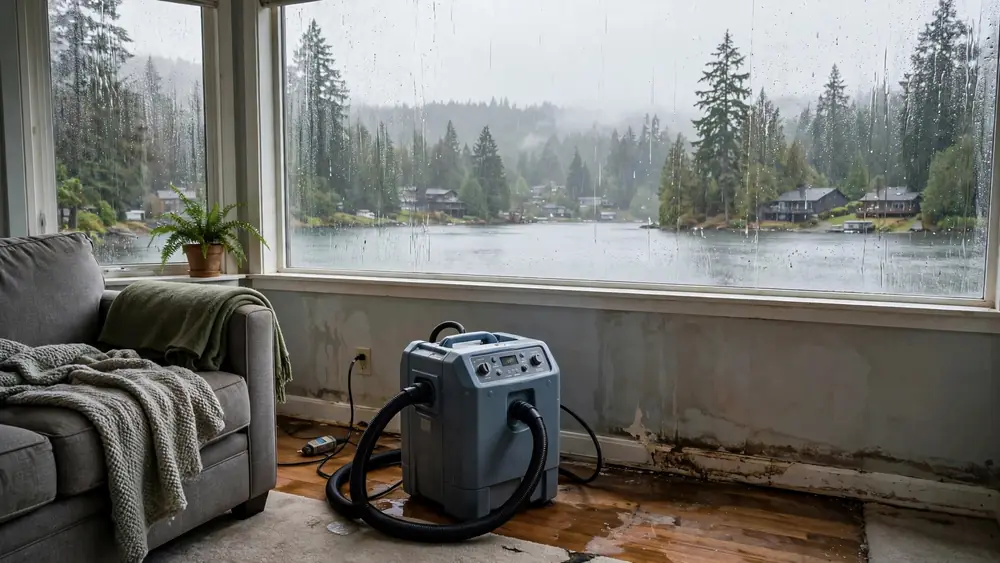
The lake is fed by Lundeen, Mitchell (also called Kokanee) and Stitch creeks, and houses along these streams have flooding stories of their own. HistoryLink records that Lundeen Creek used to run in a straight ditch that flooded nearby homes, until it was restored through a 100-foot greenbelt in 2008. In late December 2020, a culvert carrying Stitch Creek under 99th Avenue SE, near 4th Street SE, collapsed, and water crossed the road by January 2021. The Herald reported that it flooded the basement of a nearby home.
If you live near one of these small creeks, watch the culverts and ditches in your area and report blockages to the city. Blocked or failing culverts can send water places it has never gone before, and the first clue may be water appearing where you have never seen it. Your flood map may not show these small drainage issues, so what you see on your own lot counts for a lot. Photographs and dates are useful if you need to talk to the city about it.
Features
Shoreline features and what to ask about them
| Feature | Why it matters | What to ask |
|---|---|---|
| Bulkhead | Holds soil, but water passes around or under it | Is water ponding behind it? |
| Fill on the lot | Soil may drain unevenly | Where does water stand after a storm? |
| Added wing | Foundations may differ | Is each crawlspace connected or separate? |
| Lakeside garage or storage | Low floor level | How high did water reach before? |
| Older side sewer | Older joints may leak | Has the line been camera inspected? |
| Dock and shoreline stairs | Reports of high water | Do they show past water lines? |
Permits
Permits and shoreline rules on the Lake Stevens waterfront
Repairs on the shoreline can bring in more rules than inland repairs. The city's permit center takes building, mechanical and plumbing applications online. Electrical permits come from Washington Labor & Industries, the city notes. If the work is in a floodplain or close to the water, floodplain and shoreline rules may add steps, particularly after heavy damage, so check with the city before rebuilding.
Do not assume your address is inside the city. Annexations changed the boundary many times, and the city says some unincorporated growth area remains. Even if you have lived here for years, it is worth confirming which office handles your permits before the repair stage starts.
The visit
Planning a contractor visit on a lakeshore lot
Access is the thing to think about on narrow lots. A truck may have to park on the road, and shoreline streets can be tight, so hoses may run a long way from the driveway. If water is across the road or the outlet is overflowing, the route to your house may change, and Hartford Drive has flooded in the past. Mention this on your call.
Have the hatch location handy, and know where the panel, the main valve and any sump pump are. If you have a flood elevation certificate or previous claim paperwork, have those to hand too. Ask the contractor what they will need you to move before they arrive, and whether they have worked with flood policy paperwork. Check their registration on Washington L&I's Verify tool before you agree to anything.
Prevention
Preparing a lakeshore home before winter
- Know the lake levelFollow the city's reports in wet weather, so a rise does not catch you off guard.
- Clear yard drains and guttersKeep roof water away from the crawlspace and out of the low side of the lot.
- Raise what can be raisedPut stored items on shelves in lake-side garages and lower rooms, and do not keep important papers there.
- Review flood coverage in summerCoverage takes time to start, and August is a far better month for this conversation than December.
- Look under the houseCheck insulation and ground cover in October, while it is dry.
- Know your shutoffsEveryone in the house should know how to turn off the water and where the panel is.
- Keep a record of past high waterPhotos of where water reached help you plan and help anyone assessing later damage.
Bigger decisions
Repair after flooding or lift and change the house?
If water has reached your living space more than once, the right question may go beyond restoration. Long-term options include moving utilities above the likely flood level, using flood-tolerant materials on lower walls, filling or venting a crawlspace to current rules, improving yard drainage or, for some owners, elevating the home. These choices involve engineers, permits and floodplain rules, so they are not something to decide while the floors are wet. Get the house dry and safe first. Then look at what the map, the lake's record and your own photographs say about the risk ahead.
The city has discussed longer-term work on the outlet too. Herald reporting in 2021 said restoring the outlet's historic path through the wetlands behind homes on the north side of Hartford Drive would likely reduce much of the downtown flooding, and that replacing an outdated culvert under the road was at the top of the city's list. We do not know the current status of those plans, so check with the city.
Weather
How wet winters and storms affect the shore
Published Everett normals give a good idea of the season, with November the wettest month at about 5.8 inches and July and August near an inch. Modelled Open-Meteo figures for Lake Stevens read much higher, about 71 inches a year, with 65.2 inches from November 2025 to October 2026 and about 11 days a year of an inch or more. These may be on the high side. Whichever you go by, what matters to a shoreline lot is the run of wet days, because the outlet can only release so much water at a time. A few heavy days on top of a full lake is the classic setup for high water.
FAQ
Questions from Lake Stevens lakeshore owners
Why is my lawn underwater when the lake is not very high?
Yards close to the lake can hold water when the ground is saturated, and the lake limits how far groundwater can drain. A filled lot or blocked yard drain can make this worse. Look at both the lake level and the drainage on your own property.
Who controls the level of Lake Stevens?
The City of Lake Stevens manages a weir on the outlet channel by adding boards in spring and removing them in fall. A 2020 study found the weir does not adequately control the lake in wet months, when the channel's shape limits outflow.
Do I need flood insurance on the lakefront?
It depends on your mortgage and your risk. Some lakeside owners were told to buy it after FEMA's maps changed. Check your address on FEMA's map, talk to your lender and agent, and remember that NFIP policies usually take 30 days to start.
Does my home insurance cover lake water in my crawlspace?
Usually not. Washington's Insurance Commissioner says a typical home policy does not cover flooding, and water coming from the lake or across the ground will usually be treated as flood. Check your policy and speak to your agent about your situation.
Can I pump water out from under my house while the lake is high?
It often will not help, because the water comes back from the saturated ground. Pumping below-grade rooms too soon can also damage walls, according to state guidance. Pump for a clear purpose, and ask for advice on timing.
Are old cabin homes more at risk than new houses?
They can have particular risks, such as varied foundations, low floors and old drain lines, but a newer house on low ground also has its own problems. The height of the floor above the likely water level and the drainage around the home matter more than age.
Is water on my lot a city or homeowner problem?
Usually water on private land is the owner's responsibility, while the outlet, ditches and road culverts generally fall to the city or county. If a ditch or culvert appears blocked, report it to the city. Keep dated photos in case they are needed.
Can I rebuild after a flood without extra permits?
Not always. Floodplain and shoreline rules may apply. Talk to the city's permit center before you begin rebuilding, particularly if there was major damage. Rules are different on county land.
Nearby
More around Lakeshore
Back to all of Lake Stevens. Nearby pages: Cavalero Hill, Frontier Village, Hartford.
Related help for Lakeshore: water extraction, structural drying, sewage backup cleanup, fire damage restoration and smoke damage cleanup. First time dealing with this? Read the first hours after water damage.
Sources and citations
- [1]Lake Stevens, Washington (Wikipedia)
- [2]Lake Stevens thumbnail history (HistoryLink)
- [3]Some Lake Stevens homeowners now must buy flood insurance (Everett Herald, 2021)
- [4]Rainstorms push Lake Stevens to a near-record level (Everett Herald, 2015)
- [5]Annexation (City of Lake Stevens)
- [6]Lake Stevens collapsed culvert (Everett Herald, 2021)
- [7]Flood insurance (Washington Office of the Insurance Commissioner)
- [8]Everett climate normals 1991-2020, NOAA station data (Climate-Zone)
- [9]Open-Meteo historical weather model (modelled data)
- [10]Flood cleanup (Washington State Department of Health)
- [11]Floods: cleaning a basement (Washington State Department of Health)
- [12]Flood cleanup to protect indoor air quality (US EPA)
- [13]Permit center (City of Lake Stevens)