Key facts: Frontier Village
- Frontier Village opened in 1960 at SR 9 and SR 204, and drew businesses away from downtown.
- The 2006 annexations added 1,563 acres near Frontier Village and at the lake's north end.
- About 24 percent of occupied Lake Stevens housing units were rented in 2020.
- Water through shared walls usually means more than one party, and more than one insurer.
The area
How Frontier Village shaped this part of the city
Frontier Village opened in 1960 at the junction of SR 9 and SR 204, and drivers on 204 could cross the highway straight into its parking lot. HistoryLink records that Mitchell Pharmacy moved there on September 1, 1960, and that other downtown businesses followed. Its arrival played a part in the push to incorporate the town. By the turn of the century, the SR 9 and SR 204 intersection was the busiest in Snohomish County. It became part of the city in the first major annexations, completed in 2006, which added 1,563 acres near Frontier Village and at the lake's north end. [2]
The result today is a mix: big-box and strip retail along the highway, with residential streets and multi-family housing nearby. Census figures from 2020 show a city where 75.7 percent of occupied units are owner-occupied and 24.3 percent are rented, and rental and shared-wall homes are the kind of housing where a leak quickly becomes more than one person's problem.
We are not claiming every home here looks the same. Detached houses on quiet streets are also part of the picture, and for those homes our other pages may suit you better. This page focuses on what is different when your home shares a wall, a floor or a parking lot with others.
What is common here
What tends to come up in this part of Lake Stevens
Leaks from the unit above
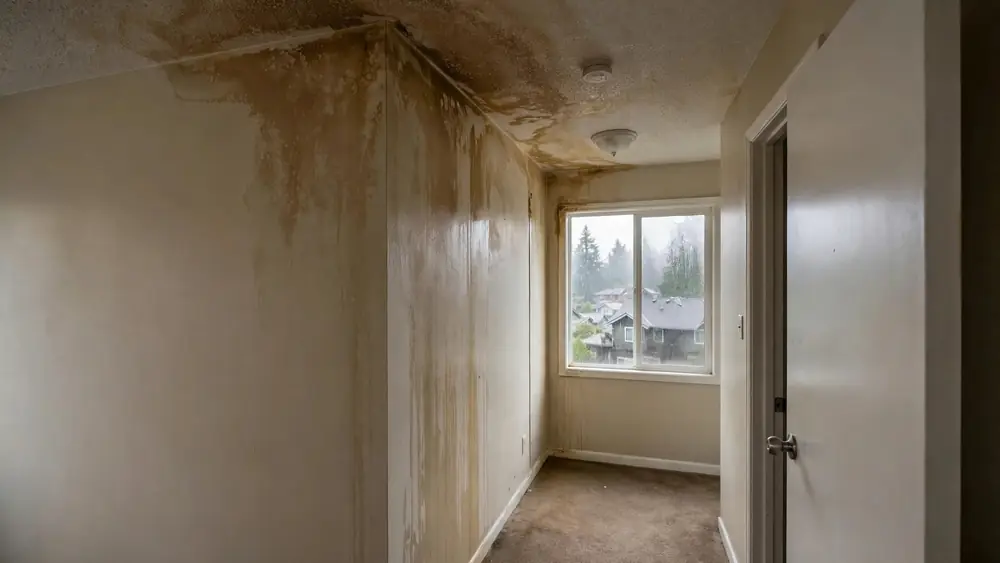
Water runs through ceilings and light fixtures, often with no clue where it started.
Read moreDamage across a shared wall
Moisture passes along floor framing and behind baseboards into the unit next door.
Read moreBackups in connected drains
Building drain lines shared by several units can overflow at the lowest fixture.
Read moreDisputes over who pays attention to what
Owners, tenants and associations each have a different role after a loss.
Water does not stop at the property line
The process
The order of events when water crosses from one unit into another
- 1
Stop the source
Ask a neighbor or the manager to close the valve. If you cannot reach anyone, call the building's emergency contact or property management.
- 2
Check for hazards
Water near light fixtures, outlets or a panel means staying away from those areas until checked.
- 3
Record it
Photograph ceilings, walls, belongings and the time you noticed it.
- 4
Notify in writing
Email or text the landlord, manager or association, and your insurer.
- 5
Agree on who is assessing
One contractor with access to all affected units can trace the water more accurately.
- 6
Map moisture across units
Readings should cover the unit above, the unit below and those to the sides.
- 7
Dry together
Drying one unit while the neighbor's wall stays wet can pull moisture back and forth.
- 8
Repair once it is dry
Keep shared walls open until every side reads dry.
Drying
Drying when you do not control the whole wall
Shared assemblies add a challenge. A party wall can have a gap, two layers of drywall and fire-rated materials, and it runs into floor framing that belongs to more than one unit. Fire-separating assemblies need to be repaired to keep their rating, so check with the building owner and the permit office before anyone changes them.
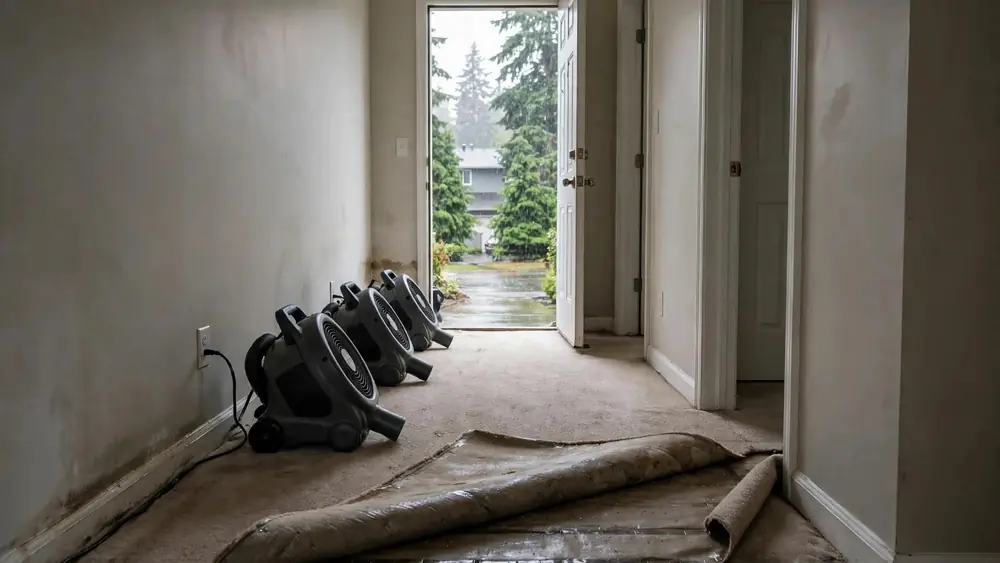
Practical details matter as well. Equipment often has to run for days in small rooms, and the noise can reach neighbors. Long cord runs and shared electrical capacity can also limit what goes where. Getting access to all the affected spaces at the same time is often the slowest part of the job. A manager who can coordinate access can make the most difference.
- Rated walls have to be restored properly
- Coordinate access across units
- Noise and power limits affect equipment
Runoff
Paved ground, parking lots and runoff near the highway
Rain behaves differently around pavement. Roofs, roads and parking lots shed water quickly, so ground-level units and garages near these surfaces depend on catch basins, swales and storm pipes working as they should. When drains clog with leaves or debris, water may pond against a building's lower edge, and a sloped driveway can send it straight through a garage door.
Heavy rain is not unusual in this region. Published normals at the Everett station have November at around 5.8 inches, with December and January close to 5. Modelled figures for the Lake Stevens location read higher, but we label those as modelled because they may overstate things. If a low unit or garage takes on water during storms, report the drain problem to the manager right away, and take a photo while the water is there. It is much harder to show after it has gone.
Water coming across the ground is a flood question for insurance purposes, which is different from a leak inside the building. The state's Insurance Commissioner notes that a typical home policy does not cover flooding. [6] Ask what your policy says, and what the association's master policy says, if there is one.
Do it yourself
What you can do in your own unit right away
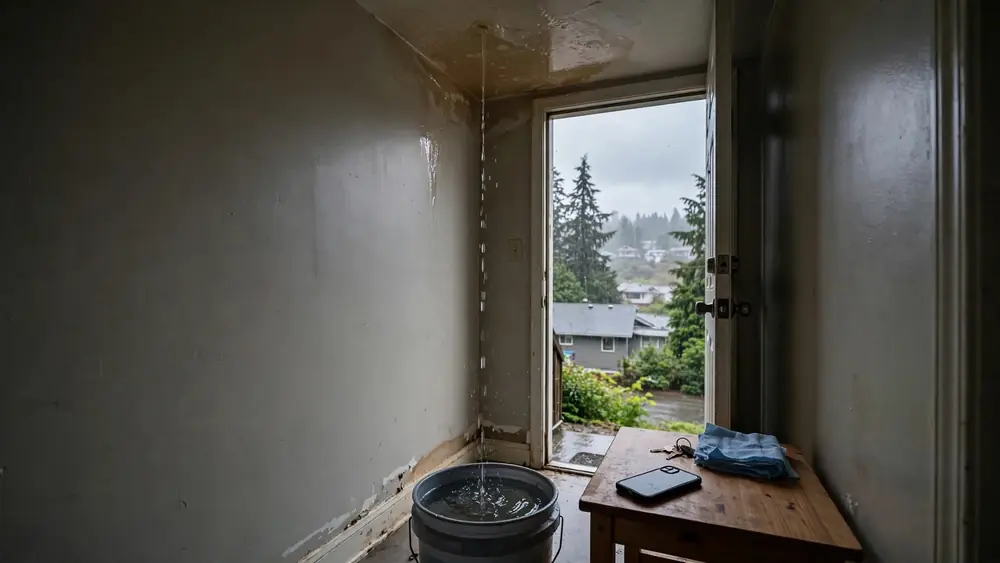
- Protect belongingsMove items from under the wet area and use buckets for steady drips.
- Do not pop a ceiling bubbleStay out from under a bulging ceiling, and let someone who can do it safely deal with it.
- Keep recordsKeep a list of damaged items with photos, and keep receipts for anything you have to buy.
- Avoid wet appliancesDo not turn on anything that got soaked, and stay clear of wet outlets.
- Give accessLet the manager and contractor know how to reach your unit, including when you will be home.
- Keep humidity downRun a fan or dehumidifier if it is safe and you have been told it does not interfere with the drying plan.
Upper floors
Ceilings, sprinklers and upper floors
Some larger multi-family buildings have fire sprinkler systems, and a broken sprinkler head releases a lot of water quickly and stains ceilings with dark, smelly water that has been sitting in the pipes. If this happens, leave any fire-related decisions to the building's people, and treat the water with more caution than a clean supply. Do not try to stop a sprinkler yourself unless you know what you are doing, as disabling a system affects everyone's safety.
On upper floors, you can have the opposite problem: your own appliance leak running down into several homes. Know where your unit's shutoffs are, and turn off the washer valves when you leave for an extended trip. It is also worth checking if your washer has a drain pan, and whether your bathroom and laundry have sensors or shutoffs that would help. A small detector on the floor near a washing machine can give early warning.
Permits
Permits and managers around Frontier Village
Most of this area has been within the city since the 2006 annexations, and the city's permit center handles building, mechanical and plumbing permit applications online. In attached buildings, work on shared structure, plumbing stacks and fire-rated assemblies is more likely to involve permits than in a single-family home. An association may also have its own approval rules and may want contractors to provide proof of registration and insurance before they start work. Ask your manager about these so that nothing gets held up. Tenants should leave permitting to the owner.
The visit
Planning a visit in a busy part of town
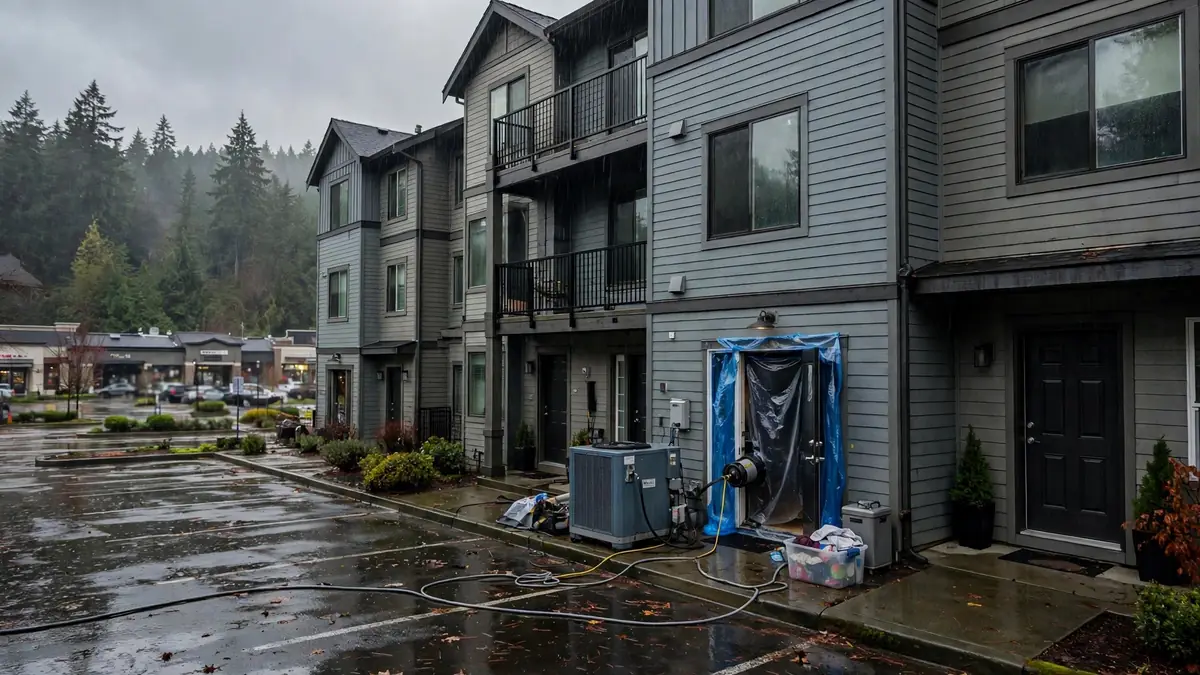
Parking can be the first hurdle. Truck-mounted equipment needs a place to park and a hose route, which is harder with assigned spaces, fire lanes and busy lots. Tell the contractor about the layout and any gate codes and restrictions on the call. Some jobs can use portable units. Upper floors with elevators or narrow stairs change what can be carried in. If traffic matters for timing, remember that the SR 9 and SR 204 intersection gets very busy, so plan for time on the road when you ask about arrival.
Prevention
Ways to lower the risk in attached housing
- Know both valvesYour unit shutoff and the location of the building main, plus who has keys.
- Replace appliance hosesWasher and refrigerator lines can flood more than one home, so inspect them yearly.
- Add leak sensorsThese are small and easy to place near water heaters, washers and sinks.
- Read your documentsKnow what the association insures and what you are expected to cover.
- Report slow dripsA small stain on your ceiling often means something bigger above it.
- Check the renter's policyYour landlord's policy generally will not replace your belongings.
Diagnosis
Clues that help you work out where it is coming from
| What you see | Likely source | Who to involve |
|---|---|---|
| Ceiling stain below a bathroom | Tub, toilet or shower above | Upstairs neighbor and manager |
| Wet carpet along a shared wall | Neighbor's plumbing or appliance | Manager and neighbor |
| Wet floor near an outside door | Roof, siding or door leak, or runoff | Manager or owner |
| Water at a garage door | Runoff or blocked drain | Manager, and take photos |
| Toilet or tub filling with dirty water | Shared drain line backup | Manager, plumber and sewage cleanup |
| Dark smelly water from ceiling | Sprinkler or drain line | Building manager and fire department if needed |
Getting to the cause
Repair the finish or address the cause
The biggest risk with shared housing is fixing what shows and not what caused it. Drywall patched below a leaking shower looks good until it stains again. Make sure that someone has actually identified the source, and that the fix happens before finishes go back. If your home has been damaged more than once from the same direction, write down each date and send it to the manager. A record of repeat damage changes the conversation about whether to investigate behind walls or replace a line.
Mixed uses
Living next to shops, restaurants and offices
Homes close to commercial buildings can be affected by things a suburban street rarely sees. A leak in a building with several tenants may not be noticed until the next business day, as nobody is there overnight. Restaurants and similar uses have grease and floor drains that can back up, and shared building lines can carry those problems to neighbors. Flat commercial roofs depend on drains that clog with leaves and debris, and water that ponds up there tends to come through at a seam or a penetration some distance from where it started.
If you rent an upstairs apartment over a business, or you have a shop on the other side of a wall, keep the building manager's contact details handy, as well as an after-hours number. If you run a small business here, think about the things that matter most in a loss: stock stored off the floor, a list of what is on the premises and your landlord's expectations under the lease. Commercial leases often spell out who handles what after water damage, and these terms may be quite different from those in a residential lease.
Neighbors
Noise, access and the neighbors during drying
Drying equipment in an attached home affects people who have nothing to do with the leak. Air movers can be heard through walls, and hoses or cords in a shared hallway may be a trip hazard or conflict with fire rules. A short note to your neighbors saying what is going on and for how long it is expected to last can prevent a lot of friction. The manager may also want to know if a corridor is going to be used for equipment.
Also consider the unit that is not obviously affected. If you are beside or below a serious leak, ask for your own wall and ceiling to be read, even if nothing shows. It is far simpler to check now than to argue later about a stain that has appeared weeks after the event. If someone in your home has asthma or a weakened immune system, let the manager and the contractor know early, as dust and mold can affect them.
FAQ
Questions about water damage near Frontier Village
Who pays when water comes from the unit above me?
It depends on what caused it, who was responsible, your lease or association documents and the policies involved. Report it right away and contact your own insurer. Avoid signing anything that assigns responsibility until you have read your documents and have taken advice.
I rent. Should I call a restoration contractor myself?
Tell your landlord or manager first, because the building is theirs to repair. You can call to ask questions, but do not authorize any opening of walls without the owner's approval. Your renter's policy, if you have one, is what helps with your belongings.
Does my association insure the inside of my condo?
It varies. Some association policies stop at bare walls, and others include original finishes. Read the governing documents and the master policy summary, and then talk to your own insurance agent about any gap between the two.
Can a leak next door damage my home if I see nothing?
Yes. Water runs along framing and under walls, and it can dampen your side before anything shows. If a neighbor has a serious leak, ask for moisture readings on your side of the shared wall too.
Is it a flood if parking lot water came into my garage?
Insurers usually class surface water coming across the ground as flood, and a typical home policy does not cover flooding, according to the state regulator. Check what your policy and the association's policy say, and report any blocked drains to the manager.
Can drying equipment run on shared power?
Often, but older buildings or small circuits may limit how many machines can run. Ask the contractor to look at the circuits and tell them if breakers have tripped before. Do not plug extra equipment into extension cords without asking first.
How long will my neighbor and I have to deal with this?
That depends on how far the water went and how quickly everyone gets access. Getting every affected unit dried at the same time prevents moisture moving between them, so coordinated access through the manager often affects the schedule more than anything else.
Do repairs to shared walls need a permit in Lake Stevens?
They may, particularly with fire-rated walls, shared plumbing or structural work. Ask the city's permit center and your association. Contractors should keep rated assemblies intact and be able to tell you how they will restore them after repairs.
Nearby
More around Frontier Village
Back to all of Lake Stevens. Nearby pages: Cavalero Hill, Hartford, Lakeshore.
Related help for Frontier Village: water extraction, structural drying, sewage backup cleanup, fire damage restoration and smoke damage cleanup. First time dealing with this? Read the first hours after water damage.
Sources and citations
- [1]Lake Stevens thumbnail history (HistoryLink)
- [2]Lake Stevens, Washington (Wikipedia)
- [3]Annexation (City of Lake Stevens)
- [4]2024 Comprehensive Plan (City of Lake Stevens)
- [5]Everett climate normals 1991-2020, NOAA station data (Climate-Zone)
- [6]Flood insurance (Washington Office of the Insurance Commissioner)
- [7]Building permits (City of Lake Stevens)
- [8]Permit center (City of Lake Stevens)
- [9]A brief guide to mold, moisture and your home (US EPA)
- [10]Flood cleanup (Washington State Department of Health)
- [11]Verify a contractor, tradesperson or business (Washington L&I)