
Key facts: Uptown and Downtown
- Uptown is a dense, largely residential district just north of Downtown Dallas, dominated by apartment and condominium buildings [1].
- Automatic sprinkler heads open individually when heat near them activates them, and they release water until the system is shut off [2].
- Water-damaged materials should be dried within 24 to 48 hours to help prevent mold growth [3].
- Unit owners, associations and renters are usually covered by different insurance policies for different parts of a loss [4].
Uptown and Downtown
How people live in Uptown and Downtown
Uptown sits just north of Downtown Dallas and has grown into one of the city's densest residential districts, with mid-rise apartment complexes, high-rise condominium towers, townhomes and a smaller number of older houses [1]. Downtown itself has added thousands of residents in converted office buildings and new towers. Most of these buildings are a few decades old or newer, built of concrete and steel with sprinkler systems throughout.
That construction changes what a fire looks like. Flames are often contained to one unit or one room, thanks to fire-rated walls and sprinklers. The damage that spreads is water and smoke: sprinkler and hose water running into units below, smoke traveling along corridors, through shafts and around plumbing and wiring penetrations. A kitchen fire on the twelfth floor can leave wet ceilings on the eleventh and tenth, and a smell on the thirteenth.
The other big difference is who decides. In a condo building, the association controls common areas, building systems and often the structure, while owners control their units' interiors. In apartments, the landlord controls the building and residents own their belongings. Restoration has to fit around building management, insurance policies and building rules from the first hour.
What restorers see
Fire damage patterns in Uptown and Downtown buildings
These are typical in mid- and high-rise residential buildings.
Sprinkler water below
Water from an activated sprinkler runs through floors into units and corridors below until the system is shut off.
Smoke in corridors
Smoke escapes under the unit door and along hallways, staining walls and carpet and reaching neighbors' doors.
Shaft and penetration spread
Gaps around pipes, ducts and wiring let smoke reach units above and beside.
Kitchen and balcony fires
Cooking fires and balcony grills are common causes in apartment living.
In-unit air systems
Each unit's air handler can pull smoke in and spread it through the unit's ducts.
Building rules
Work hours, elevator reservations and approved contractors shape the schedule.
Sprinklers
When the sprinkler went off
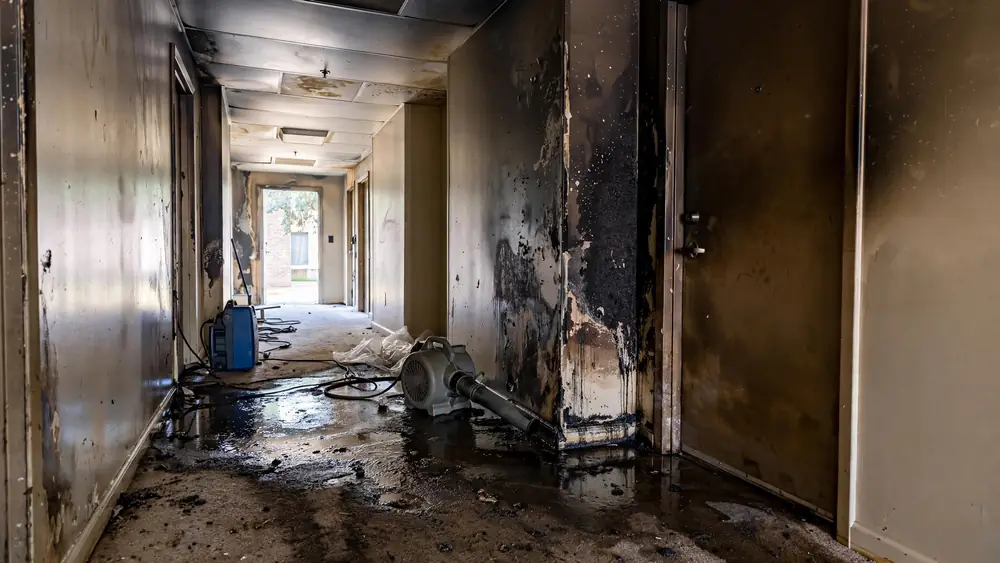
Fire sprinklers are among the most effective life-safety features in a building. Each head responds to heat in its area and opens on its own, so usually only one or two heads activate in a small fire [2]. But each open head flows water until building staff or the fire department close the system valve, and in that time water can run through the floor into the units below.
Sprinkler water is not as clean as tap water once it has run through ceilings and floors. It picks up residue and debris on the way. Drying needs to start quickly, because wet drywall, insulation and flooring can begin to support mold within a day or two [3]. In a building, drying often has to happen in several units and in common areas at once.
A high-rise job
How restoration usually works in an Uptown or Downtown building
- 1
Building and fire department release
Residents return only when the fire department and building management allow it.
- 2
Report to management
Notify the property manager or association in writing and ask which areas they are handling.
- 3
Document your unit
Photograph every room, ceilings, floors and belongings before anything is moved.
- 4
Coordinate access
The restorer works with management on elevator reservations, loading dock times and work hours.
- 5
Dry the unit
Water is removed and drying equipment set in your unit, often alongside other units.
- 6
Clean smoke and soot
Residue is cleaned from walls, ceilings, cabinets and contents, and the unit's air system is checked.
- 7
Rebuild with approval
Repairs follow building rules and City permits, with the association approving work that touches building elements.
Who covers what
Who is usually responsible for what after a building fire
This varies by building documents and policies; check yours.
| Part of the loss | Condo building | Apartment building |
|---|---|---|
| Common areas and corridors | Association, under its master policy | Landlord |
| Building structure and systems | Association, as defined in the governing documents | Landlord |
| Unit interior finishes | Often the unit owner, depending on the documents | Landlord |
| Personal belongings | Unit owner's own policy | Renter's own policy |
| Temporary housing | Unit owner's policy, often | Renter's policy, often |
| Damage to neighbors from your unit | Depends on cause and policies | Depends on cause and policies |
Condo owners
What condo owners need to know
In a condominium, the association's master policy covers common elements and, depending on the governing documents, may cover some or all of the original unit structure. Owners usually carry their own unit policy for interior finishes, improvements they made, belongings and temporary housing [4]. Where the line falls is spelled out in the declaration and bylaws.
After a fire, get a copy of the association's insurance information and the relevant part of the governing documents. Report the loss to the association and to your own insurer promptly. Ask whether the association is hiring a restoration contractor for the building and whether you may hire your own for your unit's interior and contents.
Renters
What renters need to know
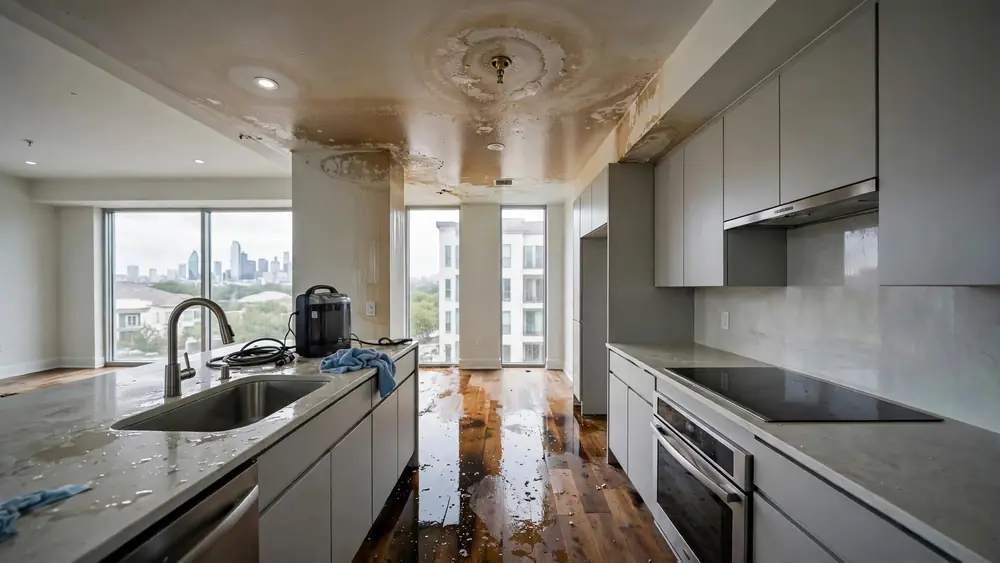
If you rent, your landlord's insurance generally covers the building and its systems, and the landlord arranges restoration of the unit. Your own renters policy is what covers your belongings, and many renters policies also cover the extra expense of living somewhere else while your apartment is unlivable [4].
Photograph your belongings before they are moved, list what was damaged, and contact your renters insurer quickly. Ask the property manager when your unit will be dried and cleaned and whether you will be moved to another unit. Belongings that smell of smoke or got wet may need contents cleaning even if the unit itself is handled by the landlord.
Smoke migration
How smoke moves through a tall building
Smoke in a tall building follows pressure differences. In hot Dallas weather, cooled indoor air is denser than outside air, and in cold weather the reverse is true; those differences, plus elevator shafts, stairwells and mechanical shafts, influence which way smoke travels. It also squeezes through gaps around pipes, ducts and wiring where they pass between units.
That is why residents several floors away sometimes smell smoke after a fire. Units next to and above the fire unit, and the corridor outside, usually take the most residue. A good restoration plan checks neighboring units, not just the one that burned.
Resident checklist
First steps for Uptown and Downtown residents after a fire
Practical steps for apartment and condo living.
- Wait for clearanceDo not re-enter until the fire department and building staff say it is safe.
- Notify management in writingEmail or a written note creates a record of when you reported the damage.
- Photograph your unit and belongingsInclude ceilings, floors, the corridor outside your door and your air system filter.
- Call your own insurerUnit owner and renters policies cover different things than the building's policy.
- Keep your air system offThe unit's air handler can spread residue through your ducts.
- Ask about building rules for contractorsInsurance certificates, work hours, elevator bookings and loading dock times often apply before any work starts.
Kitchens and balconies
Common causes in apartment living
Cooking is one of the leading causes of home fires nationally, and apartments are no exception [5]. In a compact unit, a stovetop fire sends smoke and protein residue through the whole space in seconds, and sprinklers may activate before the fire spreads. Many buildings also restrict grills on balconies because of the fire risk to the building.
Restoring a kitchen fire in a unit means degreasing cabinets, appliances and ceilings, cleaning the range hood and its duct, and drying anything the sprinkler soaked. Neighbors' units may need cleaning too if smoke escaped.
Building symptoms
Post-fire symptoms in Uptown and Downtown units and first steps
Use this to describe what you see when you call.
| What you notice | Likely cause | First step |
|---|---|---|
| Wet ceiling below a fire unit | Sprinkler or hose water through the floor | Report to management; start drying quickly |
| Smoke smell from bathroom exhaust | Smoke through a shared shaft | Report to management |
| Soot around your front door | Corridor smoke entering under the door | Photograph and report; clean door and threshold |
| Odor when your AC runs | Residue in your unit's air handler | Turn it off; ask for inspection |
| Belongings smell of smoke | Residue on textiles and soft goods | Ask about contents cleaning; call your insurer |
Logistics
Elevators, loading docks and work hours
Restoration in a high-rise depends on access. Equipment such as dehumidifiers, air movers and air scrubbers has to come up in elevators, often a freight elevator that must be reserved. Contents pack-outs need the loading dock. Many buildings limit work to weekday hours and require contractors to provide insurance certificates before they start.
Ask the contractor whether they have worked in high-rise buildings and how they will coordinate with management. Delays in access are one of the most common reasons drying starts late, so get the paperwork moving as soon as possible.
Older buildings
Older houses and converted buildings
Not everything in central Dallas is new. Uptown includes some older houses and small buildings, and Downtown has many older commercial buildings converted to apartments. Older structures may have materials that contain lead paint or asbestos, which must be tested before demolition [6] [7].
Converted buildings can have unusual layouts, exposed brick and timber, and shared systems retrofitted into old shafts. Restoration plans need to account for those details.
Townhomes
Uptown townhomes
Uptown also has many townhomes, often three or four stories with an attached garage at street level. Fires that start in the garage can send smoke up through stairwells into living floors, and shared walls carry smoke and water into the neighboring townhome. Many townhome communities have associations with their own insurance and rules, similar to condos.
In a tall townhome, the top floor and the stairwell usually take the most smoke. Ask the restorer to check every level and the attic or roof space, and coordinate with neighbors and the association.
Permits
Permits and approvals for repairs
Repairs involving structure, electrical, plumbing or mechanical systems need permits from the City of Dallas Building Inspection division [8]. In condo buildings, the association may also need to approve work affecting walls, floors, ceilings and building systems. Ask management what approvals are required before rebuilding starts.
Insurance
Insurance claims in a multi-unit building
Claims after a building fire often involve several insurers: the association's or landlord's master policy, each unit owner's policy and each renter's policy. Overlaps and gaps are common. Read your policy, get the association's insurance details if you own a condo, and keep a clear record of what you reported to whom and when [4].
If the fire started in another unit, your own insurer will usually handle your claim and decide whether to pursue the responsible party. Our insurance adjuster guide explains how to keep documentation organized.
Choosing a restorer
Questions for a restorer in a high-rise building
Ask whether the contractor has worked in high-rise residential buildings, whether they can provide the insurance certificates the building requires, and how they coordinate with management and other contractors. Ask how they will dry your unit while the building handles the corridor and other units, and how they will handle contents in a building with limited elevator time.
Ask whether they will check your unit's air handler and how they will treat odor without disturbing neighbors.
Floors
Flooring in high-rise units after sprinkler water
Many Uptown and Downtown units have engineered wood, laminate, luxury vinyl or tile over a concrete slab, often with a sound-dampening underlayment required by the building. Water from a sprinkler above can seep under these floors and sit on the concrete, where it dries very slowly. Engineered wood and laminate may swell or delaminate, and the underlayment can hold water like a sponge.
Restorers check moisture under the flooring with meters and decide whether it can be dried in place or must be lifted. Buildings often specify which underlayment is allowed for noise control, so replacement flooring may need management approval.
Neighbors
Working with neighbors after a building fire
In a building, your restoration affects neighbors and theirs affects you. Drying equipment is noisy and may run day and night for several days. Odor treatment in one unit can be noticed next door. A short, friendly note to neighbors explaining what is happening, which contractor is working and how long the equipment will run helps keep goodwill on the floor.
If a neighbor's fire damaged your unit, keep the conversation factual and leave fault questions to the insurers. Share contact details for building management and your insurer if asked, and keep copies of everything you send.
Temporary living
Where to stay while your unit is restored
Displaced residents in central Dallas often need somewhere nearby so commutes, schools and routines continue. Renters and unit owners should ask their own insurers about coverage for additional living expenses, and landlords sometimes offer another unit in the same building or community [4].
Keep receipts for hotels, short-term rentals and meals above your usual spending, and keep a log of dates. Make sure building management and the contractor know how to reach you, and check your mail and packages, which may be held at the front desk while you are away.
Nearby
Neighborhoods near Uptown and Downtown
Just northeast of Uptown, older single-family neighborhoods such as the M Streets and Lower Greenville bring very different restoration issues: plaster, crawlspaces and conservation districts. Across the Trinity River, Oak Cliff has historic homes and the mixed-use Bishop Arts District.
ZIP coverage
Uptown and Downtown ZIP codes covered
Uptown and Downtown include ZIP codes 75201, 75202 and 75204, all covered by the contractor network this site connects callers to, along with nearby 75219 and 75226. Call and you will be told on the call whether your building is served.
FAQ
Questions from Uptown and Downtown residents
A sprinkler went off in the unit above me. What do I do?
Tell building management in writing, photograph the damage in your unit, move belongings away from wet areas and call your own insurer. Drying should start within a day or two to limit mold growth.
Who pays to restore my condo after a fire in another unit?
It depends on the association's governing documents and the policies involved. The master policy usually covers common elements and some structure; your unit policy covers interior items you are responsible for, your belongings and often temporary housing.
I rent. Who restores my apartment?
The landlord generally arranges restoration of the unit and building. Your renters insurance covers your belongings and often temporary living expenses.
Why does my apartment smell like smoke when the fire was on another floor?
Smoke travels through corridors, shafts and gaps around pipes and wiring. Report it to management; your unit may need cleaning and your air handler checked.
Can I hire my own restoration contractor in a condo building?
Often yes for your unit's interior and contents, but the building may have rules about insurance certificates, work hours and approvals. Check with management first.
How long until I can move back in?
Small events may take days to a couple of weeks. Larger losses with drying, cleaning and rebuilding across several units can take longer, especially with building approvals.
Can engineered wood floors be saved after sprinkler water?
Sometimes, if water is extracted and drying starts quickly. Water trapped under the boards and in the sound underlayment is the problem, and engineered or laminate boards that swell or delaminate usually need replacing. Moisture readings under the floor decide it.
Who will come to my Uptown or Downtown unit?
A licensed, independent restorer who works in central Dallas buildings, reached on the call you make. Ask whether they can supply the insurance certificate your building requires; you, not this site, agree the work with them.
Are Uptown and Downtown ZIP codes covered?
Yes, ZIPs 75201, 75202 and 75204 are covered. Call and you will be told whether your building is served.
Nearby
More around Uptown and Downtown
Back to all of Dallas. Nearby pages: Lake Highlands, Lakewood, M Streets and Lower Greenville, Oak Cliff, Preston Hollow.
Related help for Uptown and Downtown: water extraction, structural drying, sewage backup cleanup, fire damage restoration and smoke damage cleanup. First time dealing with this? Read the first hours after water damage.
Sources and citations
- [1]Wikipedia — Uptown, Dallas
- [2]Wikipedia — Fire sprinkler system
- [3]U.S. EPA — A brief guide to mold, moisture and your home
- [4]Wikipedia — Homeowner's insurance
- [5]NFPA — Home fire safety
- [6]U.S. EPA — Protect your family from sources of lead
- [7]U.S. EPA — Protect your family from exposures to asbestos
- [8]City of Dallas — Building Inspection