
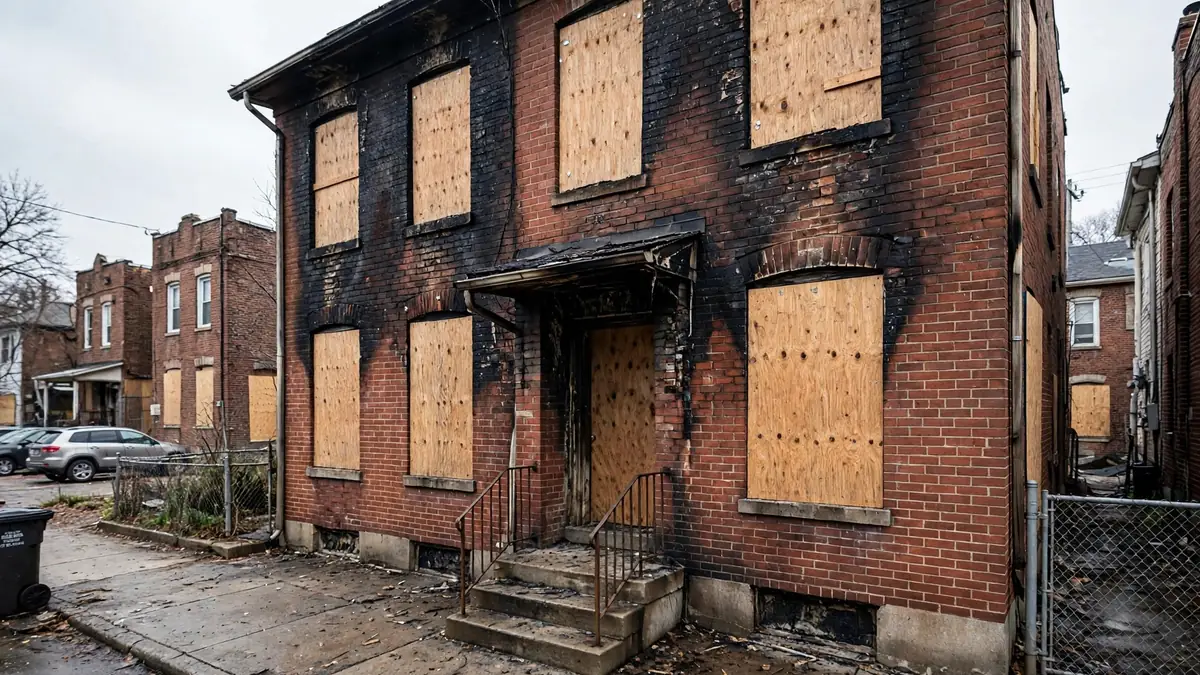
Key facts: Lakewood
- Lakewood is an East Dallas neighborhood near White Rock Lake, developed largely in the decades before World War II [1].
- The nearby Swiss Avenue Historic District was the earliest of the city's locally designated historic districts [2].
- Lakewood's pre-war plaster and trim usually carry old paint layers, and paint applied before 1978 can contain lead that sanding would release [3].
- Fire and smoke restoration follows the ANSI/IICRC S700 standard for assessing residue and odor in buildings and contents [4].
Lakewood homes
What Lakewood houses are like inside
Lakewood grew up on the western side of White Rock Lake, mostly from the 1920s into the 1940s, and many of its streets still have the original houses: Tudor Revival cottages with steep roofs, Craftsman bungalows with deep porches, Spanish Eclectic homes with stucco and tile, and larger two-story houses on the boulevards [1]. Many have been carefully restored or expanded, and plenty have modern kitchens and additions behind their original fronts.
Inside, the original parts of these houses often have plaster walls on wood lath, hardwood floors, wood trim and built-in cabinets, and brick fireplaces. Many sit on pier-and-beam foundations with a crawlspace underneath. Attics are often tight under steep roof pitches, and wiring and ductwork have usually been upgraded in stages over the decades. All of that changes how smoke moves and how a fire-damaged room is cleaned and rebuilt.
Lakewood also has a mix of later houses: post-war infill, renovated cottages with large rear additions, and new homes built where older houses were taken down. A fire in a new-construction home here looks more like one in the suburbs than one in a 1930s Tudor, so the first thing a restorer should ask is how old each part of the house is.
What restorers see
Fire damage patterns common in Lakewood homes
These issues come up often in the neighborhood's older houses.
Smoke in plaster walls
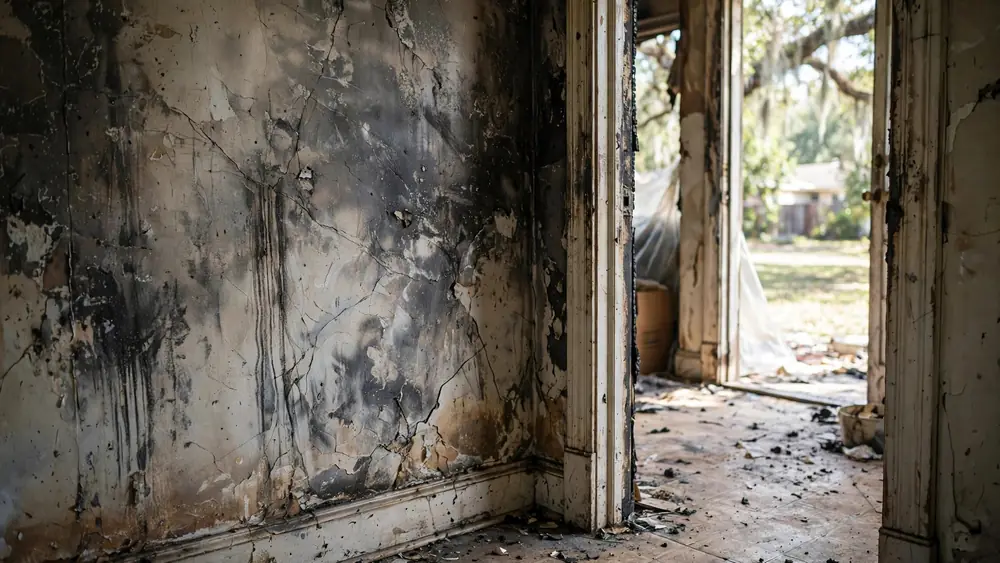
Plaster is harder than drywall but porous on its surface, and it holds residue in cracks and old paint layers.
Original wood trim
Painted and stained trim, built-ins and doors hold residue in their profiles and may have old paint underneath.
Crawlspace odor
On pier-and-beam houses, smoke and firefighting water can reach the crawlspace and keep odor and moisture under the floor.
Tight, steep attics
Steep Tudor roofs create narrow attics where smoke collects and insulation is hard to reach.
Mixed wiring
Older homes often have wiring from several eras, so electrical checks matter before power is restored.
Additions and old parts
Smoke moves differently through an original house and a modern addition, which may have separate air systems.
Plaster
Cleaning smoke from plaster walls in Lakewood houses
Plaster walls are an asset in a fire. They do not burn, they resist heat better than drywall, and they often survive a fire in good shape away from the flames. Smoke residue sits on the paint, though, and old plaster usually has many layers of paint, some of which may contain lead. Cleaning starts with dry removal and gentle detergents, never aggressive scraping or sanding of surfaces that might hold lead paint [3].
Water from firefighting is a bigger threat to plaster than smoke is. Soaked plaster can lose its grip on the wood lath behind it, and ceilings can sag. Restorers should check for loose plaster before anyone works under it, and dry wet plaster slowly with monitoring rather than cutting it out by reflex. If keeping original plaster matters to you, say so early so the plan is built around it.
Crawlspaces
Pier-and-beam floors and crawlspaces after a fire
Many Lakewood houses sit a couple of feet off the ground on piers, with a crawlspace beneath the floor. Firefighting water drains through floorboards into that space, and smoke can drift down through gaps around pipes and floor registers. A wet crawlspace in a Dallas summer stays humid for a long time and can support mold on the floor framing [5].
A thorough Lakewood restoration includes the crawlspace: checking for standing water, drying the soil surface and framing, removing wet debris and any damaged insulation, and treating odor if needed. Ductwork in some older houses runs through the crawlspace too, so it should be inspected along with the floor system.
A Lakewood job
How a fire restoration typically unfolds in a Lakewood house
- 1
Secure the house
Broken windows, doors and roof openings are covered, with care for original windows where possible.
- 2
Walk every level
The restorer checks living spaces, the attic, the crawlspace and any detached garage or garage apartment.
- 3
Check for hazards
Ask about lead paint and asbestos-containing materials before old surfaces are removed or sanded.
- 4
Dry what got wet
Plaster, hardwood floors and the crawlspace are dried with monitoring.
- 5
Clean residue
Dry removal first on plaster, trim and built-ins, then cleaning matched to the residue type.
- 6
Treat odor and seal
Attic, cavities and framing are treated and sealed before finishes are restored.
- 7
Plan repairs
Permanent repairs follow City of Dallas permit rules and, where it applies, historic review for exterior changes.
Typical setups
How Lakewood housing types handle fire and smoke
Generalizations only; every house is different.
| House type | Typical features | Common restoration issues |
|---|---|---|
| 1920s-30s Tudor cottage | Steep roof, plaster, brick fireplace, pier-and-beam | Tight attic, plaster cleaning, crawlspace drying |
| Craftsman bungalow | Wood trim, built-ins, porch, pier-and-beam | Residue in trim profiles, original floors |
| Spanish Eclectic | Stucco, tile roof, arched openings | Roof tarping over tile, plaster interiors |
| Two-story traditional | Larger rooms, multiple fireplaces | Smoke moving up stairwells, more attic area |
| Renovated with rear addition | Original front, modern back | Two air systems, mixed materials |
| New infill home | Drywall, slab, open plan | Fast smoke spread through open rooms |
Historic character
Historic and conservation district rules near Lakewood
Dallas protects some of its older neighborhoods through local historic districts and conservation districts, which can regulate exterior changes. The Swiss Avenue Historic District, just west of Lakewood, was the first area Dallas protected this way, back in the early 1970s, and other parts of East Dallas have their own districts with their own standards [2] [6].
If your home is inside one of these districts, exterior repairs after a fire, such as replacing windows, doors, roofing or siding, may need review before work begins. Photograph original exterior details before board-up and demolition, and ask the contractor and the City of Dallas Historic Preservation office whether your address is covered.

Attics
Smoke in older Lakewood attics
Steep Tudor and Craftsman roofs leave attics that are tall in the middle and pinched at the edges. Smoke that rises into them settles on the underside of the roof deck, on rafters and on whatever insulation has been added over the years. In older houses, that can be a mix of old loose-fill and newer blown insulation, sometimes several layers deep.
Attic odor is one of the most common reasons smoke smell returns after a cleanup, especially on hot afternoons. In many Lakewood houses, the restoration plan includes removing affected insulation, cleaning and sealing the framing and decking, and installing new insulation. If older insulation might contain asbestos, it should be tested before anyone disturbs it [7].
Floors
Original hardwood floors after a Lakewood fire
Original oak floors are a defining feature of many Lakewood homes. Smoke residue can usually be cleaned from finished floors, and floors that were wet from firefighting can often be dried in place and refinished. Boards that charred, cupped badly or separated may need to be replaced with matching wood.
Because these floors often sit over a crawlspace, drying needs to work from both sides. Ask the contractor how they will dry the floor and the framing underneath, and whether they will try to save and reuse boards before replacing them.
Lakewood checklist
First steps for Lakewood homeowners after a fire
These steps fit older East Dallas homes in particular.
- Photograph original featuresWindows, doors, trim, built-ins, fireplaces and floors, before anything is covered or removed.
- Ask about lead and asbestosRaise it before surfaces are sanded or materials removed in a pre-1978 home.
- Check the crawlspaceMake sure someone looks under the floor for water and residue.
- Keep the air system offOlder homes often have ducts in the attic or crawlspace that spread residue.
- Find out if your street is in a districtAsk the City of Dallas Historic Preservation office before exterior repairs.
- Save broken historic piecesKeep pieces of original glass, hardware and trim for possible restoration.
White Rock Lake
Living near White Rock Lake
Lakewood sits close to White Rock Lake and its park, with mature trees and parkland around much of the neighborhood [8]. Big trees are part of the appeal, but after a fire they can complicate roof access for tarping and board-up, and leaves and limbs can clog tarps and gutters on a damaged roof during the following weeks.
Wildlife from the park and greenbelts also finds its way into damaged attics and crawlspaces quickly. Covering roof openings, vents and broken crawlspace screens soon after the fire keeps animals out of the house while it is empty.
Gas and power
Utilities in older Lakewood houses
Gas service in Lakewood is provided by Atmos Energy. After a fire, the gas is often shut off by firefighters or the utility, and it is restored only once the lines and appliances are considered safe. Do not turn gas valves back on yourself, and call Atmos Energy from outside if you smell gas [9].
Older houses may have a mix of original and updated wiring, sometimes with junction boxes in the attic or crawlspace. Heat and water can damage that wiring out of sight. A licensed electrician should check the system before power is restored to damaged areas.
Permits
Permits for rebuilding a Lakewood home
Cleaning and drying usually do not need permits, but structural repairs, new electrical work, plumbing and HVAC replacement generally do. In Dallas, those permits come from the City's Building Inspection division [10]. Your reconstruction contractor should pull them and schedule inspections.
If the house is inside a historic or conservation district, exterior changes may also need approval through the City's historic preservation or planning processes [6]. That review can add time, so start the conversation early if windows, doors, the roof or exterior walls need replacing.
Lakewood symptoms
Fire aftermath symptoms in Lakewood homes and first steps
Use this to describe what you see when you call.
| What you notice | Likely cause | First step |
|---|---|---|
| Smell strongest on hot afternoons | Attic insulation and roof deck holding residue | Ask for an attic inspection |
| Musty smell under smoke odor | Wet crawlspace or subfloor | Ask for moisture readings under the floor |
| Gray streaks on plaster | Residue smeared by wiping | Stop wet wiping; ask for dry cleaning first |
| Sagging ceiling plaster | Water soaked plaster loosening from lath | Keep people out from under it |
| Soot around floor registers | Ducts in crawlspace or attic carrying residue | Keep HVAC off; ask about duct cleaning |
Detached buildings
Garages and garage apartments
Many Lakewood lots have a detached garage at the back, sometimes with a garage apartment or studio above it. A fire that starts in a garage can damage the main house through radiant heat and smoke, and a fire in the house can send smoke into the garage. Both buildings should be included in the restoration assessment.
Garages often store paint, fuel and chemicals. If they were exposed to fire, those products need careful handling and disposal. Garage apartments with their own tenants raise additional questions about notice and temporary housing; talk to your insurer about how the policy treats them.
Contents
Antiques and family pieces in older homes
Older homes often hold older belongings: antique furniture, family heirlooms, books, artwork and collections. Smoke residue and firefighting water can damage these, but many can be saved by specialists. A contents pack-out gets them out of the house, documented and to the right cleaners while the house is restored.
Tell the contractor about any pieces with special value before packing starts, so they can be handled separately.
Insurance
Lakewood homes and the insurance claim
Restoring an older home to its pre-fire condition can involve materials and workmanship that are harder to match than in newer houses: plaster repair, wood trim profiles, original-style windows. Talk to your insurer early about how your policy treats older construction and whether it includes coverage for code upgrades required during rebuilding [11].
Clear documentation helps. Photographs of original features before the fire, if you have them, and detailed photos after it, support the case for matching what was there. Our insurance adjuster guide explains how to prepare.
Choosing a restorer
Questions for a restorer working on a Lakewood house
Ask whether the contractor has worked on pre-war homes, how they clean plaster and original wood, and how they handle possible lead paint and asbestos. Ask how they will dry the crawlspace and hardwood floors, and whether they will inspect the attic and the air system.
If your home is in a historic or conservation district, ask whether they have worked through the City's review process before. A contractor who understands older homes will raise these issues before you do.
Fireplaces
Brick fireplaces and chimneys in Lakewood homes
Many Lakewood houses have a brick fireplace as the centerpiece of the living room, and some have more than one. Fireplace surrounds take soot readily because brick and mortar are porous. They can usually be cleaned with masonry methods, but acidic cleaners can damage some brick, so testing comes first.
If the fire started in or near the chimney, have the chimney inspected before it is used again. Heat can crack flue liners and mortar in older chimneys, which can let smoke and heat reach framing inside the walls. A chimney inspection report is also useful for the insurance claim.
Temporary housing
Staying nearby while your Lakewood home is restored
Restoring an older house can take longer than a newer one, because plaster repairs, trim matching and historic review all add steps. Many families want to stay close to schools, work and neighbors during that time. Ask your insurer early whether your policy includes additional living expenses and how they handle temporary housing [11].
Keep receipts for hotels, meals and other expenses of being displaced, and keep a simple log of dates. Let the restoration contractor know how to reach you and how often you can visit the house to check progress.
Nearby
Lakewood's neighbors in East Dallas
Lakewood borders other East Dallas neighborhoods with their own housing patterns. The M Streets and Lower Greenville to the west have similar-era Tudor cottages on smaller lots, while Lake Highlands to the north is mostly post-war ranch homes. The same restoration principles apply across them, but the details change.
ZIP coverage
Lakewood-area ZIP codes covered
Lakewood falls mainly in ZIP code 75214, which is covered by the contractor network this site connects callers to. Nearby East Dallas ZIP codes, including 75206 and 75218, are also covered. If you are not sure whether your address is covered, call and ask; you will be told on the call.
Recovery
Recovering from a fire in an older home
A fire in a house with history can feel like losing more than property. Many Lakewood homeowners chose their houses for the plaster, the trim, the floors and the character. Much of that can usually be cleaned, repaired or matched. Taking time to understand the options, and choosing a contractor who respects older construction, makes a real difference in how the house feels when you move back in.
FAQ
Questions from Lakewood homeowners
Can smoke be cleaned from plaster walls in my Lakewood house?
Usually, yes. Plaster resists fire and heat better than drywall, and smoke residue can often be cleaned off its painted surface with dry removal and gentle cleaners. Old paint layers may contain lead, so avoid scraping or sanding until it has been tested.
Does my pier-and-beam crawlspace need attention after a fire?
Often. Firefighting water and smoke can reach the crawlspace. It should be checked for standing water, wet framing and odor, and dried and treated if needed, or moisture and smell can linger under the floor.
Do I need approval for exterior repairs in Lakewood?
If your home is in a Dallas historic or conservation district, exterior changes may need review. Check with the City of Dallas Historic Preservation office and tell your contractor before replacing windows, doors, roofing or siding.
Why does my older house still smell like smoke on hot days?
Steep, tight attics in older homes often hold residue in insulation and on the roof deck, and heat releases the odor. An attic inspection is usually the next step.
Can original hardwood floors be saved after a fire?
Often. Residue can be cleaned from finished floors, and wet floors can frequently be dried and refinished. Charred or badly warped boards may need to be replaced with matching wood.
Should I worry about asbestos in my Lakewood home?
Homes from this era may contain asbestos in some insulation, flooring, siding or textured finishes. It is not a hazard when left undisturbed, but fire and demolition can disturb it, so testing should come before removal.
Who will come to my Lakewood house?
An independent restoration contractor who takes work in East Dallas, reached through your own call to this site. Ask them about their experience with pre-war plaster and pier-and-beam homes; the agreement for any work is between you and them.
Is my Lakewood ZIP code covered?
ZIP 75214 is covered, along with nearby East Dallas ZIP codes. Call and you will be told whether your address is served.
Nearby
More around Lakewood
Back to all of Dallas. Nearby pages: Lake Highlands, M Streets and Lower Greenville, Oak Cliff, Preston Hollow, Uptown and Downtown.
Related help for Lakewood: water extraction, structural drying, sewage backup cleanup, fire damage restoration and smoke damage cleanup. First time dealing with this? Read the first hours after water damage.
Sources and citations
- [1]Wikipedia — Lakewood, Dallas
- [2]City of Dallas — Swiss Avenue Historic District
- [3]U.S. EPA — Protect your family from sources of lead
- [4]IICRC — ANSI/IICRC S700 Standard for Professional Fire and Smoke Damage Restoration
- [5]U.S. EPA — A brief guide to mold, moisture and your home
- [6]City of Dallas — Historic Preservation
- [7]U.S. EPA — Protect your family from exposures to asbestos
- [8]Wikipedia — White Rock Lake
- [9]Atmos Energy — Safety
- [10]City of Dallas — Building Inspection
- [11]Wikipedia — Homeowner's insurance