
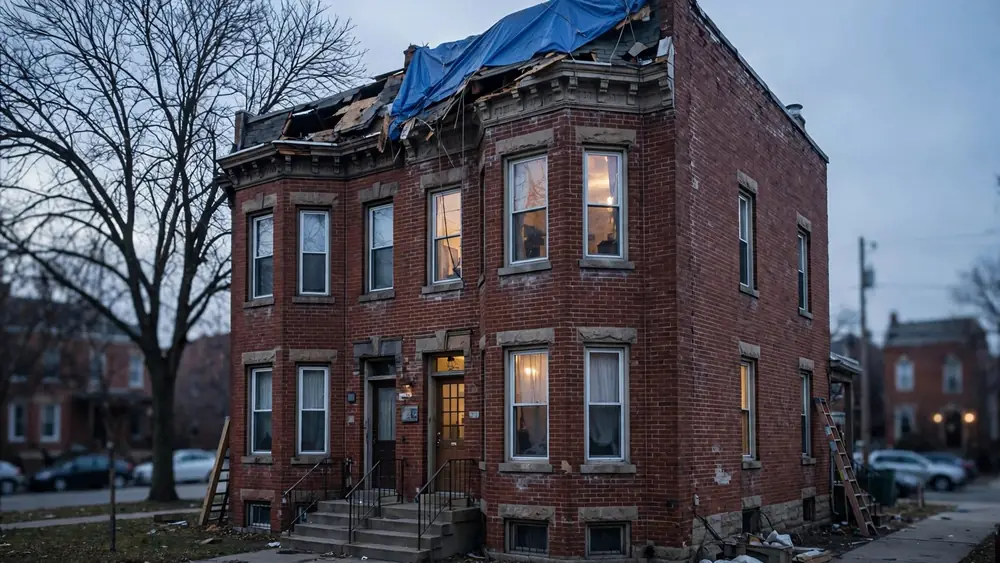
Key facts: Lake Highlands
- Lake Highlands is a Northeast Dallas community whose housing grew largely after World War II [1].
- U.S. home fires very often begin with cooking [2].
- Ranch homes from the 1950s through the 1970s predate the 1978 residential lead paint ban, so older paint layers deserve a test before demolition [3].
- Fine smoke particles can be inhaled deep into the lungs, so residue in shared air spaces affects neighbors too [4].
Lake Highlands homes
The houses and apartments of Lake Highlands
Lake Highlands lies in Northeast Dallas, above White Rock Lake and well east of US 75, and its streets filled in mostly during the 1950s, 1960s and 1970s [1]. The typical house is a single-story brick ranch on a concrete slab, with an attached two-car garage, a living room and den, three or four bedrooms and an attic above it all. Many have been updated with open kitchens, newer windows and added rooms.
The neighborhood also has a large stock of apartments and townhomes, many built in the 1970s and 1980s along its main roads, and newer mixed-use development around its town center. That mix means fire restoration here covers two quite different situations: single-family homes where one owner makes the decisions, and multifamily buildings where landlords, associations and several households are all involved.
Homes here are a generation newer than those in Lakewood or the M Streets, but most are still old enough to raise questions about lead paint, older wiring, original ductwork and, in some cases, asbestos in textured ceilings or flooring.
What restorers see
Fire damage patterns common in Lake Highlands
These come up often in the area's ranch homes and apartments.
Kitchen fires spreading to the den
Many ranch plans connect the kitchen to the den, so smoke and protein residue reach the main living area quickly.
Read moreGarage fires
Attached garages hold vehicles, tools and chemicals; fire there sends heat and smoke into the house through the shared wall and attic.
Low attic residue
Ranch homes have one attic over the whole house, so smoke spreads across it and settles on insulation everywhere.
Ducts in the attic
Air systems in the attic pull smoke into returns and blow it into every room.
Popcorn ceilings
Textured ceilings from the era are hard to clean and may need testing for asbestos before removal.
Apartment smoke migration
In multifamily buildings, smoke and sprinkler water move into neighboring units through shared walls and floors.
Garage fires
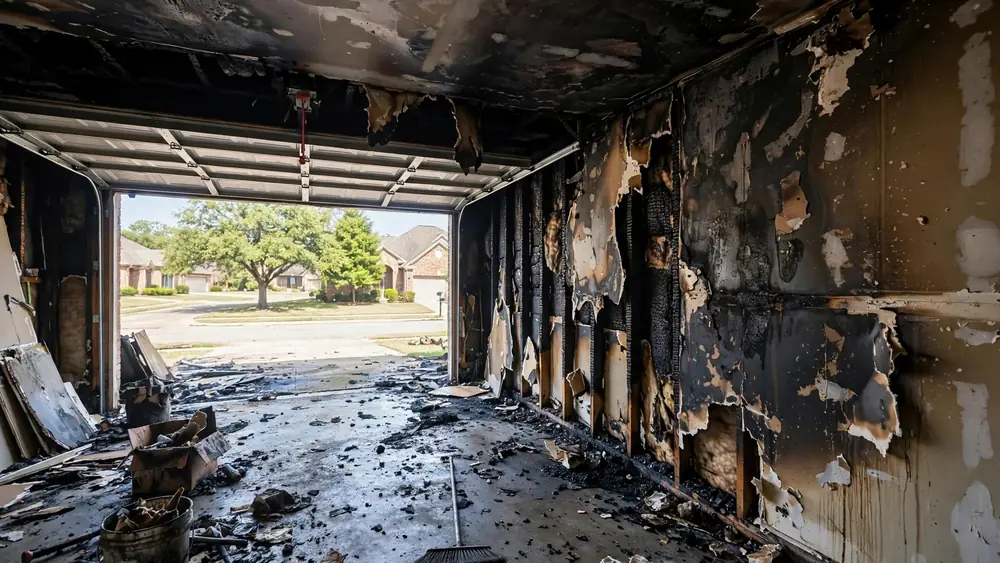
When the fire starts in an attached garage
Garages are where many households keep things that burn easily: gasoline for the mower, paint, cleaning chemicals, old furniture and boxes. They also hold vehicles, freezers and workbenches with power tools and chargers. A fire there can grow quickly, and in an attached garage the heat and smoke push through the wall shared with the house and up into the attic above both.
Building codes generally call for fire-resistant separation between a garage and the living space, but older homes and modifications such as pet doors, added windows or attic openings can weaken that separation. Restoration after a garage fire usually involves both spaces: structural repair and heavy cleaning in the garage, and smoke, soot and odor work in the house. Hazardous products in the garage need careful handling and disposal.
Ranch attics
Smoke across a ranch home's single attic
A single-story ranch home has one attic spanning the whole house. Smoke that gets into it, whether from a kitchen fire, a garage fire or a fire in a bedroom, spreads across the entire space and settles on the insulation, the ceiling joists and the underside of the roof deck. That is one reason why smoke odor in Lake Highlands homes so often comes back on hot afternoons.
The attic also usually holds the air handler and much of the ductwork. A thorough restoration includes checking the attic insulation and replacing it if it holds residue or odor, cleaning and sealing affected framing and decking, and cleaning or replacing ductwork. Older insulation should be checked for asbestos before removal if there is any question [5].
A Lake Highlands job
How a fire restoration usually goes in a Lake Highlands ranch home
- 1
Secure and assess
Broken windows, garage doors and roof openings are covered; the restorer walks the house, garage and attic.
- 2
Check hazards
Ask about popcorn ceilings, older flooring and paint before removal; test if needed.
- 3
Extract and dry
Firefighting water is removed from slab floors, wall bottoms and cabinets, and drying equipment is set.
- 4
Remove damaged materials
Burned drywall, wet insulation and damaged flooring are removed.
- 5
Clean residue
Smoke and soot are cleaned from the structure and contents, starting with dry methods.
- 6
Attic and ducts
Attic insulation, framing and the air system are cleaned or replaced.
- 7
Odor and rebuild
Remaining odor is treated and framing sealed before insulation, drywall and finishes go back.
Typical setups
Lake Highlands housing types and fire restoration issues
General patterns only; your home may differ.
| Housing type | Typical features | Common issues after a fire |
|---|---|---|
| 1950s-60s brick ranch | Slab, attached garage, single attic, original or updated ducts | Attic-wide smoke, garage fires, slab drying |
| 1970s ranch or split plan | Larger footprint, vaulted den, popcorn ceilings | Textured ceilings, vaulted ceiling residue |
| Updated or expanded home | Open kitchen, added rooms | Smoke spreading through open plan, mixed air systems |
| Garden apartment building | Two or three stories, shared walls and breezeways | Smoke and water in neighboring units |
| Townhome | Shared walls, sometimes shared attic spaces | Attic smoke crossing into neighbors |
| Newer mixed-use apartments | Sprinklers, corridors, building systems | Sprinkler water, building management coordination |
Apartments
Apartment and townhome fires in Lake Highlands
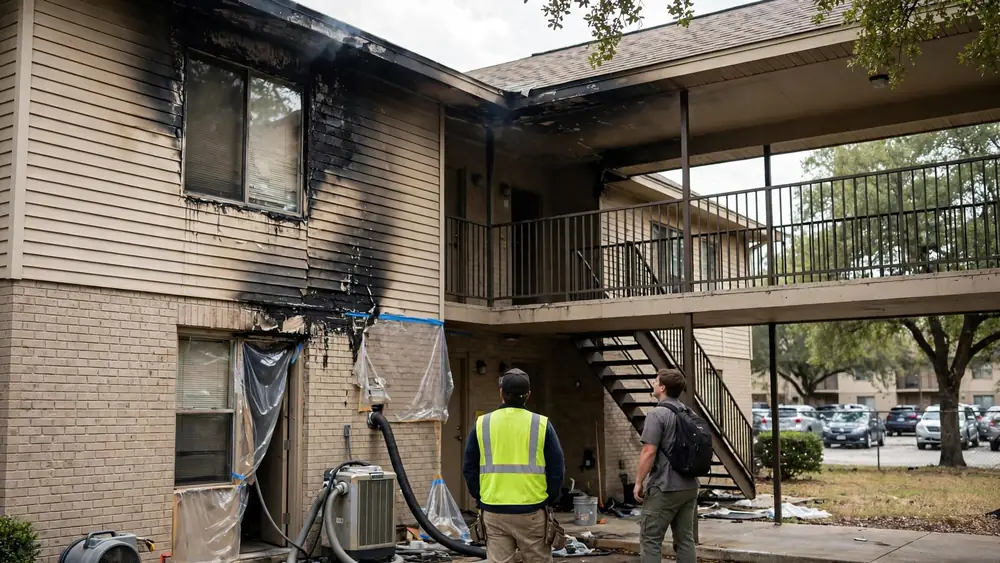
In a multifamily building, a fire in one unit rarely stays there. Smoke moves through gaps around pipes and wiring, under doors into breezeways and corridors, and into shared attic spaces in some older buildings. Water from firefighting or sprinklers runs into the units below. Neighbors who never saw flames can have soot on their walls and wet ceilings.
For renters, the landlord's insurance generally covers the building, while the tenant's renters insurance covers their belongings and, often, temporary housing [7]. Report damage to the property manager right away, photograph your unit and belongings, and contact your own insurer. Contents in a smoke-filled apartment usually need cleaning or pack-out even if the unit itself is restored by the owner.
Slab floors
Drying slab-on-grade floors after a fire
Most Lake Highlands houses sit on concrete slabs. Firefighting water runs across the slab, under baseboards and into the bottom of walls, beneath cabinets and under flooring. Carpet and pad usually come out; tile may stay; wood or laminate flooring over the slab often traps water and may need to be removed so the slab can dry.
Wall bottoms are the other trouble spot. Drywall wicks water upward, and insulation in exterior walls holds it. Restorers often remove a strip of drywall at the base of affected walls to let the cavity dry, then replace it. Drying should be confirmed with moisture readings before flooring goes back down, or trapped moisture can lead to mold [6].
Popcorn ceilings
Textured ceilings in Lake Highlands homes
Many houses built in the 1960s and 1970s have spray-on acoustic or popcorn texture on the ceilings. It is very difficult to clean smoke from, because the texture is porous and soft and water can loosen it. In most cases a smoke-damaged textured ceiling is either sealed and recoated or removed.
Some acoustic ceiling textures made before the 1980s contain asbestos. Before a textured ceiling is scraped or removed, a sample should be tested. If asbestos is present, removal has to follow proper procedures by trained workers [5]. A careful contractor will raise this before demolition starts, not after.
Lake Highlands checklist
First steps after a fire in a Lake Highlands home
Practical steps for ranch homes and apartments.
- Keep the garage-to-house door closedIf the garage burned, it keeps smoke from moving further into the house.
- Do not move vehicles yetWait for the fire department to release the garage; burned vehicles can reignite or leak fuel.
- Turn off the air systemDucts in the attic will spread residue if the blower runs.
- Ask about textured ceilingsGet them tested before anyone scrapes them.
- Renters: call the property manager and your insurerDocument your unit and belongings with photos.
- Photograph the attic opening and ventsResidue there helps the adjuster understand the spread.
Kitchens
Kitchen fires in Lake Highlands homes
Cooking is one of the leading causes of home fires nationally, and stovetop grease fires are the classic case [2]. In a typical Lake Highlands ranch, the kitchen opens to a den or breakfast area, and many remodeled homes have removed walls to create a single open space. A kitchen fire in that layout sends protein residue and smoke across the main living area and into the attic through recessed lights and the range hood.
Cleaning a kitchen fire means degreasing cabinets inside and out, the range hood and its duct, ceilings and walls through the connected rooms, and checking the attic above. Painted cabinets often need sealing and repainting. Food and anything stored in open containers near the fire should be thrown out after it is listed for the claim.
Utilities
Gas and electric service after a Lake Highlands fire
Many Lake Highlands homes have gas water heaters, furnaces and ranges served by Atmos Energy. After a fire, gas service may be shut off at the meter. Only the utility or a qualified technician should restore it, after checking lines and appliances. If you smell gas, leave the house and call from outside [8].
Water heaters and furnaces in garages and attics are often near the fire's path. Have them inspected before they run again, and make sure working carbon monoxide alarms are installed [9]. Electrical panels in garages can be damaged by heat; an electrician should check the system before power is restored to affected circuits.
Lake Highlands symptoms
Post-fire symptoms in Lake Highlands homes and first steps
Use this to describe what you see when you call.
| What you notice | Likely cause | First step |
|---|---|---|
| Smoke smell in every room | Attic and ducts spreading residue | Keep HVAC off; ask for attic and duct inspection |
| Soot on the garage-side wall | Smoke through the shared wall or attic | Keep the connecting door closed; document both sides |
| Popcorn ceiling stained gray | Smoke residue on porous texture | Do not wipe; ask about testing and removal |
| Wet carpet along walls | Firefighting water across the slab | Ask for moisture mapping and extraction |
| Neighbor's fire, your walls dark | Smoke migration through shared walls | Photograph and contact your insurer and manager |
Trees and storms
Mature trees, spring storms and a damaged roof
Lake Highlands has many mature trees, and North Texas spring storms bring wind and heavy rain. A roof opened by fire or ventilation needs to be tarped quickly and checked after each storm. Overhanging limbs can tear tarps and drop debris, so contractors may need to trim branches to secure the roof properly.
Water that gets in after the fire, through an unsecured roof, adds to the damage and may be treated differently on the claim. Boarding up the openings right after the fire protects both the house and your claim.
Permits
Rebuilding permits in Lake Highlands
Lake Highlands is inside the City of Dallas, so permits for structural repairs, electrical, plumbing and HVAC replacement come from the City's Building Inspection division [10]. Your reconstruction contractor should handle permits and inspections. When a garage fire damaged the separation wall between garage and house, the rebuild should restore proper fire separation; ask the contractor how they will do that.
Insurance
Insurance after a Lake Highlands fire
For homeowners, the fire claim usually includes the dwelling, the garage if attached, personal property and additional living expenses while the house is uninhabitable [7]. Vehicles in a garage fire are generally covered under auto policies rather than the homeowners policy. Keep these separate when you report the loss.
For apartment residents, the landlord's policy covers the building and the tenant's renters policy covers belongings and often temporary housing. Our insurance adjuster guide covers how to organize photos, inventories and receipts.
Choosing a restorer
Questions for a restorer in Lake Highlands
Ask how the contractor handles garage fires and the shared wall, whether they will inspect and clean the entire attic and the air system, and how they approach popcorn ceilings and asbestos testing. Ask how they dry slab floors and how they decide what flooring to remove.
If you live in an apartment or townhome, ask whether the contractor works with property managers and associations, and how they coordinate work across several units.
Vaulted ceilings
Vaulted dens and tall ceilings
Many ranch and split-level homes from the 1960s and 1970s have a den with a vaulted or beamed ceiling, sometimes with exposed wood beams or tongue-and-groove paneling. Smoke rises to the peak of these ceilings and settles along the beams, which makes them one of the dirtiest surfaces after a fire and one of the hardest to reach.
Cleaning a vaulted ceiling needs scaffolding or lifts and patient dry removal before any wet cleaning. Stained wood beams and paneling may need cleaning followed by refinishing or sealing. Ask the contractor how they plan to reach and clean tall ceilings, and whether recessed lights in them let smoke into the attic above.
Smoke alarms
Smoke alarms in older ranch homes
Many Lake Highlands houses were built long before modern smoke alarm requirements, and alarms were added later, sometimes only in a hallway. NFPA recommends alarms inside each bedroom, outside each sleeping area and on every level, with interconnected alarms so they all sound together [2]. Restoration is a good time to bring alarms up to that standard.
When walls and ceilings are open, contractors can run wiring for hardwired, interconnected alarms. Ask about adding carbon monoxide alarms too, especially if the home has gas appliances or an attached garage.
Nearby
Neighborhoods around Lake Highlands
Lake Highlands borders Lakewood to the south, where homes are older and often on pier-and-beam foundations, and the larger North Dallas neighborhoods to the west, including Preston Hollow. The restoration approach shifts with the housing, but the order of work stays the same everywhere in the city: secure the house, dry it, clean it, deodorize it and then rebuild.
ZIP coverage
Lake Highlands ZIP codes covered
Lake Highlands spans ZIP codes 75218, 75238 and 75243, all of which are covered by the contractor network this site connects callers to. Nearby 75214 and 75231 are also covered. Call and you will be told on the call whether your address is served.
Recovery
Getting back home in Lake Highlands
For many families in Lake Highlands, the neighborhood's schools, parks and trails are a big part of daily life, and being displaced by a fire disrupts all of it. Ask the contractor for a realistic sequence of work and keep in touch with your adjuster about temporary housing. Most ranch homes can be fully restored, room by room and system by system, and the work often includes updates, such as new insulation, ductwork and fire-rated garage walls, that leave the house in better shape than before.
FAQ
Questions from Lake Highlands residents
My attached garage caught fire. Is the house affected?
Very likely, even if the flames stayed in the garage. Heat and smoke pass through the shared wall and the attic. Have the restorer inspect the house side of the wall, the attic and the air system as well as the garage.
Why does my whole ranch house smell like smoke?
Ranch homes have one attic over every room, and the air system usually sits in that attic. Smoke spreads across the attic and through the ducts to every room. Attic insulation and duct cleaning are often part of the fix.
Can smoke be cleaned off a popcorn ceiling?
Rarely. Textured ceilings are porous and soft, so they are usually sealed and recoated or removed. Older textures should be tested for asbestos before anyone scrapes them.
A fire in a neighboring apartment damaged my unit. What do I do?
Tell the property manager, photograph your unit and belongings, and call your renters insurer. The landlord's policy generally covers the building, while yours covers your belongings and often temporary housing.
Is a burned car in my garage covered by homeowners insurance?
Vehicles are generally covered under auto insurance, not homeowners. Report the vehicle to your auto insurer and the house damage to your homeowners insurer.
Do slab floors need special drying after a fire?
Water spreads across the slab and into wall bottoms and under flooring. Carpet and pad are usually removed, and lower drywall may be cut out to dry wall cavities. Drying is confirmed with moisture readings.
How long does it take to restore a ranch home after a kitchen fire?
A contained kitchen fire with light smoke elsewhere can often be cleaned in days to a couple of weeks. When smoke reached the attic and ducts, or walls and cabinets need replacing, the full job including rebuilding usually takes several weeks or more, depending on approvals and materials.
Who will come to my Lake Highlands home?
A licensed restoration contractor who serves Northeast Dallas and is independent of this site. Your call is put through to them, you talk on that same call, and you decide whether to hire them.
Is my Lake Highlands ZIP code covered?
ZIPs 75218, 75238 and 75243 are covered. Call and you will be told whether your address is served.
Nearby
More around Lake Highlands
Back to all of Dallas. Nearby pages: Lakewood, M Streets and Lower Greenville, Oak Cliff, Preston Hollow, Uptown and Downtown.
Related help for Lake Highlands: water extraction, structural drying, sewage backup cleanup, fire damage restoration and smoke damage cleanup. First time dealing with this? Read the first hours after water damage.
Sources and citations
- [1]Wikipedia — Lake Highlands, Dallas
- [2]NFPA — Home fire safety
- [3]U.S. EPA — Protect your family from sources of lead
- [4]U.S. EPA — Particulate matter (PM) basics
- [5]U.S. EPA — Protect your family from exposures to asbestos
- [6]U.S. EPA — A brief guide to mold, moisture and your home
- [7]Wikipedia — Homeowner's insurance
- [8]Atmos Energy — Safety
- [9]U.S. EPA — Carbon monoxide's impact on indoor air quality
- [10]City of Dallas — Building Inspection