Key facts: Irvington
- Irvington was founded in 1870 as a suburban town and annexed by Indianapolis in 1902 [3].
- The Irvington Historic District has National Register of Historic Places status [3].
- As everywhere in Indianapolis, the homeowner maintains the lateral from the house to the main; repairs and lining need a Citizens permit [1].
- Older laterals of the era were typically vitrified clay with many joints that roots can enter [5].
Covered area
Irvington streets this page covers
This page is about the Irvington neighborhood on the east side of Indianapolis, centered on East Washington Street around Audubon Road and Johnson Avenue, in ZIP code 46219. Calls from Irvington addresses are connected with an independent contractor who works on sewer laterals in this part of the city.
Neighboring east-side ZIP codes such as 46201, 46218 and 46229 are also covered, along with the rest of the Indianapolis ZIP codes listed on the areas page. If your address is outside those, the call may not be able to connect you with a contractor, and it is best to look for a local plumber directly.
History and housing
How Irvington's history shows up underground
Irvington was planned by Sylvester Johnson and Jacob Julian, who laid it out in 1870 as a suburban retreat from the city, with curving streets rather than the strict grid used elsewhere in Indianapolis [3]. It grew around a college, Butler University's predecessor, which stayed until 1928, and around streetcar service to downtown. The town ran short of resources for services like street paving and fire protection, and it joined Indianapolis by annexation in 1902 [3][4].
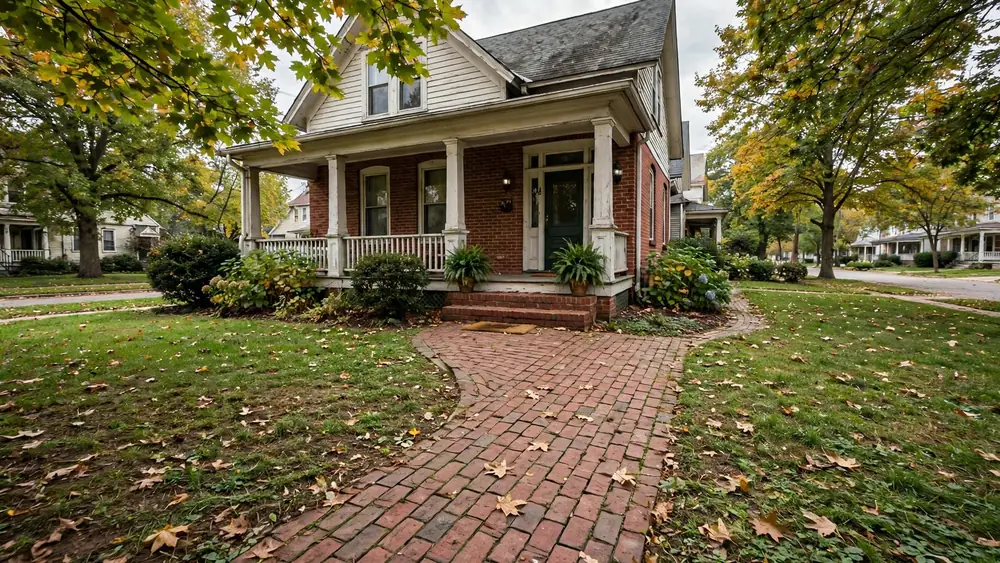
The result is a neighborhood where many houses date from the 1870s through the 1930s: Second Empire and Italianate homes near the old town center, then bungalows, Tudor Revival cottages and other early twentieth-century houses filling in the streets around them. Houses from that period were connected to sewers with vitrified clay pipe laid in short lengths, sealed at each joint with mortar or packing [5]. Many of those original laterals are still in service, or partly in service, more than a century later.
Some Irvington houses have had their laterals replaced over the years, and some have mixed pipe: original clay under the yard, a later PVC section where someone dug a repair, and cast iron under the basement floor. You often cannot tell from the surface. A camera inspection is usually the first step to finding out what you actually have.
Common calls
What Irvington homeowners call about most
Roots from old street trees
Big trees in the tree lawns and yards send roots into the clay joints under them, the classic root intrusion problem.
Basement floor drain overflow
Most Irvington houses have basements, and the floor drain is where a blocked lateral shows itself first.
Seized cast iron cleanouts
Original cleanout plugs near the front basement wall may not have been opened in decades.
Lines under porches and walks
Laterals often pass beneath front porches, steps and old walks that owners want to keep.
Mixed pipe materials
Clay, cast iron and later repair sections in one line, each aging differently.
Double and converted houses
Older homes split into units can share one lateral, so one blockage affects everyone.
Trees and soil
Irvington's tree canopy and the pipes beneath it
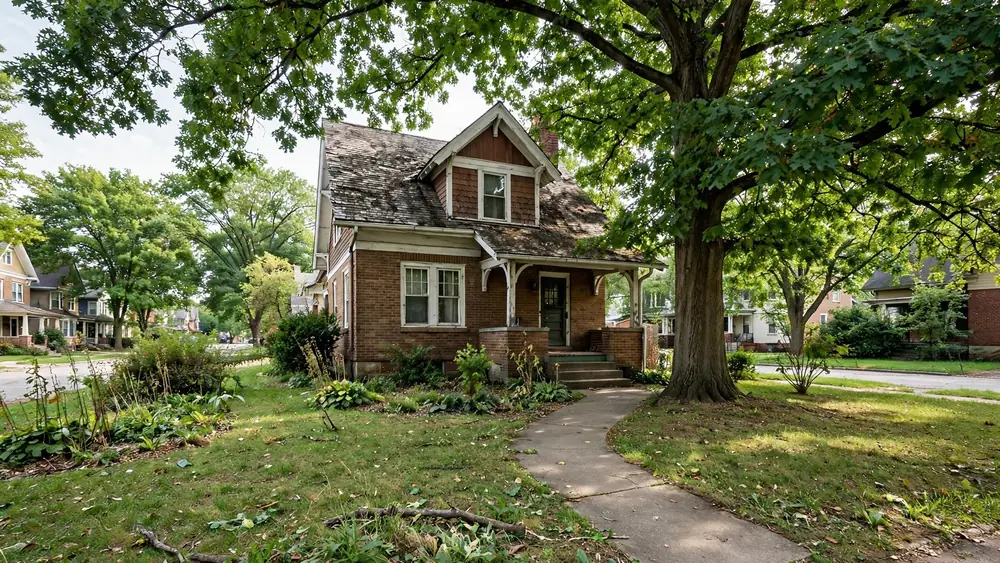
Irvington is known for its trees. Many streets have mature specimens in the tree lawn and front yards, some of them as old as the houses. A large tree's feeder roots spread well beyond its canopy and concentrate in the top few feet of soil, which is where many older laterals run. Water and vapor leaking from clay joints draw those roots in, and a mat forms inside the pipe.
The local soils add to it. Much of the east side sits on clay-rich glacial deposits that hold moisture and shrink and swell with the seasons. That movement, repeated for a hundred years, slowly opens clay joints and nudges sections out of line. Once a joint has moved, roots have an easier path, and the pipe can develop offsets that catch paper and grease.
Because the trees are part of what makes Irvington what it is, the usual goal is to fix the pipe without harming them. That is a strong argument for trenchless repair, which can seal or replace a lateral with one or two small pits instead of a trench through the root zone.
Historic district
Working on a sewer inside the Irvington Historic District
Irvington holds National Register of Historic Places status, and the Indianapolis Historic Preservation Commission designated it as a local historic district in 2006 [3][4]. Local designation means many exterior changes visible from the street are reviewed against design guidelines. A sewer lateral is underground, so the pipe itself is not usually what reviewers care about; what can matter is anything visible that the job changes, such as historic walks, steps, retaining walls or street trees.
In practice, that is another reason trenchless methods are popular here. Lining through an existing cleanout or bursting between two small pits leaves original brick or limestone walks and front steps in place. If a job does need excavation through a visible feature, ask the contractor whether any review is needed and plan to restore the feature to match.
Citizens Energy Group's lateral permit applies in Irvington the same as anywhere else in the city: repairs, replacements, cleanouts and lining all need it, and routine cleaning and root removal do not [1]. Historic status does not replace the utility permit or the Indiana 811 locate request before digging [6].
A typical job
How a sewer repair usually unfolds on an Irvington lot
- 1
Clear the line from the basement
Most Irvington houses are entered through a basement cleanout near the front wall; the contractor opens it carefully and clears the blockage.
- 2
Follow the lateral under the tree lawn
A camera follows the lateral under the yard and tree lawn to the connection, noting roots, cracks and material changes.
- 3
Locate and mark
Defects are marked on the lawn with depth, often right beside a particular tree or under the walk.
- 4
Weigh the method
With a round clay pipe and old walks above it, lining is often the first option discussed; deformed or sagging pipe points elsewhere.
- 5
File the permit before Irvington pits are dug
The contractor files the Citizens permit and requests utility locates before any pit is dug [1][6].
- 6
Repair, film and inspect
After the work, a final video confirms the result and Citizens inspects where required before backfill.
Irvington housing
Irvington house types and their usual sewer issues
| House type | Typical setup | Common sewer issue |
|---|---|---|
| Second Empire or Italianate near the old center | Deep basement, long front setback | Long clay lateral, roots at many joints |
| Craftsman bungalow | Basement or partial basement, porch over the route | Roots and cracked joints under the porch and walk |
| Foursquare or revival-style house | Full basement with floor drain | Floor-drain backups from a partly blocked line |
| Converted double | Two households on one lateral | Shared blockages; access to one cleanout |
| Later infill house | Newer pipe joined to older street connection | Problems at the transition or the main tap |
Pleasant Run and storms
Storms, Pleasant Run and Irvington basements
Pleasant Run winds through Irvington on its way across the east and south sides, and parts of the neighborhood sit near its banks and the parkway that follows it. In older parts of Indianapolis, combined sewers carry stormwater and wastewater together, and historically heavy rain sent overflow into streams like Pleasant Run [7]. Citizens Energy Group's DigIndy tunnel network, completed in 2025, now captures much of that overflow deep underground [2].
For a homeowner, the key distinction is whether a basement backup happens on a dry day or only during intense storms. Dry-day backups almost always come from your own lateral. Storm-only backups, especially if neighbors have them too, can come from a surcharged public sewer. In that case a backwater valve and a report to Citizens are worth discussing.
Low spots near the creek and along the parkway are where storm backups tend to be most noticeable. If your house is one of them, ask the contractor about protection for basement fixtures even after the lateral is repaired.
Before the visit
Preparing an Irvington house for a sewer contractor
- Find the basement cleanout, often near the front foundation wall, and clear stored items around it.
- If the plug looks rusted solid, mention it; the contractor may bring tools or a replacement fitting.
- Note the trees in the tree lawn and front yard, and roughly how big they are.
- Tell the contractor if the front walk, steps or porch are original and you want them protected.
- If the house is a double, let the other household know about the visit and ask them not to run water.
- Have any earlier camera video or invoices from previous root clearing ready.
- Check where you will ask the crew to park; some Irvington streets are narrow and curved.
Choosing a repair
Repair choices that suit Irvington's older lots
Every repair decision starts with the video, but a few patterns come up often in Irvington. Round clay laterals with roots at many joints are good candidates for full-length CIPP lining, which seals the joints without disturbing the trees and walks above. Laterals with deformed or broken sections may be better suited to pipe bursting, which pulls a new jointless pipe through the old route from two pits.
Open-trench replacement still has its place where a section has sagged and holds water, or where the old pipe has collapsed in several spots. In those cases, the contractor can often limit the excavation to the problem stretch and line or burst the rest.
Because so many Irvington houses have only a basement cleanout, adding an outside cleanout during the repair is often recommended. It makes future clearing and inspection simpler and keeps equipment out of the house.
Prevention
Keeping an Irvington lateral flowing
- If roots have been cleared before, schedule a check ahead of spring growth rather than waiting for a backup.
- Plant new trees away from the known sewer route; ask a nursery about trees with less aggressive roots.
- Keep grease and wipes out of the drains; old clay joints catch them easily.
- Keep the basement cleanout accessible and the plug serviceable.
- Store valuables off the basement floor near the floor drain.
- Keep inspection videos with your house records; they are valuable when you sell.
Nearby
Nearby neighborhoods with similar sewer issues
Other older Indianapolis neighborhoods share many of Irvington's sewer patterns. Fountain Square and Garfield Park on the south side, along Pleasant Run's lower course, have similar-era housing and clay laterals. On the north side, Meridian-Kessler combines big trees with 1920s homes.
Washington Street
Older storefronts and apartments along Irvington's Washington Street
Irvington's commercial strip grew along Washington Street with the streetcar and interurban lines that once linked the town to downtown [4]. Today the corridor mixes small shops, restaurants, offices and apartments above storefronts, many in buildings that are a century old. Their sewer connections are often longer, larger and busier than a house lateral, and kitchens add grease that coats the line.
Owners of these buildings tend to see a different pattern from homeowners: gradual narrowing from grease and scale rather than a sudden root blockage, and backups that affect several tenants at once. Regular hydro jetting and a camera check every so often are the usual maintenance. When repairs are needed, the line may run under a sidewalk or into Washington Street itself, which brings right-of-way coordination along with the Citizens permit [1].
If you manage one of these buildings, keep a record of where the cleanouts are, which tenants share the line, and the last inspection video. It makes every call faster and every repair easier to plan.
Winding streets
How Irvington's curving plat affects sewer routes
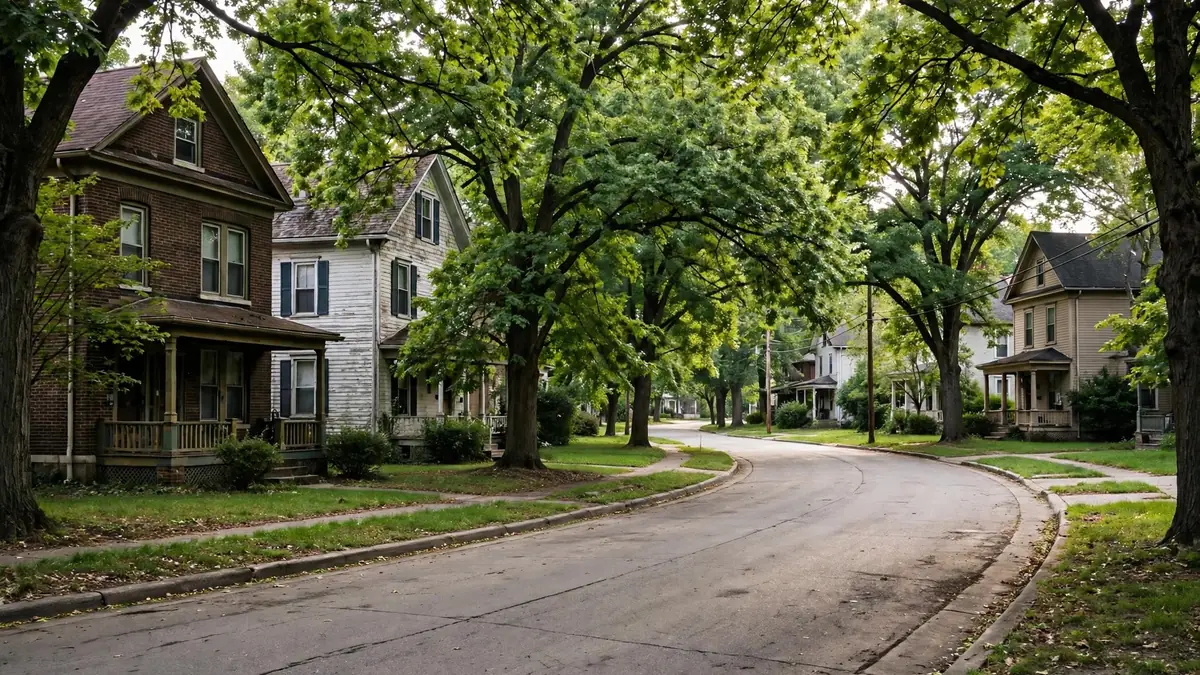
Irvington was deliberately laid out with naturalistic, winding streets rather than a grid [4]. That is part of its appeal, but it means lot shapes vary and the main under the street does not always run where you might expect relative to the house. On curved blocks, a lateral can angle across the front yard, run longer than a neighbor's, or join the main at a point some distance down the street.
This is one reason contractors rely on a camera with a locating transmitter before suggesting a method. Knowing the true route and depth tells them where pits can go, whether bursting has a straight enough path, and how far the liner needs to reach. Guessing based on the house next door can be misleading here.
Ask the contractor to mark the full route on the lawn during the inspection and take a photo of it. That simple record is useful for future landscaping, fence posts and any later repair.
Basements
Irvington basements and the floor drain
Most Irvington houses have basements, many with stone or brick foundation walls and a concrete floor poured later. The floor drain in the middle of that floor is usually the lowest drain in the house, so it is where a partly blocked lateral announces itself. Keeping that drain's trap filled, its grate clear and the area around it free of stored items makes a backup much easier to manage if one happens.
Buying in Irvington
What Irvington home buyers should ask about the sewer
Irvington's older houses attract buyers who love their character, and many of those buyers are surprised to learn the lateral is their responsibility. Before closing, ask the seller whether the sewer has ever been replaced, lined or repeatedly cleared, and whether any video exists. Then consider a separate sewer scope during the inspection period. A line that has been relined or replaced with records is a real plus; an original clay line under a big tree is something to understand before you own it, not after the first spring backup.
Records
Keeping an Irvington sewer file
Keep one folder with every invoice, permit number, locate photo and camera video for your lateral. In a neighborhood of century-old houses, that history is one of the most useful things you can hand to the next contractor or the next owner.
Timing
Best season for Irvington sewer work
If your line is still draining, late summer and early fall are often the easiest time for excavation or lining here: soil is drier, trees are past their spring root push, and lawns recover before winter.
FAQ
Irvington sewer line questions
Do I need special approval to repair my sewer in Irvington?
You need the Citizens Energy Group lateral permit for repairs, lining or replacement, as anywhere in Indianapolis. Because Irvington is a local historic district, ask your contractor whether changes to visible features like walks or steps need review.
Why do Irvington sewer lines get so many roots?
Many laterals are original clay pipe with joints every few feet, and the neighborhood has large, old trees close to the sewer route. Roots enter the joints for water and nutrients and fill the pipe.
Can my Irvington sewer be fixed without removing the front walk?
Often yes. Lining from the basement cleanout or pipe bursting between two pits can replace the flow path without breaking the walk, if the camera shows the old pipe is suitable.
Where is the sewer cleanout in an older Irvington house?
In many older houses it is a cast iron fitting with a square plug near the front basement wall, close to where the drain exits the foundation. Some houses also have an outside cleanout added during a past repair.
Does Pleasant Run cause basement backups in Irvington?
The creek itself does not back up into houses, but heavy storms can fill local sewers. If your basement backs up only during big storms, the public sewer may be surcharging and a backwater valve is worth discussing.
Is my Irvington ZIP code covered?
Irvington's 46219 is covered, along with many other Indianapolis ZIP codes. The areas page lists the neighborhoods, and calling is the quickest way to confirm your address.
Who maintains the sewer under the street in Irvington?
Citizens Energy Group maintains the public main. The homeowner is responsible for the lateral from the house to the connection at the main.
Should I get a sewer scope before buying in Irvington?
For most older Irvington homes it is a sensible step, because the lateral may be original pipe and a general home inspection does not usually include it.
Nearby
More around Irvington
Back to all of Indianapolis. Nearby pages: Broad Ripple, Butler-Tarkington, Fountain Square, Garfield Park, Meridian-Kessler.
Related help for Irvington: water extraction, structural drying, sewage backup cleanup, fire damage restoration and smoke damage cleanup. First time dealing with this? Read the first hours after water damage.
Sources and citations
- [1]Citizens Energy Group — Connecting a sewer service line
- [2]Citizens Energy Group — What is DigIndy?
- [3]Wikipedia — Irvington Historic District (Indianapolis)
- [4]Encyclopedia of Indianapolis — Irvington
- [5]Wikipedia — Vitrified clay pipe
- [6]Indiana 811 — Call before you dig
- [7]U.S. EPA — Combined sewer overflows