Key facts: Historic Downtown
- Cedar Hill dates from around 1846, and an 1856 tornado destroyed most of its buildings, so what stands downtown comes from later rebuilding.[1]
- The city's National Register walking tour lists homes such as 210 South Broad Street (1884) and 132 North Potter Street (1899).[2]
- EPA's Lead Renovation, Repair and Painting rule applies to paid work that disturbs lead paint in most pre-1978 homes.[3]
The neighborhood
What this page means by Historic Downtown
The city calls this area Old Town, Historic Downtown or simply Downtown, and your building's age matters more here than the label.[4]
- Residential buildingsOlder houses, some converted, near the center.
- Commercial buildingsOlder storefronts, which raise different questions about leases and who is responsible.
- Designated buildingsSome buildings carry local or national recognition, so check before altering them.
Local history
A short history that explains the buildings
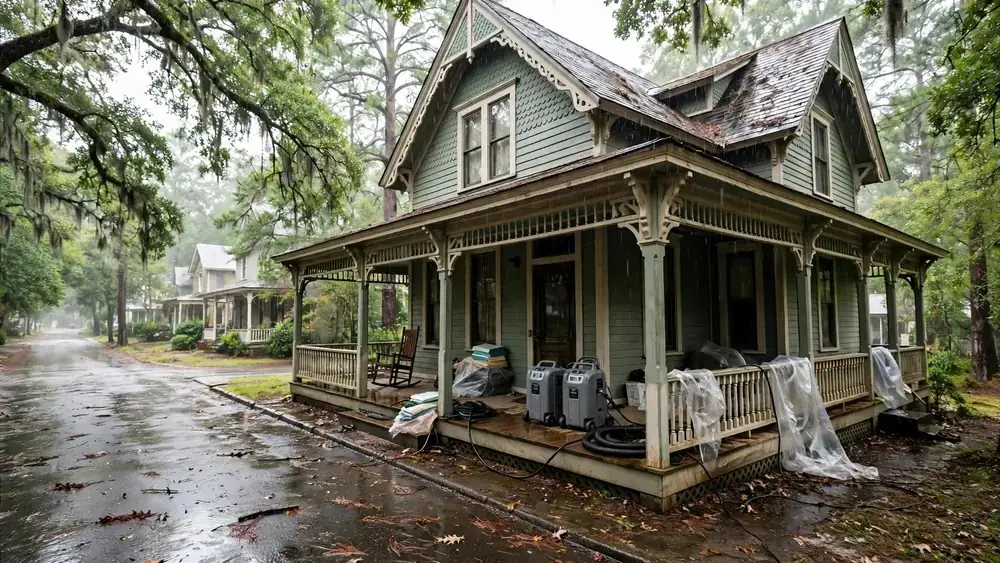
Settlers from the Peters Colony founded the area around 1846, and it briefly served as Dallas County's temporary seat. On April 29, 1856, a tornado killed at least nine people and destroyed most buildings, and the county seat moved on to Dallas.[1] So what stands downtown today came later, including homes from 1884 to 1899 on the city's walking tour.[2]
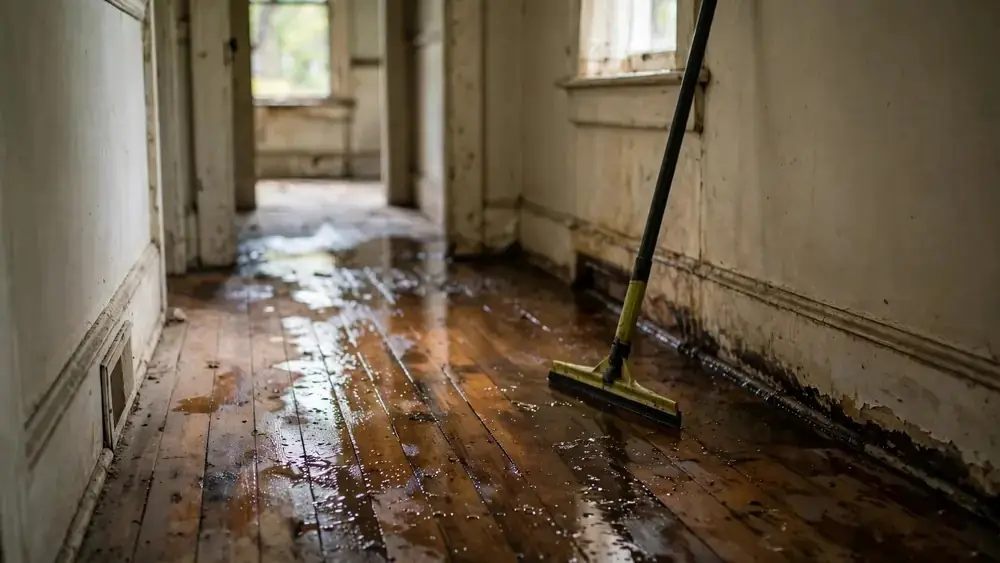
That matters for water damage in one simple way. A building from that era can have been altered many times. It may have original wood floors over a raised frame, later plumbing of several generations and walls of plaster, wallboard or paneling, sometimes all in one room. You have to look at what's there.
Local problems
What tends to show up in older buildings
Plaster bulging or going soft
Water behind plaster can loosen its grip on the lath.
Rust-brown water or low pressure
Galvanized lines may be corroding from the inside.
Read moreSewer smell at old drains
Old drain lines or traps may be failing.
Read moreSagging or springy floors
Water may have reached framing under a raised floor.
Damp below a window
Old window frames and flashing can let in rain.
Paint peeling after a leak
In an old building, assume that it may be lead paint.
Walls
Plaster and lath: not the same as drywall
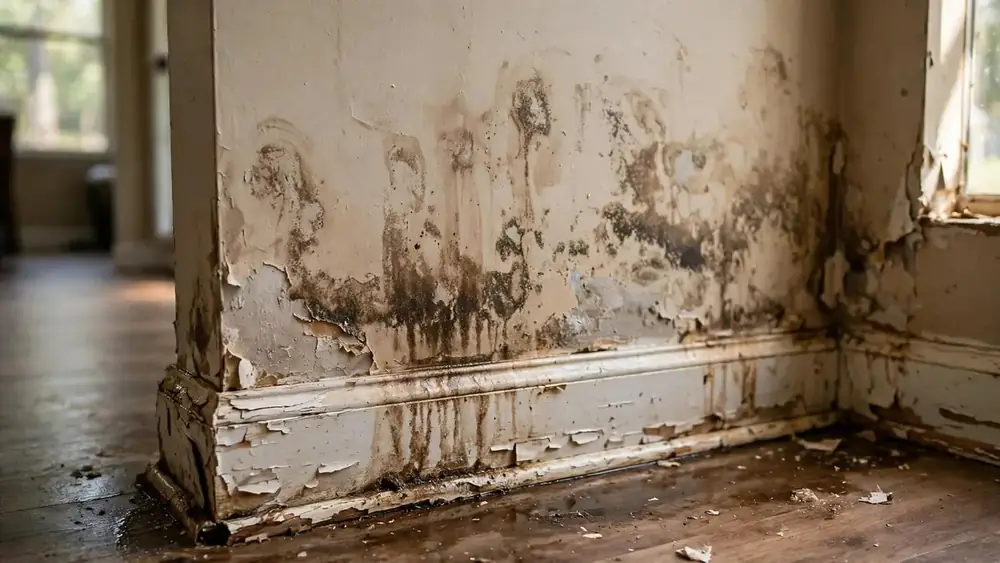
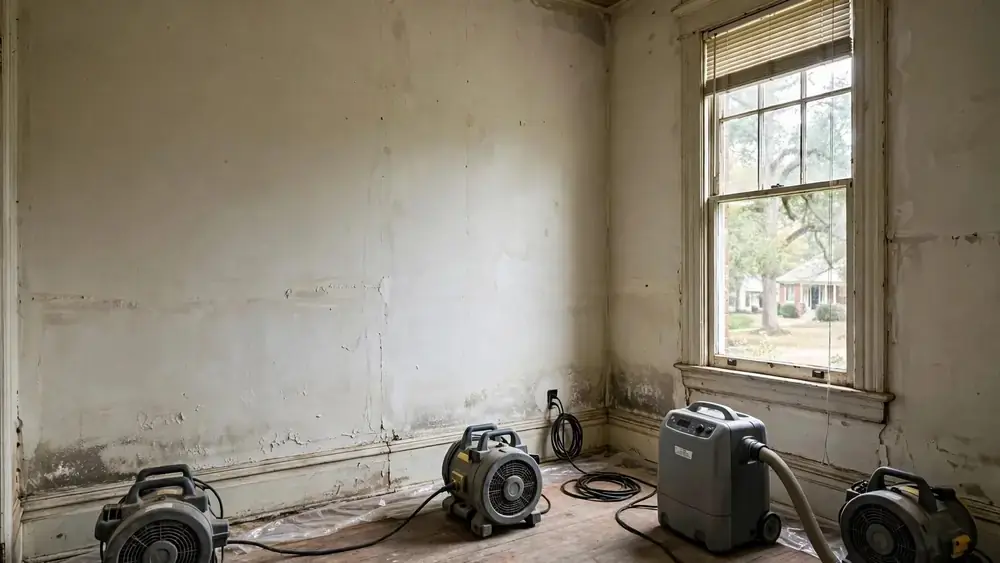
Plaster is applied wet over wood lath or an earlier base, and it reacts to water differently from drywall. It doesn't soften so readily and it can often dry in place, but water can break the bond between the plaster and the lath, so that a section sounds hollow when tapped or starts to bulge. It also dries slowly, because it is thick and dense.
Flood-cut methods designed for drywall are not automatically the right approach for plaster. Ask whether drying in place is possible, and whether a plaster repairer would be better than replacing the wall with new board, particularly in a room where the original finish matters.
- Tap to find hollow spots
- Dry in place where possible
- Plaster dries slowly
- Find a plaster repairer early
Below the floor
Raised floors and older foundations
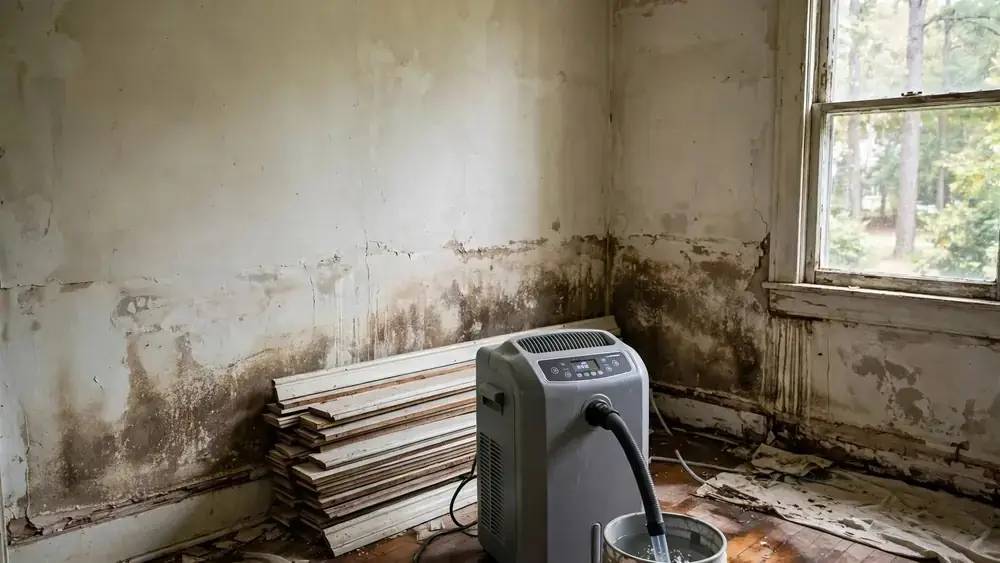
Unlike the slab homes in the newer parts of town, some older buildings may have raised wood floors. If yours does, water can drop through into the space beneath, wetting soil, sills and joists, and that space needs ventilation or drying in its own right. Check for a hatch, and be careful down there, since you might meet wet soil, old wiring and pests.
Old wood floors deserve care. They are often thicker than modern floors, and they can recover surprisingly well if the water is removed and the drying is slow and controlled. Rushing it with high heat can cause cracks and gaps.
Materials
Old building material and how water changes the plan
| Material | Water risk | Ask about |
|---|---|---|
| Lime or gypsum plaster | Loss of bond, slow drying | Drying in place; plaster repair |
| Old wood flooring | Cupping, gaps | Slow, controlled drying |
| Painted trim | Lead dust if disturbed | RRP-certified firm; salvage |
| Galvanized pipe | Rust, leaks, low pressure | Plumber's inspection; replacement plan |
| Cast iron drain | Cracks, scale | Camera inspection |
| Old wiring | Shock risk when wet | Licensed electrician first |
| Old wood windows | Rain entry, rot | Repair versus replacement |
Plumbing
Older plumbing in downtown buildings
Old pipes may show up as galvanized supply lines, cast iron drains, or a mixture of replaced and original sections. Galvanized pipe corrodes from the inside, which reduces pressure and discolors water before it starts leaking. Cast iron drain lines can crack or scale. Repairs in one place can put new stress on the old section next to it, so ask the plumber for an overall view, as well as a fix for this leak.
Permit rules still apply. Cedar Hill requires state-licensed trades to register, and plumbing permits run through Building Inspections.[5][6] Also, bear in mind that an older shutoff may not close fully. Test it before you need it, and with a plumber's help if it looks fragile.
Preservation
Designated and historic buildings: check before you alter
Cedar Hill has five homes on the National Register, and since 2006 the city has run a Historic Designation Marker program for the downtown area, which it describes as bounded roughly by West Belt Line Road, Highway 67 and Cooper at Broad.[1][4] Designation can affect what you may change, particularly on the outside. The city's page does not set out approvals, and we haven't checked individual buildings, so call the city before you replace windows, doors or visible finishes.
It's usually safest to treat original materials as worth keeping until shown otherwise. Label what comes off, keep samples of trim and floor, and take photos so that a repairer can match them later.
Careful process
How a careful job in an older building runs
- 1
Assess hazards
Check for lead paint, possible asbestos and wiring before any demolition.
- 2
Stop the source
Find it, even if it means looking through several generations of plumbing.
- 3
Extract gently
Remove water with care for old finishes and loose plaster.
- 4
Salvage
Number and remove trim, doors and other original elements.
- 5
Dry slowly
Use controlled drying so old wood and plaster do not crack.
- 6
Monitor
Take readings at regular intervals, and adjust as you go.
- 7
Repair like for like
Bring in plaster and wood repairers rather than defaulting to new board.
Commercial buildings
Storefronts, leases and who is responsible
Commercial and mixed-use buildings downtown raise an extra question: who is responsible? A lease may split responsibility for plumbing, roof and fit-out between owner and tenant. Report any water to the other party in writing straight away, take photographs and check your lease and insurance. A separate commercial policy may apply. This site's content is aimed at homes, so ask the contractor whether they handle commercial work.
From above
Roofs, parapets and older windows
Older roofs and parapet walls collect water differently from modern pitched roofs. Flashing, tired mortar and old windows can all let water through. A stain under a window in heavy rain may be a window problem, or it may be something higher up in the wall. Have a roofer or mason take a look before you repaint, since interior fixes won't hold if the water is still getting in.
Prevention
Protecting an older building before anything goes wrong
- Test the main valveKnow how it works and whether it closes.
- Have the drains checkedA camera inspection shows the condition of old lines.
- Replace old supply hosesDo this even if the rest of the system stays.
- Keep gutters and downspouts clearOld walls don't appreciate wet bases.
- Keep paint in good conditionPeeling paint in a pre-1978 building is a lead concern as well as a water one.
- Document original featuresPhotos today make repairs after a loss much easier.
Decisions
Repair or replace old materials?
Original materials may be harder to work with but they're also hard to replace, and they often survive better than people expect. A plaster wall that can be dried and repaired or an old floor that settles back is often a better outcome than a new finish that doesn't suit the building. On the other hand, contaminated water, failed wiring and rotten structure need to be replaced.
Ask each trade to explain its reasons. Anyone who says everything must go without looking first is telling you more about their process than about your building.
The visit
Planning a visit to a downtown property
Tell the contractor the rough age of the building, whether it is a home or a business, and whether there are any known hazards, such as old paint or suspect flooring. Parking and hose access can be tighter on older streets, so mention what's outside. If you know that the building is designated, say so at the start.
Named houses
Homes on the city's walking tour
The City of Cedar Hill publishes a National Register walking tour that gives a sense of how old these buildings are. It lists the home Dr. Rufus Alston Roberts built at 210 South Broad Street in 1884, E. E. Straus's two-storey home at 400 Cedar Street from about 1884, William Bryant Jr.'s house at 398 South Broad Street from 1889, an 1895 Victorian cottage at 800 West Belt Line Road and Tip Hawkes's home at 132 North Potter Street from 1899.[2]
Houses of that age predate modern plumbing standards, so any pipes in them were added or replaced later. We have no information about the condition of these or any other buildings, and we name them only to show the period. Their owners would have a much better idea of what's inside the walls.
Long history
Questions for a house with a long history
| Question | Why it matters | Where to look |
|---|---|---|
| When were the pipes last replaced? | Mixed generations fail at the joints | Old invoices; a plumber's look |
| What's under each room? | Raised floor or added slab | Hatches, vents, floor levels |
| What's the wiring like? | Old wiring and water are a bad mix | A licensed electrician |
| What finishes are original? | Decides what to keep | Photos; a preservation-minded repairer |
| Is there any designation? | May affect visible changes | City staff |
Rain
Old windows and walls in wind-driven rain
Old wood windows can let in wind-driven rain, especially with worn putty, failed paint or tired flashing. Water may run down inside the wall and appear below the sill, or even a floor down. Before you blame plumbing, check whether a stain lines up with a window and whether it follows storms from a particular direction.
Brick or stone walls with old mortar can also take in water. Repointing with a hard modern mortar can trap moisture in soft old brick, so ask a mason who knows older work. Interior paint won't solve any of this, and it can make things worse by sealing in the damp.
- Check the stain against the window
- Note the direction of the storm
- Use mortar that suits old brick
- Don't seal in damp
Electrical
Electrical safety in older buildings
Water and old wiring are a bad combination, and this is the first thing to think about after a leak in an older building. Knob-and-tube or old cloth-covered wiring may still be around in a building of this age, hidden behind later work, and it wasn't designed to be wet or buried in insulation. If water has reached a wall, a ceiling light or the panel, switch off that circuit from a dry place if you can. Otherwise, wait for an electrician. Don't assume a working light means safe wiring.
Ask the restoration contractor to confirm circuit loads before plugging in equipment. Drying machines draw a lot of power, and old circuits may not cope with them.
Records
Keeping a record of original features
- 1
Photograph each room
Do this now, before any loss, and repeat it every few years.
- 2
Get close-ups
Trim profiles, door hardware, floor patterns and plaster details.
- 3
Measure key pieces
Baseboard height, door sizes and board widths.
- 4
Note colors and materials
Include paint samples where they exist.
- 5
Keep samples
Spare boards, tiles or trim should be stored somewhere dry and high.
- 6
Store copies off-site
A flood can take the paper records as well.
Old and new
Why modern fixes can backfire in an old house
Older buildings tend to manage moisture by letting walls and floors dry out, while modern materials often try to keep water out altogether. Mix them carelessly and you can trap water. Cement-based patches on soft old plaster, plastic sheeting in the wrong place or vinyl floors on an old wood subfloor can all hold moisture where it does harm. That doesn't mean new materials are always wrong. It means each change should be thought about, and asked about, in the context of the whole building.
It's another reason to hire people who've worked on older houses. Ask them what they've done before, and ask to see a similar repair if possible.
Choosing trades
Choosing who works on an older building
- Ask about older houses specificallyGeneral experience doesn't always carry over.
- Ask about lead-safe certificationThis applies to paid work on paint in pre-1978 housing.
- Ask how they'd protect original finishesListen for specifics like labeling and salvage.
- Ask who repairs the plasterIt's a different skill from hanging drywall.
- Ask what they'd leave aloneGood answers include some restraint.
Later additions
Bathrooms and kitchens added long after the house was built
When a house dates from the 1880s or 1890s, its bathroom was probably added long after it was built, and often more than once. Those rooms may sit in a converted porch or a rear addition, with a floor that's a different height and drains that run a long way to reach the sewer. They're usually the first place to look for water trouble. Check the wall behind the tub, the floor around the toilet and the framing below, if you can get to it. A slight slope or a soft board near a tub is a sign to take seriously.
Street level
Downtown drainage and the street outside
Older streets were not laid out with today's rainfall and paving in mind, and the area around a building may have been raised or resurfaced many times. Watch how water moves on your block during a heavy rain, from a safe place. If water is reaching your door from the pavement, report blocked inlets to the city and ask a contractor about the threshold. Small changes at the door can make a real difference, and they often need no change to the historic fabric.
Early signs
Signs an old building is asking for attention
- Paint blistering low on a wallMoisture is moving through it.
- A floor that has begun to slopeFraming below may be damp or damaged.
- A musty smell after rainCheck under the floor and around windows.
- Rust-colored water at first drawOld supply lines may be corroding.
Older homes
Insurance on older homes
Older buildings can raise extra questions with insurers, particularly about wiring, plumbing and replacement of period materials. Ask your agent how your policy would treat original plaster or woodwork after a covered loss, and whether matching is included. A sample standard form excludes wear and tear and deterioration, so keep records showing that you've maintained the building.[7] Good photographs and receipts are your best support, and they take very little time to organize before anything goes wrong.
Buying and selling
Before you sell or buy an older house
Ask for any history of leaks and repairs, and look at the space under the floor if there is one.
Steady conditions
Keeping heat and air steady
Old wood and plaster dislike sudden swings. After a loss, bring the building back to its normal conditions gradually, not all at once.
Questions
Historic Downtown water damage questions
Can water-damaged plaster be saved?
Often, yes. Plaster can sometimes dry in place, but water may break its bond with the lath, which shows as bulging or a hollow sound when tapped. A plaster repairer can often stabilize it, so ask before you agree to removal.
Do lead paint rules apply to water damage repairs?
They can. EPA's RRP rule covers paid renovation work that disturbs lead paint in most pre-1978 homes, which can include removing water-damaged walls or trim. Ask the contractor whether they're certified and how they'll keep dust under control.
Why is my downtown building's water brown?
Old galvanized supply lines rust from the inside, and that can discolor water and reduce pressure. City water issues can also cause discoloration. If it affects only your building, a plumber can check; if neighbors see it too, call the Water and Sewer Division.
Do I need city approval to repair a historic building in Cedar Hill?
Permits apply as they do anywhere in the city, and designation can add requirements, especially for exterior changes. Check with Building Inspections and the city's planning staff, because we have not verified the status of individual buildings.
How is a raised floor dried after a leak?
The space below has to be dealt with, along with the floor above. That may mean removing wet soil cover, drying with air movers and dehumidifiers and checking joists and sills. Slow, measured drying is kinder to old wood.
Nearby
More around Historic Downtown
Back to all of Cedar Hill. Nearby pages: Bear Creek, High Pointe, Lake Ridge.
Related help for Historic Downtown: water extraction, structural drying, sewage backup cleanup, fire damage restoration and smoke damage cleanup. First time dealing with this? Read the first hours after water damage.
Sources and citations
- [1]Wikipedia: Cedar Hill, Texas
- [2]City of Cedar Hill: National Register walking tour brochure
- [3]U.S. EPA: Lead Renovation, Repair and Painting Program
- [4]City of Cedar Hill: Historic Preservation
- [5]City of Cedar Hill: Contractor Registration
- [6]City of Cedar Hill: Permits issued report, May 2024
- [7]Triple-I: Sample HO-3 homeowners policy form