Key facts: Bear Creek
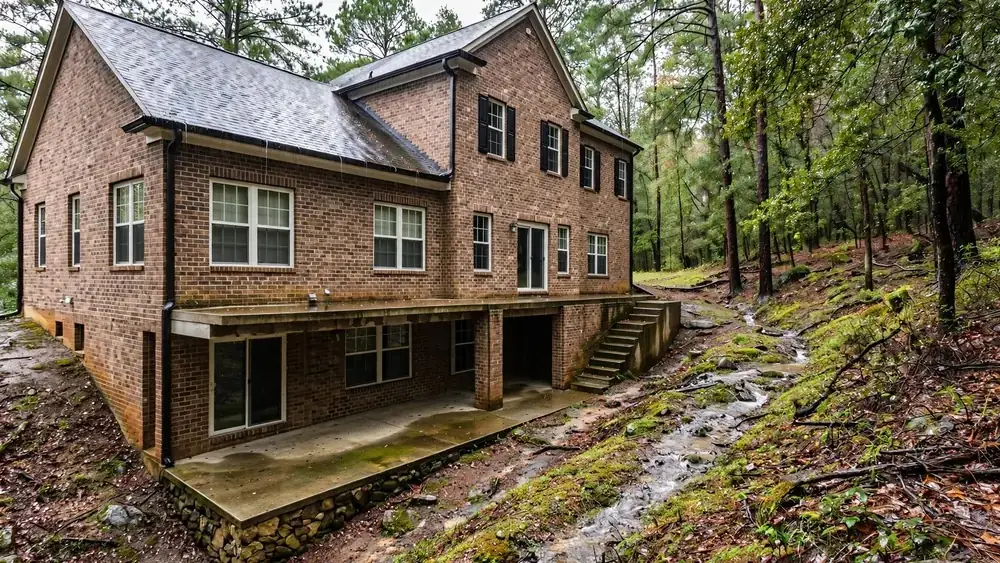
- A local guide describes the Bear Creek area as central-west Cedar Hill, with mature trees, natural creek lines and a mix of established and newer infill homes.[1]
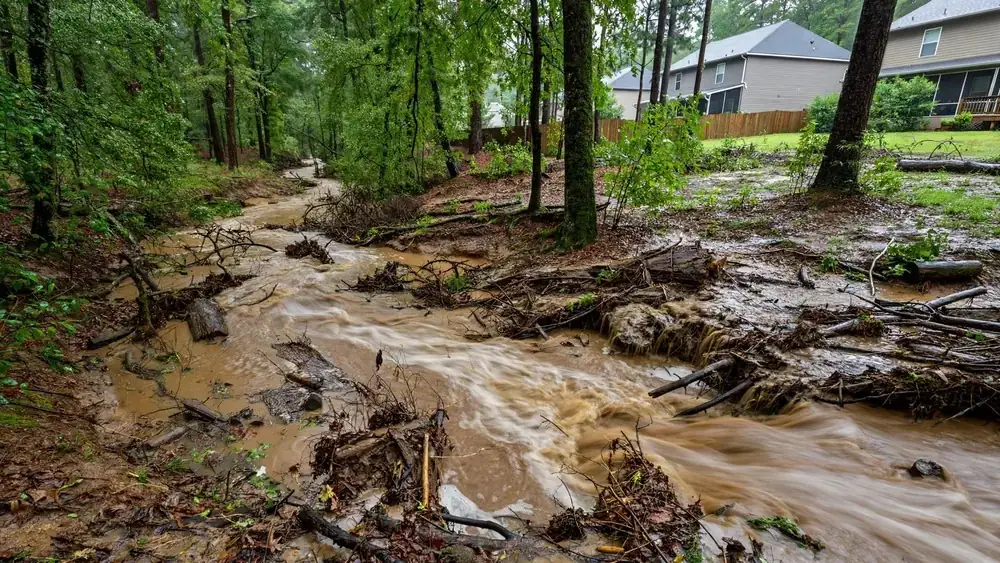
- During the August 2022 flood cleanup, a Cedar Hill councilwoman said a creek flooded and damaged homes along a whole street. The report did not name the creek or street.[2]
- FEMA says there is no area entirely free of flood risk, and its Map Service Center holds your community's flood map.[3]
The neighborhood
What this page means by Bear Creek
Bear Creek is used here as the name local real-estate guides give to this central-west part of Cedar Hill. Exact limits vary, and we describe the general area rather than an official boundary.
Housing
Older houses and new infill on the same street
A street that mixes established homes with newer infill has mixed water risks. The older house may have an aged plumbing system and a lower finished floor. The newer one may have been raised and graded to modern practice, and sometimes that grading changes where water goes for those around it. We can't speak for any one street, but it's worth looking at your lot as it is now, and not as it was when you bought it.
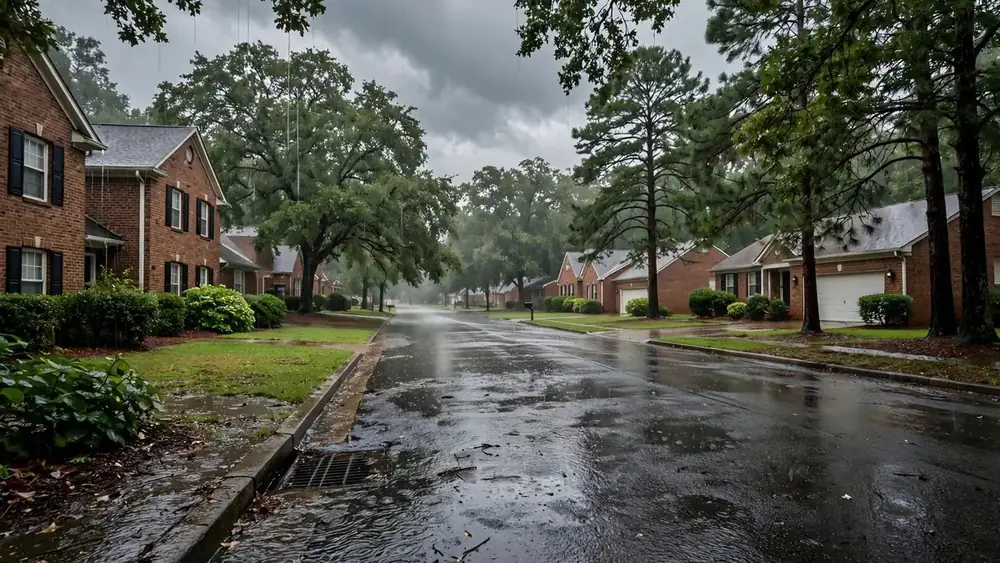
Mature trees are lovely and they also shape the water story here: gutters fill up fast, roots search out sewer lines and big limbs fall on roofs during storms. Each of these can start a loss that has nothing to do with the creek.
Local problems
The water problems this setting points toward
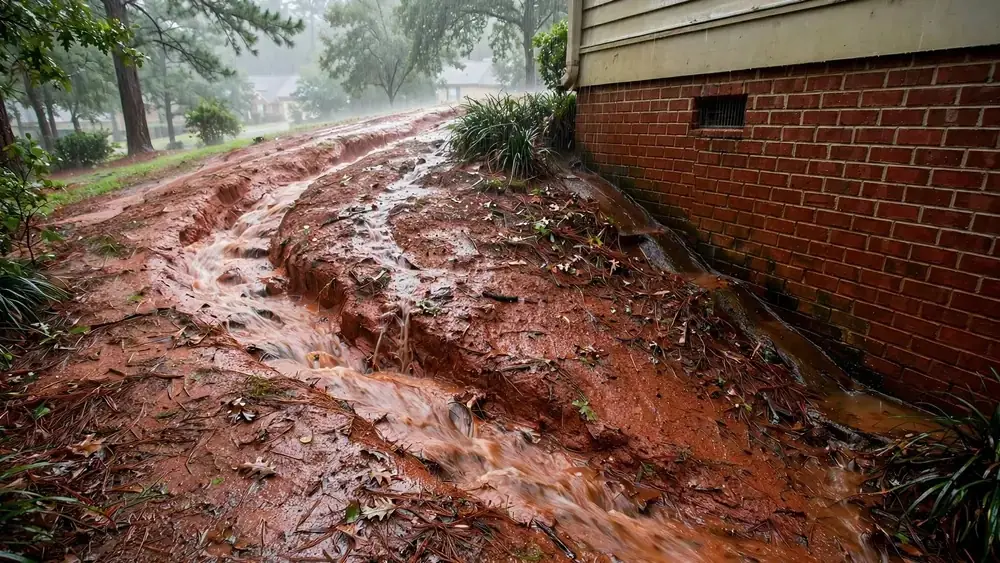
Runoff coming across the yard
A heavy storm can send water to the back of the house.
Silt on the patio or at the door
Muddy water suggests a surface route, so note where it came from.
Drains backing up in storms
Inflow can overload lines during heavy rain.
Read moreGutters overflowing at the back
Tree debris is often to blame.
Damp along one wall
A shifted grade or a neighbor's new drainage may matter.
Slow drains with big trees nearby
Roots may be in the sewer line.
Local history
August 2022: when a Cedar Hill creek reached homes
The most useful local example is August 22, 2022. The official DFW Airport station measured 9.19 inches of rain in 24 hours, and that was second only to the 1932 record.[4] Two days later, KRLD reported Cedar Hill Councilwoman Shirley Daniels saying that a creek had flooded and that water had damaged homes along an entire street.[2]
That report does not say which creek or which street, so we're not claiming it happened in this neighborhood. The point is what it shows: small creeks in Cedar Hill can reach houses in a big rain. A home near a creek line should plan with that in mind, even though most storms pass without trouble.
Flood maps
What a flood map can and cannot tell you
Start with FEMA's flood maps page, which leads to the Map Service Center and your community's map.[3] A lender may already have told you if you're in a high-risk zone. Those maps are a key tool, but FEMA itself says floods can happen almost anywhere, and they may not capture fresh changes to the area or overwhelmed storm drains.
So use the map together with what you can see. Where does water pond on your street in a storm? Where did the silt come from last time? Ask neighbors who have been there for a while. They often remember things no map shows.
- Check FEMA first
- Watch your lot during rain
- Ask long-time neighbors
- Ask the city about drainage
If water gets in
What to do when creek or yard water reaches the house
- 1
Get to safety
Move to higher ground, and call 911 if anyone is in danger.
- 2
Stay out until safe
Do not enter a flooded house until the power and gas have been made safe.
- 3
Document it
Take photos of the water line, the yard, the route it took and any damage.
- 4
Call your insurer
Tell them how the water came in, because it decides which policy applies.
- 5
Call a contractor
Assume the water is contaminated, and say so when you call.
- 6
Check neighbors
Older people on your street may need a hand.
Source table
How the source of water changes the plan in Bear Creek
| Source | Clues | Handling | Policy question |
|---|---|---|---|
| Creek or surface runoff | Silt line, outside route | Contaminated; remove porous materials | Flood policy |
| Roof or tree damage | Water from above, storm damage | Depends how long it sat | Home policy, check wording |
| Sewer backup in the storm | Comes up from a drain | Contaminated | Backup cover, if any |
| Failed pipe | Clean water with a clear source | Dry where possible | Home policy |
Around the lot
Grading, fences and neighbors' drainage
Drainage is rarely one-lot-only in an established area. New construction, fences, retaining walls and even a raised garden bed can redirect water. If your yard has started to pond where it never did, walk the boundary after a storm and take photos. Speak to your neighbor first, and then ask the city if there's a drainage concern on public land or a bigger pattern.
On your own lot, the basics matter: soil sloping away from the foundation, downspouts that extend beyond the wall and clear yard drains. A landscaper or drainage contractor can give a view on French drains or swales, and those are projects for dry weather.
Trees
Trees, limbs and storm damage
Mature trees come with their own water risks. A falling limb can puncture a roof, and rain then enters during the same storm. Tarp it if you can do so safely or have a professional do it, and take photos first. Once a roof has been opened like that, the attic insulation and ceiling below are likely wet, even if they look fine for now.
Leaves are the slower problem. Blocked gutters overflow onto fascia, siding and foundations. Clean them before autumn, since Love Field normals show October as the wettest month.[6]
Insurance
Insurance for homes near creek lines
The single most important fact: flood damage from rising water is handled by a separate flood policy, according to Triple-I.[7] If water rises from a creek or runs across the ground into your house, you would generally need that policy, whichever flood zone you are in. Ask your agent before a storm is on the forecast, because Triple-I notes a 30-day waiting period is typical.[8]
Our insurance guide sets out how sudden leaks, floods and backups usually differ.
Public and private
Who is responsible for what around the creek
Public streets, storm drains and sewer mains are generally maintained by the city, while yards and private lines are for the owner. Natural creek lines on private lots can be more complicated, including any easements on your deed. Check your survey and ask the city before you build or dump anything near a creek line. The Water and Sewer Division handles water and sewer issues, and it can direct you to the right people for others.[9]
Prevention
Getting ready before the next big storm
- Check your coverAsk your agent about flood and sewer backup cover.
- Store things highKeep papers and irreplaceable items off low shelves and garage floors.
- Clear yard drainsLeaves collect around them quickly.
- Photograph your home nowRecord condition and contents before any loss occurs.
- Know the safe routeKnow which nearby roads flood before you need to leave.
- Keep a shutoff planKnow how to shut off water, power and gas, and when it's safe to do so.
Decisions
Rebuild as it was, or rebuild to take a flood better?
Once a home has flooded, it's sensible to ask whether it should be put back in exactly the same way. Materials that handle wetting better on lower walls, higher outlets or simple changes to thresholds may reduce the damage next time. Talk with the contractor and check any permit requirements with Cedar Hill's Building Inspections office.[10]
Wait for dry readings first. A rebuilt wall on damp framing can be worse than a wall that stayed open for an extra week.
The visit
Planning a contractor's visit
Tell the contractor how the water reached the house, how high it came and whether you have silt in the wall or under the flooring. Mention if the yard is too soft for heavy equipment, and whether power has been restored. Say whether you've spoken to your insurer, and ask how they document the work.
Storm damage
What each kind of storm damage looks like in this setting
| Cause | First signs | First call |
|---|---|---|
| Falling limb | Hole in the roof; water above a ceiling | Tarp or roofer, then a contractor |
| Clogged gutter | Stain high on a wall or at fascia | Clear it, then check the attic |
| Yard runoff | Silt at a door | Contractor; treat as contaminated |
| Creek overflow | Water line, debris outside | Authorities first if unsafe, then flood insurer |
| Sewer surge | Water rising from drains | Plumber or the city |
| Pipe failure in the same storm | Clear water, moving meter | Close the main, then call a plumber |
Reading the lot
How low-lying parts of a lot give clues
Old lots keep a record if you know where to look. Stains and silt lines low on a fence show where water has stood. A line of leaves or mulch across the yard marks an old flow path. Trees with exposed roots on one side suggest water runs through there regularly. Moss or algae at the base of a brick wall means that wall stays damp. None of this proves that your house will flood, but it does show how water behaves on your lot.
Take photos each time, with a date. Over a few years, they become a record that you can show an insurer, a drainage specialist or a future buyer.
Dry-weather check
A dry-weather check of a lot near a creek line
- 1
Walk the boundary
Note low spots, swales and any changes since last year.
- 2
Look at the slab edge
It should be visible, with soil falling away from the wall.
- 3
Check every downspout
Each should carry water clear of the foundation.
- 4
Clear yard drains
Lift the grates and remove leaf build-up.
- 5
Look at the creek side
From a safe distance, note erosion or new debris.
- 6
Check for easements
Your survey may show drainage easements you must keep clear.
Erosion
Erosion near the back of the lot
A creek bank that's slowly moving toward a yard is a separate worry from flooding, though the two are related. University of North Texas notes describe the Eagle Ford Shale, found on the western side of the city, as subject to severe erosion through slaking.[11][12] We don't know what's under any given lot in this area, so don't take that as a diagnosis. If you see a bank collapsing, fences leaning toward the creek or new cracks in the ground, keep away from the edge, and get professional advice before building or dumping anything there.
Adding fill along a creek isn't a simple fix. It can change how water moves for you and for neighbors, and rules may apply, so talk with the city first.
Low rooms
Basements are rare, but low rooms aren't
Most North Texas homes don't have basements, so people tend to feel safe from flooding. But sunken living rooms, garages set below the main floor and rooms added on at the back can all sit lower than the rest of the house. Water will find them first. If your home has a step down anywhere, that's the place to keep valuables off the floor, and to check first after a storm.
Rear additions deserve special attention. Their foundations may not match the original, and the joint between the two is a likely place for water to enter.
Reporting
What to tell an insurer after storm damage near a creek
- Exactly how water got in, and where.
- Whether it rose from outside, came through the roof or came up through a drain.
- Times, as accurately as you can give them.
- Whether the power stayed on during the storm.
- What you did to protect the house, with receipts.
- Photos of the outside as well as the inside.
Near misses
When the street floods but the house stays dry
A near miss is valuable information. If water came up the driveway and stopped short of the door, note how close it came and take a photo with something for scale. Then check the garage wall, the weep openings and any low vents, as water that didn't enter the room may still have wet the base of the wall. Use the near miss to do the jobs you've been putting off, like checking your cover or moving valuables off the garage floor, before the next rain comes.
Getting out
Getting out when your route floods
Know two ways out of your street, and which low crossings go under first. If you're told to leave, go early, since roads can close before your own yard shows any water at all. Ready.gov's warning that moving water about a foot deep can carry off a car applies to quiet neighborhood streets as much as to highways.[5] Keep shoes and a flashlight near the bed during storm warnings, and keep your phone charged.
Storm kit
What to keep ready during storm season
- Boots, gloves and a flashlightKeep them where you can reach them in the dark.
- Copies of your policiesOn your phone, as well as on paper.
- Photos of your roomsTaken before anything happens.
- Numbers you'll needYour agent, a plumber and the city's water and sewer line.
Slow recovery
Why a low wall stays damp for months after a flood
Brick and concrete soak up water and give it back slowly. After a flood, a wall on the shady side can keep reading high long after the room feels normal, particularly if soil against it is still wet. That doesn't always mean the job failed. Ask whether the numbers are falling, keep the soil and mulch pulled back and hold off on repainting. Ask for a final reading in the same spots as the first ones, so that you're comparing like with like.
Dry-weather jobs
Small drainage jobs that are worth doing in dry weather
Dry weather is when drainage work gets done properly. Reshape a low spot beside the wall so it falls away from the house, add a downspout extension or clear a blocked swale. Before digging, call 811 so that buried lines get marked. Take a photo before and after each change, and watch how it performs in the next rain. If water now goes somewhere new, especially toward a neighbor, adjust it before it becomes a dispute. Keep larger ideas, such as French drains or work near a creek bank, for a specialist, and ask the city first if the work is close to the creek line.
Local memory
Asking neighbors the right questions
Ask long-time neighbors where water stood in past storms, how high it reached and how long it took to go down. Write the answers down.
Questions
Bear Creek water damage questions
Is the Bear Creek area in a flood zone?
It depends on the address. Find your community's map through FEMA, and remember that FEMA says no zone is free of risk. Being near a creek line is a good reason to check, but it doesn't by itself mean you're in a high-risk zone.
Did the August 2022 flood hit Bear Creek?
The report we found says a Cedar Hill creek flooded and damaged homes along an entire street, but it doesn't name the creek or the street. Neighbors and the city may know more about your specific location.
Do I need flood insurance if I'm outside a mapped zone?
You aren't always required to have it, but home policies don't cover floods, and homes outside mapped zones can still flood. Talk with your agent about the risk at your address, and check waiting periods well ahead of storm season.
Why did my yard start ponding after a neighbor built?
New building, fences and regrading can change how water moves. Photograph it during and after storms, speak with your neighbor first and ask the city whether drainage rules apply. A drainage specialist can suggest changes for your side.
Is creek water really a health risk inside the house?
Treat it as contaminated. It can carry soil, bacteria and chemicals picked up on the way. Wear boots and gloves, keep kids and pets out, and don't simply dry out porous materials that it soaked.
Nearby
More around Bear Creek
Back to all of Cedar Hill. Nearby pages: High Pointe, Historic Downtown, Lake Ridge.
Related help for Bear Creek: water extraction, structural drying, sewage backup cleanup, fire damage restoration and smoke damage cleanup. First time dealing with this? Read the first hours after water damage.
Sources and citations
- [1]Dustin Pitts: Best neighborhoods in Cedar Hill, TX
- [2]KRLD/Audacy: Flood cleanup in North Texas, August 24, 2022
- [3]FEMA: Flood maps
- [4]PBS NewsHour: Near-record rainfall floods Dallas-Fort Worth
- [5]Ready.gov: Floods
- [6]Wikipedia: Dallas (climate normals and records)
- [7]Triple-I: How to protect your home from water damage
- [8]Triple-I: Water damage, what's covered, what's not
- [9]City of Cedar Hill: Water and Sewer
- [10]City of Cedar Hill: Contractor Registration
- [11]University of North Texas: Eagle Ford Shale field stop
- [12]Wikipedia: Cedar Hill, Texas