
Key facts: Emergency Sewage Backup Services
- Stop using water: Every flush or wash adds to the backup.
- Keep everyone away: Especially children, older adults and anyone with health concerns.
- Sewage calls connect to independent contractors, with no guarantee one covers every address.
Right now
First steps for sewage backup services
- 1
Stop using water
Every flush or wash adds to the backup.
- 2
Keep everyone away
Especially children, older adults and anyone with health concerns.
- 3
Close off the area
Avoid tracking contamination through the house.
- 4
Wash after any contact
Use soap and clean water, and call a doctor about any exposed wound.
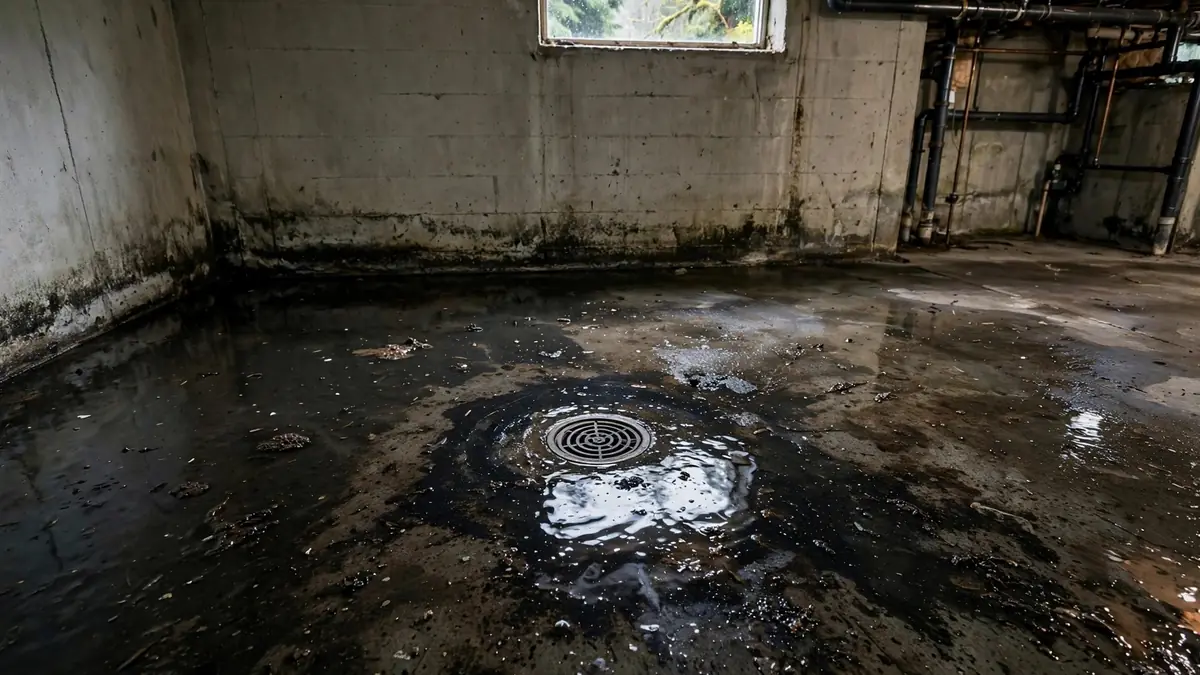
A low room where backups surface
Confirm it
Telling a sewer backup from an ordinary leak
The answer changes who may safely stay in the house, so look for these signs from a distance.
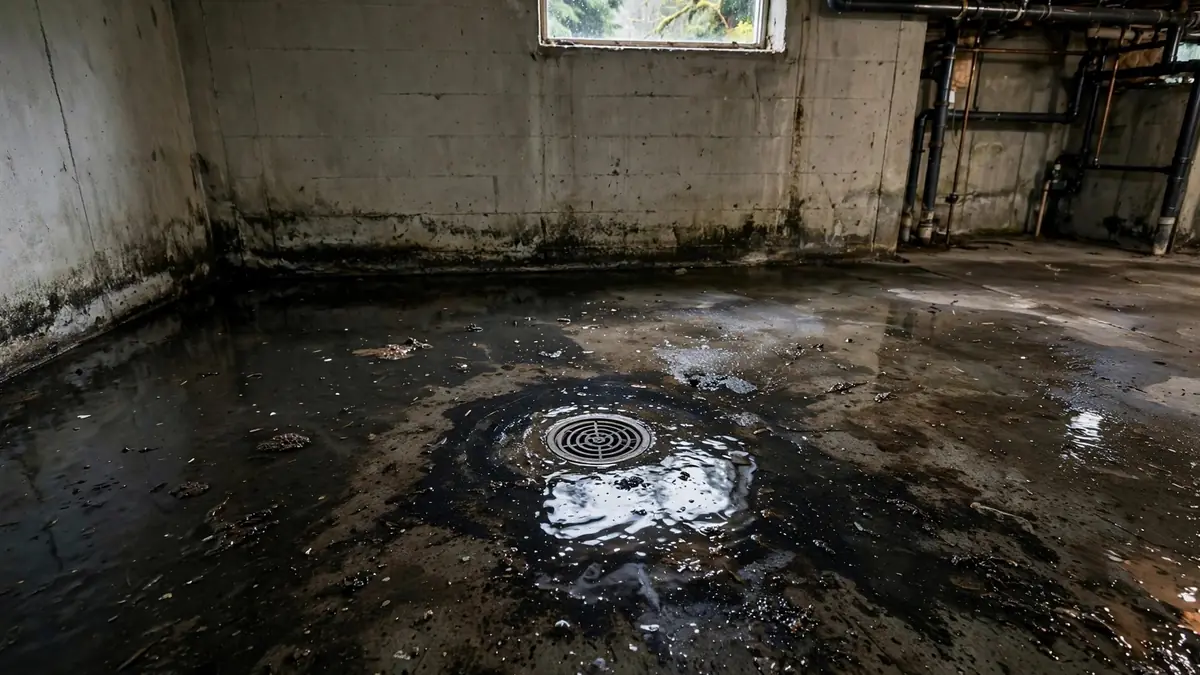
- Water comes up through the lowest drainBasement floor drains, shower pans and lowest-level toilets are the usual places, because they are the first escape route for a blocked line.
- It gets worse when someone uses waterIf a washer draining upstairs makes a downstairs toilet gurgle or overflow, the drain line is likely blocked below both.
- The color and smell are wrongGray or black water, an unmistakable odor, toilet paper or solids all count. Trust your nose, but do not lean in to confirm.
- Several fixtures act up togetherOne slow sink is a local clog. Several slow or gurgling fixtures at once suggest a main line problem.
- It follows heavy rainSome storm systems and combined sewers can surcharge in downpours, sending water back toward homes. Call your sewer utility and report it, since they may need to know.
Time line
Handling a sewage backup across the first day
The first goal is to keep sewage from spreading on people, pets and shoes. Outside help depends on local availability, so plan to hold the line safely in the meantime.
- 1
Immediately
Tell everyone in the house to stop flushing, running taps, and using the washer or dishwasher. Shut off appliances that drain automatically, such as an ice maker or a softener, if you can do so from a dry spot.
- 2
Next few minutes
Get children, pets and anyone unwell away from the area. Close the door to the affected room. Put a towel at the threshold only if you can reach it without stepping in the water.
- 3
Within half an hour
Sort out power. If circuits or equipment got wet, CDC advice is to use the main breaker, and to phone an electrician if reaching it would take you into standing water. Do not step into the sewage to reach a switch.
- 4
Within the first hour
Call a plumber or sewer contractor, or the sewer utility if you are on a public line and suspect the problem is on their side. Take photographs from the doorway. Call your insurer, and ask directly about sewer or drain backup coverage, which may be separate.
- 5
Hours 1 to 6
Set up a clean zone at an entry door. Anyone who has entered the wet area takes boots off there. Wash hands with soap and clean water before eating or touching a phone.
- 6
Hours 6 to 24
Once the line is flowing, a contractor can talk through removal and sanitizing. Keep ventilating to the outdoors if windows can be opened without crossing the area. Keep the HVAC off if ducts or returns are in the affected space.
- 7
Day two
Ask where the removed material will go, how they will contain the work zone, and how they will verify that the area has been cleaned. Plan for people to stay elsewhere if the only bathroom is out of action.
Contact
Who owns which part of the sewer problem
Responsibility often hinges on where the blockage is. Your local utility can tell you where its part ends.
| Situation | Call first | Then |
|---|---|---|
| One fixture only, no sewage in the room | Plumber | Clean any small splash, wash your hands |
| Many fixtures, sewage at the lowest drain | Plumber or sewer contractor | Restoration contractor and insurer |
| Neighbors have the same problem | Sewer utility | Plumber if the utility says the line is yours |
| Septic system | Septic contractor | Local health department if the ground outside is also affected |
| Backup during a flood or storm | Local officials and utility | Insurer, and avoid the water |
| Apartment or condo | Building manager or landlord | Your renters or unit owner policy |
| Sewage with a wet electrical panel | Electric utility or electrician | Plumber once power is safe |
Hazards
Why sewage is not just dirty water
- Germs you cannot seeIt carries human waste and the illness-causing organisms that come with it. Treat every splash as contaminated, even after the water looks clear.
- Contact through small cutsCDC guidance says to clean open cuts or sores exposed to floodwater and apply antibiotic ointment, and to get medical attention if you become hurt or sick. Do the same after sewage contact, and tell the clinician what you were exposed to.
- Spread on footwearA clean hallway stays clean only if nobody walks through it in dirty boots. Most secondary contamination in a house travels on feet, hands and tools.
- Electrical contactLow outlets and basement equipment are often at the exact level where a backup collects.
- Gas from a blocked systemA strong sewer odor in the home should not be ignored. If you feel dizzy or unwell, get out into fresh air and seek medical help. If you smell natural gas instead, leave and call emergency authorities.
- Hidden wet zonesSewage moves under flooring, behind baseboards and into wall bottoms, where it cannot be wiped clean.
Keep or remove
How contaminated materials are usually handled
A contractor makes the final decision in your home. These are the usual starting positions, and they lean toward caution.
| Material | Usual approach | Why |
|---|---|---|
| Carpet and pad | Usually removed | Pad and backing absorb contamination and cannot be reliably cleaned |
| Drywall and insulation | Removed where wet | CDC says to discard what sewage has contaminated |
| Upholstered furniture and mattresses | Usually discarded | Filling cannot be cleaned through |
| Concrete and tile | Cleaned and disinfected | Hard surfaces can be washed, though grout and cracks need attention |
| Solid wood framing | Cleaned and dried if sound | Replacing it is rarely the first option, but rot changes that |
| Metal furniture and hard plastic | Often cleanable | Scrub, disinfect and rinse, then dry |
| Clothing and washable fabric | Wash hot with detergent, kept apart | CDC gives this for clothes worn during cleanup; ask about items soaked in sewage |
| Stuffed toys | Discard | CDC advises throwing out toys that cannot be cleaned |
| Food and medicines in contact | Discard | Do not risk it |
Don't
Sewage mistakes that spread the damage
- Flushing to "see if it cleared"A test flush adds to whatever is backed up. Wait until someone has confirmed the line is open.
- Running a fan aimed at the wet roomMoving contaminated air around the house is not drying. Ask how the area should be ventilated.
- Mopping toward clean roomsMops and buckets carry it with them. Do not start until you have a plan for where the dirty water goes.
- Pouring bleach over it and calling it doneContaminated material still has to come out, and bleach must never be mixed with ammonia cleaners, as the EPA warns.
- Using a household vacuum or a carpet cleanerThese machines can spray contaminated water and may be ruined. They also put you in contact with electricity while standing in the water.
- Letting a helper with a wound or weak immune system pitch inKeep vulnerable people out of the area entirely. Ready.gov says children should sit out cleanup altogether.
- Washing work clothes with the family's laundryCDC says to wash clean-up clothes in hot water and detergent, apart from other laundry.
- Putting off medical careIf someone gets sick or has an infected wound after contact, get medical attention and describe the exposure.
Small or large
Deciding if a small spill is really small
Some backups are minor: a little water around a toilet base, on tile, caught quickly. A very small spill on a hard floor may be manageable with gloves and disinfectant. If you do that, wear rubber boots, gloves and goggles, as CDC advises for sewage. Bag what you use, wash thoroughly afterward, and launder your clothes separately.
Anything beyond that is a contractor job. The EPA says that if damage came from sewage or other contaminated water, you should use a professional experienced with that kind of damage. Carpet, drywall, a basement, a crawl space, more than one room, or anyone vulnerable in the home all tip the balance. Do not let the wish to get it over with lead you into a cleanup that puts someone at risk.
Crawl spaces are a special case. Sewage under a house can come from a broken drain you never see, and the first clue may be a smell in the floor registers. If you notice this, keep out of the crawl space and turn off the forced-air system if its ducts run there, then phone a plumber.
Document
What to keep for the sewer backup file
- The first signNote what you noticed, when and where. Gurgling the day before counts, so write that down too.
- Plumber's findingAsk for a written note on where the blockage was and what caused it, such as roots, grease or a collapse. Ask for any camera footage.
- Utility report numberIf you called the sewer utility, record the report number, the time, and who responded.
- High-water photosShow the water line, the lowest drain and any stained material, with the date recorded on the images.
- List of discarded itemsPhotograph each item before it goes. Contamination is a good reason to remove things fast, but record them first.
- Cleanup scopeKeep the contractor's list of removed materials, disinfection steps and any testing or verification they did.
- Medical visitsIf anyone needed care, keep those records with the date of exposure.
Getting back in
How to think about reoccupying the space
A cleaned sewage area should look clean, smell clean, and be dry. Ask the contractor how they determined it was finished. Moisture readings show that materials are dry, and a visual check shows residue has gone. If any testing was done, ask for the report and what it was looking for. Do not let rebuilding start until those questions have answers, because new drywall or flooring will cover what was missed.
Once the emergency has passed, ask your plumber what would reduce the chance of a repeat. Options depend on the home and the cause, and may include line cleaning, repairing a damaged section, or a backwater valve where local code permits one. Get that advice from the plumber who saw the problem, and treat it as a separate decision from the cleanup.
Questions
Sewage Backup Services: quick answers
Can I clean a small backup myself?
A very small spill on a hard floor may be manageable with gloves and disinfectant, but carpet and drywall are different.
Who fixes the blockage?
A plumber or sewer contractor, or your utility if the main line failed.
Can I shower while I wait?
No, not until the line has been cleared. Water sent down any drain ends up at the same blockage. Use a neighbor's bathroom, or stay elsewhere.
Is it safe to stay in the house?
It depends on where the sewage is, whether there is any working bathroom, and who lives there. Infants, older adults and anyone with a weak immune system are better off elsewhere.
Do I have to throw out my carpet?
Usually, when sewage soaked it. Ask the contractor to explain any exception for your specific situation.
My drains are slow but nothing has come up. Is that an emergency?
It is a warning. Cut back on water use and call a plumber soon, because a partial block can become a full one without much notice.
Does my homeowners policy cover this?
Backup coverage is often an add-on, and flood coverage is separate again. Ask your insurer which applies, and do not assume either way.
Next
When the drains have been cleared
The sewage backup cleanup page explains how contaminated material is removed and the area sanitized. The guide to water categories sets out why this water is treated so differently, and who does what between plumber and restorer helps you make the right calls.