

Key facts: Emergency Roof Leak Services
- Stay off the roof: Wet or storm-damaged roofs are dangerous.
- Catch the water: Use buckets, and move belongings away.
- After a storm, calls to (833) 610-0241 reach independent contractors whose availability changes with local demand.
Right now
First steps for roof leak services
- 1
Stay off the roof
Wet or storm-damaged roofs are dangerous.
- 2
Catch the water
Use buckets, and move belongings away.
- 3
Check the attic if safe
Walk only on framing, and look for wet insulation.
- 4
Photograph from the ground
Note the date, since your insurer may ask.
Rain that travelled down a wall
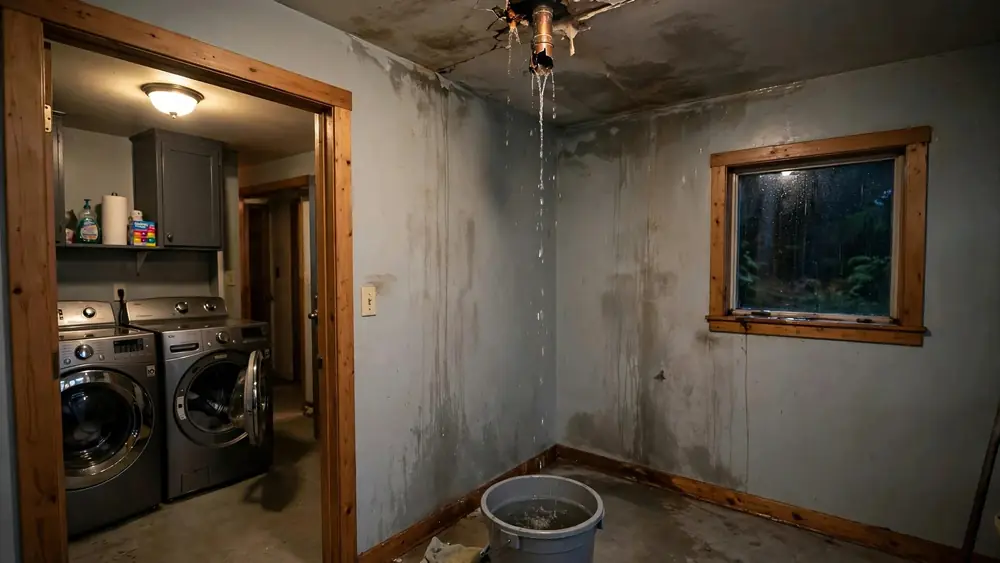
Stay down
Why the roof is the last place to be in a storm
A wet roof is slick, and storm damage can leave weak decking you cannot see from above. Wind can catch a tarp like a sail, and a person holding it. Lightning, high wind and darkness all rule out climbing, and so does being alone. Whatever you can do from inside the house or from the ground, do that, and leave the roof to someone trained and equipped to work on it.
You can do a lot for the house from indoors. Protecting what is under the leak, catching water, and recording the damage may do more for your claim and your belongings than a rushed tarp.
Storm timing
Leak response before, during and after the rain ends
Roofers and tarp crews get stretched after a storm, and availability varies. These steps are designed so that you can make progress on your own and safely.
- 1
As soon as you see water
Identify the room and move people away from any ceiling that is bulging. Keep clear of light fixtures with water near them, and turn off that circuit from a dry panel if needed.
- 2
First 30 minutes
Move electronics, documents and photographs out of the room, then furniture. Cover what you cannot move with plastic. Set buckets under drips, and put a towel in the bucket to quiet the splash and reduce spray.
- 3
During the storm
Stay inside and away from windows during high winds. Follow local weather alerts. If the structure is making strange noises or part of the roof has gone, leave and call for help, then follow local instructions on shelter.
- 4
First hour after the worst passes
From the ground, look for missing shingles, lifted flashing, fallen limbs or dented vents. Use a phone zoom or binoculars. Stay away from any downed lines, and report them to the utility.
- 5
Same day
Call your insurer to open a claim, and ask what they expect regarding temporary repairs. Arrange a tarp through a roofer or contractor once it is safe. Save every receipt.
- 6
First evening
Go into the attic only if you can do so safely, staying on framing with a good light and someone nearby. Move wet insulation only after advice, as it can be heavy and may contain hazards in older homes.
- 7
Next 24 to 48 hours
Wet insulation, drywall and belongings need attention in the EPA's drying window. Ask the contractor to check for moisture in the ceiling, walls and attic framing, even where nothing appears wet.
Where it got in
Common entry points and what they show inside
Water often enters at a joint rather than through the middle of a shingle. Sharing what you see helps the roofer narrow things down.
| Entry point | What you may see inside | What to tell the roofer |
|---|---|---|
| Chimney flashing | Stains on nearby ceiling or chimney breast | Whether it follows wind-driven rain |
| Plumbing vent boots | Small ceiling stain near a bathroom | Which room and how long it has been happening |
| Skylight | Drips around the frame or on the shaft | Whether it leaks only in heavy rain |
| Valleys | Long stains at the corner of two roof planes | Debris or ice you noticed |
| Missing shingles | Fresh drip or wet attic insulation | Storm date and any photos from the ground |
| Tree strike | Sudden opening, broken framing | Size of limb and whether it is still in place |
| Ice dam | Water at exterior walls in thaw weather | Recent freeze and thaw pattern |
Attic water can travel along rafters and pipes, so the leak may be some distance uphill from where you first notice it.
Tarp talk
What to ask before anyone tarps your roof
- How will it be fastened?Ask how the tarp is held at the edges and over the ridge. A tarp that lifts in the wind may do little good.
- What is the plan for wind forecast tonight?Good temporary work takes the weather into account. Ask what happens if the tarp lifts or leaks.
- Will the fasteners cause more damage?A temporary fix involves some compromises. You should know where nails or battens went, so a roofer can deal with them later.
- Will you photograph the roof first?Ask for before-and-after pictures, dated. They support your claim, and you will not have to climb up yourself.
- Do you carry insurance?Ask for the certificate, and check it. Roof work is high risk. Licensing rules differ by state, so check what yours requires.
- What does the invoice describe?It should list the work, materials, date and address, which your insurer may ask for.
Skip these
Things to avoid while the roof is open
- Climbing up to "just take a quick look"Ground-level photos and a roofer's images will do the job.
- Using a pressure washer or hose to find the leak in the storm's aftermathWater testing has its place, but done by a roofer, not while the home is already wet.
- Sealing from belowCaulk or foam from the attic side does not stop rain, and may hide the path. It can also trap moisture in the decking.
- Letting wet insulation sitIt holds water against the ceiling. Ask the contractor to look at it soon, rather than waiting for repairs.
- Agreeing to a full roof replacement at the doorStorm sales can be high-pressure. Get time to read what you sign, talk to your insurer and check the business independently.
- Running a generator in the garage during the outageCDC warns against it, including near open windows or vents, and Ready.gov wants the machine a full 20 feet from the house openings.
- Touching wet wiring in the atticAttic wiring and lights can get wet. Stay out if you see water on a junction box or fixture.
Ceiling, attic, walls
Inspecting the house below a leak
What you find inside decides how quickly the drying needs to happen. Go through it in this order, and stop whenever something looks unsafe.
| Area | Look for | If you find it |
|---|---|---|
| Upper ceilings | Stains, bulges, peeling paint | Clear the room if it sags, photograph, call for a check |
| Top of walls | Damp paint, wet baseboards below | Ask for moisture readings inside the wall |
| Windows and trim | Water coming through the head | Tell the roofer; flashing may be involved |
| Attic insulation | Matted or wet patches | Have it evaluated and removed if needed |
| Attic framing | Dark streaks, damp wood | Have it dried and checked for existing mold |
| HVAC in the attic | Wet ducts or unit | Stop using it until checked |
| Closets and storage | Wet boxes, damp clothes | Move out, photograph, dry within a day or two |
Proof
What your storm record should contain
- Date and time of the stormSave a screenshot of the weather alert or a local report. Note exactly when the first drip appeared.
- Ground-level roof photosFrom each side of the house, including any shingles in the yard. Keep the fallen pieces, if safe to collect them.
- Interior photosTaken before you clean or move things, with the wet spot and the items affected.
- Earlier roof recordsAge of the roof, past repairs, any inspection report. Your insurer may ask whether the damage is new.
- Tarp and emergency receiptsMany policies expect reasonable steps to limit further damage. Ask yours what it wants, and keep the paperwork.
- Contractor detailsEach company's name, the person you met and what they said. Keep their photos and readings with your own.
- Items listNote ruined belongings with description and age. Take a picture before you throw anything out.
Common roof types
Flat roofs, metal roofs and older homes
Flat or low-slope roofs behave differently. Water can pool and find a seam well away from where it surfaces. Do not go up to clear a drain during or right after a storm. Pooled water adds weight, so if a flat roof has visibly sagged, or a ceiling beneath it has bulged, keep people out of the space below and tell the roofer exactly what you saw.
Older homes bring additional care. Attic insulation, textured ceilings and old plaster can contain materials like asbestos or lead that should not be disturbed without testing. Ask before anyone pulls them down. In older homes, knob-and-tube or other aged wiring may also run through the wet area, which makes an electrician's check especially worthwhile.
Snow adds its own hazard. Ice dams can force water under shingles in a thaw, sometimes on a sunny day. Standing on a ladder to chop at ice is an easy way to get hurt and a good way to damage the roof. Have water removed from indoors, take photos, and call someone equipped for the job.
Long waits
Protecting the house if the repair takes time
After a large storm, permanent roof work may take some time to arrange. Plan for the wait. Check the temporary cover after every storm, from the ground. Look inside the attic and on upper ceilings. Keep receipts for anything you buy. If the home is unlivable, ask your insurer what is available for temporary housing, and let the mortgage company know about major damage if your insurer or lender requires this.
Keep drying going where you can. Portable dehumidifiers run on dry, safe circuits, and interior doors left open allow air to move. Rooms under the leak should stay empty until you know the ceiling is safe and the leak has stopped. Inspect stored items, too, because cardboard can wick water and mold can show up on anything left damp. A roof fixed on schedule is good; a house that stayed dry while waiting is better.
Questions
Roof Leak Services: quick answers
Will insurance pay for a tarp?
Many policies expect reasonable steps to prevent further damage, so keep the receipt.
Can I wait for the roofer?
Roofers can be booked out after a storm, so temporary protection comes first.
Should I fix the leak before the adjuster comes?
Temporary repairs to limit damage are generally expected, but check with your insurer and photograph everything first. Keep any permanent repair until the adjuster has seen it, unless told otherwise.
The drip stopped once the rain did. Should I still call?
Yes. The hole has not healed itself, and wet material may be sitting above your ceiling. Have it checked before the next storm.
Can a tarp go on while it is raining?
Safe practice depends on the conditions, and a contractor will decide. High winds and lightning mean no. Keep working inside until the crew says it is safe.
What if a tree is on the roof?
Stay out of the rooms below and call your insurer and a qualified tree contractor. If power lines are involved, keep well away and call the utility.
Next
Once the rain has stopped
The board-up and tarping page covers temporary roof protection in more detail. The wet drywall guide helps you decide what stays, and the insurance adjuster guide explains how to present storm damage.