
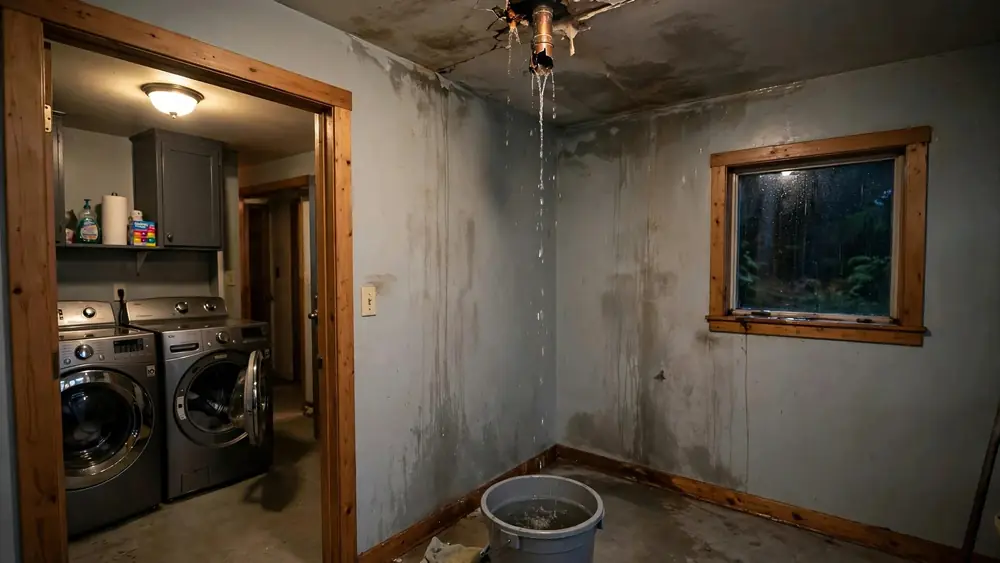
Key facts: Emergency Ceiling Leak Services
- Clear the room below: Move furniture and electronics if you can do so safely.
- Turn off that circuit: Especially if a light fixture is wet.
- This number links you to independent contractors for ceiling water damage, and service differs by area.
Right now
First steps for ceiling leak services
- 1
Clear the room below
Move furniture and electronics if you can do so safely.
- 2
Turn off that circuit
Especially if a light fixture is wet.
- 3
Check above
Look for a bathroom, appliance or roof leak upstairs.
- 4
Do not poke a bulge unless told to
A controlled drain is sometimes used, but only with a bucket and a clear exit, and it is better left to a professional.
Why a wet ceiling can come down

Water that came from overhead
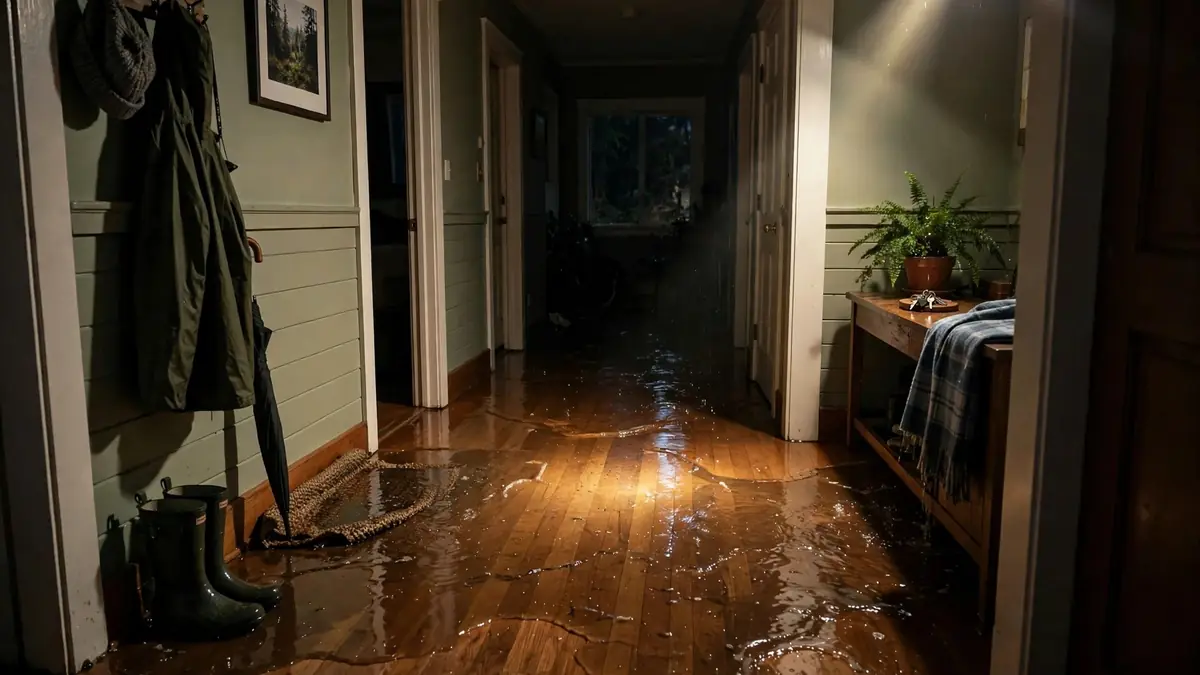
Look up
Reading a wet ceiling from a safe spot
A ceiling tells you a fair amount before you go anywhere near it, as long as you stand back and in a doorway. A small ring-shaped stain with no drip suggests an old or slow leak. A fresh drip from one point shows water has found a seam or fixture. A wide, soft belly means water is pooling on top of the board, and it is the one that can come down without warning. Cracks along tape joints, peeling paint and a bowed line of sagging panels all point the same way.
Do not press it with a broom to see how soft it feels. Do not climb on a ladder under it. Wet drywall can lose its strength with very little warning, and the water it holds is heavy.
Signs
Ceiling symptoms and how urgently to treat them
None of these replaces an inspection. The purpose is to help you choose your first move.
| Symptom | What it may mean | What to do first |
|---|---|---|
| Round brown stain, dry to the eye | Past or slow leak above | Check above, photograph, arrange a moisture check |
| Steady drip at one point | Water finding a joint or a fastener | Catch it with a bucket, stop the source |
| Water from a light or fan | Water in contact with wiring | Stay clear, cut that circuit from a dry place |
| Paint bubble or bag | Water trapped behind paint | Keep below clear, do not pop it |
| Drywall belly or sag | Water pooled on the board | Clear the room and shut the door |
| Crumbling plaster | Old plaster keys letting go | Clear the room; ask about asbestos or lead testing in older homes |
| Falling sections | Failure in progress | Get out, and stop anyone going back in |
Sequence
Working down from the source in the first hours
The usual order is to deal with the room, then what is above, then the record. You may not reach every step, and availability of outside help varies.
- 1
First five minutes
Get everyone out from beneath the wet area. Move a bucket in only if you do not have to stand under a sag. Close the door on any room with a bulging ceiling.
- 2
Next ten minutes
Turn off the circuit for that room at the panel if a fixture is wet or dripping, as long as the panel is dry and you do not have to cross water. Label the breaker with tape so nobody flips it back.
- 3
Next half hour
Find the source. Check for an overflowing tub, a running toilet, a leaking washer or a dripping water heater above. If you find nothing and it is raining, suspect the roof. If nothing else explains it, close the main and see if the drip slows.
- 4
First hour
Photograph the ceiling from below, the room, and anything damaged. Call a plumber or roofer depending on the source. Phone your insurer or landlord.
- 5
Hours two to four
Pull belongings well out of the drop zone. Roll back rugs if the floor is safe. Put plastic sheeting over heavy furniture you cannot lift, and keep lifts under 50 pounds per person.
- 6
By nightfall
Enter the attic only when it is safe, standing on framing and never on the ceiling board. Look for wet insulation and note any daylight or staining above.
- 7
Next day
Look at the walls beneath the wet area, since water runs down inside cavities. Ask the contractor when the ceiling, insulation and any framing can be checked with a moisture meter.
Above the ceiling
What is overhead tells you where to look
Water can travel along joists and pipes before it drips, so the wet spot may sit several feet from the true source.
| What is above | Common sources to check | Clue |
|---|---|---|
| Bathroom | Tub overflow, shower pan, toilet seal, supply lines | Gets worse when the fixture is used |
| Kitchen | Dishwasher, sink drain, refrigerator ice-maker line | Appears after appliance cycles |
| Laundry room | Washer hoses and drain | Timed with wash cycles |
| Attic with HVAC | Condensate pan or drain line | Worse when cooling runs |
| Attic under roof | Flashing, shingles, vents | Follows rain or snowmelt |
| Neighbor's unit | Any of the above | Contact the manager; you cannot shut off that source |
These are common patterns and not a diagnosis. A plumber or roofer can confirm the actual cause.
Hands off
What not to do beneath a leaking ceiling
- Do not stand under it to place bucketsSlide the bucket in with a broom from the side, or do without it. A wet floor is better than an injury.
- Do not pop a bulge yourselfProfessionals sometimes use a controlled drain. It needs a plan for where the water and the board will go, and a clear way out.
- Do not switch wet lights on or offUse the breaker from a dry spot instead. If you have to enter water to reach the panel, CDC guidance is to call an electrician.
- Do not paint or stain-block it nowThe EPA says not to paint or caulk moldy surfaces, and sealing a wet ceiling traps the problem. Wait for the repair and dry readings.
- Do not walk on attic drywallCeiling board will not hold a person, and wet board even less. Stay on framing, or stay out of the attic.
- Do not disturb old textured ceilingsSome older ceiling textures and plaster can contain asbestos or lead. Ask for testing before any scraping, cutting or demolition.
- Do not assume it stoppedA slowing drip can simply mean the water found another route. Look at adjacent rooms, closets and the floor below.
Multi-level homes
The room below the room below
In a two- or three-story home, water does not stop at the first ceiling. It can move through a wall, a chase, or around a pipe and appear in a lower room hours later. Check every level under the source. Pay particular attention to recessed lights and bath fans, since they are holes in the ceiling that water tends to find, and any wet one should stay off until checked.
In apartments and condos, there may be more than one party involved. Your first calls are to the building manager and, where you can reach them, the neighbor above. Ask that the source be stopped. Photograph your side and put the report in writing. Who pays for what may depend on the association documents and each person's policy, so ask rather than assume, and keep your own insurer informed.
Old plaster behaves differently from modern drywall. It tends to hold on, then let go in heavy sheets as the keys behind it fail. If your home has plaster and you see a crack that is opening or a section that sounds hollow when water hits it, treat the room as closed even if the belly looks small.
Calls
Who deals with a leaking ceiling
A ceiling can involve up to four separate parties, and sorting them out quickly avoids repeat visits.
| Who | Handles | Say this first |
|---|---|---|
| Plumber | Supply lines, drains, fixtures above | Which room is above and whether it worsens with use |
| Roofer or tarp crew | Roof openings, flashing, temporary cover | When it started and whether rain is forecast |
| HVAC technician | Attic pans and condensate lines | Whether the drip follows cooling cycles |
| Electrician | Wet fixtures, fans and wiring | Which circuit you shut off |
| Restoration contractor | Removing wet material and drying | Size of wet area and what is in the room |
| Building manager or landlord | Shared lines, units above, access | Unit number and photographs |
Evidence
What to photograph before the ceiling is touched
- The ceiling from straight below and from the doorwayUse a fixed spot, then repeat from that spot daily. The change over time is useful evidence.
- A ruler or familiar object for scaleHold it up only if you can do so from a safe place, or put one on the floor below.
- The floor below, with whatever fellLeave any fallen debris in place until photographed, unless it creates a danger.
- The source aboveThe tub, the wet attic insulation, the broken hose. Photograph it before anyone repairs it, and ask the plumber for the removed part.
- The timeNote when you first saw the stain and when the drip began. Look at old phone photos of the room if you need to establish when it was last clean.
- Who you toldRecord when you called the neighbor, the manager and the insurer, and what each one said.
Repairs later
What usually happens to the ceiling afterward
Whether the board stays depends on how long it stayed wet, what the water was, and whether it sagged. Drywall that has sagged or lost its strength is generally removed. Wet insulation above it is another matter, because it can hold water against the board and block drying, and it is usually pulled so the cavity can dry. If the water contained sewage, CDC guidance is to discard drywall and insulation that it contaminated. Ceiling tiles are in a similar position: the EPA lists them among porous materials that may have to be thrown away if mold has grown in them.
Ask for moisture readings before any new board goes up, and make sure they include the framing. A patched and painted ceiling that looks perfect on the first day can stain again if the framing was left damp, or if the source was never really found. Ask what the contractor did to confirm the repair, and run the fixture above or wait for the next rain before closing out the job.
If you see mold when the ceiling comes down, the EPA suggests a person can often handle a patch under about 10 square feet. Above that size, or with significant water damage, it advises following its guidance for larger cleanups, which is a good moment to bring in someone with mold experience.
Questions
Ceiling Leak Services: quick answers
How much water can a ceiling hold?
More than people expect, and the weight is what makes it fall.
Can a stained ceiling be painted?
Only after the leak is fixed and the material tests dry.
Does a small stain need attention tonight?
If it is dry and not spreading, it can usually wait for daylight. If it is wet or growing, deal with the source now, because a drip can turn into a sag.
The leak stopped when the rain stopped. Is that it?
No. The opening is still there, and whatever sits above the ceiling could be soaked. Arrange the roof check and a moisture reading before more rain.
Can I sleep in the room?
Not under a sagging or wet ceiling. Choose a dry room with a dry ceiling on a safe circuit.
Should I drill a hole to let the water out?
Leave it to a professional. Draining a ceiling depends on knowing how much water is there and whether the board can hold while it happens.
How do I tell a condensate drip from a roof leak?
A drip that appears on dry days while the cooling runs points toward the HVAC. A drip that follows rain points toward the roof. A technician can confirm which.
Next
Once the drip has stopped
If a pipe caused this, the burst pipe water damage page covers the repair side. The drywall decision guide helps you weigh repair against replacement, and the hidden moisture guide explains why a dry-looking ceiling can stay wet inside.