
Key facts: Emergency Burst Pipe Services
- Shut the main: Do this before anything else, and show others in the home where it is.
- Open the faucets: This drains the lines and relieves pressure.
- A call to (833) 610-0241 connects you with an independent contractor for the water damage; whether one can help depends on your location.
Right now
First steps for burst pipe services
- 1
Shut the main
Do this before anything else, and show others in the home where it is.
- 2
Open the faucets
This drains the lines and relieves pressure.
- 3
Turn off the water heater
Follow the maker's instructions for gas or electric units.
- 4
Watch the ceilings
Bulging drywall can hold water and drop without warning.
A split line hiding behind a wall
Decide fast
Three decisions a burst pipe forces in the first ten minutes
Most of the harm from a broken supply line comes from how long it keeps flowing. These choices come before towels, photos or phone calls.
- Can you reach the main valve without crossing water near electricity?If yes, go and close it. If the route takes you through a wet room with live outlets or a flooded basement, stop. CDC advice is to call an electrician when reaching a breaker would mean entering standing water, and the same caution applies to a valve sitting beside a panel. Your water utility may be able to shut service at the street, so call it instead.
- Is the water near anything live?Water running through a light fixture, down a wall with outlets, or across a floor with plugged-in cords changes the job from plumbing to electrical danger. Turn the circuit off only from a dry spot. Never switch power on or off while you stand in water.
- Is anyone at risk from what is overhead?A pipe in an upper floor or attic loads the ceiling below it. If the drywall is bulging or cracking, the room below is closed. Get people and pets out and shut the door behind you.
Hour by hour
The first day after a supply line lets go
Times here are a rough order of work, not a promise of how quickly any outside help will reach you. Availability varies by location and by what else is happening locally, so do what you safely can while you wait.
- 1
Minutes 0 to 15
Close the main. Call out to everyone in the home so nobody starts using taps or walks into a wet room. If you cannot find the valve, check where the supply line enters the building, near the meter, or along a basement or garage wall, and phone the water utility if you still have no luck.
- 2
Minutes 15 to 30
Open the lowest cold tap to bleed off what is left in the lines. Turn off the water heater according to its label, because a heater left running on a draining tank can be damaged. Unplug small appliances only from dry floor.
- 3
First hour
Photograph the break, the wet rooms, and the water line on walls before anything moves. Call a plumber about the pipe. Phone your insurer or note the claim number if you reach an automated line. Then call a restoration contractor about wet materials.
- 4
Hours 1 to 4
Lift rugs, move light furniture, and put foil or plastic under wooden legs so finishes do not transfer. Keep each lift under 50 pounds per person, as CDC cleanup guidance advises, and use two people for anything bulky. Pull wet items out of closets so air can reach them.
- 5
Hours 4 to 12
Run fans only on outlets in dry rooms. Keep interior doors open unless the plumber or contractor asks otherwise. If the outside air is drier than the air indoors, open windows. Check the rooms below and beside the break, since water travels along framing and shows up far from the source.
- 6
Hours 12 to 24
Look again at ceilings, baseboards and flooring edges for new stains or cupping. Write down anything that has changed since the morning, with the time. Ask the contractor when moisture readings can be taken.
- 7
Hours 24 to 48
This is the window the EPA names for drying wet materials and items to help prevent mold growth. Anything still wet at this point deserves a direct question to the contractor about whether it is being dried or removed.
Valves
Which shutoff closes which break
Knowing which valve to reach for can keep part of the house in service, but when in doubt, close the main.
| Where the water is coming from | Valve to try first | If that fails |
|---|---|---|
| Under a sink | Small stops under the basin | Close the main |
| Toilet supply line | Stop on the wall behind the tank | Close the main |
| Washing machine hose | Paired valves behind the machine | Close the main; old valves may not seal |
| Water heater connection | Cold inlet valve above the tank | Close the main, then turn off the heater |
| Pipe inside a wall or ceiling | None nearby; go straight to the main | Ask the water utility to shut the street valve |
| Outdoor spigot line | Interior stop for that branch, if there is one | Close the main |
| Line before the main valve | The main cannot stop this one | Call the water utility at once |
Homes vary. Older valves can stick or leak when turned, so turn them gently and do not force a seized handle with a long wrench.
Avoid
Burst pipe mistakes that make things worse
- Turning the water back on to find the leakWait for a plumber or a clear plan. Repressurizing a damaged line can reopen the flow into cavities you cannot see.
- Leaving the heater on while the system is drainedFollow the label on the tank. Gas and electric units have different shutoff steps, so do not guess at either.
- Running a household vacuum on wet floorsA standard vacuum is not built for water and adds an electrical risk to an already wet room.
- Puncturing a bulge in the ceilingThe water above may come down all at once, with the drywall. Keep clear and let the contractor decide how to relieve it.
- Patching or painting within daysClosing a wet wall holds moisture against the framing. Paint over damp or moldy surfaces is likely to peel, the EPA notes.
- Throwing away the failed sectionThe insurer or plumber may want to look at it. Bag it, label it with the date, and keep it.
- Running a generator indoors if an outage and the leak coincideReady.gov puts the safe distance for a generator at 20 feet or more from any window, door or attached garage. Carbon monoxide has no smell and can kill.
Frozen lines
When a cold snap is the cause
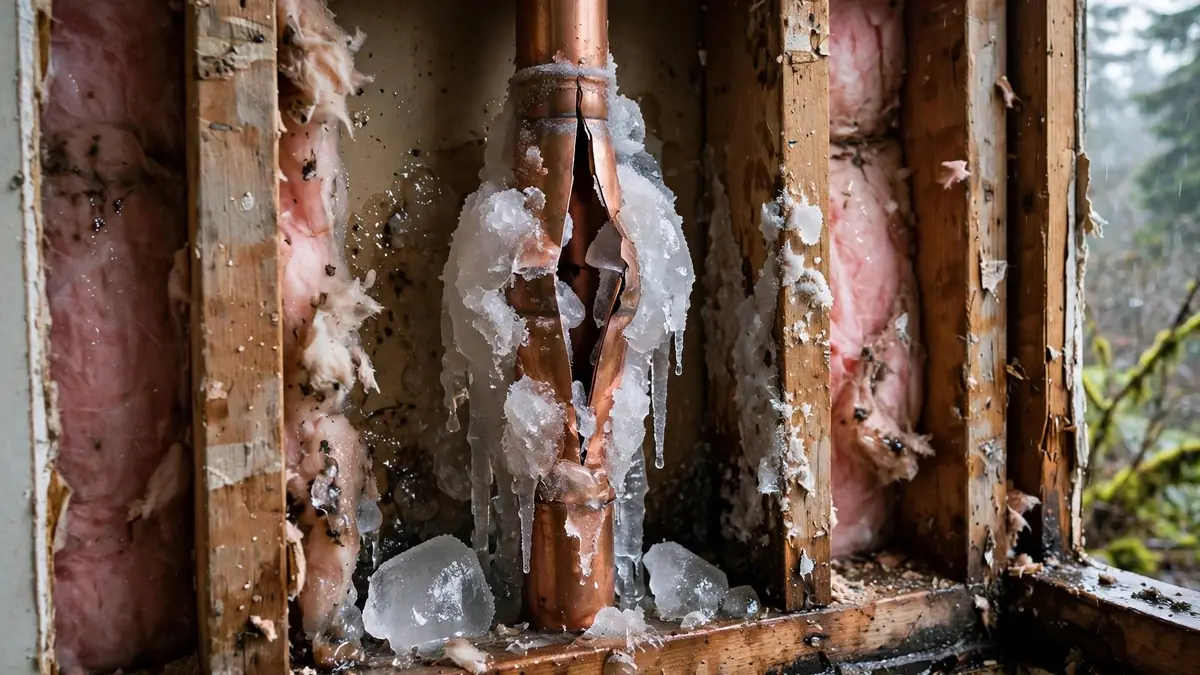
Freezing is a common trigger, and it brings a specific trap. A split can stay quiet while the ice holds, then begin running when the line warms. That is why a break may show up on the first mild afternoon rather than during the coldest night. If you have just had a hard freeze and one tap gives only a trickle, treat it as a warning. Know where the main is before the line thaws, and do not leave the house without checking it.
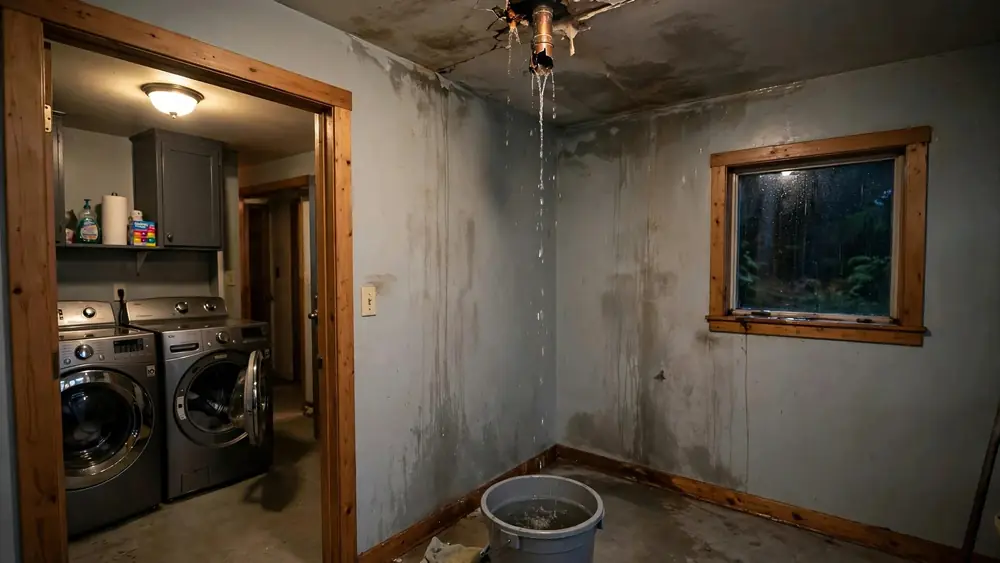
If nobody was home, the first sign may be a wet ceiling on arrival. In that case, stay near the door and look before stepping in. Lights that flicker, a sound of running water behind a wall, or sagging drywall are all reasons to stay out and make calls from outside. CDC guidance on damaged buildings is to leave if you hear shifting or strange noises, and that holds here too.
Heat matters as well. If the power or heating is off and more freezing weather is forecast, tell the plumber and contractor. Other lines in the same house may be at risk while the home sits unheated, and this should shape the order of the work.
Who to call
Matching each problem to the right phone call
Several trades touch a burst pipe, and each one handles something different. Calling them in this order usually keeps the job from stalling.
| Call | Ask them to | Have ready |
|---|---|---|
| Water utility | Shut the street valve if your main will not close or cannot be reached | Service address and account name |
| Plumber | Find and repair the break, then pressure test before service returns | Where the water appeared and what you closed |
| Electrician | Check any circuit, panel or fixture that got wet | Which rooms and which breakers you turned off |
| Restoration contractor | Remove water and dry the structure, and document moisture levels | When it began, which rooms, and whether the water was clean |
| Insurer | Open a claim and explain what steps they expect from you now | Policy number, photos and time of discovery |
| Landlord or building manager | Report the break and agree who is arranging what | Unit number and photos |
Record
What to write down while it is happening
A phone note is enough. The goal is a plain record that does not depend on anyone's memory a month from now.
- Time of discovery and time the water stoppedThese two times frame the whole event. If you only know a range, write the range and say why.
- The valve you closed and who closed itHelpful for the plumber, and a clear sign to the adjuster that you acted to limit the damage.
- Video of the moving water, if safeA short clip from a dry spot shows the flow better than any description. Do not step in to get a better angle.
- Each room, wide then closeTake a wide shot from the doorway, then the floor edges, baseboards and ceiling, then each damaged item with its label or model number visible where possible.
- The failed partPhotograph it in place if you can reach it safely, then keep the piece once the plumber removes it.
- Names and times of each callNote who you spoke with, the claim number, and what you were told to do. Follow up by email if you can, so that the advice is in writing.
- ReceiptsKeep anything bought because of the break, from buckets to a hotel room. Ask your insurer what can be claimed.
Water quality
Why clean water does not stay clean
A supply line starts out carrying drinkable water, which makes the first hours simpler than a drain or flood event. That status can change as the water passes through insulation, wall cavities and flooring, or sits on dirt in a crawl space. Tell the contractor how long the water ran and what it passed through. The guide to water damage categories explains how that judgment is made.
Children and pets should stay out of the wet rooms until cleanup finishes. Ready.gov tells people who have asthma, other lung trouble or reduced immunity to keep out of buildings where leaks or mold are present. If that describes someone in your home, say so on your first call, because it may change the plan for who stays where.
Questions
Burst Pipe Services: quick answers
Who do I call first?
After shutting the valve, a plumber stops the failure and a restorer deals with wet materials.
Should I keep the broken pipe?
Yes, your insurer may want to see it.
Can I keep using water anywhere in the house?
Not with the main closed, unless a plumber has isolated the broken branch. Once that branch is capped, ask the plumber to confirm which fixtures are safe to use.
The break is in an apartment above mine. What do I do?
Tell the building manager at once and ask that the unit's valve be closed. Then protect your belongings, photograph the damage in your unit, and contact your own renters insurer.
Do I need a restoration contractor if the plumber fixed it quickly?
Perhaps not for a small amount of water on a hard floor that dries right away. If water reached walls, carpet, ceilings or a floor below, ask for moisture readings, since these places can stay wet after they look dry.
Should I turn the heat up to dry things?
Ask the contractor first. Heat without air movement and dehumidification may simply push moisture into other rooms.
Next
Once the valve is closed and the room is safe
With the immediate danger handled, the burst pipe water damage service page explains how the repair work itself usually runs. The plumber or restoration contractor guide sorts out who handles which part, and the adjuster preparation guide covers the claim conversation.