
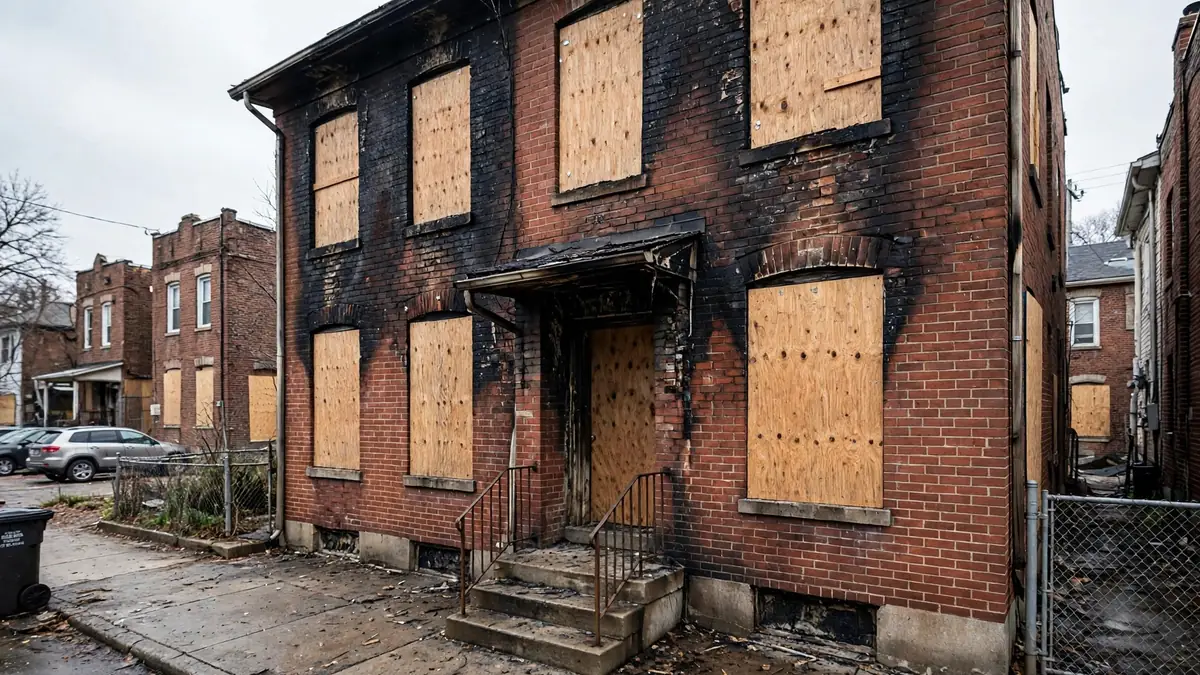
Key facts: Emergency Board-Up Services
- Photograph first: Capture openings before they are covered.
- Remove valuables if allowed: Ask officials before going in.
- Board-up calls are routed to independent contractors, and who can respond depends on your area.
Right now
First steps for board-up services
- 1
Photograph first
Capture openings before they are covered.
- 2
Remove valuables if allowed
Ask officials before going in.
- 3
Note who holds keys
A new lock or panel may be fitted.
- 4
Tell your insurer
A vacant home can affect coverage.
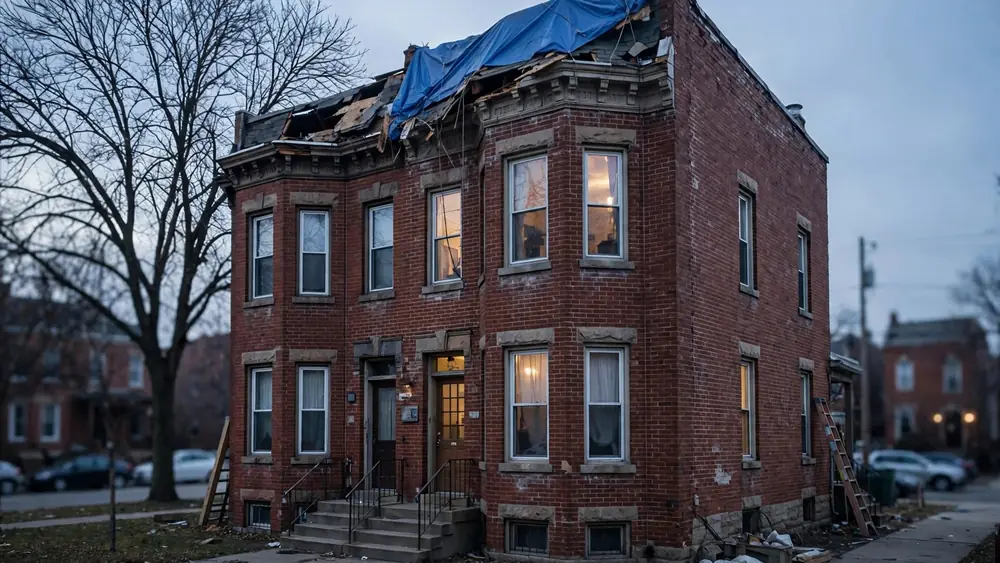
A temporary cover on a damaged roof
Why it cannot wait
What an open house is exposed to
An open building keeps taking damage after the event that opened it. Rain and snow come in, animals may enter, people may wander through, and wind can pull at loose materials. Insurers commonly want owners to limit further loss, so ask what yours requires. Yet the rush to close it up should never come before safety, because the same event that broke the windows may have weakened the walls or the roof.
Clear first
What must be true before anyone starts boarding up
- Officials have released the sceneAfter a fire, the fire department decides on re-entry. After a crime or crash, ask police whether the scene is released before anything is changed.
- Utilities are safeDamaged lines and live wiring at the opening are a reason to wait and call the utility.
- The wall can hold fastenersA cracked or burned wall may not hold plywood and could be dangerous to work against. Ask for a structural opinion if it has moved.
- Glass is managedBroken glass hanging in a frame can fall without warning. Keep people out of the zone below.
- The weather allows itWind makes large sheets of plywood dangerous, and ladders worse. A crew will judge this on site.
- Photos have been takenRecord each opening before it is covered, inside and out if you can.
Timing
From discovery until the house is secure
Availability varies, particularly after a regional storm. These steps keep you safe and keep your options open in the meantime.
- 1
First hour
Stay clear of broken glass and unstable walls. Get people and pets out of affected rooms. Call the fire department or police if the damage came from a fire, crash or break-in.
- 2
Next hour
Take your photographs. Call your insurer and ask what they require for temporary protection, and whether they have a preferred process.
- 3
Same day
Contact a contractor about boarding and tarping, and describe each opening: width, height, floor level and what it is made of.
- 4
While you wait
Move valuables and documents out if officials allow. Put a tarp or plastic indoors over belongings below a roof opening. Do not climb on the roof or go on a tall ladder alone.
- 5
When the crew is there
Walk the openings together from a safe distance. Ask how each panel is fastened, and how you will get in and out of the house.
- 6
After the work
Get photos of the finished job and a dated invoice. Check who holds keys, and record any new lock or panel entry.
- 7
In the following weeks
Look at the boards from outside after each storm. Tell the crew if anything has moved, and let your insurer know if the home becomes vacant.
Openings
Different openings need different covers
Tell the contractor what you are seeing. This helps them bring the right materials the first time.
| Opening | Typical temporary cover | What to mention |
|---|---|---|
| Broken window | Plywood panel | Size, floor level, and frame condition |
| Forced or burned door | Plywood or a secure temporary door | Which door you still need for access |
| Roof hole | Tarp with battens | Pitch, height and what was burned |
| Wall opening | Framed plywood | Whether the wall has moved |
| Vehicle impact | Shoring, then cover | Whether framing has been hit; a structural check may be needed first |
| Skylight | Tarp or fitted cover | Any glass still in the frame |
Don't
Board-up shortcuts to avoid
- Standing under a damaged wall or a loose panelKeep clear, and keep others clear, until a qualified person has looked.
- Boarding every exitKeep a safe way out, and make sure anyone going in knows it. Do not trap yourself or anyone else inside.
- Sealing up a wet houseClosed, wet rooms invite mold. Ask how to keep air moving and when drying will begin. The EPA's window for drying wet materials is 24 to 48 hours.
- Covering hazards without a recordPhotograph first, since the board hides evidence an adjuster may want to see.
- Fixing a tarp yourself in windA tarp can pull you off a ladder. Leave it to a crew.
- Handing over keys without a noteRecord who has them, for what purpose, and when they will be returned.
- Using a generator in a closed-up houseBoarded homes have even less airflow. CDC warns against running one indoors, and Ready.gov sets a minimum of 20 feet between the machine and any opening.
Vacant house
Looking after a home you cannot live in
- Tell the insurer it is emptyA vacant home can affect coverage, so ask what the policy requires and for how long.
- Remove valuables if allowedPhotograph them first. Take documents, medications, and sentimental items. List what you left behind.
- Shut off what you can, safelyAsk a plumber or utility about water and gas in an empty building, especially in a cold season. Leave any reconnection to qualified people.
- Check it regularlyLook at it from the outside if the building is unsafe. Note the date of each visit and take a photo.
- Tell neighborsGive someone your phone number, so they can alert you to a loose board or unusual activity.
- Post no personal detailsKeep any note on the door to the contractor name or your insurer's contact, and leave out personal information.
File
Board-up records your insurer may ask about
- Photos before and afterInside and outside, with the date on them.
- The invoiceListing each opening, the materials used and the date.
- Reason for the workNote the storm, fire, crash or break-in and the report or case number.
- Key and access logWho has entry, how, and what you have asked them to do.
- Post-storm checksDated photos showing that you kept an eye on the temporary cover.
- ConversationsNames, dates and instructions from the adjuster or contractor.
Questions
Board-Up Services: quick answers
Who usually pays?
Often the claim, when the policy covers the loss, so save the receipt.
How long does plywood stay on?
Until repairs are ready, so check it after storms.
Can I do the board-up myself?
For a single ground-floor window, with no structural damage and safe conditions, a capable person might. Anything high, large or next to fire damage is a crew job.
Do I need a permit?
Temporary protection often does not need one, but rules vary, so ask your local building department. They can also tell you whether any order applies to the building.
Will boards damage the frame?
Some fasteners may leave marks. Ask how the crew will fix panels, and whether the frame is being kept for repair.
What if I rent?
Tell the landlord at once, in writing. The building is usually their responsibility. Move your own belongings, and contact your renters insurer about them.
Next
Once the openings are covered
The board-up and tarping page covers materials and methods. The fire damage restoration page explains what often follows, and the adjuster guide helps you present what was done to protect the home.